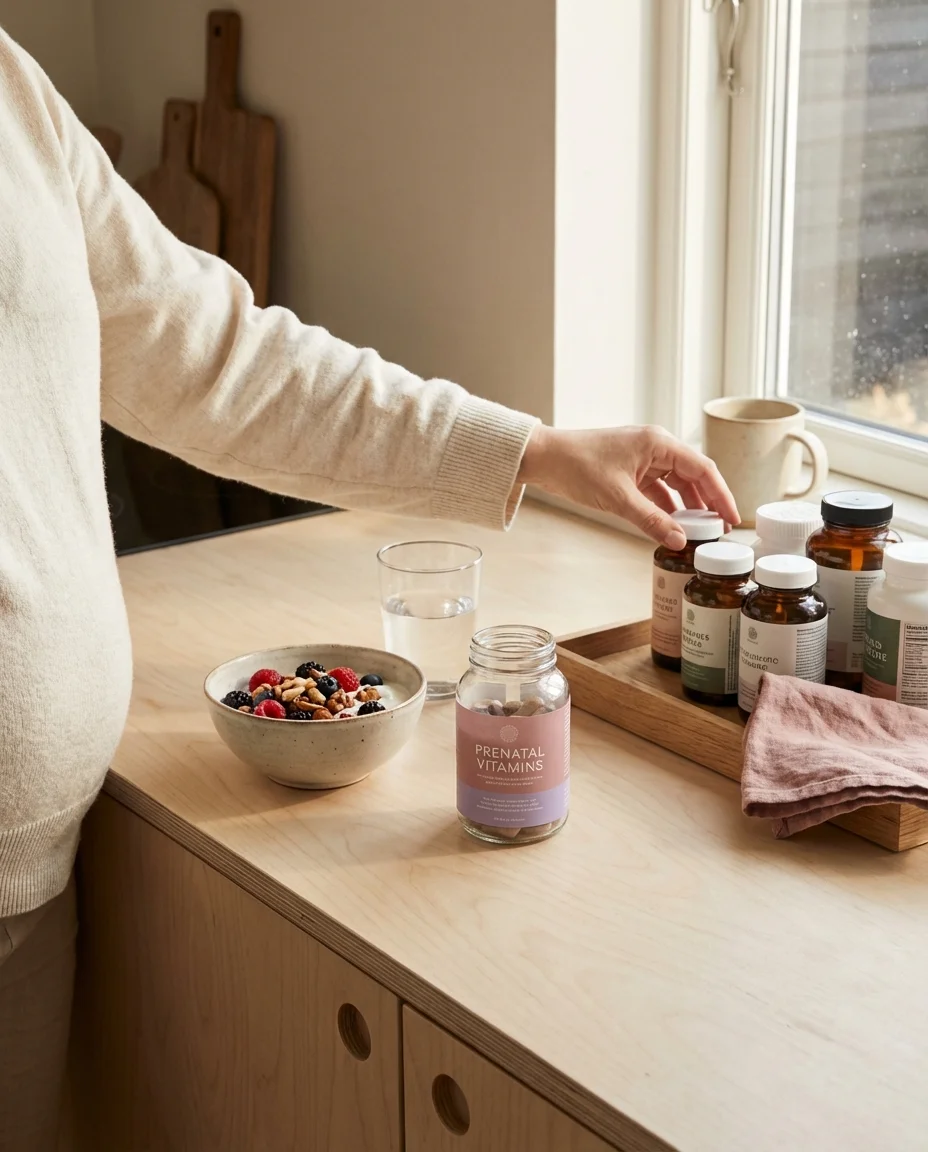
Folic acid, iron, vitamin D, omega-3, the shelves are full of pregnancy supplements. But what do you really need? Here is the overview, based on recommendations from ACOG (American College of Obstetricians and Gynecologists) and the AAP.
The Most Important Supplements During Pregnancy
Folic Acid. The Most Critical One
Folic acid (vitamin B9) prevents neural tube defects such as spina bifida. ACOG recommends:
- 400–800 micrograms daily from when you start trying to conceive
- Continue through the first 12 weeks of pregnancy
- Women with elevated risk (diabetes, epilepsy, BMI over 30) may need a higher dose, consult your doctor
Start early. The neural tube closes as early as weeks 5–6 of pregnancy, often before you know you are pregnant. That's why you should start taking folic acid at least one month before trying to conceive.
Vitamin D. Important Throughout Pregnancy
ACOG recommends that all pregnant women take vitamin D supplementation, especially if you have limited sun exposure.
- Recommended dose: 600 IU (15 micrograms) daily; some providers recommend up to 1,000–2,000 IU, ask your doctor
- Important for: The baby's skeletal development, immune function, and the mother's bone health
- Many people, especially in northern climates, don't produce enough vitamin D from sunlight in winter months
Iron. When Needed
Iron needs increase significantly during pregnancy. But not everyone needs a supplement.
- Your midwife or doctor checks iron levels (ferritin) with a blood test
- Supplementation is recommended if ferritin is below 30 micrograms/liter
- Common dose: 27–60 mg daily at low levels (check with your provider)
- Take iron with vitamin C-rich food (orange, bell pepper) for better absorption
- Avoid taking iron alongside dairy products, coffee, or tea
Side effects of iron supplements such as constipation and nausea are common. Talk to your provider about trying a different form of iron, taking it every other day, or combining it with magnesium. Learn more about iron deficiency in pregnancy.
Omega-3 (DHA)
DHA is important for the development of the baby's brain and eyes.
- Recommended: 200–300 mg DHA daily
- Best source: Fatty fish (salmon, mackerel, trout) 2–3 times a week
- Supplement: Cod liver oil or omega-3 fish oil capsules if you eat little fish
- Cod liver oil: Provides both vitamin D and omega-3, a convenient combination
What About Prenatal Multivitamins?
Prenatal multivitamins are convenient because they combine several nutrients in one tablet. But they are not necessary for everyone.
Who Benefits From a Prenatal Multivitamin?
- Women with a limited or restricted diet
- Vegetarians and vegans
- Those who find it difficult to take several individual supplements
- Women with nausea who struggle to eat a varied diet
Choosing the Right Product
Look for a prenatal vitamin that contains:
- Folic acid 400–800 micrograms
- Vitamin D 600 IU or more
- Iron (if recommended by your provider)
- DHA/omega-3
Avoid too much vitamin A. Large amounts of vitamin A (retinol) can harm the developing baby. Avoid liver-based products in large quantities, and choose supplements with beta-carotene rather than retinol. Always check the ingredient list.
Trimester by Trimester
Before and First Trimester
| Supplement | Dose | Notes |
|---|---|---|
| Folic acid | 400–800 mcg | Start at least 1 month before conception |
| Vitamin D | 600 IU (15 mcg) | Throughout pregnancy |
| Fish oil / cod liver oil | Per label | Provides vitamin D + omega-3 |
Second Trimester
| Supplement | Dose | Notes |
|---|---|---|
| Vitamin D | 600 IU | Continue |
| Iron | 27–60 mg | If low levels on blood test |
| Omega-3 | 200–300 mg DHA | If you eat little fish |
Third Trimester
| Supplement | Dose | Notes |
|---|---|---|
| Vitamin D | 600 IU | Continue |
| Iron | 27–60 mg | Especially important now, body builds iron stores for birth |
| Omega-3 | 200–300 mg DHA | Baby's brain is growing rapidly |
Nutrients You Get From Food
A varied diet covers a lot. Here are the best food sources.
- Folic acid: Dark leafy greens, beans, lentils, oranges, fortified whole grains
- Iron: Red meat, chicken, beans, lentils, whole grains, spinach
- Vitamin D: Fatty fish, eggs, fortified milk, cod liver oil
- Calcium: Milk, cheese, yogurt, broccoli, almonds
- Omega-3: Salmon, mackerel, sardines, walnuts, flaxseed
- Iodine: Dairy, white fish, eggs, important for the baby's brain development
Vegetarians and Vegans
If you eat a vegetarian or vegan diet, pay extra attention to:
- B12: Found only in animal products. Supplementation is essential for vegans
- Iron: Plant-based iron is absorbed less efficiently. Combine with vitamin C
- Iodine: Can be difficult to cover without dairy and fish, consider a supplement
- DHA: Algae oil is an excellent plant-based alternative to fish oil
Talk to your provider or a registered dietitian for personalized recommendations.
Frequently Asked Questions
Can I take too many supplements?
Yes. Fat-soluble vitamins (A, D, E, K) are stored in the body and can become harmful in large doses. Stick to recommended doses and don't combine multiple products containing the same vitamin.
Is cod liver oil enough as a supplement during pregnancy?
Cod liver oil covers vitamin D and omega-3, but not folic acid and iron. You still need folic acid, at minimum through the first 12 weeks. Iron only as needed based on blood tests.
Do supplements help with nausea?
Some people find that vitamin B6 (pyridoxine) reduces nausea. Ginger is another natural remedy that may help. Learn more about nausea during pregnancy.
When during the day should I take my supplements?
Folic acid and vitamin D can be taken at any time. Iron is best absorbed on an empty stomach, but may cause nausea, try taking it with a small snack. Omega-3 should be taken with food for better absorption.
Do I need supplements while breastfeeding too?
Vitamin D is recommended to continue during breastfeeding. Iron may still be relevant. Your baby should receive vitamin D drops from birth, ask your pediatrician.
Summary
The three you absolutely should take: folic acid (through week 12), vitamin D (throughout pregnancy), and iron (when needed based on blood work). Everything else can largely be covered through a healthy, varied diet.
Sources: ACOG. Nutrition During Pregnancy, AAP. Vitamin Supplementation During Pregnancy, FDA. Advice About Eating Fish
Sources
- ACOG. Clinical guidance on pregnancy and women's health
- WHO. Global recommendations for maternal health
- Mayo Clinic. Evidence-based pregnancy health information
🔧 Helpful Tools
- Due Date Calculator. Calculate your estimated due date
- Contraction Timer. Track your contractions during labor
- All Baby Tools. Browse all free tools for pregnancy and baby care
📖 Related Articles
- Vitamins and Supplements for Baby: Vitamin D, Iron, and Fish Oil. Does your baby need supplements? A guide to vitamin D, fish oil, iron, and other supplements for babies and toddlers based on recommendations from the WHO and AAP.
- Pregnancy Diet: Complete Nutrition Guide for Pregnant Women. Wondering what you can eat while pregnant? Here is a complete guide to pregnancy nutrition, what to eat, what to avoid, and which vitamins you need.