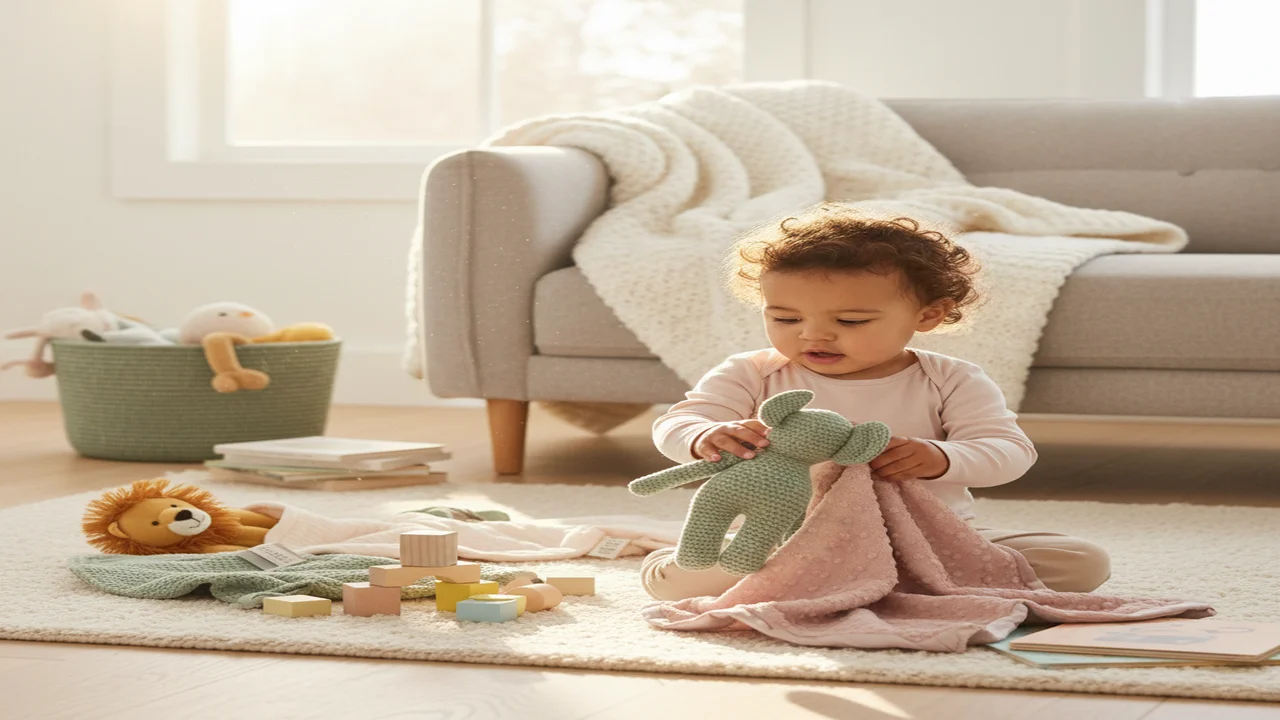
The day comes for every parent: your child has outgrown the crib, and it's time for a big bed. But when is the right time, and how do you make the transition without disrupting nighttime sleep?
Here's a practical guide to transitioning from crib to toddler bed, with tips for safety, timing, and how to make it as smooth as possible.
When Is a Child Ready for a Toddler Bed?
There's no magic age. Most children make the switch between 18 months and 3 years, but the timing depends on your child.
Signs that the child is ready:
- Child climbs over the crib railing (safety risk!)
- Child is too tall for the crib (approaching 90 cm / 35 inches)
- Child asks for a "big bed" themselves
- Child seems cramped and uncomfortable
Safety first: If your child is climbing out of the crib, make the switch soon. A fall from the crib rail can cause injuries. In the meantime, lower the mattress to its lowest position and remove any pillows or toys the child could use as a step.
Do You Really Need to Switch?
Not all children need to switch early. If the child sleeps well in the crib, isn't climbing, and has enough room, there's no reason to rush.
Common reasons to wait:
- The child sleeps well and is happy
- A sibling is coming and the child can be moved gradually
- The child is in an unsettled phase (separation anxiety, sleep regression)
Avoid switching beds at the same time as other major changes like starting daycare, potty training, a new sibling, or moving. One big transition at a time is enough.
Three Options for the Transition
1. Toddler Rail on the Crib
Many cribs can be converted by removing one side or installing a toddler rail. The child can then get in and out themselves, but the bed is otherwise the same.
Advantage: The child keeps their familiar bed. Lower threshold. Disadvantage: Limited lifespan, the child will outgrow it fairly quickly.
2. Toddler Bed (Junior Bed)
A low bed, typically 70x140 cm or 70x160 cm, with low sides or a bed rail.
Advantage: Low and safe, suitable from about 18 months to 5-6 years. Disadvantage: Needs to be purchased in addition to the regular bed the child will need later.
3. Regular Twin Bed (90x200) with Bed Rail
Many parents go straight to a regular bed with a bed rail. It saves money and gives the child a bed they can use for many years.
Advantage: Long-term solution, great mattress options. Disadvantage: Can feel large and overwhelming for a small child.
Tip: Whatever bed you choose, you can place the mattress on the floor for the first few weeks. The fall is minimal if the child rolls out, and the child can get used to the new sleeping spot without stress.

Safety in the New Bed
Bed Rail Is Important
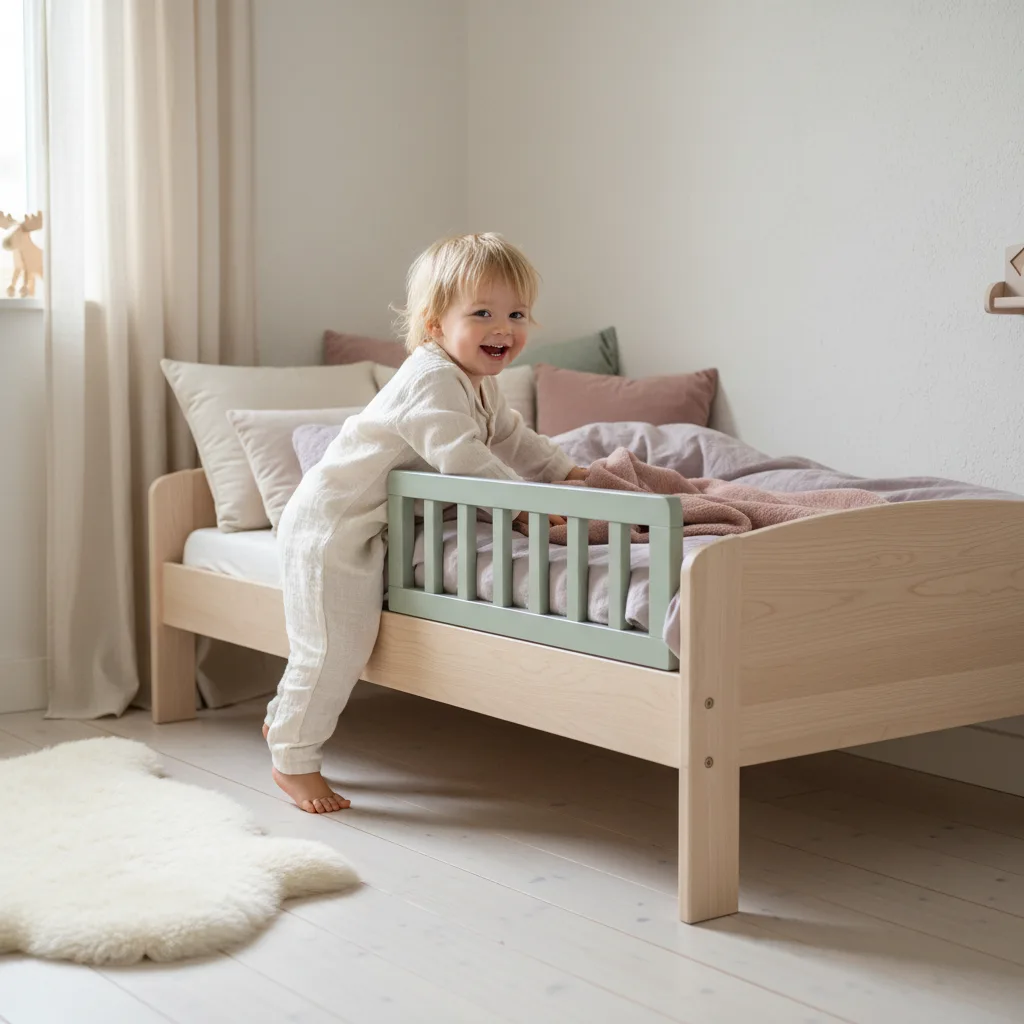
A bed rail (bed guard) prevents the child from falling out overnight. It's especially important during the first months.
- Choose a bed rail that meets safety standards
- Check that it attaches securely and cannot tip
- Remove the bed rail when the child is old enough not to fall out (usually 3-4 years)
Child-Proofing the Room
When the child can leave the bed on their own, the dynamic changes. The bedroom needs to be safe for a child who may wander at night.
Child-proofing checklist:
- Secure dressers and shelves to the wall (tip prevention)
- Remove cords and strings from curtains/blinds
- Install outlet covers on electrical sockets
- Remove small objects that could be swallowed
- Consider window locks
- Night light in the room and hallway
Right Mattress
Choose a mattress that is appropriately firm (not too soft) and fits the bed frame exactly. There should be no gaps where the child could get stuck.
How to Make the Transition Smooth
1. Involve the Child
Let the child help choose bedding. Favorite color, favorite character, this creates ownership and excitement about the new bed.
2. Keep the Bedtime Routine
The most important sleep factor is the routine, not the bed. Keep exactly the same evening routine as before, bath, book, song, good night.
3. Start with Naps
Some parents let the child try the new bed during nap time first, while the crib is still used at night. A gradual transition gives children security.
4. Be Prepared for Nighttime Wandering
In the first few weeks, many children will get up and come to the parents' room. This is normal. Calmly walk the child back to bed without making a big deal of it.
5. Be Patient
The transition typically takes 2-4 weeks. Some children adapt in a few days, others need longer. Both are normal.
Tip: Use a sleep tracker to log how sleep is affected during the transition period. Many parents are surprised by how quickly children adapt.
Common Challenges
Child Wants to Go Back to the Crib
Completely normal, especially in the first few days. Be supportive but consistent. Talk about how nice the new bed is and how the child is a "big kid" now. Consider removing the crib after a few days so it's not an option.
Child Falls Out of Bed
Use a bed rail and place a thick mat or pillows on the floor along the bed for the first few weeks. Most children quickly learn to turn in their sleep without falling out.
Child Won't Stay in Bed
The freedom to leave the bed can make bedtime difficult. Some tips:
- Set clear rules: "When we've said good night, it's sleep time"
- Use a toddler clock (stay-in-bed clock) for older toddlers
- Be consistent about walking the child back to bed
- Praise the child when they sleep well in the new bed
Timeline for the Transition
| Week | What happens |
|---|---|
| Week 1 | Introduce the bed, let the child explore it during the day |
| Week 2 | Start with nap in new bed, crib at night |
| Week 3 | Move night sleep to new bed too |
| Week 4 | Fine-tune, remove crib, celebrate progress |
This timeline is a suggestion. Some children need less time, others more. Follow your child's pace.
Frequently Asked Questions
When should a child move from a crib?
Most children switch between 18 months and 3 years. Switch earlier if the child is climbing out of the crib, as this is a safety risk.
Do I need a bed rail?
Yes, a bed rail is recommended for children under 3-4 years sleeping in a regular bed. It prevents falls from the bed at night.
Should I buy a toddler bed or a regular bed?
A regular twin bed (90x200) with a bed rail is often the most practical solution. The child can use it for many years. A toddler bed is a nice intermediate step, but not necessary.
What do I do when the child gets up at night?
Walk the child calmly and firmly back to bed. Avoid making nighttime wandering into something exciting. Be consistent, and the child will learn the routine.
Can I move the child and give the crib to a new sibling?
Yes, but do the transition well in advance, ideally 2-3 months, before the new baby arrives. The child should not feel "kicked out" of their bed for the baby.
Summary
The transition from crib to toddler bed is a milestone for the whole family. With good timing, a safe setup, and a little patience, it goes smoothly for most families.
Remember: there is no perfect time. Follow your child's signals, stick to the bedtime routine, and give it a few weeks.
Read More
- Sleep for Toddlers 2-3 Years. Sleep needs and challenges
- Toddler Sleep Problems and Bedtime. When bedtime becomes a battle
- Bedtime by Age. How much sleep does your child need?
Sources
🔧 Helpful Tools
- Baby Milestones Tracker. Track your baby's developmental milestones
- Development Leaps. Understand your baby's developmental leaps
- All Baby Tools. Browse all free tools for pregnancy and baby care
📖 Related Articles
- Transitioning to Their Own Bed: When and How. Ready to move your child from a crib to a regular bed? Here are practical tips for a safe and successful transition.
- Bedtime Routines That Actually Work. Better Sleep for Your Baby. Build a bedtime routine that gives your baby and toddler better sleep. Step-by-step evening routines by age, from newborn to 2 years old.
- Bedtime for 2- and 3-Year-Olds: A Guide to Better Sleep. When should 2- and 3-year-olds go to bed? Get practical tips on bedtime routines, the right bedtime, and how to handle night waking in toddlers.