Your 2-year-old has just started climbing out of the crib. Your 3-year-old is dreaming about monsters and refuses to sleep alone. Sleep between ages 2 and 3 brings entirely new challenges compared to the baby phase.
At this age, major transitions happen: from crib to big bed, from two naps to none, and from simple dreams to vivid nightmares. Here's concrete help to navigate it all.
Sleep Needs: How Much Does Your Child Need?
According to international sleep guidelines (AASM), referenced by leading pediatric health organizations, the recommended sleep needs are:
| Age | Total sleep per day | Nap |
|---|---|---|
| 2 years | 11–14 hours | 0–2 hours |
| 3 years | 10–13 hours | 0–1 hour |
These numbers include any daytime nap. Most 2-year-olds still need an afternoon nap, while many 3-year-olds manage without one.
There is significant variation between children. Some 2-year-olds do fine with 11 hours, while others need closer to 14. Look at your child's mood and energy level to judge whether they're getting enough sleep.
Transitioning from Crib to Big Bed
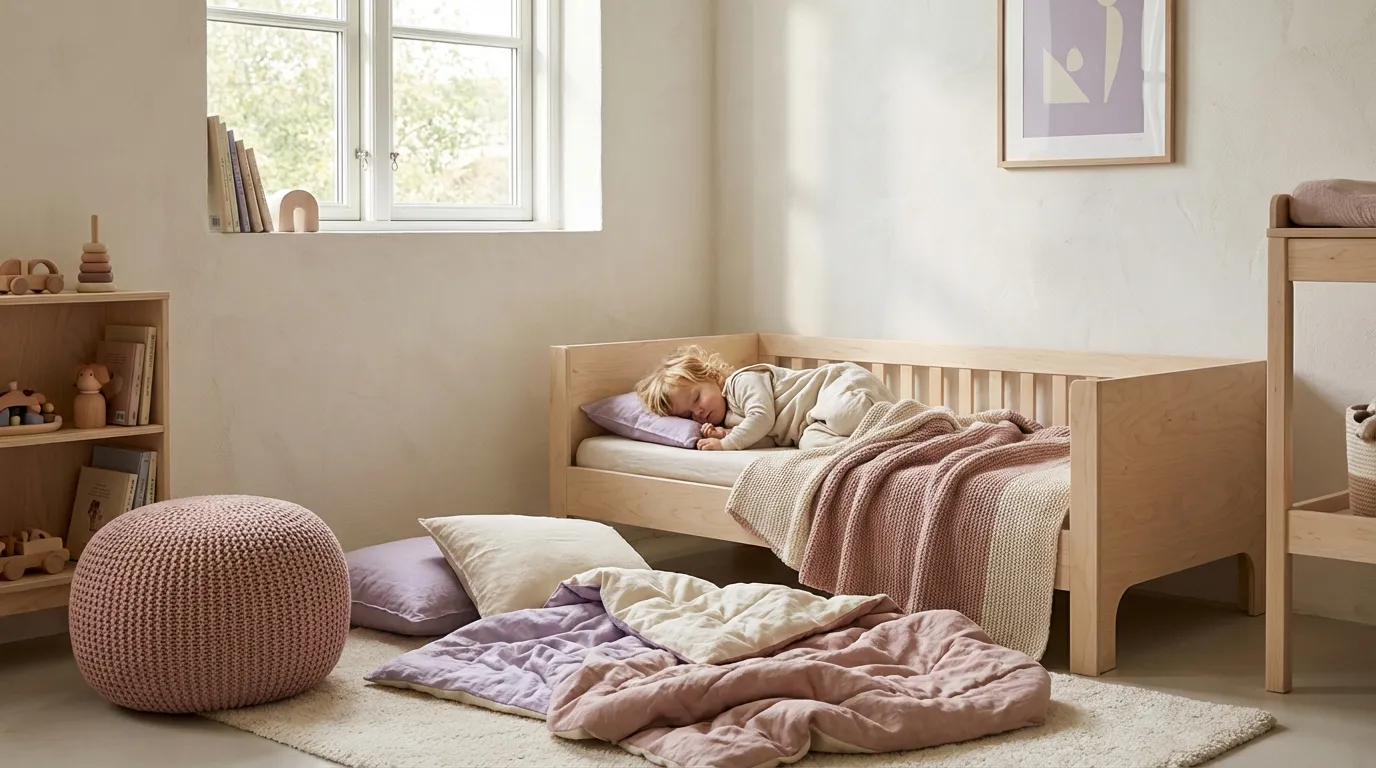
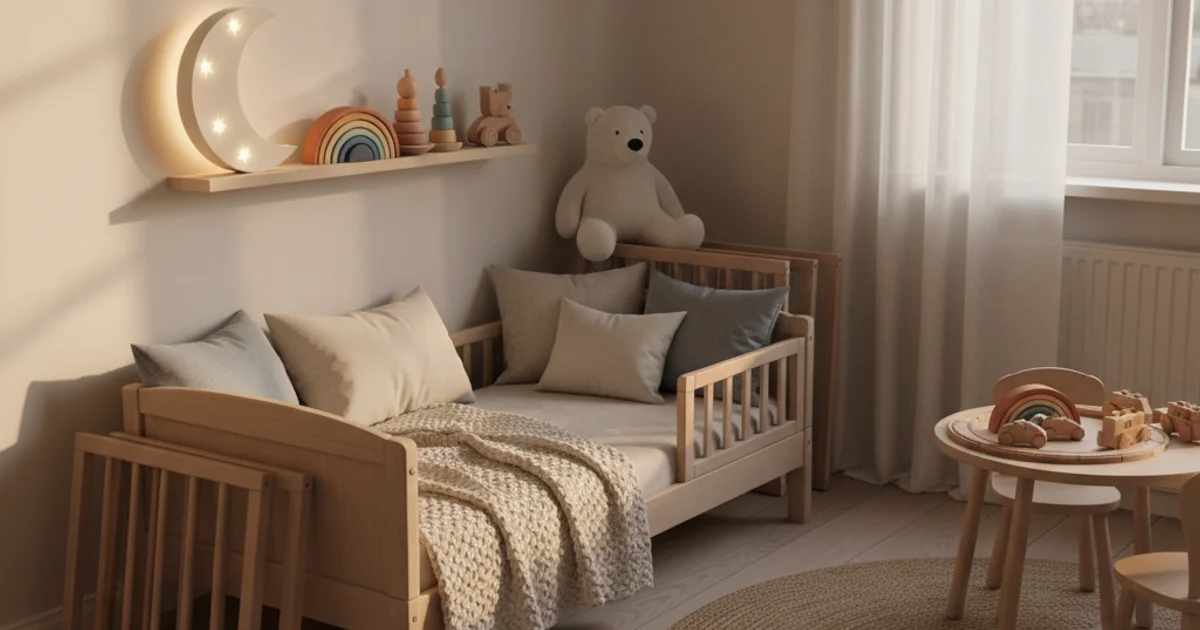
Most children switch to a big bed between ages 2 and 3. Common reasons include the child climbing out of the crib, a new sibling arriving, or the child simply outgrowing it.
Signs Your Child Is Ready
- Your child climbs or tries to climb out of the crib
- Your child looks uncomfortable or cramped in the crib
- Your child shows interest in a "big bed"
- Your child is around 2.5–3 years old
Making the Transition Easier
Prepare your child: Talk about the big bed well in advance. Let your child help choose the bedding or its placement.
Lower expectations for the first few weeks: Your child may get up several times at night, come into your room, or sleep on the floor. This is completely normal and passes.
Safety-proof the room: When your child can move freely, the room must be child-safe. Anchor furniture to the wall, cover outlets, and consider a bed rail at first.
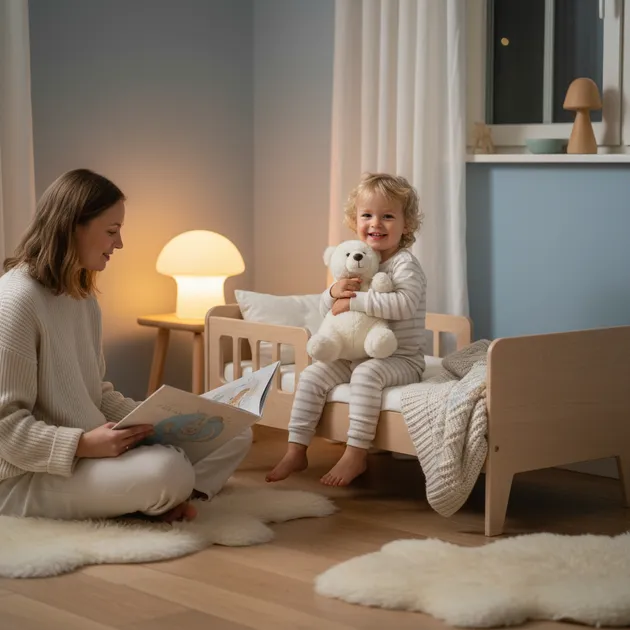
Keep routines unchanged: The actual bedtime routine should stay the same as before, bath, book, song, goodnight. Only the bed is new.
Start the transition during an otherwise calm period. Avoid switching beds at the same time as starting daycare, a new sibling arriving, or other major changes.
Nightmares vs. Night Terrors. Do You Know the Difference?
Many parents confuse these two, but they are very different and require different responses.
Nightmares
Nightmares are common from around age 2 and up. Your child wakes from a scary dream, is frightened, and seeks comfort.
Signs:
- Your child wakes and is conscious
- Your child remembers the dream (or parts of it)
- Your child wants comfort and closeness
- Happens most often in the second half of the night
What to do:
- Go to your child and offer comfort
- Confirm that it was a dream and that your child is safe
- Stay until your child has calmed down
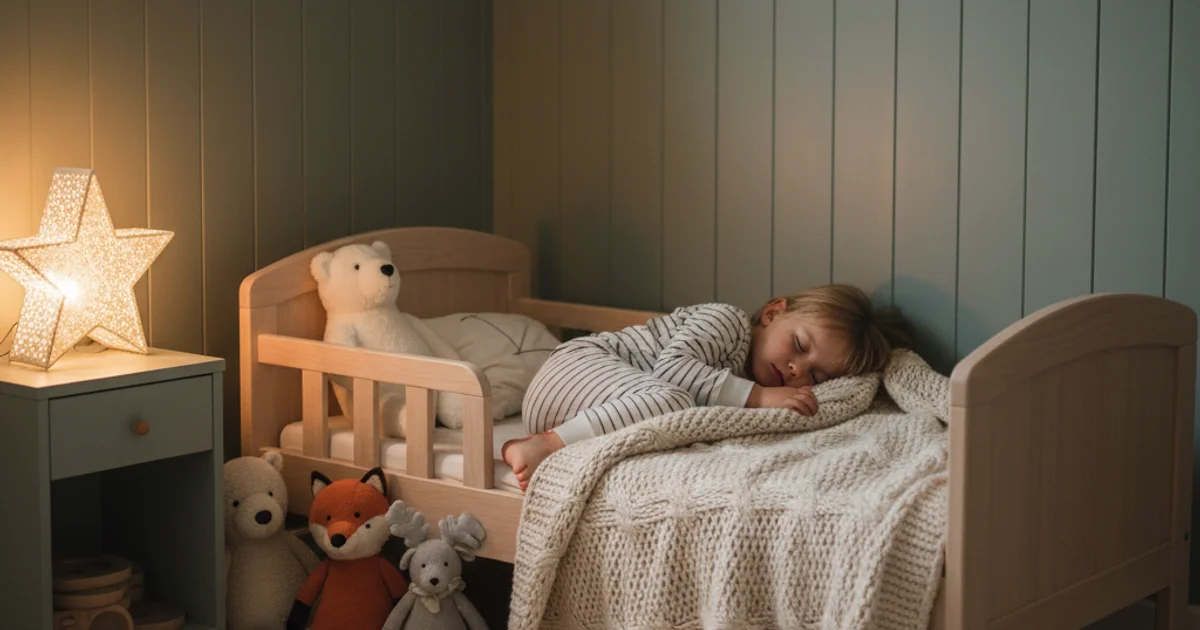
- Leave a nightlight on if that helps
Night Terrors
Night terrors look dramatic, but your child is actually asleep throughout the episode. They occur in about 3–5% of children, most often between ages 2 and 6.
Signs:
- Your child screams, is agitated, may sit up or walk
- Your child is not awake and doesn't recognize you
- The episode lasts 5–30 minutes
- Your child remembers nothing afterwards
- Happens most often 1–3 hours after falling asleep
What to do:
- Don't try to wake your child, it makes things worse
- Make sure your child doesn't hurt themselves
- Wait for the episode to end
- Gently put your child back when it's over
Night terrors can be triggered by sleep deprivation. Make sure your child is getting enough total sleep, sometimes putting them to bed 30 minutes earlier helps.

Dropping the Nap: When Your Child Stops Sleeping During the Day
Most children stop napping between ages 2.5 and 3.5. The transition can take several weeks and is rarely smooth. Some days your child needs a nap; other days they don't.
Signs your child is ready to drop the nap:
- The nap means your child won't fall asleep in the evening
- Your child takes more than 30 minutes to fall asleep at nap time
- Your child is in a good mood without a nap all the way through to dinner
- Your child is 2.5 years or older
How to handle the transition:
- Replace the nap with a quiet "rest time", your child lies in bed with a book or music
- Move bedtime 30–60 minutes earlier during the nap-free period
- Be prepared for a couple of challenging weeks where your child is grumpy in the afternoon
- Some days your child may still need a nap, stay flexible
Use the Babysential Sleep Tracker to keep track of your child's sleep patterns through the transition.
Screen Time and Sleep
The American Academy of Pediatrics (AAP) is clear in its recommendations on screen time for young children:
- Under 18 months: Avoid screen use (except video calls)
- 18 months–2 years: Only high-quality content, together with a parent
- 2–5 years: Maximum 1 hour per day of high-quality programming
Screen use close to bedtime affects sleep in several ways. The blue light from screens suppresses the production of the sleep hormone melatonin. In addition, content can stimulate the brain, making your child harder to settle.
Rule of thumb: Turn off all screens at least 1 hour before bedtime. Replace with calm activities like books, drawing, or quiet play.
Many daycares use tablets during the day. It's worth asking about the daycare's practices and requesting that your child not use screens during the last hour before pickup, so the wind-down starts early.
Separation Anxiety at Bedtime
Around age 2, separation anxiety can flare up again. Your child cries when you leave the room, calls for you repeatedly, or refuses to sleep without you there.
Strategies that help:
- Transitional objects: Give your child a stuffed animal or an item that "keeps watch" at night
- Gradual withdrawal: Sit by the bed for the first few evenings, then move the chair a little closer to the door each night
- Predictability: Say exactly what you're going to do: "I'm going out, and then I'll come back to check on you in five minutes"
- Keep your promises: If you say you'll come back, do it. Trust is built through consistency
Bedtime Routine for 2–3 Year Olds
A consistent bedtime routine is the most effective tool for good sleep. The routine should take 20–30 minutes and follow the same order every evening.
Example bedtime routine:
- Evening snack (if your child needs it)
- Bath or wash
- Pajamas and teeth brushing
- Two books in bed
- A song or brief chat about the day
- Goodnight hug and lights dimmed
Common Questions
When should a 2-year-old go to bed?
Most 2-year-olds should go to bed between 6:00 pm and 7:00 pm, depending on whether they nap and when they need to wake up. A 2-year-old needs 11–14 hours of sleep per day. Subtract any nap time and count back from when your child needs to wake up.
Are night terrors dangerous?
No, night terrors are harmless even though they look dramatic. Your child sleeps through the episode and remembers nothing afterwards. Night terrors occur in about 3–5% of children and usually resolve on their own. Talk to your pediatrician if episodes are very frequent or persistent.
My child only wants to sleep with us, what do we do?
Co-sleeping is common at this age, and many families choose it intentionally. If you want your child to sleep in their own bed, use gradual withdrawal. Start by lying next to your child in their bed, then sit by the bed, then stand in the doorway, over several weeks. Be patient and consistent.
Read More
- Sleep Tracker, follow your child's sleep patterns
- Bedtime for Toddlers: Guide to Better Sleep
- Sleep Problems in Toddlers
- Night Terrors in Children. Complete Guide
Sources
- American Academy of Sleep Medicine. Sleep Guidelines
- AAP. Screen Time Guidelines
- National Sleep Foundation. Children and Sleep
🔧 Helpful Tools
- Baby Sleep Tracker. Track and optimize your baby's sleep
- Soothing Sounds. White noise and soothing sounds to help your baby sleep
- All Baby Tools. Browse all free tools for pregnancy and baby care
📖 Related Articles
- Bedtime for 2- and 3-Year-Olds: A Guide to Better Sleep. When should 2- and 3-year-olds go to bed? Get practical tips on bedtime routines, the right bedtime, and how to handle night waking in toddlers.
- Bedtime Routines That Actually Work. Better Sleep for Your Baby. Build a bedtime routine that gives your baby and toddler better sleep. Step-by-step evening routines by age, from newborn to 2 years old.
- Sleep and Starting Daycare: Adjusting Your Child's Routines. Starting daycare affects sleep. Get tips on sleep routines, settling in, and how to help your child sleep well during the daycare transition.