The Short Answer
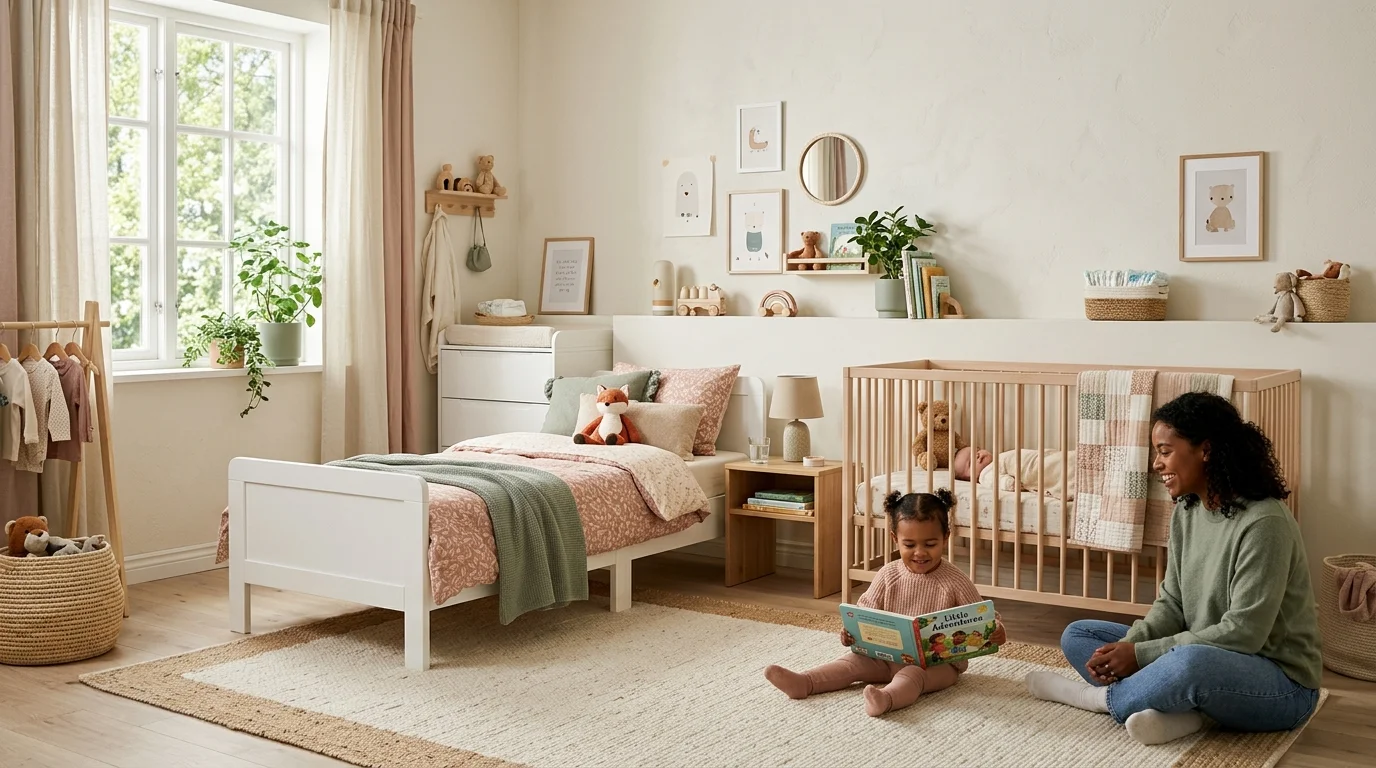
Most children transition from a crib to a toddler or single bed between 18 months and 3.5 years of age, with the average around 2.5–3 years. There is no single "right" age, the transition should be driven by your child's readiness, not an arbitrary timeline. In fact, keeping children in a crib longer is safer: crib sides prevent falls and make it harder for toddlers to wander at night.
Signs Your Child Is Ready
Physical Signs
- Climbing out of the crib, once a child can climb out consistently, there is a fall risk. This is the most common reason for an early transition (often around 18–24 months)
- Reaching the maximum height limit for the crib (typically 90 cm / 35 inches)
- The crib side lowered to its lowest position no longer adequately contains your child
Behavioural Signs
- Frequently asks to sleep in a "big bed"
- Understands and can follow simple boundaries ("stay in bed until the light changes")
- Consistently naps and sleeps well in the crib (transitions are harder during sleep regressions)
- Is potty training and needs to access the bathroom independently at night
Signs It Is Too Early
- Under 18 months: toddlers this young rarely understand stay-in-bed boundaries
- Going through a major life transition (new sibling, house move, new childcare), add one change at a time
- Currently in a sleep regression or fighting naps
How to Make the Transition
1. Lower the Crib First
Before buying a toddler bed, try lowering the crib mattress to the lowest position. This may delay the need to transition while still accommodating a growing child.
2. Choose the Right Bed
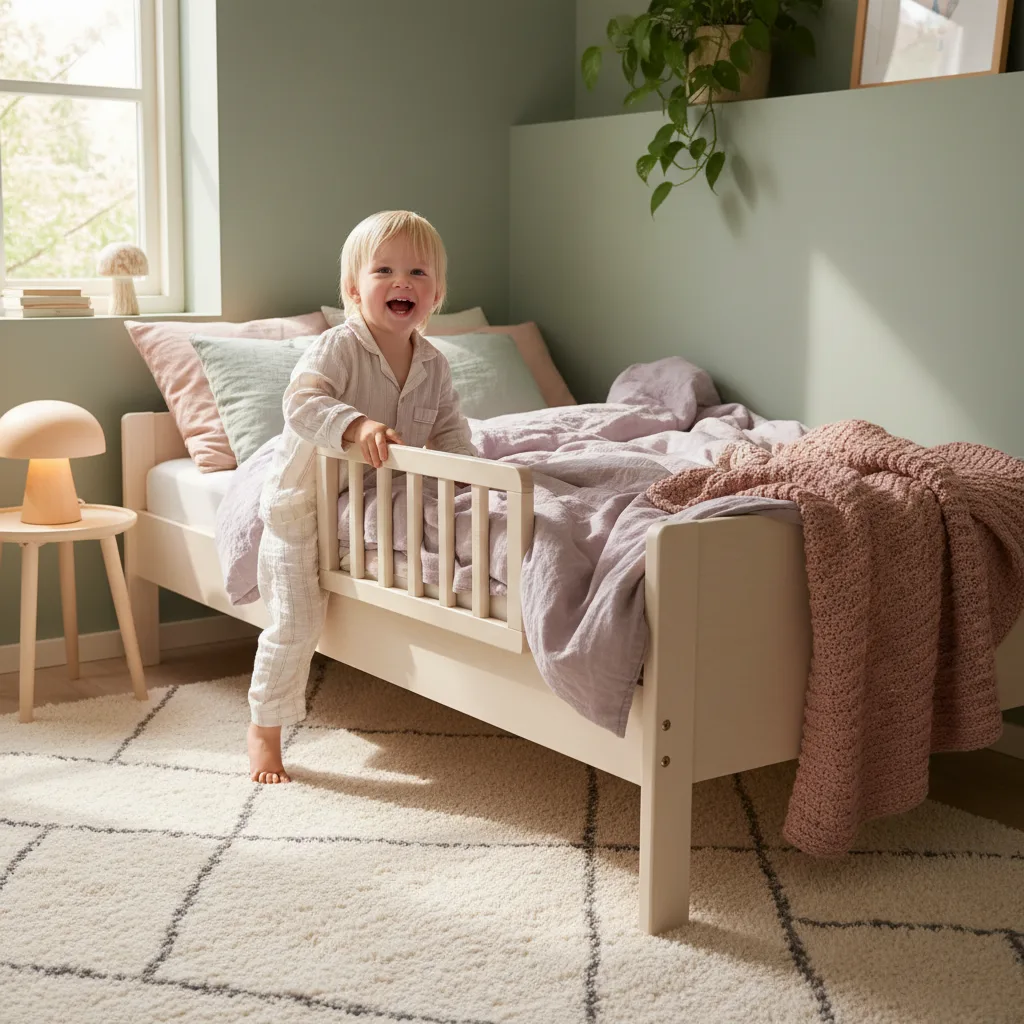
- Toddler bed: Uses a crib-sized mattress (easier transition, lower to the ground, often has guard rails). Suitable until around age 5
- Single/twin bed with guard rails: Skips the toddler bed stage. More expensive upfront but lasts much longer
- Floor mattress: The safest option, no fall risk at all. Some families simply place the crib mattress on the floor during the transition
3. Involve Your Child
Let them help choose bedding, a new pillow, or a special soft toy for the big bed. Building excitement helps reduce resistance.
4. Keep Everything Else the Same
Maintain the exact same bedtime routine. Change only the sleep surface, not the timing, sequence of activities, or sleep environment. Familiarity is critical during transitions.
5. Use a Visual Cue for Morning
A toddler clock (Gro Clock, Hatch, etc.) teaches children to stay in bed until a visual cue (light colour change, picture) signals morning. This is highly effective for preventing 5 a.m. wake-ups and wandering.
6. Childproof the Room
Before the first night in the big bed, assume your child will get out of bed. Ensure:
- The room or doorway has a safety gate
- Furniture is anchored to the wall (tip-over risk)
- Blind cord and electrical hazards are secured
- Accessible windows have safety locks
What to Expect After the Transition
- Night wandering is common in the first 2–4 weeks. Calmly, consistently return your child to bed with minimal interaction.
- Bedtime resistance may increase temporarily as children test the new boundary of being able to get out of bed.
- Earlier wake-ups, without crib walls, children may get up earlier. A toddler clock and a room-darkening blind can help.
- Most children settle into the new arrangement within 2–4 weeks if parents are consistent.
When NOT to Rush
The AAP does not set a specific age for the crib-to-bed transition. If your child is safe in the crib and sleeping well, there is no developmental or health reason to rush. Many parents transition too early and create sleep problems that would not have existed if they had waited.
Do not transition because:
- A new sibling needs the crib (buy or borrow a second crib, or use a Moses basket/bassinet for the newborn for the first few months)
- You think they "should" be in a big bed by a certain age
- The child occasionally mentions wanting a big bed but is otherwise sleeping well
Frequently Asked Questions
When should a toddler transition from crib to bed?
Most children transition between 18 months and 3.5 years, with the average around 2.5–3 years. The AAP does not set a specific age, the transition should be driven by readiness, not an arbitrary timeline. Keeping children in a crib longer is actually safer, as crib sides prevent falls and make nighttime wandering impossible.
What are the signs my toddler is ready to move to a bed?
The most common trigger is climbing out of the crib, once this happens consistently, there is a fall risk and transition makes sense. Other readiness signs include reaching the crib's maximum height limit, understanding simple boundaries ("stay in bed"), potty training that requires night-time bathroom access, and consistently sleeping well in the crib.
Is 18 months too early to transition to a toddler bed?
For most children, yes, toddlers under 18 months rarely understand stay-in-bed boundaries and the transition often creates sleep problems that did not exist before. The AAP recommends against rushing the transition. If a child is safe in the crib and sleeping well, there is no developmental reason to move them.
Should I get a toddler bed or go straight to a twin or single bed?
A toddler bed uses a crib-sized mattress and sits low to the ground, making it an easy transition with familiar dimensions and a lower fall risk. A single bed with safety rails skips the toddler bed stage and lasts longer, but the higher surface and larger space can be disorienting for younger toddlers. A floor mattress is the safest option of all, no fall risk whatsoever.
How do I stop my toddler getting out of bed after transitioning?
A toddler clock (such as a Gro Clock or Hatch clock) that signals morning with a visual cue (colour change, picture) is highly effective at teaching children to stay in bed. Calmly and consistently returning your child to bed with minimal interaction during the first 2–4 weeks also helps establish the new boundary. Consistency is more important than any specific technique.
Do I need to baby-proof the room when transitioning to a bed?
Yes, before the first night in a big bed, assume your child will get out. Ensure the room has a safety gate at the door or hallway, all heavy furniture is anchored to the wall, blind cords and electrical hazards are secured, and accessible windows have safety locks. A child who can now exit the crib can reach things they could not before.
What should I do if we need the crib for a new sibling?
The AAP recommends against transitioning an older child to a bed specifically to free up the crib for a new baby, this creates an association between the transition and sibling displacement, which often increases resistance. Instead, borrow or buy a second crib, bassinet, or Moses basket for the newborn's first months while the older child remains in their crib until genuinely ready.
Key Sources
- AAP. Transitioning Your Child from Crib to Bed
- NHS. Your Baby's Sleep
- Sleep Foundation. Toddler Sleep
Sources
- AAP. Safe sleep guidelines for infants
- NICHD. Safe to Sleep campaign. SIDS prevention
- CDC. Infant safe sleep practices
🔧 Helpful Tools
- Baby Sleep Tracker. Track and optimize your baby's sleep
- Baby Milestones Tracker. Track your baby's developmental milestones
- All Baby Tools. Browse all free tools for pregnancy and baby care