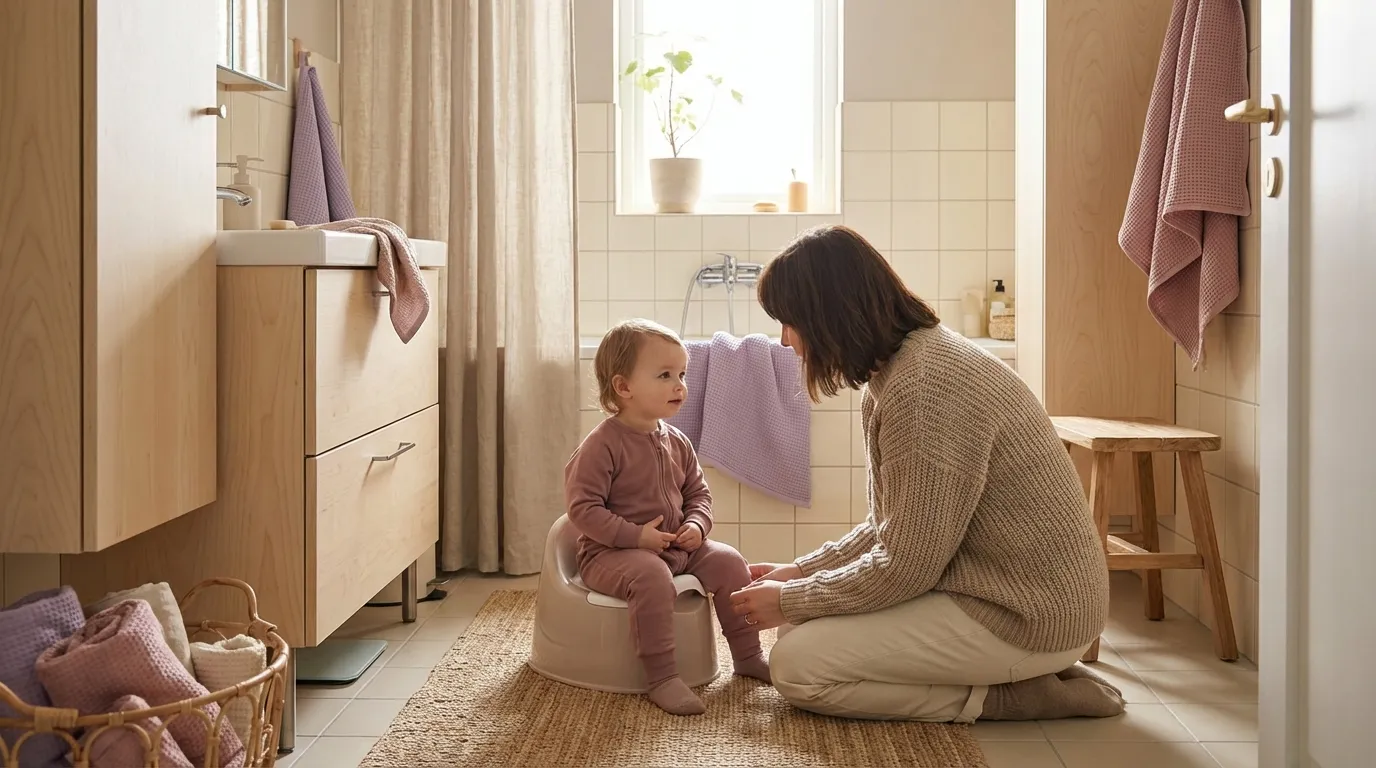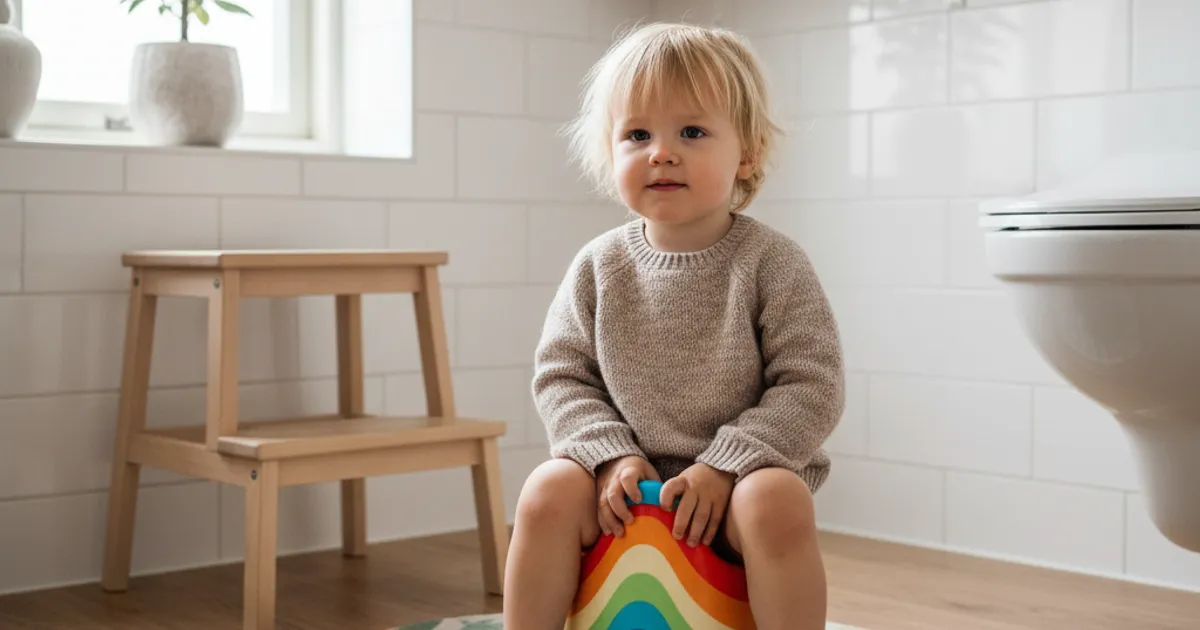
There is no single right approach to potty training. Some children are ready at eighteen months, others need more time. The most important thing is to follow your child's pace and make the process positive.
Pediatric guidelines recommend waiting until your child shows signs of readiness rather than pushing for an early start. Here is a complete step-by-step guide that takes a child-led, patient approach.
When Is Your Child Ready for Potty Training?
According to the AAP, there is no set age to start potty training. Most children are ready between 18 months and 3 years. Boys are often a bit later than girls, but there is wide individual variation.
Signs Your Child Is Physically Ready
Your child needs a certain physical maturity to succeed:
- Can walk and sit stably, needs balance to sit on the potty
- Stays dry for longer stretches, at least 1–2 hours between diaper changes
- Shows discomfort with a wet or dirty diaper, wants to be changed
- Can pull pants up and down with a little help
- Has a predictable bowel pattern, often at regular times
Signs Your Child Is Mentally Ready
Just as important as physical readiness is cognitive readiness:
- Understands simple instructions, like "sit on the potty"
- Shows interest in the toilet, wants to see what parents do
- Uses words or signs for pee and poop
- Can communicate that they need to go, or tells you right after
- Seeks privacy, hides when having a bowel movement in the diaper
Pediatric guidelines emphasize that there is wide normal variation. A child who is not ready at 2.5 years is not behind, that is completely normal. Pressure and force can actually delay the process.
Choose the Right Equipment
Good preparation makes the transition easier for the whole family.
Potty or Toilet Seat Insert?
Most experts recommend starting with a standalone potty because:
- The child can sit down without help
- Feet reach the floor (provides security and correct posture)
- Can be placed in the room where the child is
- Less intimidating than the big toilet
Later you can transition to a toilet seat insert with a step stool. This lets your child use the regular toilet with a child-sized seat.
Training Pants
Cotton training pants (pull-ups) can help during the transition:
- The child feels moisture more clearly than with a regular diaper
- Easier to pull up and down than a taped diaper
- Gives the child the feeling of "big kid underwear"
Step-by-Step: How to Do Potty Training
Phase 1: Preparation (1–2 Weeks)
Start by making the potty a natural part of everyday life:
- Place the potty visibly in the bathroom or living room
- Let your child sit on the potty with clothes on to get used to the feeling
- Read books about potty training together, there are many great children's books
- Talk positively about using the toilet: "When you're ready, you can use the potty just like mommy and daddy"
- Let your child observe that parents and older siblings use the toilet (normalization)
Phase 2: Introduction (Weeks 1–2)
Now the active training begins:
- Offer the potty at set times, after meals, after napping, before bath time
- Praise the effort, not just the result: "Great job trying to sit on the potty!"
- Use loose, light clothing that is easy to take off
- Never hold your child on the potty against their will, maximum 2–3 minutes per attempt
- React calmly to accidents: "Oops, maybe next time we'll make it to the potty"
Phase 3: The Mastery Phase (Weeks 2–4)
Your child begins to understand the connection between the feeling and the action:
- Let your child go without a diaper at home during waking hours
- Ask regularly, but not too often: "Do you need to use the potty?"
- Set up a simple routine with regular potty times
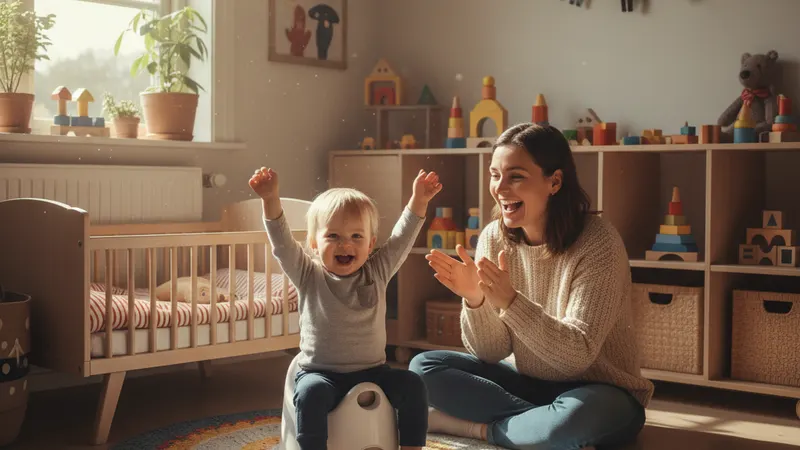
- Celebrate success with praise, clapping, or a fun song
- Be prepared for accidents, have extra clothes available
Phase 4: Out and About (Weeks 3–6)
When your child has mastered the potty at home:
- Start with short outings with a toilet visit before you leave
- Bring a portable potty seat or travel potty
- Pack extra clothes in a bag
- Do not go back to diapers during the day, it sends confusing signals
Most daycares have experience with potty training and are happy to collaborate. Talk to the teachers about your child's progress so you have a consistent approach at home and at daycare.

Potty Training at Night
Nighttime bladder control often develops later than daytime dryness, sometimes up to a year or more after. According to the AAP, it is normal for children to use a diaper at night until age 5–6.
Signs Your Child Is Ready for Dry Nights
- The diaper is dry several mornings in a row
- Your child wakes up to use the toilet at night
- Your child says they want to sleep without a diaper
Tips for Nighttime Potty Training
- Use a waterproof mattress protector, accidents will happen
- Limit drinks right before bedtime (but never deny a thirsty child water)
- Toilet visit as the last thing before bed
- A nightlight in the bathroom makes it easier to find the way
- Praise dry nights without making too big a deal of it
- React calmly to wet sheets, your child cannot control this during sleep
Regression. What Do You Do?
Regression is normal and very common. Your child may have mastered the potty for weeks, then suddenly have frequent accidents again.
Common Causes of Regression
- Major changes, new sibling, starting daycare, moving
- Illness, fever, cold, or stomach trouble
- Constipation, painful bowel movements, child holds back
- Stress or anxiety, divorce, conflict, new caregiver
- Started too early, the child may not have been quite ready
How to Handle Regression
- Stay calm, punishment and scolding make the situation worse
- Go one step back in training without making a big deal of it
- Offer the potty more often without nagging
- Check for an underlying cause (constipation, stress)
- Consider a break if your child shows strong resistance
If your child has been dry for over 6 months and suddenly starts wetting again (especially at night), discuss this with your pediatrician. There may be a medical cause that needs to be investigated.
Child Refuses the Potty. Now What?
Some children have strong resistance to potty training. They refuse to sit on the potty, hold back bowel movements, or cry when you try.
Possible Causes
- The child is simply not ready yet
- Bad experience (painful bowel movement, fell off the potty)
- Too much pressure from adults
- The child wants control (common in the defiance phase)
Strategies That Can Help
- Take a 2–4 week break and try again
- Give your child choices, "Do you want to use the blue or the red potty?"
- Use pretend play with dolls or stuffed animals that "practice" on the potty
- Make it fun with stickers or a reward chart
- Let your child decide when to try, force creates resistance
Potty Training at Daycare
Collaboration between home and daycare is important. Most daycares have good experience with potty training and adapt to the child's level.
Tips for Good Collaboration
- Tell daycare that you have started
- Use the same approach at home and at daycare
- Send extra clothing, ideally 2–3 sets of pants and underwear
- Choose clothing the child can manage themselves (elastic waistband, no buttons)
- Daily updates, most daycares track toilet visits
Checklist: Is Your Family Ready?
Before you start, check that conditions are in place:
- Your child shows at least 3–4 of the readiness signs above
- It is a calm period without major changes
- Both parents (and daycare) agree on the approach
- You have equipment ready (potty, training pants, extra clothes)
- You have the time and patience to follow up consistently
- You are prepared for it to take weeks to months
Frequently Asked Questions
What is the right age to start potty training?
Most children are ready between 18 months and 3 years, according to the AAP. There is no "right" age. Look for readiness signs rather than a specific age. Some children are ready early, others need more time, both are normal.
How long does potty training take?
It varies a lot. Some children learn in a few days, while others need several months. On average it takes 3–6 months from the start until the child is reliably dry during the day. Nighttime bladder control can take an additional 6–12 months.
Should I use a reward during potty training?
Praise and positive attention are the best motivation. Stickers or a reward chart can work well for some children. Avoid large rewards (candy, toys) for every toilet visit, it can create dependency on external motivation.
What do I do if my child holds back bowel movements?
Constipation and withholding are common during potty training. Make sure there is enough fiber in the diet (fruit, vegetables, whole grains), adequate fluids, and physical activity. If your child consistently holds back, talk to your pediatrician.
Should I use training pants or go straight to regular underwear?
Both approaches work. Cotton training pants give the child a clearer feeling of moisture than disposable pull-ups, while regular underwear provides the strongest feedback. Choose what suits your child and situation best.
Sources and References
- AAP, Toilet Training
- AAP, Bedwetting
- Cleveland Clinic, Potty Training
🔧 Helpful Tools
- Baby Milestones Tracker. Track your baby's developmental milestones
- All Baby Tools. Browse all free tools for pregnancy and baby care
📖 Related Articles
- Potty Training: Step-by-Step Guide for Parents. Complete guide to potty training. Signs your child is ready, a step-by-step plan, tips that work, and help with regression. Based on pediatric guidelines.
- The 2-Year Checkup: What Happens and What's Assessed. Everything about the 2-year well-child visit. What's checked, how to prepare your child, and what questions to ask.
- Biting and Hitting: How to Handle It. Does your child bite or hit? Get safe, research-based advice for handling aggression in toddlers aged 1–3.