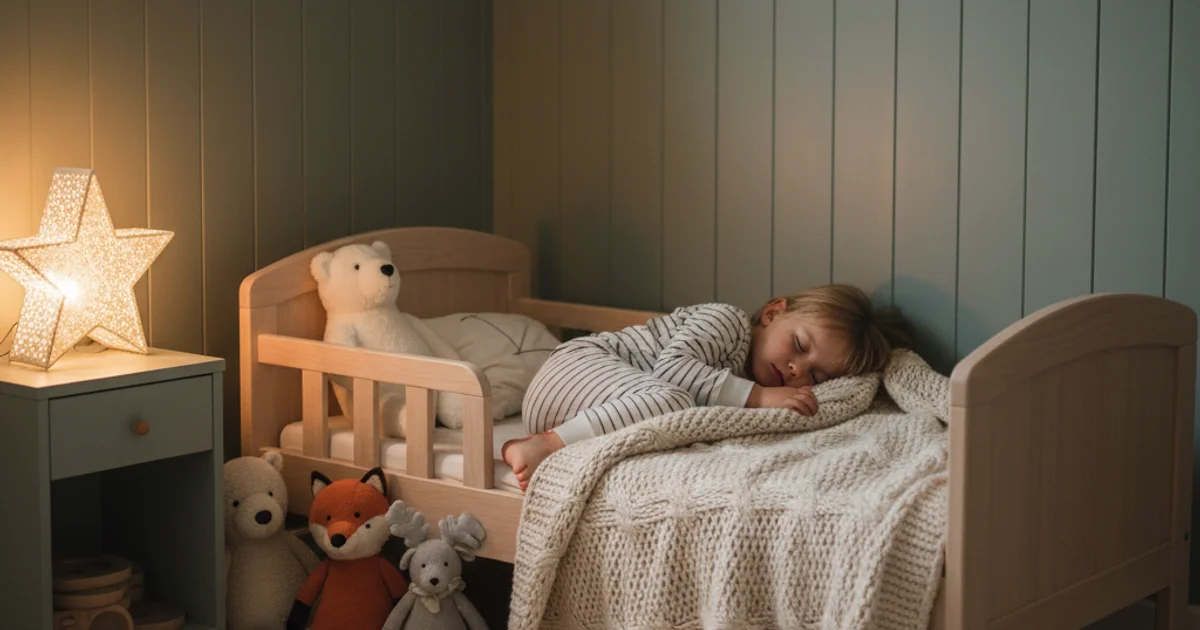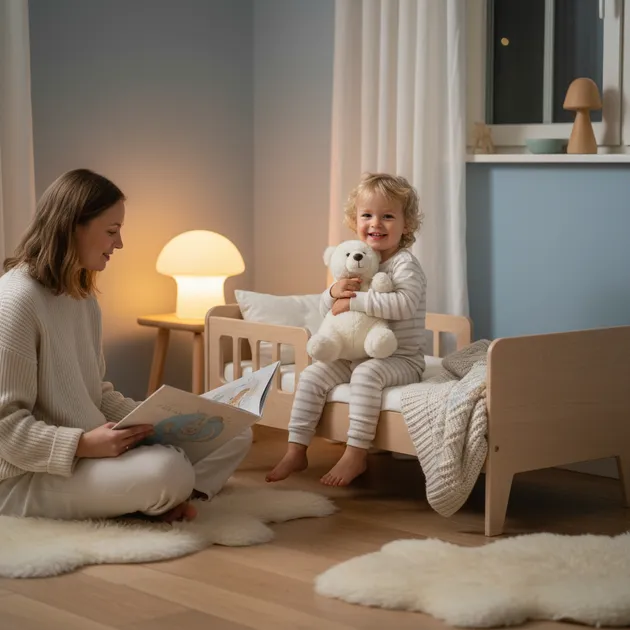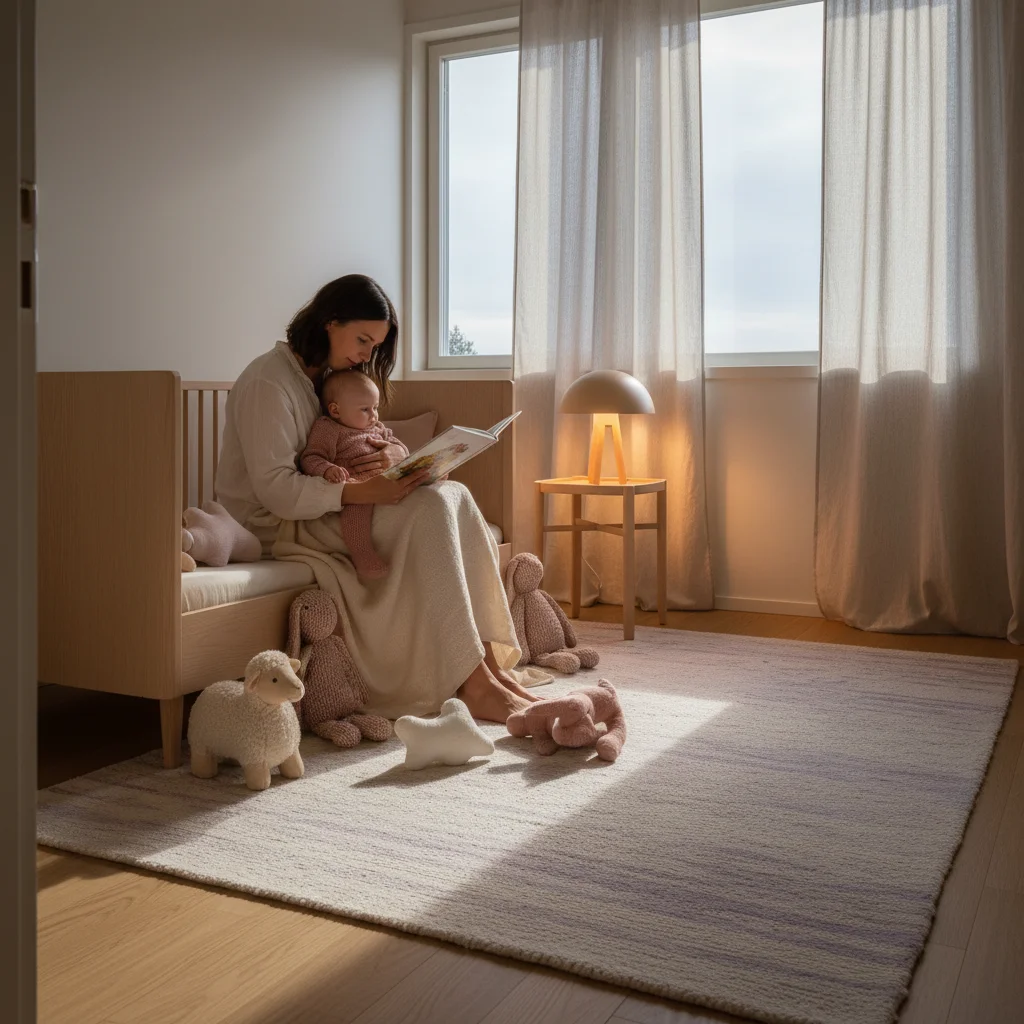
It's 7:30 PM and your 3-year-old is going full speed. What's the right bedtime for toddlers, and how do you actually get them to sleep?
Sleep is one of the most common conversation topics among parents of young children. And for good reason: many children between 1 and 3 years old still sleep restlessly and wake during the night. Here you'll find practical answers on when your child should go to bed and how to build good bedtime routines.
Recommended Bedtime for 2- and 3-Year-Olds
According to AAP and WHO guidelines, toddlers should generally go to bed between 6:00 PM and 7:30 PM. But there's no one-size-fits-all answer.
Sleep needs by age:
| Age | Total sleep per 24 hours | Recommended bedtime |
|---|---|---|
| 1–2 years | 11–14 hours | 6:00–7:00 PM |
| 2–3 years | 11–13 hours | 6:20–6:50 PM |
| 3–4 years | 10–12 hours | 6:50–7:30 PM |
The rule of thumb is simple: if the child naps during the day, bedtime can shift a little later. Without a nap, put the child to bed earlier.
Complete Sleep Chart: From Baby to School Age
Many parents wonder how much sleep their child actually needs. Here's a complete sleep chart based on AAP and WHO recommendations:
| Age | Sleep per 24h | Night sleep | Daytime sleep | Naps |
|---|---|---|---|---|
| 0–3 months | 14–17 hours | Irregular | Irregular | Many short |
| 3–6 months | 12–15 hours | 9–10 hours | 3–5 hours | 3 naps |
| 6–12 months | 12–15 hours | 10–11 hours | 2–3 hours | 2 naps |
| 1–1.5 years | 11–14 hours | 10–11 hours | 1.5–2.5 hours | 1–2 naps |
| 1.5–2 years | 11–14 hours | 10–11 hours | 1–2 hours | 1 nap |
| 2–3 years | 11–13 hours | 10–11 hours | 0–1.5 hours | 0–1 nap |
| 3–5 years | 10–13 hours | 10–12 hours | 0 hours | None |
Note: This chart shows averages. There are significant individual differences. According to the AAP, the range is wide, some children need 10 hours, others need closer to 14. What matters most is that the child seems rested and functions well during the day.
How to Use the Sleep Chart
- Find your child's age in the chart
- Count backwards from the desired wake-up time to find bedtime. Example: if the child needs to be up at 6:30 AM and needs 11 hours of night sleep, they should be asleep by 7:30 PM
- Adjust for daytime sleep, children who nap can go to bed a little later
- Watch your child, signs of tiredness (yawning, eye rubbing) are the best guide
Find your child's "sleep window" by watching for signs of tiredness, yawning, rubbing eyes, or getting a little fussy. Put them to bed BEFORE they become overtired.
What to Do When Your Child Won't Sleep
Most parents of toddlers know the feeling: the child protests, asks for water, wants another book, or "just one more hug."
How to Handle Stall Tactics
- Predictable routine: Keep the same order every evening (bath → pajamas → teeth brushing → book → song)
- Set clear limits: "We're reading one book", and stick to it
- Prepare ahead: "After the song, Mommy/Daddy is going to leave"
- Avoid negotiations: Be warm but firm
Many families use a consistent "goodnight song" as a signal that the bedtime routine is done. Pick a song you use every evening, the child quickly learns what it means.
When Does a Child Have a Sleep Problem?
According to the AAP, a child may have sleep difficulties if:
- They wake three or more times during the night, at least four nights a week
- They are awake for more than 20 minutes each night
- It takes more than 30 minutes to get the child to sleep
- The child refuses to go to bed and has meltdowns at bedtime
One difficult evening is normal. If it becomes a pattern over time, it may be worth talking to your pediatrician.
How to Wind Down Before Bedtime
The key to falling asleep easily is creating calm in the time before bed. Here's an effective wind-down:
1–2 hours before bedtime:
- Turn off screens (TV, tablet, phone)
- Dim the lighting in the home
- Avoid loud play and running
30–45 minutes before bedtime:
- Light evening snack if needed
- Bath (calming for most children)
- Pajamas and teeth brushing
Last 15 minutes:
- Read a book in bed
- Sing a song or tell a short story
- Give a goodnight hug
Avoid overtiredness! An overtired child produces stress hormones that make it harder to fall asleep. Put your child to bed when they show signs of tiredness, don't wait until they are completely exhausted.
How to Settle an Overtired Child
Did you wait too long? An overtired child often becomes hyperactive, cranky, or "silly."
How to recover:
- Remove stimulation: Take the child into a dark, quiet room
- Stay calm: Speak softly and calmly, even if the child is wound up
- Physical closeness: Hold or rock the child if needed
- Don't abandon the routine: Follow through with the bedtime routine, even if it takes longer than usual
The next day: put the child to bed 15–30 minutes earlier to prevent it from happening again.
When Should Toddlers Stop Napping?
Most children stop napping during the day between ages 2 and 3, but there is a lot of individual variation.
Signs the child is ready to drop the nap:
- Takes a long time to fall asleep in the evening
- Falls asleep late despite an early bedtime
- Seems rested without daytime sleep
- Is approaching 3 years old
Transition tip: Replace the nap with a "quiet time" where the child can lie in bed with a book or listen to calm music, with no expectation of actually sleeping.
Night Waking in Toddlers. Completely Normal
It's common for children up to age 3 to wake at least once during the night. The challenge is helping them fall back asleep.
How to Handle Night Waking
- Don't make nighttime interesting: Keep it dark, speak quietly, avoid play
- Be consistent: Do the same thing every night (for example, walk the child back to their bed)
- Provide comfort: A brief hug and a "goodnight" is enough
- Avoid bringing the child into the adult bed if the goal is for them to sleep in their own bed
Children need help understanding that it's okay to fall back asleep when they wake. With patience, they learn this skill.
The Day Affects the Night
Your child's nighttime sleep is closely linked to what happens during the day.
For better nighttime sleep:
- Make sure the child gets physical activity and outdoor play during the day
- Provide enough daylight (this helps the body produce melatonin)
- Be prepared for worse sleep during periods of big changes (starting daycare, a new sibling, travel)
Every child has their own sleep pattern. Even siblings can be completely different. Be patient, better sleep phases will come.
Sleep Regression in Toddlers
Many parents experience a sudden return of poor sleep after a good stretch. This is called sleep regression and is completely normal.
Common times for sleep regression:
- 18 months, separation anxiety, language development
- 2 years, independence phase, nightmares begin
- 2.5 years, transition from crib to toddler bed
- 3 years, imagination blossoms, fear of the dark
How to handle sleep regression:
- Keep your routines unchanged, consistency is key
- Offer extra comfort and closeness without creating new habits you don't want to maintain
- Talk calmly about what's happening: "I understand you feel scared, but you're safe"
- Most regressions last 2–4 weeks
Use a sleep tracker to keep an eye on sleep patterns. When you can see the data visually, it's easier to spot patterns and figure out what's working.
The Sleep Environment: Setting It Up for Success
A good sleep environment makes a real difference for toddlers' sleep quality:
- Temperature: 65–68°F (18–20°C) is ideal for the bedroom
- Darkness: Use blackout curtains, especially during summer months
- White noise: Some children sleep better with consistent background sound (a fan, white noise app)
- Nightlight: If the child is afraid of the dark, use a dim, warm nightlight (avoid blue light)
- Their own bed: The child should have their own consistent sleep space
Frequently Asked Questions
When should a 3-year-old go to bed?
Most 3-year-olds should go to bed between 6:50 and 7:30 PM, depending on whether they still nap and what time they need to wake up. If the child no longer naps, bedtime should fall toward the earlier end of the range.
How much sleep does a 2-year-old need?
A 2-year-old needs 11–14 hours of sleep in 24 hours, including any nap. According to the AAP, there is significant individual variation, but most 2-year-olds need at least 11 hours.
Why won't my toddler sleep?
Common reasons include the wrong bedtime (too early or too late), lack of routine, overtiredness, or the child going through a developmental phase with lots of new impressions. Screen use too close to bedtime is also a common cause.
Is it normal for a 2-year-old to wake at night?
Yes, it's completely normal. Many children up to age 3 wake at least once per night. The most important thing is to help the child fall back asleep on their own, without making night time stimulating.
Should a 2-year-old still nap?
Most 2-year-olds still need a 1–2 hour nap in the middle of the day. But if the child suddenly starts taking a very long time to fall asleep in the evening, it may be a sign that the nap should be shortened or gradually dropped.
Could my child have sleep apnea?
If your child snores loudly, has pauses in breathing during sleep, or consistently breathes through their mouth, bring it up with your pediatrician. Enlarged tonsils and adenoids are a common cause of poor sleep quality in young children.
Does melatonin help for children?
Melatonin supplements for children should only be used on the recommendation of a doctor. For most children, good sleep routines, the right bedtime, and a good sleep environment are sufficient. Talk to your pediatrician before considering supplements.
When should a 2-year-old go to bed?
A 2-year-old who doesn't nap should go to bed between 6:00 and 6:30 PM to get enough sleep (11–14 hours per 24 hours). If the child still naps for 1–2 hours, bedtime can be moved to around 7:00 PM. Adjust based on when the child needs to wake up and watch for signs of tiredness.
How long should a 2-year-old sleep at night?
Most 2-year-olds need 10–11 hours of nighttime sleep, plus any daytime sleep. In total, a 2-year-old should get 11–14 hours in 24 hours according to AAP guidelines. If the child wakes up on their own in the morning and seems rested, the amount of sleep is likely sufficient.
My child wakes at 5 AM, what can I do?
Early morning waking is common in toddlers. Try putting the child to bed 15–30 minutes later in the evening (but not too late, overtiredness actually causes earlier waking). Make sure the room is dark with blackout curtains, especially in summer. A toddler clock that shows a green or red light can help the child understand when it's "night" and when it's "morning."
Is it normal for my 3-year-old to refuse to nap?
Yes, completely normal. Most children stop daytime napping between ages 2 and 3. Signs that the child is ready include taking a long time to fall asleep at night, falling asleep late despite an early bedtime, or seeming rested without a nap. Replace the nap with a quiet rest period to maintain some midday downtime.
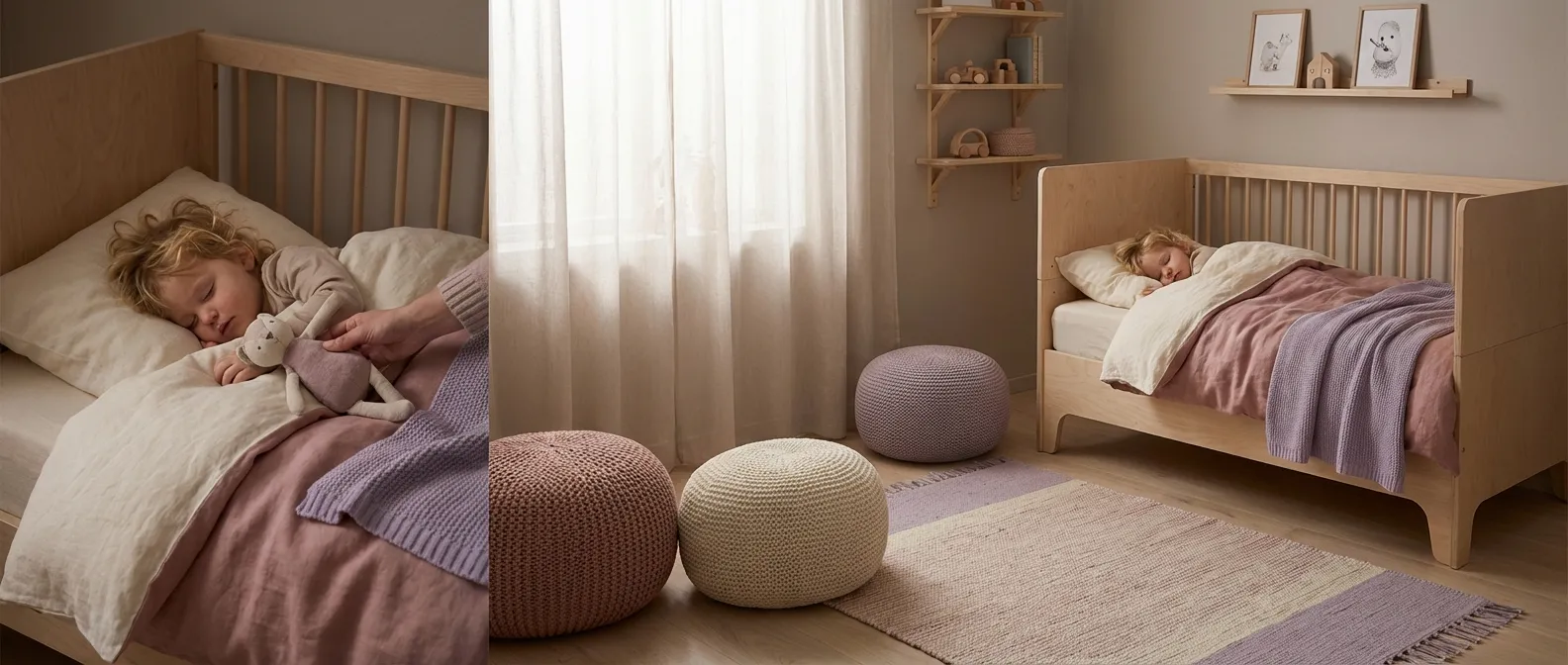
Summary
The right bedtime for toddlers typically falls between 6:00 and 7:30 PM. The keys are consistent routines, avoiding overtiredness, and being patient with night waking. Remember that sleep challenges are normal, and they do get better with time.
Read also: Sleep Regressions Explained | Night Terrors in Children | Bedtime Routines That Work
Sources
- American Academy of Pediatrics (AAP). "How Much Sleep Do Children Need?" healthychildren.org
- National Sleep Foundation. "Children and Sleep." sleepfoundation.org
- WHO. "Guidelines on physical activity, sedentary behaviour and sleep for children under 5 years of age." who.int
- Mindell JA, et al. "Behavioral treatment of bedtime problems and night wakings in infants and young children." Sleep.
🔧 Helpful Tools
- Baby Sleep Tracker. Track and optimize your baby's sleep
- Soothing Sounds. White noise and soothing sounds to help your baby sleep
- All Baby Tools. Browse all free tools for pregnancy and baby care
📖 Related Articles
- Sleep for 2–3 Year Olds: Bedtime, Nightmares, and Big Transitions. Everything about sleep for children aged 2–3: sleep needs, bedtime, nightmares, night terrors, and the transition to a big bed. Based on international health guidelines.
- Bedtime Routines That Actually Work. Better Sleep for Your Baby. Build a bedtime routine that gives your baby and toddler better sleep. Step-by-step evening routines by age, from newborn to 2 years old.
- Sleep and Starting Daycare: Adjusting Your Child's Routines. Starting daycare affects sleep. Get tips on sleep routines, settling in, and how to help your child sleep well during the daycare transition.