The Short Answer
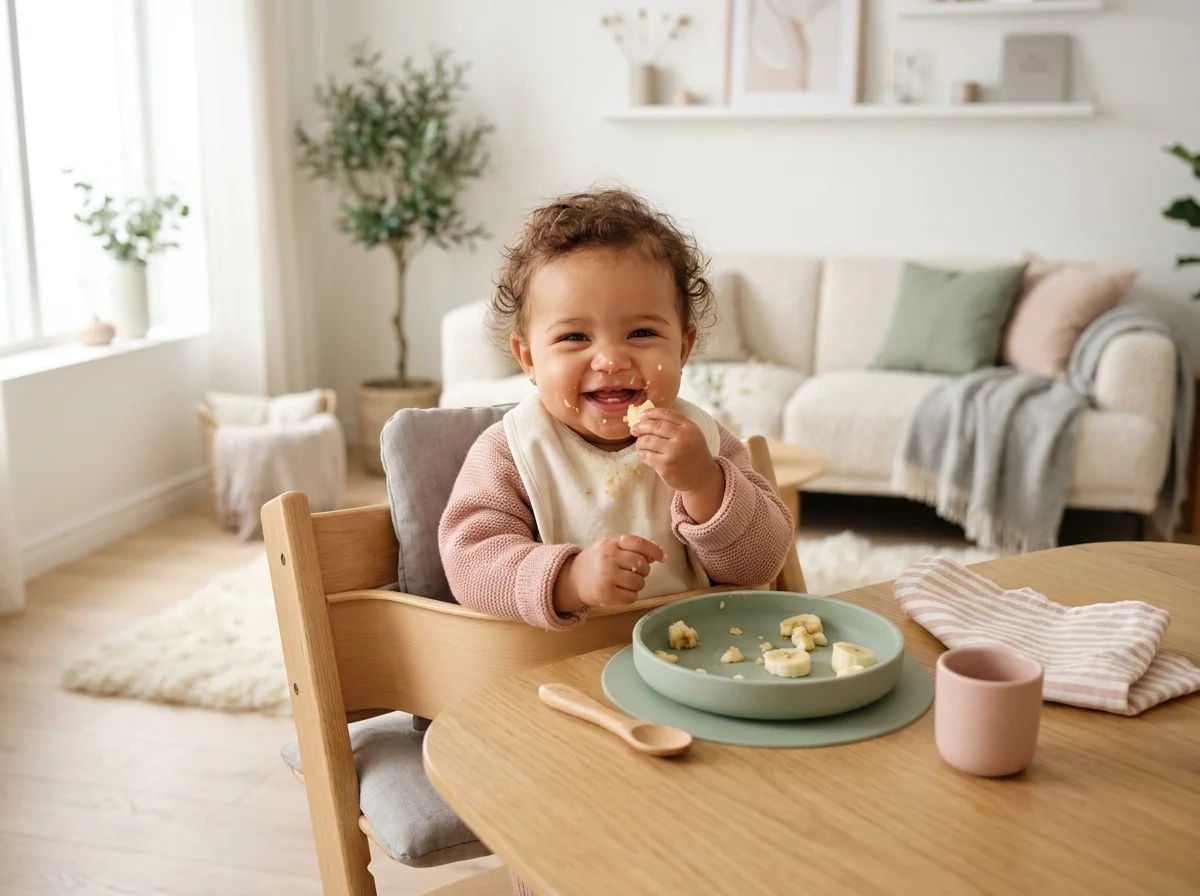
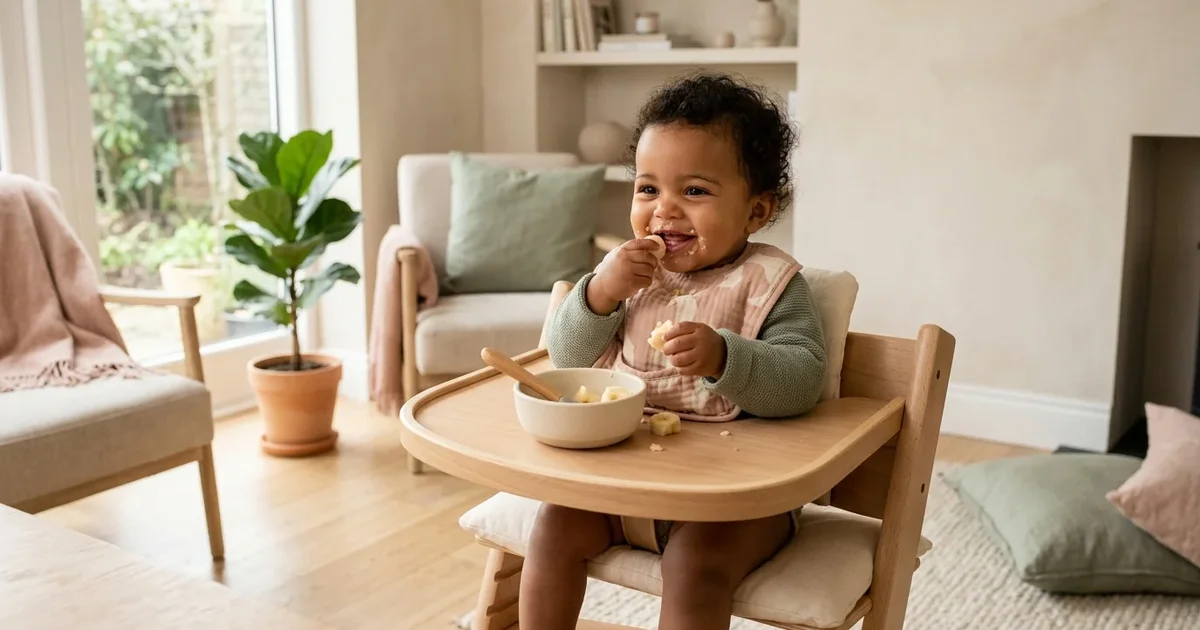
Babies can eat banana from around 6 months old, when they start solid foods. Banana is one of the most popular and practical first foods thanks to its soft texture and natural sweetness.
Key Takeaways
- Safe from 6 months: The AAP and WHO recommend starting solids around 6 months, and banana is one of the most recommended first foods worldwide.
- How to serve: For BLW, offer long strips with some peel left on as a handle. For purees, mash until smooth and thin with breast milk or formula if needed.
- No major allergen: Banana is not a top allergen, making it a low-risk first food for most babies.
- Ripe is best: Choose ripe bananas with brown spots, they are softer, sweeter, and easier to digest than green or underripe bananas.
- Choking tip: Avoid large round coin slices; cut coins in half lengthwise to reduce choking risk.
Nutritional Benefits
Bananas are a nutrient-dense first food that offers several key benefits for growing babies:
- Potassium - supports healthy heart function and muscle development
- Vitamin B6 - important for brain development and immune function
- Fiber - promotes healthy digestion and helps prevent constipation
Bananas also provide quick, natural energy, making them a great snack between meals.
How to Prepare Banana for Different Ages
6 to 8 Months
Baby-led weaning (BLW): Cut the banana in half lengthwise, then into long strips. Leave some peel on the bottom half as a "handle" so baby can grip it more easily. Ripe bananas are slippery, so you can roll strips in baby cereal or crushed puffs for grip.
Puree approach: Mash a ripe banana with a fork until smooth. You can thin it with breast milk or formula if needed. Mix with avocado or baby oatmeal for variety.
9 to 12 Months
Cut banana into small, coin-shaped pieces (then cut each coin in half to reduce choking risk). At this stage, most babies can pick up smaller pieces with a pincer grasp.
12+ Months
Serve banana sliced, whole (peeled), or mixed into pancakes, smoothies, and baked goods. Your toddler can bite off pieces independently.
Choking Hazards
Banana is generally considered a safe food, but keep these tips in mind:
- Always supervise your baby while eating
- Avoid large round slices - cut coins in half lengthwise
- Ripe bananas are soft enough for gums, but slightly underripe bananas can be harder to chew
- If banana is too slippery for baby to hold, roll it in ground oats or infant cereal
Choose ripe bananas with brown spots. They are softer, sweeter, and easier for babies to eat. Green bananas are harder and may cause gas.
Frequently Asked Questions
Can banana cause constipation in babies?
Ripe bananas are unlikely to cause constipation and actually contain fiber that supports digestion. Unripe (green) bananas contain more resistant starch and may cause constipation in some babies. Stick to ripe bananas with yellow skin and brown spots.
Can I give banana as a first food?
Yes. Banana is one of the most common and recommended first foods. The AAP and WHO both recommend starting solids around 6 months, and banana's soft texture makes it an excellent choice.
How much banana can a baby eat per day?
For babies 6 to 12 months, half a banana per day is a reasonable amount. There is no strict limit, but offering variety across different fruits and vegetables is important for balanced nutrition.
Explore More
Use our SmartStart Food Guide to check which foods are safe for your baby's age. For a complete guide to starting solids, read our Baby-Led Weaning Complete Guide.
Looking for more first foods? Check our guides on Avocado for Babies and Blueberries for Babies.
More Foods to Explore
Sources
- World Health Organization (WHO) - Complementary Feeding
- American Academy of Pediatrics (AAP) - Starting Solid Foods
- NHS Start4Life - First Foods
🔧 Helpful Tools
- Baby Food Guide. Safe foods and introduction schedule for your baby
- Baby Milestones Tracker. Track your baby's developmental milestones
- All Baby Tools. Browse all free tools for pregnancy and baby care
📖 Related Articles
- When Can Babies Eat Blueberries? Age, Safety & How to Serve. Learn when babies can eat blueberries, how to serve them safely at different ages, choking prevention tips, and nutritional benefits based on AAP guidelines.
- When Can Babies Eat Strawberries? Age, Safety & How to Serve. Learn when babies can eat strawberries, how to cut them safely, nutritional benefits, allergy info, and age-appropriate serving suggestions from WHO and AAP.
- When Can Babies Eat Avocado? Age, Safety & How to Serve. Learn when babies can eat avocado, the nutritional benefits, how to prepare it for BLW and puree feeding, plus safety tips from AAP and WHO guidelines.