It's grey, wet and 40 degrees outside. Your child pulls you toward the door and says "out!" for the twentieth time today. And you? You're thinking about the couch.
But your child is right. Outdoor play is one of the best things you can give a toddler, regardless of weather or season.
Why is outdoor play so beneficial?
Research from pediatric health institutes and child development experts confirms what grandparents have always known: children need to be outside.
Outdoor play provides:
- Better motor development, uneven terrain trains balance and coordination
- A stronger immune system, exposure to bacteria in nature strengthens the body
- Better sleep quality, daylight and physical activity lead to deeper sleep
- Calmer children, nature reduces stress levels
- Creative play, nature offers endless possibilities without toys
The WHO and AAP recommend that toddlers be physically active for at least 3 hours every day, spread throughout the day. Outdoor play is one of the easiest ways to achieve this.
Spring: Puddles and budding curiosity
Spring brings mud, water and new things growing. Perfect for toddlers who love to explore with all their senses.
Spring activities:
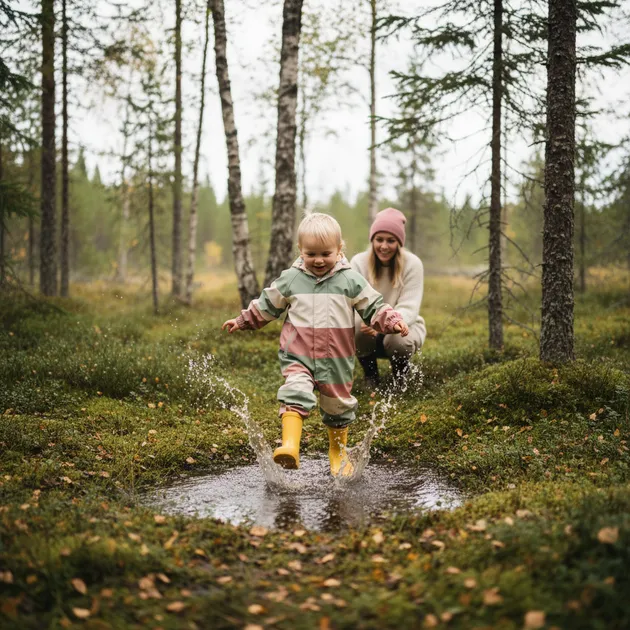
- Puddle play: Let your child jump in puddles with rubber boots. Measure the depth with a stick.
- Plant hunt: Look for the first crocuses and snowdrops. "Can you see something yellow?"
- Worm hunt: Dig in the soil and look for earthworms and beetles
- Water experiments: Create streams with water from a watering can, see where the water flows
- Bird watching: Listen for birdsong. "Do you hear the bird?" Hang up a bird feeder together.
Invest in good rain gear. When your child is properly dressed, playing in the mud becomes fun instead of stressful. As the saying goes: "there's no such thing as bad weather, only bad clothing."
Summer: Long days and warm adventures
Summer is easy, long daylight hours, warm enough to be outside for hours. Use nature as a playground.
Summer activities:
- Water play: Water table, sprinklers, buckets and cups. Scooping water from bucket to bucket trains fine motor skills.
- Sandbox play: Bake sand cakes, dig holes, make roads for toy cars
- Berry picking: Blueberries and strawberries at their own pace. Great fine motor training.
- Picnic: Eat outside! Your child helps with packing and carrying
- Barefoot trail: Let your child walk barefoot on grass, sand and stones. Wonderful for sensory development.
- Evening walks: Use the long summer evenings for a little walk after dinner
Autumn: Colors, leaves and pinecones
Autumn is a treasure chest for toddlers. Everything falls down and can be collected, sorted and played with.
Autumn activities:
- Leaf piles: Gather leaves and jump in the pile. Sort by color and size.
- Pinecone collecting: Fill a bucket with pinecones. Use them to count, stack or make "food"
- Acorn gathering: Find acorns and chestnuts. Make figures at home.
- Rain drumming: Put out buckets and boxes in the rain and listen to the sound
- Wind play: Run with a flag or ribbon and feel the wind
- Mushroom walk: Walk in the woods and look at mushrooms (but never taste without being completely sure)
Nature art: Let your child make pictures with what you find outside. Sticks, stones, leaves and pinecones become faces, houses or animals on the ground.
Winter: Snow, ice and cozy cold
Winter with snow is a wonderland for toddlers. But even grey winter days without snow offer possibilities.
Winter activities:
- Snow angel: Lie in the snow and move arms and legs
- Snowball rolling: Roll snowballs and build a snowman together
- Sledding: Start gently, sit together on the sled the first few times
- Ice experiments: Freeze water in molds with leaves and berries inside. Hang up as decorations.
- Animal tracking: Look for tracks in the snow. "Who has walked here?"
- Snow lantern: Make a lantern from snowballs and put a tea light inside
Toddlers cool down quickly because they have a large body surface area relative to their weight. Dress your child in wool next to the skin, windproof on the outside, and bring extra mittens. Check regularly that your child is warm enough, feel the neck, not the hands.
Tips for getting outside every day
The hardest part is often getting out the door. Here are some strategies that make it easier.
Make dressing a routine
Have everything ready by the door the night before. The suit hangs on the hook, the boots are ready, the mittens are in the pockets. The less you need to search for, the faster you get outside.
Let your child practice dressing themselves, it takes time, but builds independence. Start with simple things like pulling up a zipper or putting on a hat.
Lower your ambitions
You don't need to go to the forest every day. The backyard, the playground or a short walk around the block counts just as much. Five minutes outside is better than zero minutes.
Invite friends
Outdoor play is more fun with other children. Arrange with neighbors or friends who have toddlers. The children get social practice, and you get adult company.
Follow your child's pace
Toddlers stop to look at an ant, pick up a stone and study a puddle. That's not inefficiency, it's learning. Let your child set the pace and you'll discover things you've never noticed before.
Safety outside
Outdoor play is safe, but there are a few things to be aware of.
- Water: Always stay within arm's reach near water. Toddlers can drown in very shallow water.
- Poisonous plants: Teach your child early that we don't eat things we find outside (except known berries)
- Sun: Use sunscreen and a hat in summer. Avoid strong sun in the middle of the day.
- Traffic: Always hold hands near roads. Practice stopping at the curb.
Frequently asked questions
How long should toddlers be outside in winter?
There's no fixed rule, but 30-60 minutes is a good goal for one session. Check if your child is cold or tired, and go inside when it's enough. Several short outings work better than one long one.
My child won't wear rain gear. What do I do?
Let your child choose the color of their rain gear, or turn dressing into a game. "Now we're putting on the superhero suit!" Some children need to get used to the texture, try wearing it inside for short periods first.
What do we do outside when it's completely dark?
Bring a flashlight or headlamp, it turns an evening walk into an adventure. Let your child shine the light on things and "discover" what's hiding in the dark. Reflectors on clothing are of course a must.
Nature is the best playground for toddlers, free, always open and full of possibilities. Dress well and get outside. Your child will thank you with good nights and calmer days.
Track your child's motor development in Babysential's milestone tracker, and find age-appropriate activity ideas in our toddler checklists.
Read also: Nature play with children | Gross motor skills, activities | Water play and safety | Creative play at home
Sources
🔧 Helpful Tools
- Baby Milestones Tracker. Track your baby's developmental milestones
- Development Leaps. Understand your baby's developmental leaps
- All Baby Tools. Browse all free tools for pregnancy and baby care
📖 Related Articles
- 15 Indoor Activities for Toddlers on Rainy Days, 15 simple and creative indoor activities for toddlers when it's raining outside. Play that stimulates development without screens.
- Creative Play at Home: 20 Activities for Toddlers, 20 simple and fun activities you can do at home with toddlers. Creative play that supports development without expensive equipment.
- Play and Development Ages 1–3: An Age-by-Age Guide. Discover age-appropriate play ideas for 1-, 2-, and 3-year-olds that stimulate motor development, language, creativity, and social skills.