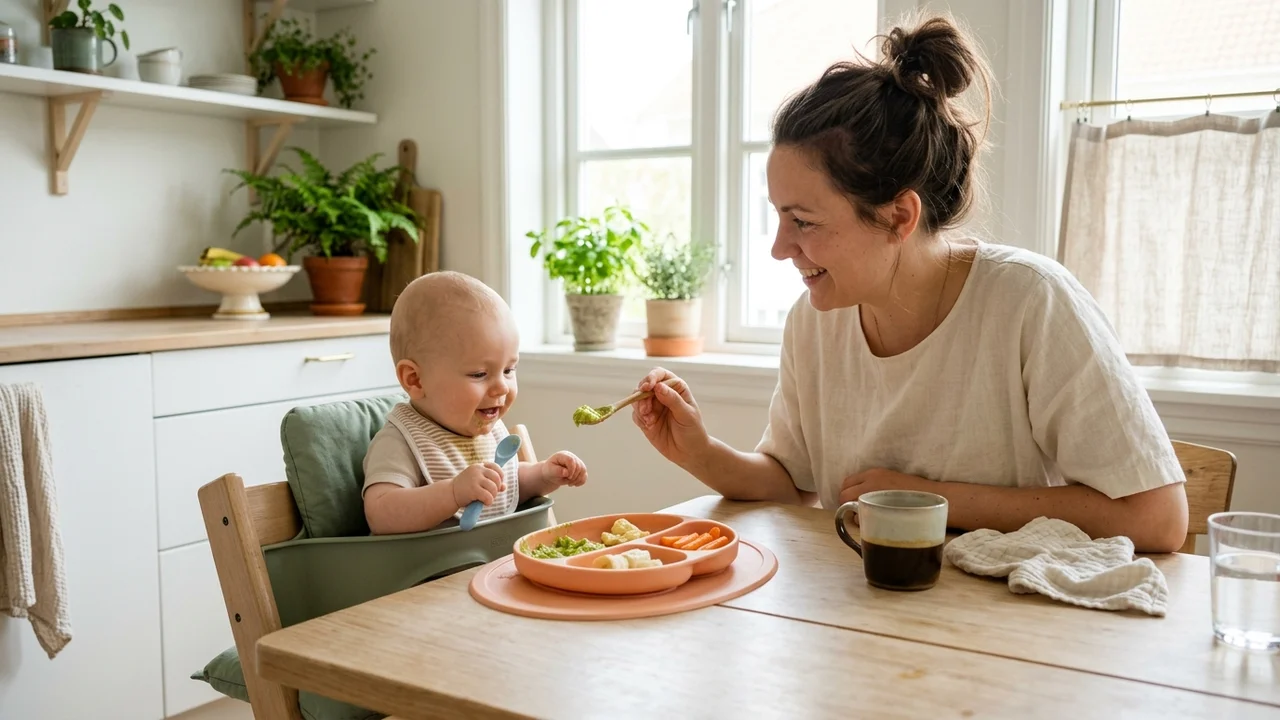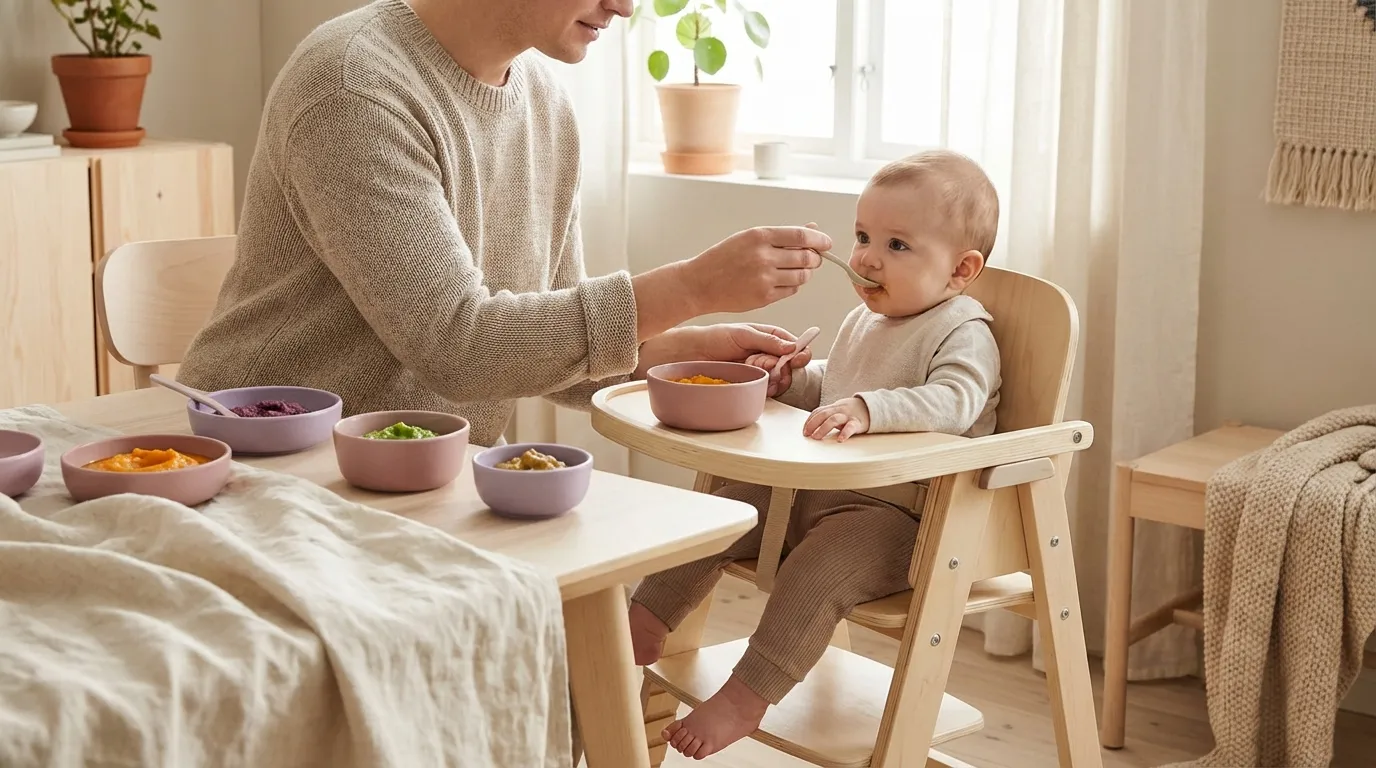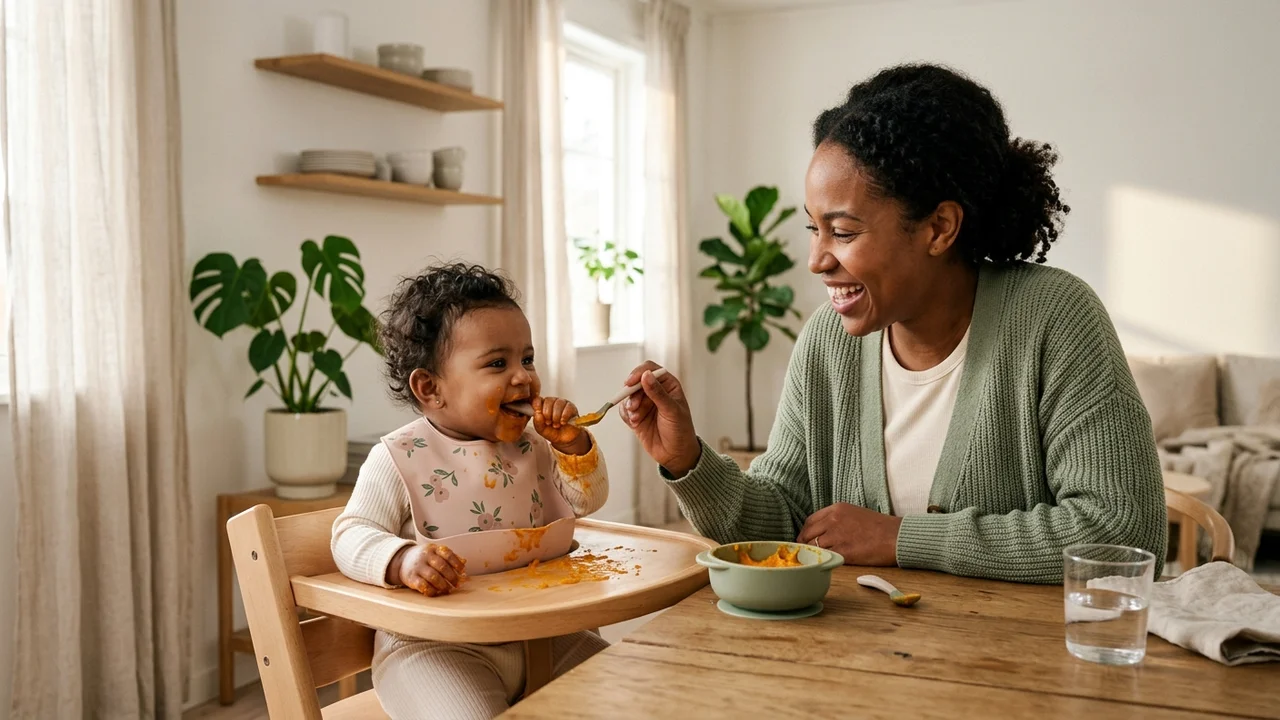
When Is Your Baby Ready?
Most pediatricians recommend introducing solid foods around 6 months of age. Before this, breast milk or formula provides all the nutrition your baby needs. However, every baby develops at their own pace, the key is watching for readiness signs rather than focusing on a specific date.
The American Academy of Pediatrics (AAP) and the World Health Organization (WHO) both agree: exclusive breastfeeding or formula feeding for approximately the first six months gives your baby the best start.
Signs of Readiness
Your baby is likely ready for solids when they can:
- Sit upright with minimal support and hold their head steady
- Show interest in food, reaching for your plate, watching you eat intently
- Open their mouth when food is offered on a spoon
- Move food from the front to the back of their mouth (loss of the tongue-thrust reflex)
- Pick up objects between thumb and forefinger (pincer grasp developing)
If your baby pushes food out with their tongue consistently, they may need a few more weeks. This is completely normal and not a sign of dislike, it is simply a reflex that has not yet faded.
Best First Foods
When you are ready to begin, start with single-ingredient foods and wait 3–5 days before introducing the next one. This makes it easier to identify any allergies or sensitivities. Great starter options include:
- Iron-fortified infant cereal mixed with breast milk or formula
- Pureed sweet potato, squash, or peas, mild and naturally sweet
- Mashed avocado or banana, soft texture, packed with nutrients
- Pureed chicken or turkey, excellent source of iron and zinc
Recent research shows that introducing common allergens like peanut butter (thinned), eggs, and fish early (around 6 months) may actually reduce the risk of developing food allergies later.
How to Start
Begin with just 1–2 tablespoons once a day, ideally when your baby is alert and not too hungry. Use a small, soft-tipped spoon and let your baby set the pace. If they turn away, do not force it, try again another day.
Gradually increase to two meals a day by around 7–8 months, and three meals by 9–10 months. Breast milk or formula should remain the primary source of nutrition throughout the first year.
Foods to Avoid Before Age 1
While most foods are fair game, a few should wait:
- Honey, risk of infant botulism
- Cow's milk as a main drink (small amounts in cooking are fine)
- Whole nuts and hard foods, choking hazard (use nut butters instead)
- Added salt and sugar, baby's kidneys cannot process excess sodium
- Unpasteurized foods, risk of harmful bacteria
Trust your instincts and your baby's cues. Starting solids is a messy, fun milestone, and do not stress about how much they eat in the beginning.
Sources
- AAP. Infant and toddler nutrition guidelines
- WHO. Global infant feeding recommendations
- CDC. Infant and toddler nutrition resources
🔧 Helpful Tools
- Baby Food Guide. Safe foods and introduction schedule for your baby
- Breastfeeding Tracker. Log feeds, track supply, and monitor nursing sessions
- All Baby Tools. Browse all free tools for pregnancy and baby care
📖 Related Articles
- Starting Solids: Complete Guide from 6 to 12 Months. Complete guide to introducing solid foods to your baby. When to start, what order to follow, how much to offer, and signs your baby is ready, based on WHO and AAP guidelines.