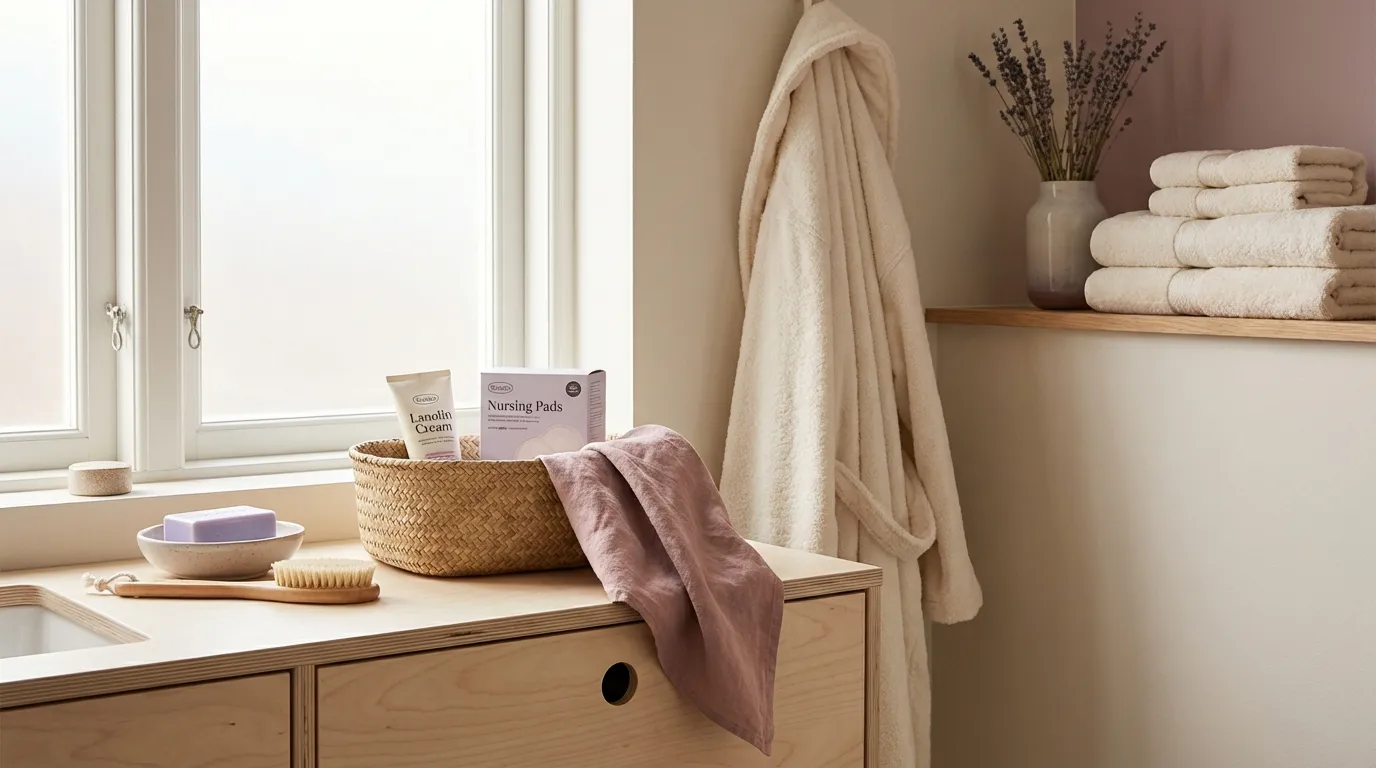
Sore nipples are the most common reason women stop breastfeeding early. You are not alone in experiencing this, and there are good solutions.
In this guide we explain what causes painful nipples, what is normal and what isn't, and how to treat and prevent the pain. Everything is based on guidance from the WHO, the AAP, and La Leche League International.
What Causes Sore Nipples?
The most common cause of sore nipples while breastfeeding is a poor latch. When the baby doesn't have enough breast in their mouth, they clamp and pull on the nipple itself rather than pressing milk out with their tongue.
Other common causes:
- Tongue-tie: The baby can't extend their tongue far enough forward, resulting in a shallow, painful latch.
- Thrush: A fungal infection that causes sharp, burning pain that continues after feeding. You may see white patches in the baby's mouth.
- Vasospasm: The nipple turns white and painful after feeding, often triggered by cold. Caused by poor blood circulation.
- Pacifier or bottle introduced too early: The baby may develop a different sucking technique that doesn't work at the breast.
The most important thing you can do to get rid of the pain is to get help with the latch. A lactation consultant or midwife can assess the latch and show you the right technique.
Normal or Cause for Concern?
It is common to experience some nipple tenderness in the first 1–2 weeks after birth. Your body is adjusting, and the skin needs time to get used to breastfeeding. This tenderness should gradually decrease.
Normal:
- Mild discomfort in the first few seconds when the baby latches on
- Mild soreness between feeds during the first week
- Pain that decreases as the latch improves
Cause for concern:
- Sharp, intense pain throughout the entire feed
- Pain that gets worse, not better, after day 3–4
- Cracks, splits, or bleeding from the nipples
- White spots or coating (may be thrush)
- Fever and red, tender areas on the breast (may be mastitis)
Contact a lactation consultant, midwife, or doctor if the pain does not improve within 48 hours, if you have cracks that are bleeding, or if you develop a fever. Persistent pain is not something you should simply endure, it is a signal that something needs to change.
How to Check the Latch
A good latch is the key to pain-free breastfeeding. Check these points every time the baby takes the breast.
Signs of a good latch:
- The baby opens wide and takes in plenty of breast, not just the nipple
- The lips are flanged outward like fish lips, not tucked in
- The chin is pressed against the breast
- The nose is clear so the baby can breathe easily
- You hear quiet swallowing sounds, no clicking sounds
- The pain disappears after the first few seconds
Signs of a poor latch:
- You feel a pinching, sharp pain throughout the entire feed
- The nipple is flat or lipstick-shaped after feeding
- You hear clicking sounds while the baby feeds
- The baby repeatedly releases the breast
If you are unsure, try different breastfeeding positions. Changing position alters the angle and can make it easier for the baby to get a deeper latch.
If the baby has a shallow latch, break the suction gently by inserting your little finger into the corner of their mouth. Never pull the baby straight off the breast, this damages the nipple.
Treatment for Sore Nipples
Always start by identifying the cause. Treatment works best when you also work on improving the latch at the same time.
1. Correct the Latch
Ask a lactation consultant or midwife to observe a feed. Often small adjustments to position or technique are all that's needed. Read our guide to breastfeeding positions for tips on laid-back breastfeeding and other positions.
2. Use Breast Milk as a Natural Remedy
After feeding, rub a few drops of breast milk over the nipples and let them air dry. Breast milk contains natural antibodies and fats that promote healing.
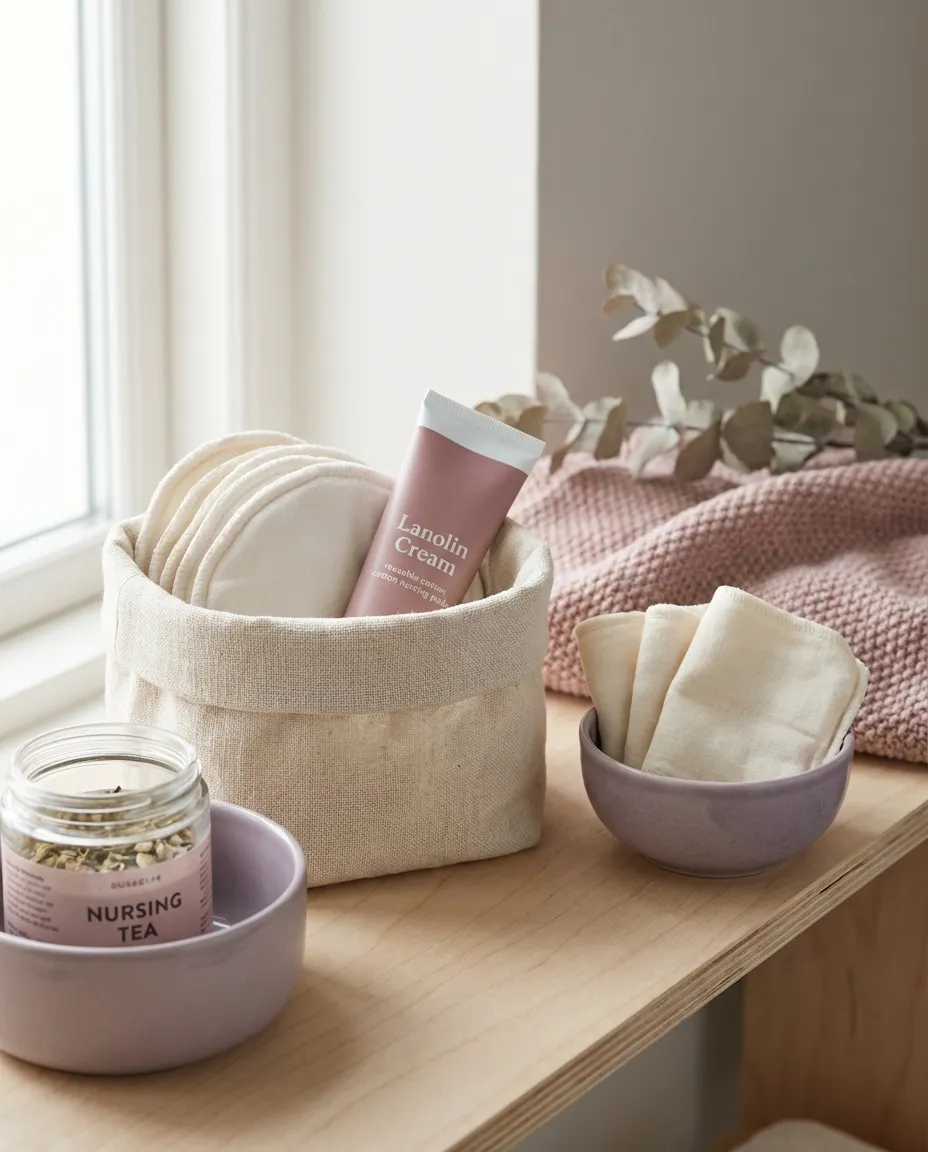
3. Apply Lanolin Cream
Medical-grade lanolin (such as Lansinoh or Medela PureLan) creates a protective layer on sore skin. The cream is safe to use while breastfeeding, you don't need to wash it off before the next feed.
4. Try a Different Feeding Position
Different positions distribute pressure across different parts of the nipple. If you have a sore spot, a new angle can give that area a rest. Laid-back breastfeeding is often gentle because the baby has more control.
5. Air the Nipples
Let your nipples air dry after feeding. Moisture against sore skin slows the healing process. Loose-fitting cotton clothing or going braless at home provides good ventilation.
Never use soap, alcohol, antiseptics, or perfumed products on your nipples. These dry out the skin and make the problem worse. Plain water when showering is enough.
Products That Can Help
These products are widely available at pharmacies and baby stores:
- Lanolin cream (Lansinoh, Medela PureLan): Medical-grade lanolin that keeps skin soft and moist. Safe to use while breastfeeding.
- Hydrogel pads (Medela, Ardo): Cooling pads that relieve pain and promote healing for cracks and wounds.
- Silver cups (Silverette): Small cups made of pure silver that cover the nipples between feeds. Silver's antibacterial properties can promote healing. Popular among breastfeeding mothers internationally.
- Nipple shields: Protect sore nipples from friction against clothing. Use only temporarily.
- Wool or silk nursing pads: Softer against the skin than standard disposable pads. Wool has natural antibacterial properties.
Tip: Silver cups (Silverette) are recommended by many lactation consultants and midwives as a one-time investment that lasts the entire breastfeeding period. Available at most pharmacies and baby stores.
How to Prevent Sore Nipples
Prevention is about good habits from day one:
- Learn a good latch early. Ask for breastfeeding support before leaving the hospital or birth center.
- Vary your feeding position. Alternate between two or three positions to avoid the same spot being stressed every time.
- Don't wait too long between feeds. A hungry baby latches harder and less coordinated.
- Don't use soap on your nipples. Soap removes the natural oils that protect the skin.
- Air your nipples daily. A few minutes of fresh air after feeding makes a big difference.
- Keep nursing pads dry. Change wet pads quickly, moisture causes irritation.
- Avoid pacifiers and bottles in the first 4–6 weeks if you want to exclusively breastfeed. This gives the baby time to learn good sucking technique.
Need to increase your milk supply? Read our dedicated guide.
Frequently Asked Questions
How long do sore nipples last?
With a good latch and proper treatment, pain should improve within 3–7 days. Mild tenderness in the first 1–2 weeks after birth is normal. If the pain hasn't eased after 48 hours of active treatment, seek help.
Can I keep breastfeeding with cracked nipples?
Yes, in most cases you can continue to breastfeed. Start with the less sore breast. If the pain is unbearable, you can pump from one breast for a few days while it heals, and breastfeed on the other side.
Are silver cups better than lanolin cream?
Both are effective. Silver cups provide mechanical protection and have antibacterial properties. Lanolin cream moisturizes and creates a protective barrier. Many mothers use both, lanolin right after a feed, and silver cups between feeds.
Can tongue-tie cause sore nipples?
Yes. A tongue-tie restricts the baby's tongue movement and results in a shallow, painful latch. A doctor or lactation consultant can assess the baby. Treatment is a simple procedure performed in an outpatient setting.

Get Help. You Deserve Pain-Free Breastfeeding
Sore nipples are common, but that doesn't mean you have to suffer in silence. With the right latch, good treatment, and a little patience, most mothers can breastfeed comfortably.
La Leche League International offers free support from trained breastfeeding counselors. Visit llli.org to find a local leader or online support.
Need answers quickly? Babysential's AI Breastfeeding Assistant can help you with questions about breastfeeding, latch, and pain relief, around the clock.
Check out our breastfeeding equipment checklist for an overview of everything you need for a comfortable breastfeeding experience.
Read More
- Log breastfeeding and feeding sessions. Keep track of your baby's feeds
- Breastfeeding Positions: Find the Position That Works for You
- Increase Milk Supply: How to Produce More Breast Milk
- AI Breastfeeding Assistant. Get Answers to Your Questions
- Checklist: Breastfeeding Supplies You Need
Sources
🔧 Helpful Tools
- Breastfeeding Tracker. Log feeds, track supply, and monitor nursing sessions
- Baby Food Guide. Safe foods and introduction schedule for your baby
- All Baby Tools. Browse all free tools for pregnancy and baby care
📖 Related Articles
- The Most Common Breastfeeding Challenges, and What Actually Helps. Breastfeeding can be challenging in the early days. Here are the most common breastfeeding problems with practical solutions, based on expert lactation guidance.
- Breastfeeding a Newborn: Complete Guide to the First Weeks. Everything about breastfeeding a newborn: first latch, colostrum, feeding positions, and cluster feeding. Based on WHO and AAP guidelines.
- Mastitis: Symptoms, Treatment, and Prevention. Do you have mastitis? Learn about symptoms, treatment, and how to prevent breast inflammation while breastfeeding, based on WHO and AAP guidelines.