Vegetables and fruit are among the first foods your baby should try. They provide vitamins, minerals, and fiber, and lay the groundwork for healthy eating habits. But which ones should you start with, and are there any you should hold off on?
Here is the complete guide to vegetables and fruit for babies, based on recommendations from the WHO and AAP.
When can a baby eat vegetables and fruit?
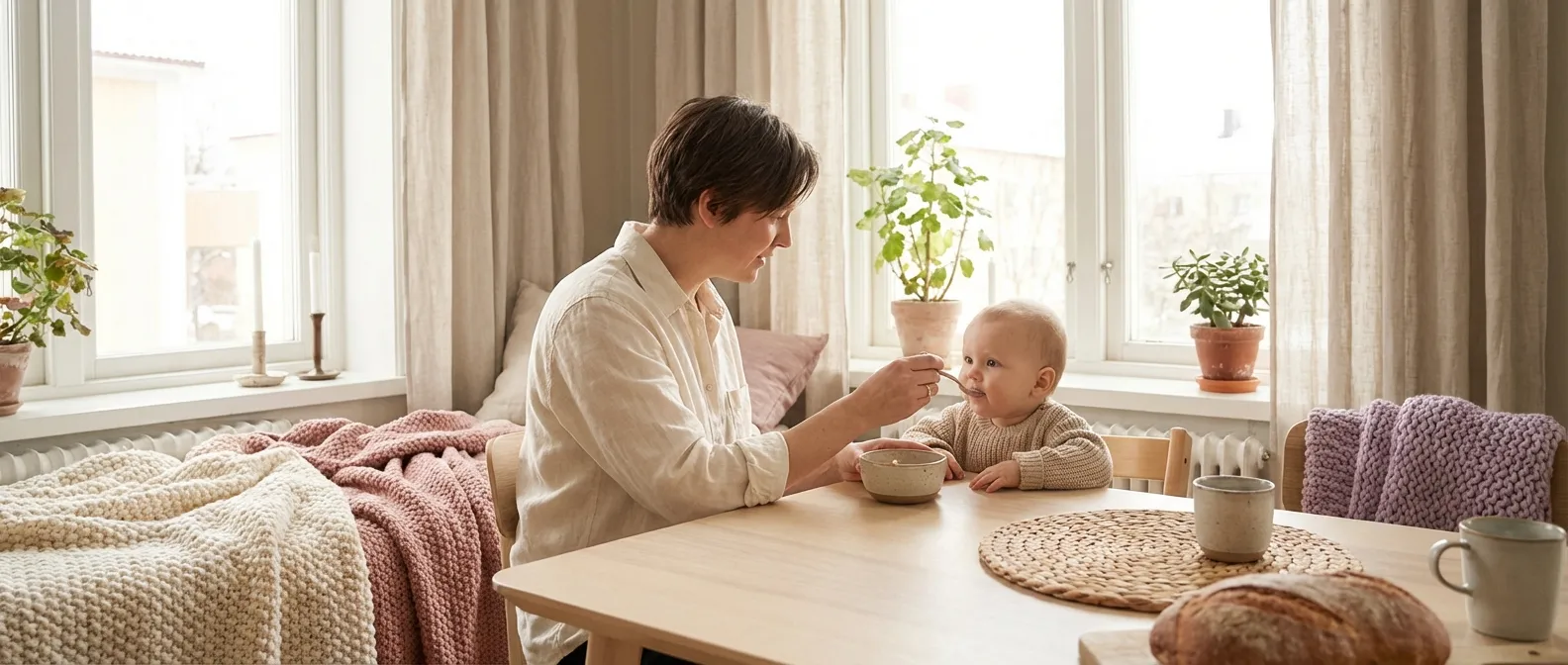
Babies can start with vegetables and fruit from 6 months, when solid foods are introduced. According to the AAP, cooked, pureed vegetables are among the best first foods.
Tip: Many experts recommend starting with vegetables before fruit. The reasoning is simple: vegetables have a milder flavor, and your baby adjusts to them more easily before the sweetness of fruit is introduced. This is not a requirement, just practical advice.
Good first vegetables (from 6 months)
Start with mild, easy-to-puree vegetables.
Mild vegetables
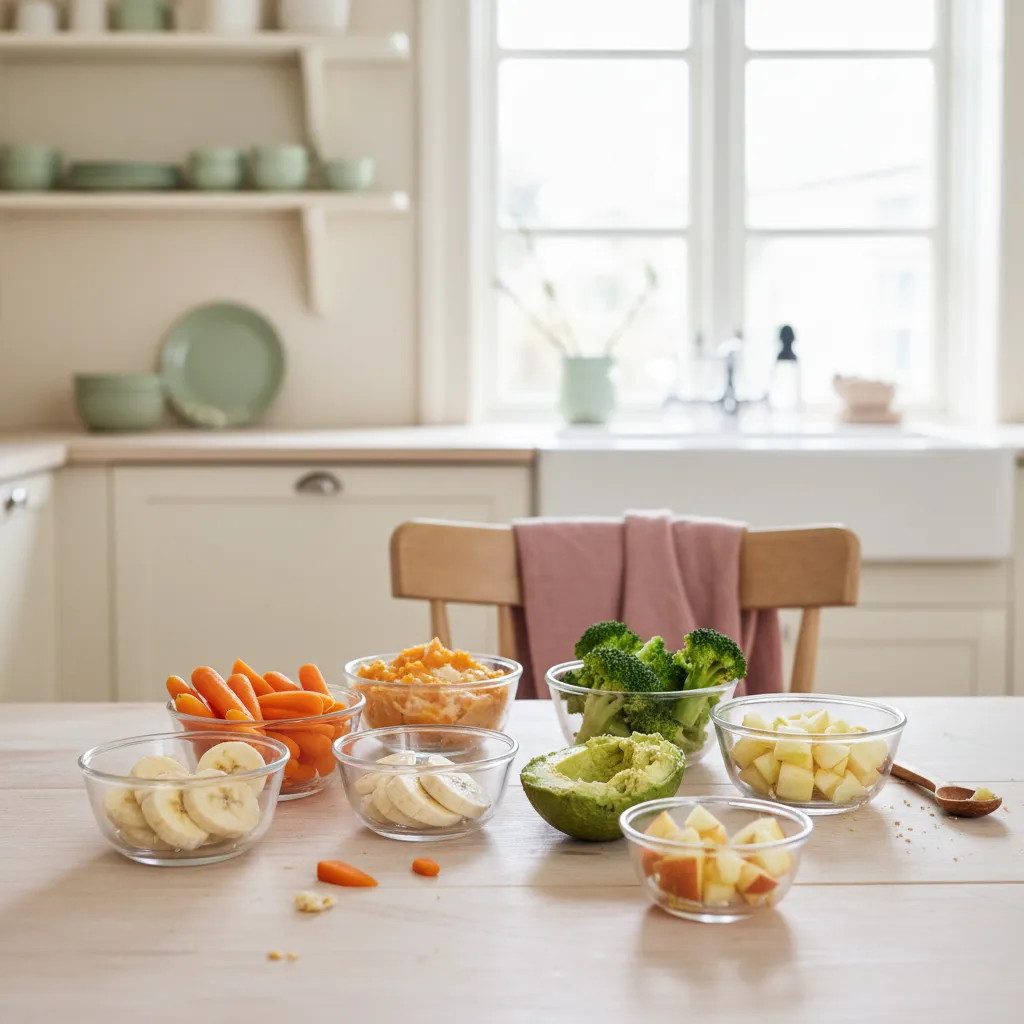
- Carrot. Naturally sweet, mild flavor. The most popular first vegetable
- Sweet potato. Naturally sweet and creamy. Easy to mash
- Potato. Neutral taste, good to mix with other vegetables
- Cauliflower. Mild taste, easy to digest
- Parsnip. Naturally sweet, similar to carrot
- Turnip. Mild and nutritious, good in puree
Stronger-flavored vegetables (also from 6 months)
These have a bit more flavor but can be introduced from the start:
- Broccoli. Rich in iron and vitamin C. Cook well and mash
- Peas. Naturally sweet, rich in protein. Mash to break the skins
- Zucchini. Very mild, soft texture
- Pumpkin. Naturally sweet, great for puree
- Spinach, AVOID in the first year (see below)
- Green beans. Cook well and mash
Vegetables to avoid in the first year: Spinach, beets, and arugula contain nitrates, which can be harmful to babies. According to the AAP, these should be avoided throughout the first year of life. After 12 months, your baby can eat them in normal amounts.
Fruit for baby (from 6 months)
Fruit is naturally sweet and most babies love it from the very first taste.
Fruit that can be given raw (mashed)
- Banana. The easiest first fruit. Mash with a fork
- Avocado. Technically a fruit, nutritious and creamy. Mash with a fork
- Mango. Soft and sweet when ripe. Mash into puree
Fruit that should be cooked first (6–8 months)
For younger babies, harder fruits should be cooked or steamed until soft:
- Apple. Peel, cook until soft, mash into puree
- Pear. Peel, cook until soft, mash into puree
- Peach. Peel, cook lightly, mash
- Apricot. Peel, cook lightly, mash
- Plum. Peel, remove pit, cook lightly
Berries (from 6 months)
Berries can be given from 6 months, but should be mashed or cooked for younger babies:
- Blueberries. Mash or cook. Whole blueberries are a choking hazard
- Strawberries. Mash for young babies. Can cause a rash around the mouth (not the same as an allergy)
- Raspberries. Easy to mash, but seeds can irritate. Strain out seeds for babies under 8 months
Strawberries can cause a red rash around the mouth in some babies. This is usually contact dermatitis (irritation from the acidity), not an allergic reaction. According to the AAP, strawberries are safe from 6 months. If your baby develops a rash anywhere other than around the mouth, contact your pediatrician.
Texture by age
6–8 months: Smooth puree
- Cook vegetables until completely soft
- Blend or mash to a completely smooth consistency (like thick yogurt)
- Fruit: Mash banana/avocado with a fork, cook apple/pear
8–10 months: Coarser mash
- Mash with a fork instead of blending
- Allow small, soft lumps
- Fruit: Offer soft pieces (ripe mango, banana)
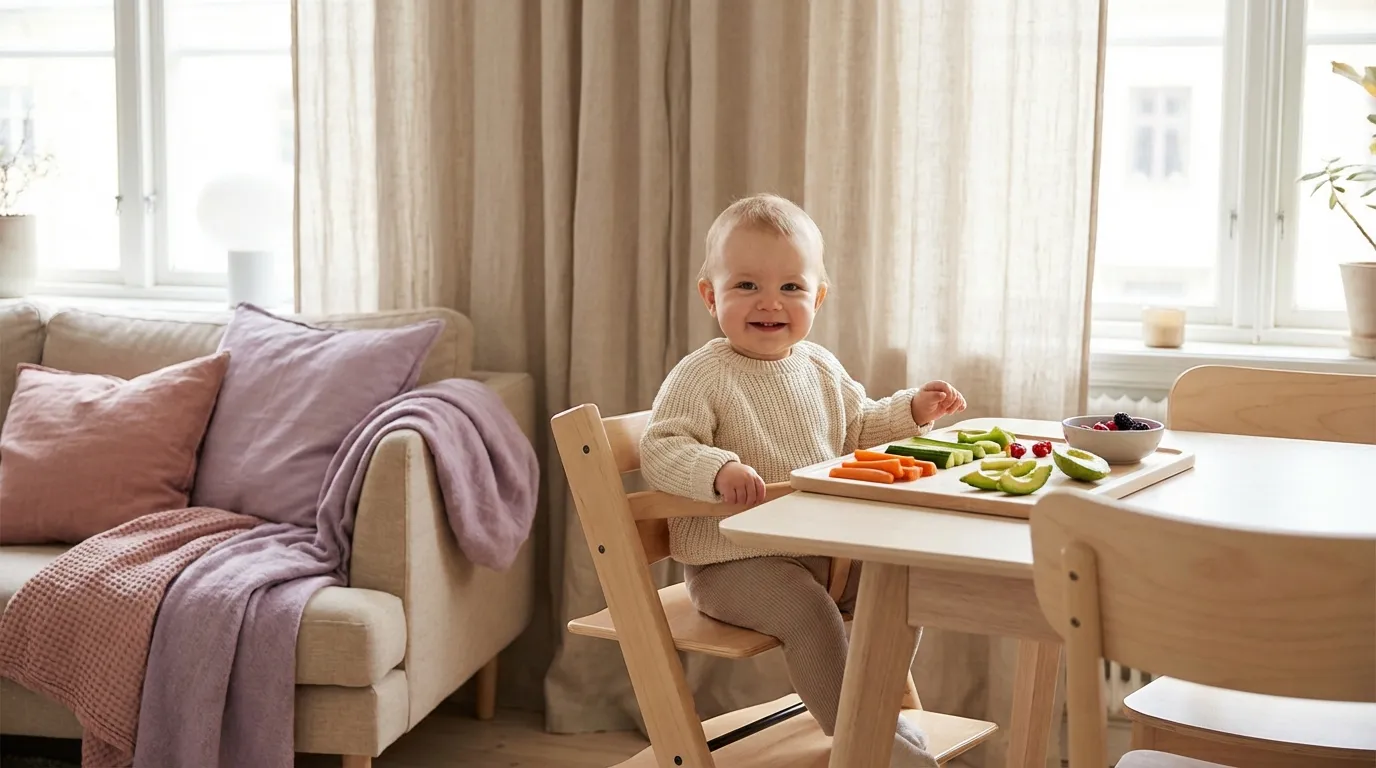
10–12 months: Pieces and finger food
- Cooked vegetable sticks (carrot, broccoli, asparagus)
- Soft fruit pieces (banana, pear, halved blueberries)
- Baby practices picking up food and feeding themselves
Choking hazard: Whole grapes, cherry tomatoes, blueberries, and similar round foods can lodge in the throat. ALWAYS cut them lengthwise, never across. Read more in our guide on choking hazards for babies.
The most nutritious vegetables and fruits
Not all produce is equally nutritious. These are worth prioritizing in your baby's diet:
| Food | Key nutrients | Why it's great |
|---|---|---|
| Broccoli | Iron, vitamin C, calcium | Vitamin C boosts iron absorption |
| Sweet potato | Vitamin A, fiber | Important for vision and immune function |
| Avocado | Healthy fats, potassium | Important for brain development |
| Peas | Protein, iron, fiber | One of the most protein-rich vegetables |
| Banana | Potassium, vitamin B6 | Easy to digest, good energy source |
| Blueberries | Antioxidants, vitamin C | Supports the immune system |
| Carrot | Vitamin A, fiber | Good for vision and skin |
3 simple recipes
1. Carrot and potato puree (from 6 months)
- 2 carrots, peeled and chopped
- 1 potato, peeled and chopped
- 1 tsp olive oil
Cook carrots and potato in water until soft (about 15 min). Blend to a smooth puree. Add olive oil and a little cooking water to reach the desired consistency.
2. Apple and pear puree (from 6 months)
- 2 apples, peeled and chopped
- 1 pear, peeled and chopped
- 1 pinch of cinnamon (max 0.5 g per day)
Cook fruit in a little water until soft (about 10 min). Mash with a fork or blend. Add cinnamon. Serve lukewarm.
3. Broccoli and pea puree (from 6 months)
- 1 handful of broccoli
- 3 tbsp frozen peas
- 1 small potato
Cook everything in water until soft (about 12 min). Blend to a puree (the pea skins must be broken down). Add a little cooking water to adjust consistency.
Make large batches and freeze in ice cube trays. One cube is roughly one baby portion. Label with contents and date. Keeps for 3 months in the freezer.
Frequently asked questions
Can a 6-month-old baby eat banana?
Yes, banana is one of the best first foods. Mash with a fork to a smooth puree for a 6-month-old. Banana is easy to digest, naturally sweet, and requires no cooking.
Can my baby eat raw carrot?
No, not until the baby has enough teeth to chew thoroughly (usually around 2–3 years). Raw carrot is hard and can cause choking. Cook carrots until soft and serve as sticks (from 10 months) or puree (from 6 months).
Should you start with vegetables or fruit?
Many experts recommend vegetables first because they have a milder flavor. The idea is that a baby will accept vegetables more readily before getting used to the sweetness of fruit. But there is no strict rule, babies can try fruit and vegetables in any order.
Which fruit is best for a constipated baby?
Pear, plum, and apricot can help with constipation. These contain sorbitol, a natural sugar that draws water into the intestines and softens stools. Try 1–2 tablespoons of pear or plum puree.
Can my baby eat cucumber?
Yes, from 6 months. Cucumber has a mild flavor and is easy to digest. For babies 6–10 months: peel, remove seeds, and mash. From 10 months: offer thin strips as finger food (with the skin removed).
Should babies eat organic fruit and vegetables?
It is a personal choice. Conventional produce from well-regulated markets generally has low pesticide levels. If you prefer organic, prioritize the foods your baby eats most often.
Summary
Vegetables and fruit are safe from 6 months. Start with mild vegetables (carrot, sweet potato, cauliflower), then introduce fruit (banana, avocado, cooked apple). Avoid spinach, beets, and arugula during the first year. Adjust texture as your baby grows, and always cut round foods lengthwise.
Further reading
- Food introduction for baby, complete guide
- Baby food at 6 months
- BLW: Baby-led weaning guide
- Iron-rich foods for baby
- Allergens baby: Safe introduction
Sources
- AAP. Starting Solid Foods
- WHO. Complementary Feeding Guidelines
- CDC. When, What, and How to Introduce Solid Foods
🔧 Helpful Tools
- Baby Food Guide. Safe foods and introduction schedule for your baby
- Breastfeeding Tracker. Log feeds, track supply, and monitor nursing sessions
- All Baby Tools. Browse all free tools for pregnancy and baby care
📖 Related Articles
- Baby Porridge: Guide to Your Baby's First Cereal. Everything about introducing porridge and cereal to your baby. Which grains to start with, when to begin, and simple recipes. Based on WHO and AAP recommendations.
- Baby Formula: Everything You Need to Know. Complete guide to infant formula. Types, step-by-step preparation, storage, transitioning from breastfeeding, cost, and reassurance. Safe guidance for formula-feeding parents.
- BLW: Baby-Led Weaning. The Complete Guide. Complete guide to BLW (Baby Led Weaning), self-feeding with finger foods from the start. When to begin, best first foods, safety, and choking risk. Based on international pediatric guidelines.