Your one-year-old can now eat most of what the family eats. That's a milestone that makes daily life easier, but it's also a phase where many parents wonder how much and what their child actually needs.
Here you'll find concrete meal ideas for breakfast, lunch, dinner, and snacks, based on recommendations from the WHO and the American Academy of Pediatrics (AAP).
How Much Food Does a 1-Year-Old Need?
A 1-year-old needs three main meals and two snacks throughout the day. The amount varies from child to child, but as a rule of thumb, a child's portion is about one-quarter to one-third of an adult portion.
The child regulates how much they eat. Some days they eat well, other days almost nothing. This is completely normal.
Regular mealtimes provide predictability. Try to keep roughly two to three hours between each meal so the child has a chance to get hungry.
Breakfast for the 1-Year-Old
Breakfast should provide energy and nutrition for the morning. Here are some simple options:
Oatmeal with fruit, oatmeal cooked with whole milk or breast milk, topped with banana, blueberries, or grated apple. Oatmeal is a good source of fiber and energy.
Bread meal, whole-grain bread with liver pâté, avocado, or soft cheese. Cut the bread into strips or small pieces. Add a few slices of cucumber on the side.
Yogurt with oats, plain or lightly flavored yogurt with rolled oats and fruit. Avoid yogurts with a lot of added sugar.
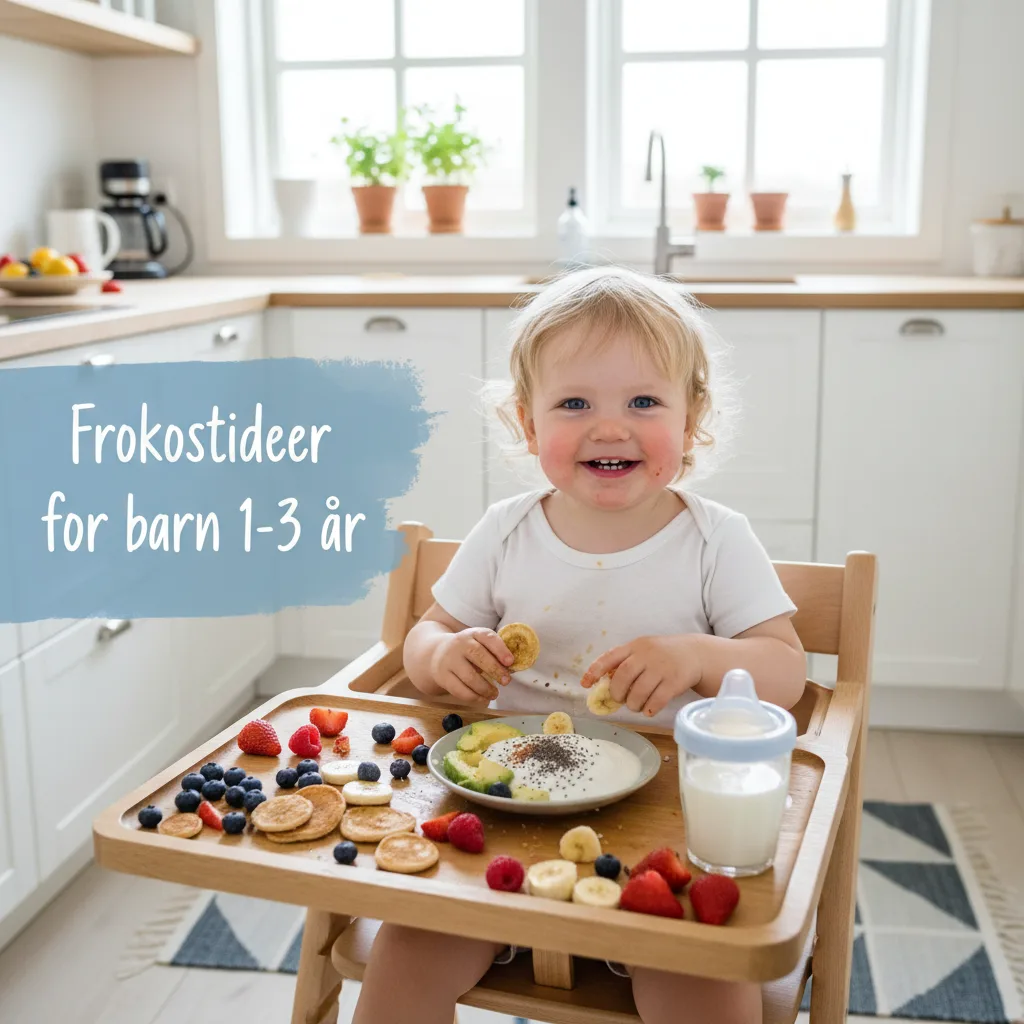
Pancakes, make thin pancakes with egg, milk, and flour. Perfect for small hands to hold. Serve with a little banana or berries.
Lunch. Simple Bread Meals
Lunch doesn't need to be complicated. A varied bread meal covers the need well.
Open-faced sandwiches, vary between liver pâté, cheese, hard-boiled egg, and avocado. Whole-grain bread or rolls provide fiber.
Wraps, soft tortillas filled with cream cheese, chicken pieces, and cucumber. Roll up and cut into pieces.
Leftovers, dinner leftovers from the night before are perfect for lunch. Pasta, vegetable soup, or fish cakes keep well.
Vary the toppings throughout the week. Liver pâté 2–3 times, egg 2–3 times, cheese some days. This way the child gets a broad range of nutrients.
Dinner. Adapted Family Food
From age 1, the child can eat the same dinner as the rest of the family. Adjust the texture and let the child practice eating by themselves.
Fish (2–3 times per week)
- Oven-baked salmon with sweet potato and broccoli
- Fish cakes with mashed potato and carrot
- Cod fillet in mild tomato sauce with pasta
Meat (2–3 times per week)
- Ground beef in tomato sauce with whole-grain pasta
- Chicken stew with root vegetables
- Meatballs with gravy and mashed potato
Vegetarian (1–2 times per week)
- Lentil soup with bread
- Bean stew with rice
- Omelet with vegetables and cheese
Plate Guide
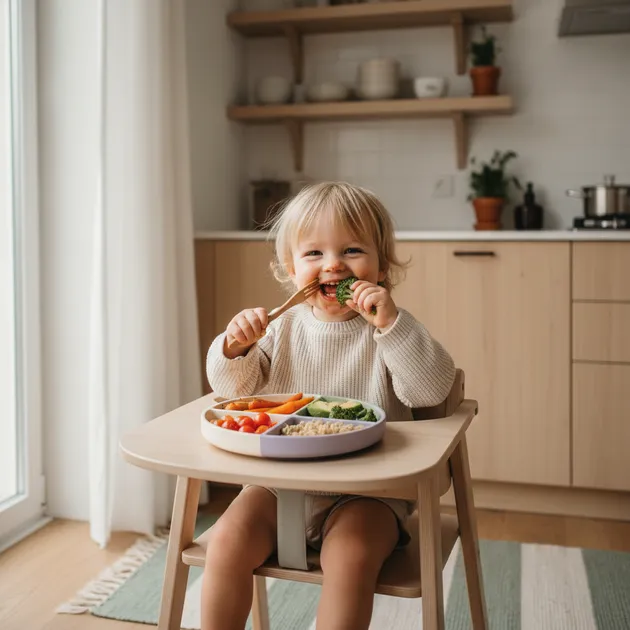
Divide the plate roughly like this: one-third vegetables or fruit, one-third carbohydrates (pasta, rice, potato, bread), and one-third protein (meat, fish, egg, legumes).
Snacks That Satisfy
Two snacks during the day, one in the morning and one in the afternoon, fill up energy between main meals.
- Fruit in pieces (banana, pear, mango, grapes cut in half)
- Vegetables with cream cheese or hummus
- Whole-grain crackers with cheese
- Rice cakes or oat crackers without added sugar
- Yogurt with fruit
Avoid grapes (unless cut), nuts, and other round, hard foods that can become lodged in the throat. Grapes should always be cut lengthwise.
Milk and Drinks
From age 1, your child can drink regular cow's milk as a thirst quencher. Use whole milk or reduced-fat milk, the AAP recommends whole milk for most toddlers through age 2, then switching to low-fat milk after that.
Maximum 16–20 oz (500 ml) of cow's milk per day, including yogurt and other dairy. Too much milk can reduce appetite and iron absorption.
Water is the best thirst-quencher. Juice, squash, and soda should be avoided in daily use.
Foods to Still Avoid
Even though a 1-year-old can eat most things, there are some exceptions:
- Whole nuts, choking hazard until age 4–5. Nut butters are safe.
- Rice cakes and rice drinks, can contain inorganic arsenic. Limit under age 6 according to the FDA and food safety authorities.
- High-salt foods, avoid adding salt to the child's food. Processed foods can have too much salt.
- High-sugar foods, candy, cookies, chocolate, and soda have no place in a 1-year-old's diet.
- Honey, safe from 1 year (the botulism risk applies only under 12 months).
Nutrients to Pay Extra Attention To
Iron
1-year-olds need about 7–11 mg of iron per day (AAP). Good iron sources are meat, fish, liver, eggs, legumes, and iron-fortified cereal. Combine with vitamin C-rich foods (bell peppers, broccoli, fruit) for better absorption.
Vitamin D
The AAP recommends 400–600 IU of vitamin D daily for most toddlers. Fortified milk, egg yolks, and fatty fish provide some, but a supplement is often needed, especially in areas with limited sunlight. Ask your pediatrician.
Omega-3
Fish is the best source. Many children don't get enough omega-3. Aim for fish at dinner 2–3 times per week.
When Your Child Won't Eat
Picky eating is very common around 1–2 years. The child is testing limits and developing their own preferences. Some practical tips:
- Offer food without pressure. The child decides whether and how much to eat.
- Serve new foods alongside something the child already likes.
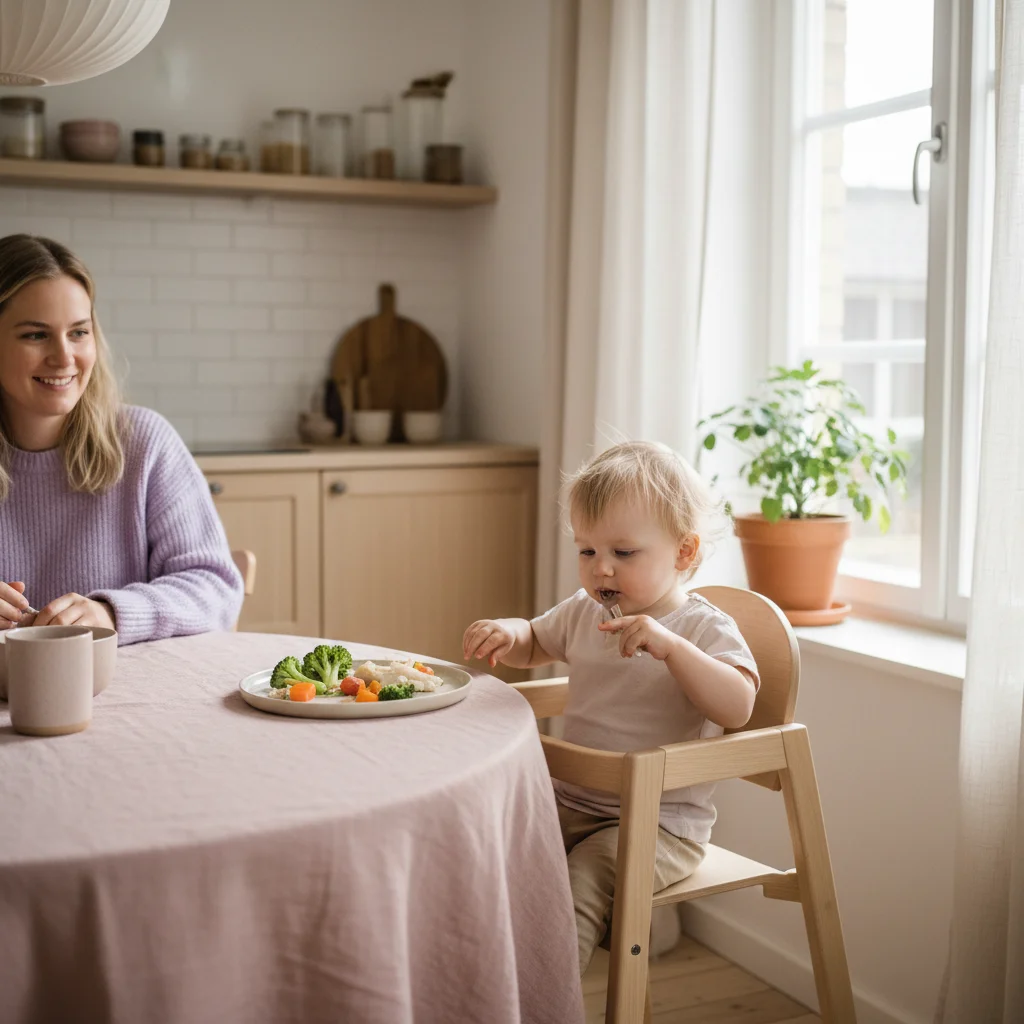
- Eat together, children learn by watching you eat.
- Give it time. A child may need 10–15 exposures before they accept a new flavor.
Sample Daily Plan
| Meal | Example |
|---|---|
| Breakfast (7:30 am) | Oatmeal with banana and blueberries |
| Snack (9:30 am) | Fruit pieces and whole-grain crackers |
| Lunch (11:30 am) | Bread with avocado, cucumber, and tomato |
| Snack (2:30 pm) | Yogurt with grated apple |
| Dinner (5:00 pm) | Salmon with sweet potato and broccoli |
Frequently Asked Questions
How much milk should a 1-year-old drink?
The AAP recommends whole milk (up to 16–24 oz / 480–720 ml per day) for most 1-year-olds. Too much milk reduces appetite and can cause iron deficiency.
Can a 1-year-old eat honey?
Yes, from 1 year honey is safe. The risk of botulism applies only to children under 12 months.
What do I do when my child refuses dinner?
Don't pressure or coax. Offer the food calmly and let the child decide for themselves. Some days they eat little at dinner but make up for it at other meals. Picky eating is a common phase.
Read More
Sources
- American Academy of Pediatrics. Infant and Toddler Nutrition
- WHO. Complementary Feeding
- FDA. Food Safety for Babies and Toddlers
🔧 Helpful Tools
- Baby Food Guide. Safe foods and introduction schedule for your baby
- Breastfeeding Tracker. Log feeds, track supply, and monitor nursing sessions
- All Baby Tools. Browse all free tools for pregnancy and baby care
📖 Related Articles
- Breakfast Ideas for Toddlers 1–3 Years, 12 simple and nutritious breakfast ideas for children aged 1 to 3. Quick everyday breakfasts the whole family will enjoy.
- Food for Baby at 1 Year: Transitioning to Family Meals. What can your child eat at 1 year? Guide to family food, cow's milk, portions, and nutrition for your one-year-old based on WHO/AAP guidelines.
- Nutrition for 2–3 Year Olds: Healthy Meals Without the Fuss. Nutrition guide for 2–3 year olds. AAP and CDC recommendations for healthy meals, portions, and nutrients for toddlers without the mealtime battles.