Gross motor skills are about the big movements: lifting the head, rolling, sitting, crawling, and walking. These skills develop in a step-by-step progression through the first year of life, and you can support your baby's development with simple, play-based activities.
Every child develops at their own pace. This guide gives you an overview of what to expect, and practical activities for each stage.
What are gross motor skills?
Gross motor skills are the body's ability to coordinate large muscle groups for movement. While fine motor skills involve small, precise movements (like grasping with the fingers), gross motor skills are about head control, balance, rolling, crawling, and walking.
Gross motor development follows a pattern: the child gains control of the body from the head downward. First head control, then the upper body and arms, then the hips and legs.
Timeline: Gross motor milestones
Here is an overview based on AAP and WHO guidelines. Keep in mind that there is wide variation, all timeframes are approximate.
0–3 months: Head control
Your baby begins lifting their head during tummy time. By 2–3 months, most can hold the head up for short periods, and some can hold it steady when sitting with support.
Activities:
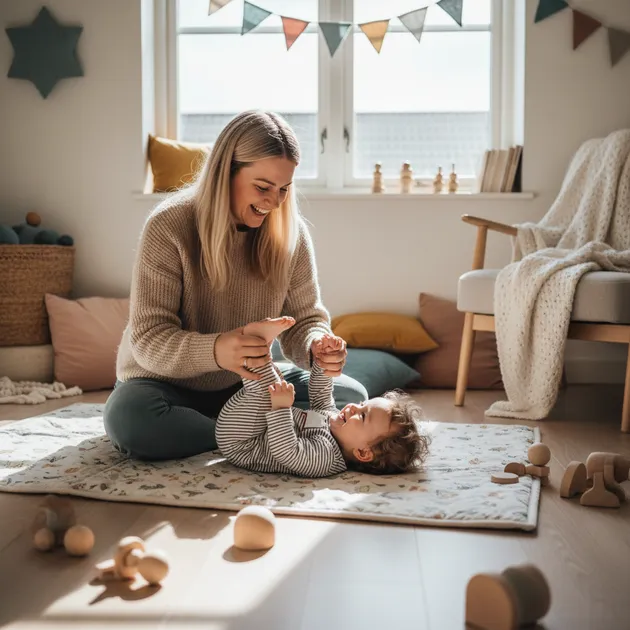
- Supervised tummy time. Place your baby on their tummy several times a day. Start with short sessions (1–2 minutes) and gradually increase. Tummy time strengthens the neck, back, and shoulder muscles.
- Face-to-face. Lie down in front of your baby during tummy time. Your face is the best motivation for lifting the head.
- Angled hold. Hold your baby at an angle against your chest so they practice holding up their head.
Many babies dislike tummy time at first. Try placing your baby on your chest instead, skin-to-skin contact and closeness makes it more comfortable.
3–6 months: Rolling and reaching
Around 3–4 months, babies begin to roll, usually from tummy to back first. By 5–6 months, most can roll both ways. Babies also start reaching deliberately for objects.
Activities:
- Motivate rolling. Place a colorful toy slightly to the side of your baby during tummy time, so they stretch and roll toward it.
- Cylinder play. Roll up a towel and place your baby over it to practice lifting the upper body.
- Airplane game. Hold your baby face-down in the air in front of you. This game strengthens back muscles and most babies find it fun.
- Stretching exercises. Hold toys over your baby while they lie on their back so they reach up with both hands.
6–8 months: Sitting and pivoting
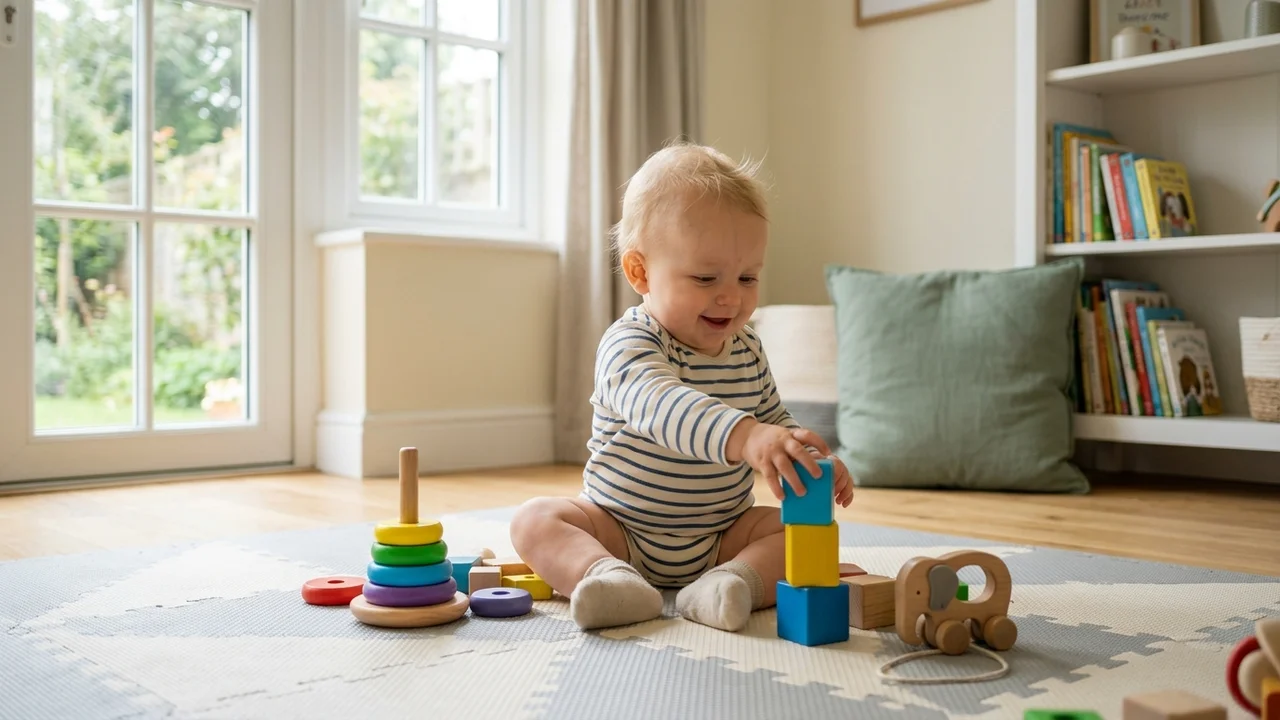
At 6 months, many babies can sit with support; by 7–8 months most can sit without support. Babies begin to pivot (rotate) during tummy time.
Activities:
- Sitting with cushions. Place cushions around your baby and let them practice sitting. Put toys in front so they stretch and practice balance.
- Toys in a ring. Sit your baby up and place toys in a semicircle around them. Baby practices rotating the upper body to reach each one.
- Floor time with variety. Use different surfaces, rug, cushion, mat. Varied surfaces stimulate balance and sensory development.
Never leave your baby sitting unsupervised at first. They can lose balance and fall backward. Always keep an arm or cushion behind them as a safety buffer.
8–10 months: Crawling
Most babies begin crawling between 7 and 10 months. Some babies commando-crawl on their stomach, others "bum-shuffle," and some skip straight to walking. All variations are normal.
Activities:
- Obstacle course. Set up a simple course with cushions and blankets for your baby to crawl over and around.
- Tunnel play. A large cardboard box with openings at both ends makes an exciting tunnel to crawl through.
- Follow me. Get down on the floor yourself and let your baby follow. Children love to imitate.
- Ball play. Roll a ball slowly away from your baby to motivate them to crawl after it.
9–12 months: Pulling up and standing
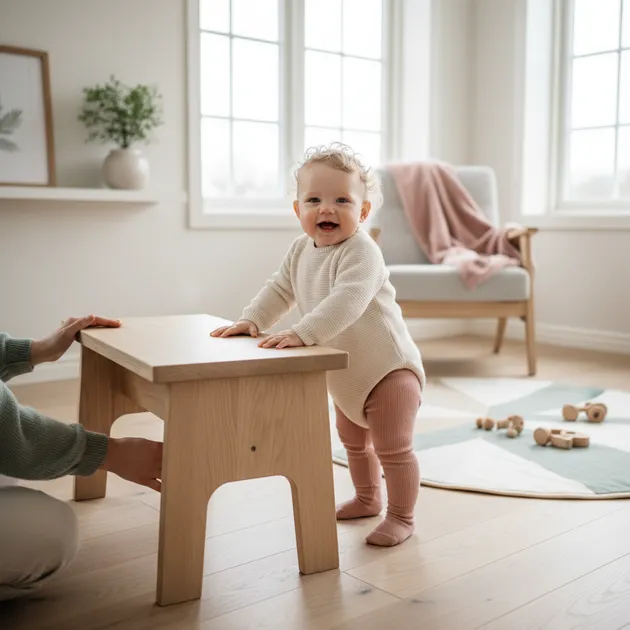
Around 9–10 months, babies begin pulling themselves up to standing by holding onto furniture. Many "cruise" along the sofa or a low table while holding on.
Activities:
- Stable furniture. Make sure your baby has stable furniture to pull up against. Remove unstable items that could topple.
- Motivation at height. Place interesting toys on the sofa or a low table to encourage your baby to pull up.
- Sofa surfing. Space toys along the sofa to encourage your baby to take sideways steps.
10–18 months: First steps
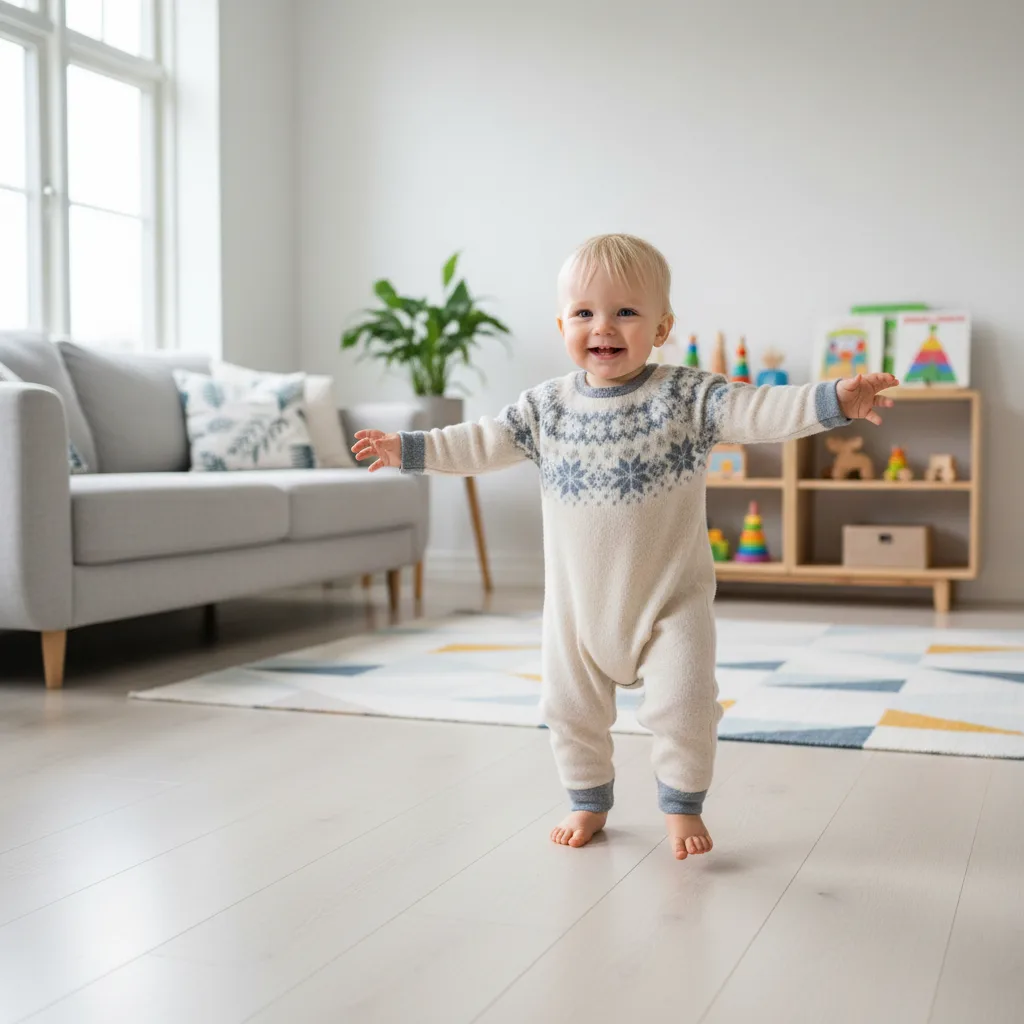
Most children begin walking between 10 and 14 months, but anything up to 18 months is considered normal. Your pediatrician monitors this at regular check-ups.
Activities:
- Hold hands. Let your baby hold your fingers and practice walking. Gradually reduce support from two hands to one.
- Push toys. A sturdy push walker (with adult supervision) gives your baby something to lean on while practicing.
- Walk on grass. Uneven surfaces like grass or sand challenge balance and strengthen foot muscles.
- Barefoot. Let your baby walk barefoot indoors as much as possible. Barefoot walking strengthens foot muscles and improves balance compared to wearing shoes.
What to avoid
Baby walkers
Baby walkers are not recommended. They place babies in an incorrect posture, slow natural motor development, and pose an accident risk. A baby placed in a walker does not learn to balance on their own.
Jumper seats (Jolly Jumpers)
Hanging bouncer seats should be used with caution and only for short periods. They create one-sided loading and can negatively affect hip development with prolonged use.
Too much time in seated positions
Babies who spend a lot of time in car seats, bouncer chairs, or carriers get less floor time. Free movement on the floor is the best stimulation for motor development.
Floor time is golden. The AAP and WHO recommend that children under 1 year be in movement several times a day through play and interaction. The more floor time, the better.
When should you seek help?
Contact your pediatrician if:
- Baby has no head control by 4 months
- Baby is not rolling by 6–7 months
- Baby cannot sit with support by 9 months
- Baby only uses one side of the body (clearly favors one arm or leg)
- Baby seems stiff or unusually floppy
- You have any general concerns about development
Remember that your pediatrician monitors your child's development at regular check-ups. If you have questions between visits, do not hesitate to reach out.
Frequently asked questions
My baby is not crawling, is that normal?
Yes. Not all babies crawl. Some commando-crawl, some bum-shuffle, and some go straight to standing and walking. Crawling is not a prerequisite for walking, but varied movement patterns build better body control.
Can I speed up motor development?
You can stimulate, but not force development. A baby's brain and muscles need to mature before each new milestone. Give your baby opportunities to practice through play and floor time, but let them develop at their own pace.
How much floor time does my baby need?
The AAP recommends that children under 1 year be physically active several times a day. Spread floor time throughout the day and adjust to your baby's energy and mood. Short, frequent sessions are better than long, infrequent ones.
Should my baby wear shoes when learning to walk?
Barefoot walking is best indoors. Feet without shoes can grip the surface better, and foot muscles are strengthened. Outdoors, babies need shoes with a soft sole that protects without restricting movement.
Further reading
- Motor development in babies: What to expect
- Baby development month by month
- Fine motor skills in babies: Activities and tips
Sources
- AAP. Developmental Milestones
- WHO. Child Growth Standards
- CDC. Developmental Milestones
🔧 Helpful Tools
- Baby Milestones Tracker. Track your baby's developmental milestones
- Development Leaps. Understand your baby's developmental leaps
- All Baby Tools. Browse all free tools for pregnancy and baby care
📖 Related Articles
- Baby Gym: Activities, Benefits, and Tips for Motor Development. Everything about baby gyms, activities for motor development, DIY baby gym vs store-bought, age-appropriate exercises from 0-12 months, and tips for stimulating your baby at home.
- Motor Development 12–18 Months: Walking, Climbing, Exploring. Motor development 12–18 months: when your baby starts walking, climbing, and exploring. Tips for stimulation, safety, and when to contact your pediatrician.