Winter brings cold temperatures, snow, and short days, but also some genuinely wonderful experiences for the whole family. Babies love watching snowflakes. Toddlers love sledding. And you need fresh air just as much as they do.
With the right clothing and a little planning, you can enjoy winter together, whether your child is three months or three years old.
Dressing for Cold Weather: The Layering Method
The golden rule: layer up
Dress your baby in layers:
-
Base layer: wool or moisture-wicking fabric next to skin. Merino wool regulates temperature and pulls moisture away from the body. Avoid cotton as a base layer in cold weather, it holds moisture and chills the skin.
-
Mid layer: fleece or wool sweater. An insulating layer that traps warmth. Fleece is lightweight and dries fast. Wool is warmer and works better in severe cold.
-
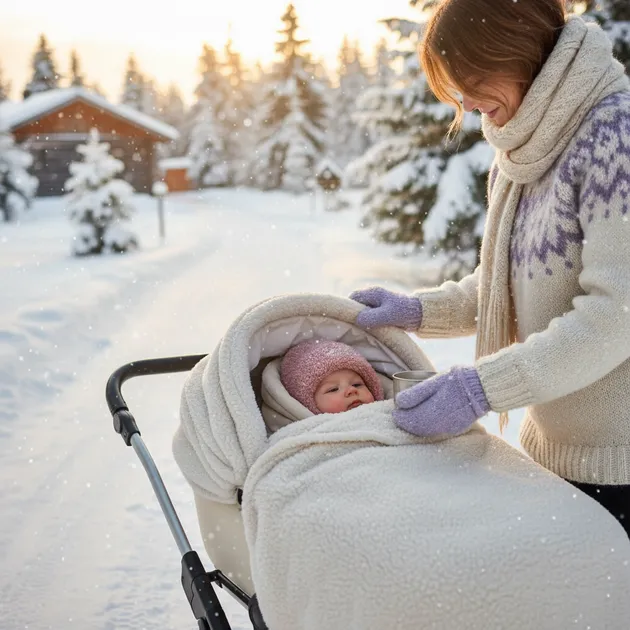
Outer layer: wind- and water-resistant. A snowsuit or winter coverall that blocks wind and keeps snow out. For babies in strollers, a good footmuff or bunting is essential.
Head, hands, and feet
Children lose a lot of heat through their heads. Use a wool hat under any outer hood for the youngest babies. Mittens should also have a wool inner layer with a wind-resistant outer.
For babies in strollers who aren't yet walking: use fleece booties or wool stroller shoes rather than regular shoes. They need warmth, not soles.
Temperature check: Feel the back of your baby's neck or between the shoulder blades, not their hands. Cold hands don't mean a cold baby. The neck should feel warm and dry, not sweaty or cold.
Recommended brands for cold-weather baby clothing
These brands make excellent winter layers for babies and young children:
- Reima (Finnish), robust, functional, and weather-tested
- Polarn O. Pyret (Swedish), durable with reinforced wear points
- Patagonia, great fleece and puffer options with ethical sourcing
- Smartwool / Icebreaker, quality merino wool base layers
- Joha. Danish merino wool, excellent for base layers
Outdoor Naps in Winter
Outdoor napping in cold weather is a Scandinavian tradition, and for good reason. Many babies sleep longer and more deeply outside in the fresh air. With proper gear, it's safe well below freezing.
How to do it safely
- Use a winter-rated stroller footmuff or bunting designed for cold temperatures
- Wool base layers, not synthetic, wool regulates temperature better
- Shield from wind, but make sure the baby can breathe freely
- Check your baby regularly, feel the neck every 20 minutes or so in severe cold
- Never leave the baby unattended outside in very cold weather
When is it too cold?
The AAP doesn't set a specific lower limit for outdoor naps, but general guidance from pediatric sources:
- Above 14°F / -10°C: Safe with proper gear
- 14°F to 5°F / -10°C to -15°C: Short outings, check frequently
- Below 5°F / -15°C: Consider staying indoors
Wind makes conditions feel much colder than the thermometer shows. Wind chill at 23°F / -5°C can feel like 5°F / -15°C. Always factor in wind.
Read more in our guide to outdoor naps with baby.
Activities by Age
0–6 Months: Enjoy the quiet
Young babies don't need action, they need fresh air and new sensory experiences.
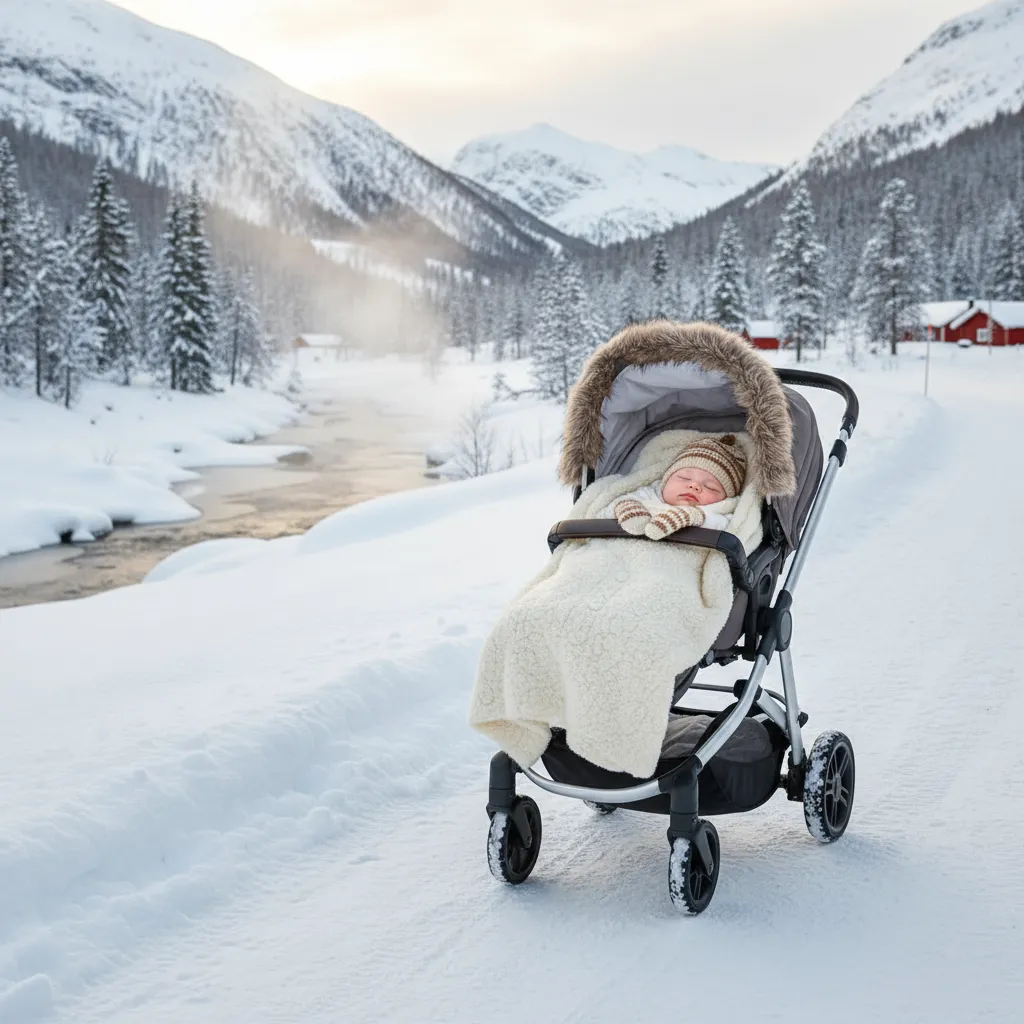
Stroller walks in the snow. Let your baby lie in the stroller and take in the trees, clouds, and snow. Aim for 1–2 hours outside each day. Choose routes with manageable terrain, paved paths are easier than deep snow trails.
Outdoor naps. Many babies fall asleep easily in the stroller outdoors in winter. The fresh air and ambient sounds are naturally soothing.
Brief snow experiences. Put your baby in a carrier and let them feel the snow through their mittened hands. The reaction is often priceless.
6–12 Months: Exploring Snow
Now your baby is getting curious and wants to touch everything.
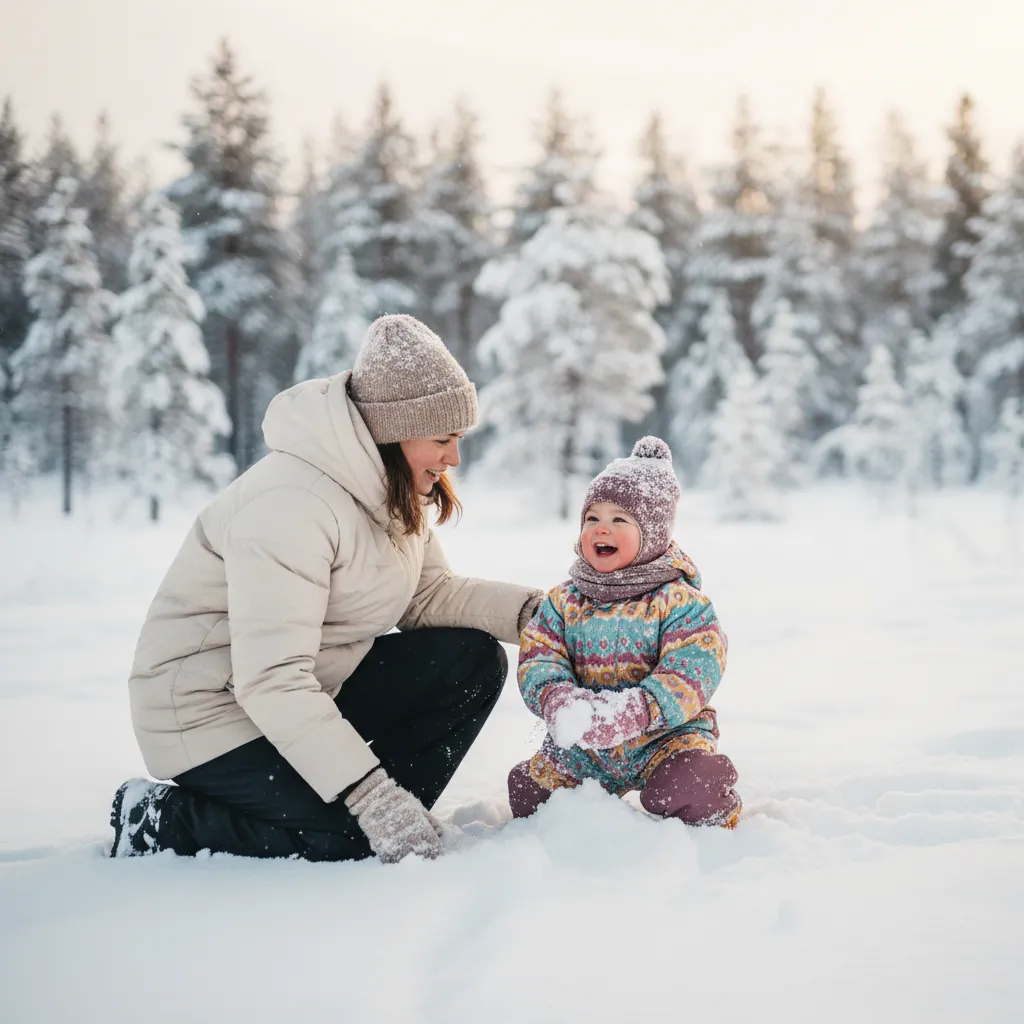
Playing in snow. Set your baby on a wind-resistant blanket or mat in the snow. Let them feel the snow with gloved hands. Many babies are fascinated by catching snowflakes.
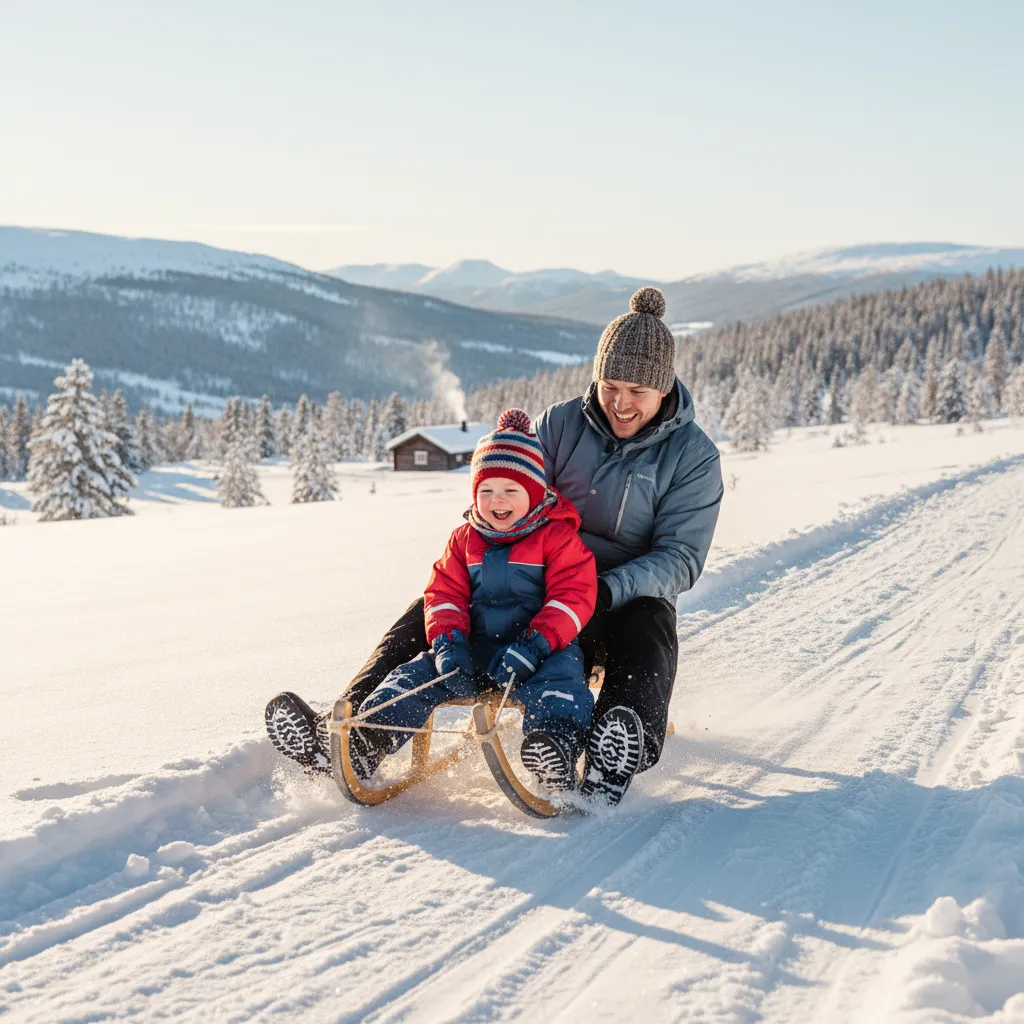
Gentle sledding. From around 6–8 months, your baby can sit in your lap on a gentle slope with a sled mat. Hold them securely, choose short and slow hills, and avoid icy or hard surfaces.
Snow angels. Carefully lay your baby on their back in soft snow and gently move their arms up and down. Most babies find it delightful.
Sledding safety: Children under 1 year should always ride in a parent's lap. Use a sled mat or wide, flat sled, never a steering sled. Choose slopes clear of trees, poles, or roads at the bottom.
1–3 Years: Full Speed
Toddlers have energy to burn, and winter is full of possibilities.
Building a snowman. A classic. Let your child help roll the snowballs, add the eyes (stones), and nose (carrot). It builds fine motor skills and creativity.
Sledding. From age 1, children can sit independently on a gentle slope with a parent guiding from behind. From age 2–3, many can sled short slopes on their own.
Animal tracks. Go for a walk and look for animal prints in the snow, cat, bird, rabbit. Bring a track identification card from the library. Fascinating for curious toddlers.
Snow painting. Fill spray bottles with water and a few drops of food coloring. Let your child "paint" the snow. Fun, creative, and easy.
Snow lanterns. Stack snowballs in a ring and place a tea light inside. Magical in the winter darkness.
Skiing and skating. From age 2–3, children can try short beginner ski runs with special toddler ski equipment. Skating is typically introduced from age 3–4 with good support harnesses.
Safety in Cold Weather
Frostbite
Children are more vulnerable to frostbite than adults because they have thinner skin and less body mass.
Signs of frostbite:
- White or gray skin (especially cheeks, nose, ears, fingers)
- Child says it itches or stings
- Skin feels hard or waxy
What to do:
- Get inside immediately
- Warm the area slowly with body contact or lukewarm water
- Never rub the skin
- See a doctor if the skin stays white or blisters develop
Visibility
Winter means dark mornings and early evenings. Reflective gear is important.
- Attach reflective strips to strollers, sleds, and children's outerwear
- Use reflective vests over jackets
- Check that children's winter clothes have adequate built-in reflectors
General Cold Tips
- Feed your child before going out, the body burns energy staying warm
- Change wet clothing immediately, wet layers chill quickly
- Take indoor breaks on longer outings, stop at a café or library to warm up
- Always pack extras, mittens, hat, wool socks
Is your child cold? Young children can't always tell you when they're cold. Watch for fussiness, unexplained crying, pale cheeks, or unusual quietness and limpness. Those are signs it's time to head inside.
When to Stay Indoors
It's completely fine to take an indoor day. Here are situations where it makes sense:
- Severe cold (below 5°F / -15°C, or lower with wind chill)
- Child is sick, a cold or fever
- Strong wind, makes it feel much colder and is unpleasant for small children
- Icy conditions everywhere, too slippery for safe stroller use
Indoor winter activities can be just as fun: make paper snowflakes, bake together, build couch cushion forts, or play with a sensory bin filled with ice and snow.
Frequently Asked Questions
How cold is too cold for a baby to sleep outside?
General pediatric guidance suggests outdoor naps are safe down to around 14°F / -10°C with proper gear. Avoid strong wind. Check the back of your baby's neck regularly for temperature.
Does my baby need sunscreen in winter?
Yes, if you're in the mountains or there's bright sunshine on snow. Snow reflects UV rays intensely. Use a baby-safe sunscreen with SPF 30+ on any exposed skin.
Can my baby catch a cold from being outside in the cold?
No. Colds are caused by viruses, not by cold temperatures. Fresh air actually supports immune health. Your baby won't get sick from being outdoors, just make sure they're dressed appropriately for comfort.
Summary
Winter is a wonderful time to make memories with your child. With a good base layer, a wind-resistant outer, and a healthy respect for the cold, you can enjoy everything from peaceful stroller walks to wild sledding runs.
Start with short outings and build up. Check temperature at the neck, pack extras, and remember that the best thing about winter is experiencing it together.
Further Reading
- Outdoor Naps with Baby. Everything you need to know about safe outdoor sleep
- Babyproofing Your Home. A complete room-by-room guide
- Spring Activities with Baby. When the warmer weather arrives
Sources
🔧 Helpful Tools
- All Baby Tools. Browse all free tools for pregnancy and baby care
📖 Related Articles
- Spring and Easter with Your Baby: Activities and Tips. Easter with your baby or toddler. Activities, outing ideas, seasonal fun, and tips for a wonderful holiday.
- Summer with Babies and Toddlers: Sun Safety and Fun. A safe and fun summer with your child. Sun protection, swimming, activities, and safety tips for babies and toddlers.
- Winter with Baby: Clothing, Cold, and Cozy Moments. How to dress your baby for cold winter weather. Wool layers, temperature guide, outdoor naps, and cold-weather limits for the youngest.