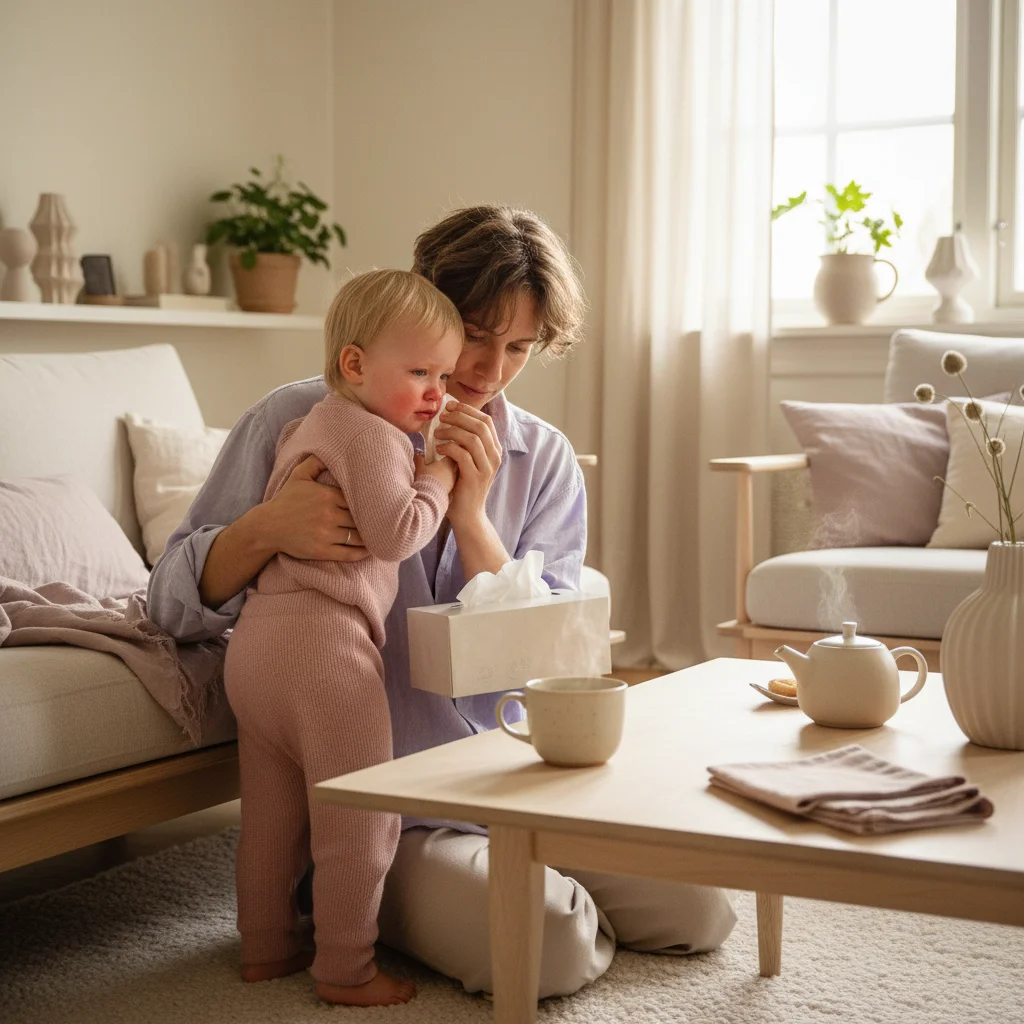
You may wonder why your baby seems to catch every cold going around, or whether there is anything you can do to strengthen their immune system. The short answer: your baby's immune system is still developing, and it is completely normal for young children to get sick often.
Here is how immunity develops, and what you as a parent can do to support it naturally.
How the Immune System Develops
All babies are born with an immature immune system. During pregnancy, the baby received antibodies through the placenta, but these fade gradually over the first months of life.
From around 2–3 months of age, the baby's own immune system begins to take over. It builds itself up by being exposed to viruses and bacteria in the environment. Each infection teaches the immune system to recognize and fight new threats.
The immune system is not considered fully mature until around age 7–8. This means that young children in childcare or preschool are especially susceptible to frequent infections.
It is normal for children in daycare to have 6–10 colds per year. Each infection actually helps strengthen the immune system over time.
Breastfeeding Provides Immune Protection
Breast milk contains antibodies and immune factors that protect your baby from infections. The most important include:
- Immunoglobulin A (IgA) which protects the mucous membranes of the gut and airways
- White blood cells that fight bacteria and viruses
- Prebiotics that promote healthy gut bacteria
These substances are especially concentrated in colostrum, the first milk, in the days after birth. But breast milk provides immune protection for as long as breastfeeding continues.
The WHO recommends exclusive breastfeeding for around the first 6 months of life, and continued breastfeeding alongside solid foods for 12 months or longer.
Vaccination Is the Most Important Thing You Can Do
Vaccines are the most effective way to protect your child from serious diseases. National childhood vaccination programs provide protection against a range of diseases and are free in most countries.
Vaccination typically starts early
According to the WHO and AAP recommended schedule, vaccination begins in the first weeks of life:
- Birth: Hepatitis B (in many countries)
- 2 months: DTaP, IPV, Hib, PCV (pneumococcal), Rotavirus
- 4 months: DTaP, IPV, Hib, PCV, Rotavirus
- 6 months: DTaP, IPV, Hib, PCV, Rotavirus, Influenza (seasonal)
- 12–15 months: MMR (measles, mumps, rubella), Varicella, PCV booster, Hib booster
Combination vaccines do not overload a baby's immune system. According to the AAP and WHO, a baby's immune system is designed to handle hundreds of new substances every day from birth. The vaccines on the recommended schedule are carefully timed and tested for safety.
Follow the vaccination schedule recommended by your pediatrician and keep up with the timing. Your baby's well-child visits are typically scheduled around vaccination milestones.
Diet That Supports the Immune System
From around 6 months, your baby begins solid foods, and a good diet plays an important role in immune health.
Vitamin D
The AAP recommends that breastfed babies receive 400 IU (10 micrograms) of vitamin D daily from shortly after birth. Babies who receive sufficient formula do not typically need a supplement. Vitamin D is important for immune function and bone development. Many families, especially those in northern latitudes or with limited sun exposure, cannot produce enough vitamin D from sunlight alone.
Iron
Iron is essential for immune cells. Babies are born with an iron store that lasts approximately 6 months. After this, iron-rich foods become important:
- Meat and fish
- Legumes (beans, lentils, chickpeas)
- Iron-fortified cereals
- Dark leafy vegetables
Other important nutrients
- Zinc (found in meat, fish, and wholegrains)
- Vitamin C (fruit and vegetables, also helps the body absorb iron)
- Vitamin A (carrots, sweet potato, egg yolk)
A varied diet with plenty of fruit, vegetables, wholegrains, fish, and meat gives your child what they need.
Hygiene and Over-Hygiene
Good hand hygiene is important for preventing infections, especially during cold and flu season. Wash hands before preparing food, after nappy changes, and when coming home.
But there is such a thing as over-hygiene. Research suggests that children who are exposed to common microorganisms in nature, through outdoor play, contact with animals and soil, may develop a more robust immune system.
Good habits for balanced hygiene
- Let your child play outside and get dirty
- Avoid antibacterial soap in everyday life, regular soap is sufficient
- Let your child have contact with other children
- Don't worry about a little mud and grass
Antibacterial handwash and disinfectants are unnecessary in everyday life. Regular soap and water is sufficient for normal hand hygiene, according to the WHO and CDC.
When Should Your Child Stay Home from Childcare?
Mild colds are part of development, but some symptoms do warrant keeping your child home. Standard guidance recommends keeping your child home if they:
- Have a fever above 38°C / 100.4°F
- Are too unwell to participate in normal play and activities
- Are vomiting or have diarrhea
- Have an eye infection with visible discharge
- Have a rash that may be contagious
Your child can return to childcare when their general condition is good, even if they still have a little runny nose or cough.
Avoid Unnecessary Antibiotics
Antibiotics only work against bacterial infections, not viruses. The vast majority of childhood illnesses, colds, influenza, most ear infections, and most sore throats, are caused by viruses.
Unnecessary antibiotic use can:
- Disrupt healthy gut bacteria
- Contribute to antibiotic resistance
- Reduce the immune system's natural training
Trust your doctor's assessment. If your doctor does not prescribe antibiotics, it means the infection is most likely viral and will resolve on its own.
Sleep and Fresh Air
Sleep is important for children's immune systems. During sleep, the body produces immune cells and proteins that fight infections.
Make sure your child gets enough sleep for their age:
- 0–3 months: 14–17 hours
- 4–12 months: 12–16 hours (including naps)
- 1–3 years: 11–14 hours (including naps)
Daily outdoor play and fresh air are also beneficial for immunity. Dress your child appropriately for the weather and let them be outside in all seasons.
Frequently Asked Questions
Can I give my baby supplements to boost their immune system?
Vitamin D is the only supplement routinely recommended for all breastfed babies. For everything else, your baby should get what they need through a varied diet. Talk to your pediatrician before giving other supplements.
Are breastfed babies less likely to get sick?
Breastfed babies have somewhat lower risk of certain infections, particularly respiratory and gastrointestinal infections, during the period they are breastfed. But all babies get sick from time to time, including those who are exclusively breastfed.
Is it true that daycare children are sick more often in the first year?
Yes. Children who start childcare are exposed to many new viruses and may have 6–10 colds in the first year. In return, they tend to be less sick during the school years, because their immune system has already been trained up.
Should I give my child probiotics?
There is some research suggesting that certain probiotic strains can reduce the frequency of certain infections in children. However, the evidence is not strong enough for it to be routinely recommended. Talk to your pediatrician if you are considering this.
Further Reading
- Vaccines and the Childhood Vaccination Schedule
- Everything About Colds in Babies
- Breastfeeding and Nutrition
- Vitamin D for Babies: Complete Guide
- Iron-Rich Foods for Babies
Sources
🔧 Helpful Tools
- Baby Milestones Tracker. Track your baby's developmental milestones
- Breastfeeding Tracker. Log feeds, track supply, and monitor nursing sessions
- All Baby Tools. Browse all free tools for pregnancy and baby care
📖 Related Articles
- Baby's Gut Microbiome: Development and What Influences It. Your baby's gut microbiome builds up during the first years of life. Learn what influences it and why it matters for long-term health.
- Sick Again from Daycare? How Your Child Builds Their Immune System. Why children are sick all the time in daycare, how the immune system develops, and when to keep your child home. Evidence-based guidance for parents.
- Common Vaccine Reactions in Babies. What are common reactions after vaccinating a baby? How to relieve discomfort and when to contact a doctor.