
Nuts and seeds are nutrient-dense foods packed with healthy fats, protein, and minerals. But they are also among the most common allergens. Many parents are unsure whether and when their baby can have nuts.
The short answer: babies can and should have nuts from 6 months, but never whole nuts. Here is a complete guide based on AAP and WHO guidelines.
When can babies eat nuts and seeds?
Babies can have nuts and seeds from 6 months, but only in pureed, butter, or finely ground form. According to the American Academy of Pediatrics (AAP) and WHO:
- Early introduction of nuts (before 12 months) may reduce the risk of nut allergy
- Whole nuts should not be given to children under 4–5 years (choking hazard)
- Smooth nut butters are safe from 6 months
- Seeds can be given ground or as a butter from 6 months
Whole nuts, halved nuts, and large pieces of nut are choking hazards for children under 4–5 years. Give ONLY smooth nut butter, pureed nuts, or finely ground nuts mixed into other food. Thick globs of nut butter can also become lodged, always spread thinly.
How to introduce nuts safely
Day 1: First taste
- Mix half a teaspoon of smooth peanut butter with a little breast milk, formula, or water
- The consistency should be thin and runny (not a thick lump)
- Give baby a small taste
- Watch for 2–3 hours for signs of allergic reaction
Days 2–3: Observe
Do not give nuts for the next 2–3 days. Watch for:
- Rash or hives
- Swelling of face, lips, or tongue
- Vomiting or diarrhea
- Difficulty breathing (call emergency services immediately)
Day 4+: Gradually increase
If no reaction, gradually increase:
- Week 1–2: Half a teaspoon of nut butter mixed into porridge or puree
- Week 3–4: A full teaspoon
- After that: Nuts as a regular part of the diet, 2–3 times per week
Research shows that early and regular introduction of peanuts (from 6 months) can reduce the risk of peanut allergy by up to 80%. This is the basis for AAP and WHO recommendations to introduce all common allergens during the first year of life.
Safe nuts and seeds for babies
Nuts (only as butter or puree)
| Nut | From age | Tips |
|---|---|---|
| Peanuts | 6 months | Smooth peanut butter without added salt or sugar |
| Almonds | 6 months | Almond butter or finely ground almonds |
| Cashews | 6 months | Cashew butter (mild, creamy flavor) |
| Walnuts | 6 months | Finely ground, mixed into porridge |
| Hazelnuts | 6 months | Hazelnut butter (avoid Nutella, too much sugar) |
| Pistachios | 6 months | Finely ground, mixed into food |
| Coconut | 6 months | Finely grated, coconut milk in cooking |
Seeds (ground or as butter)
| Seed | From age | Tips |
|---|---|---|
| Sesame seeds | 6 months | Tahini (sesame butter), excellent calcium source |
| Sunflower seeds | 6 months | Sunflower butter, nut-free alternative |
| Pumpkin seeds | 6 months | Finely ground, mixed into porridge |
| Flaxseeds | 6 months | Ground, good source of omega-3 |
| Chia seeds | 6 months | Soaked in liquid (they swell up), never dry |
Never give dry chia seeds to baby. Chia seeds expand and can become lodged in the throat. Always soak in water or milk for at least 15 minutes before giving them to baby.
Nut allergy, what you need to know
Nut allergy is one of the most common food allergies in children and can be serious. According to the AAP, it is important to introduce nuts early but with care.
Signs of nut allergy
Symptoms can appear within minutes to 2 hours:
Mild symptoms:
- Rash or red spots
- Itching around the mouth
- Swollen lips
- Stomach cramps
Severe symptoms (call emergency services):
- Swelling of the throat
- Breathing difficulty or wheezing
- Forceful vomiting
- Limpness and pale skin
- Loss of consciousness
Who is at higher risk?
Baby has a higher risk of nut allergy if:
- Close family members (parents, siblings) have a nut allergy
- Baby has severe eczema
- Baby already has an egg allergy
If this applies to your baby: Speak with your pediatrician before introducing nuts. Baby can still have nuts, but it may be wise to do so under guidance.
Peanut allergy vs. tree nut allergy
Peanuts are botanically a legume, not a nut. This means a peanut allergy does not automatically mean an allergy to tree nuts (almonds, hazelnuts, walnuts). Similarly, tree nut allergy does not mean peanut allergy. But some people have allergy to both. Your pediatrician or allergist can help clarify.
Nutrition in nuts and seeds
Nuts and seeds are nutritional powerhouses for babies:
| Nutrient | Found in | Why it matters |
|---|---|---|
| Healthy fats (unsaturated) | All nuts and seeds | Brain development |
| Protein | Peanuts, almonds | Muscles and tissue |
| Iron | Sesame seeds, pumpkin seeds | Brain development, blood production |
| Calcium | Sesame seeds (tahini), almonds | Bones and teeth |
| Omega-3 | Walnuts, flaxseeds, chia seeds | Brain development |
| Zinc | Pumpkin seeds, cashews | Immune function, growth |
| Vitamin E | Almonds, sunflower seeds | Antioxidant |
Practical tips: Using nuts in baby food
In porridge (from 6 months)
- Stir 1 tsp peanut butter into baby's oatmeal
- Sprinkle on finely ground almonds
On bread (from 6 months)
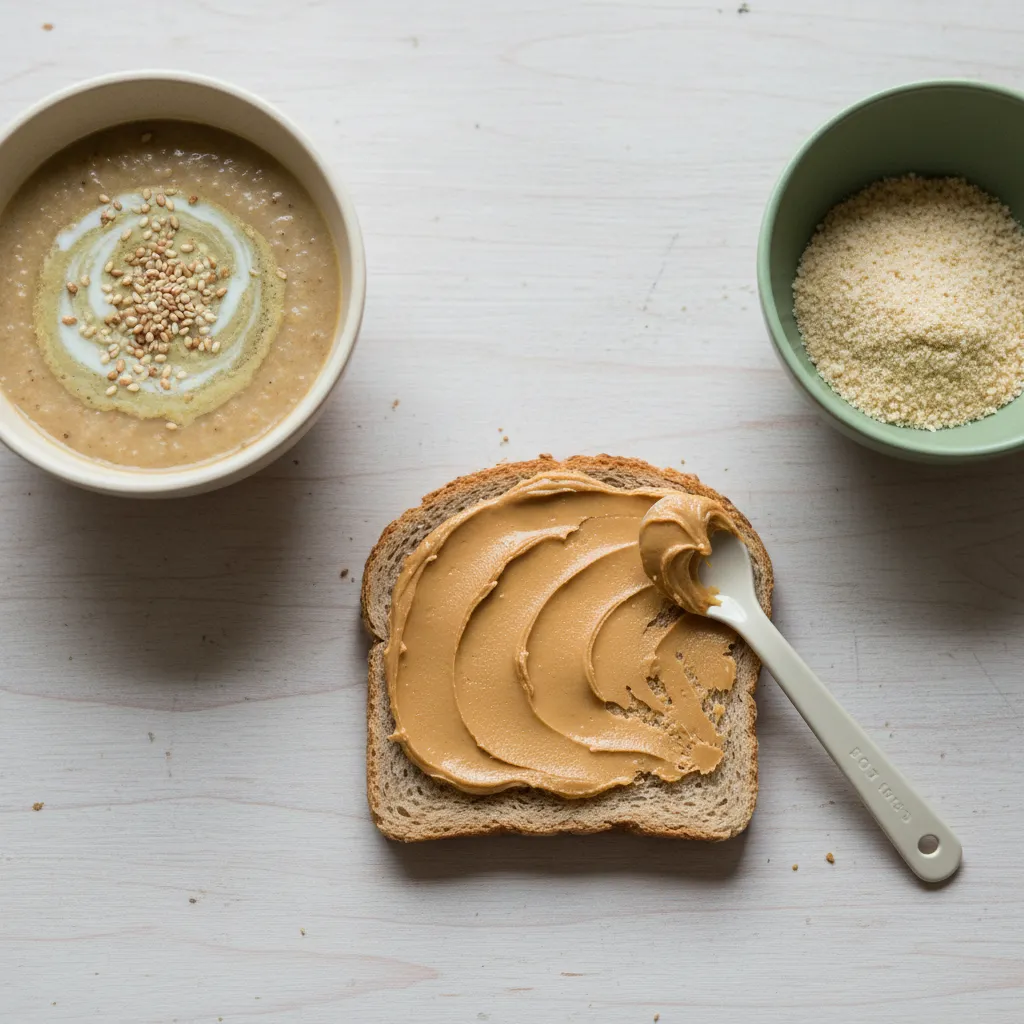
- Spread a thin layer of peanut butter or almond butter
- Mix nut butter with mashed banana for a milder flavor
In purees (from 6 months)
- Mix tahini into vegetable puree (carrot + tahini is a great combination)
- Stir nut butter into fruit puree
In baking (from 8 months)
- Use almond flour in pancakes
- Add finely ground nuts to muffins and bread
Tahini (sesame butter) is an excellent calcium source for babies. One tablespoon of tahini contains almost as much calcium as half a glass of milk. Mix into porridge, purees, or spread on bread.
Frequently asked questions
Can a 6-month-old baby eat peanut butter?
Yes. Smooth peanut butter (without added salt or sugar) is safe from 6 months. Mix with a little liquid to a thin consistency. Start with a small taste and watch for allergic reactions. Peanut butter is an excellent protein source and may reduce the risk of peanut allergy when introduced early.
When can children eat whole nuts?
Not before 4–5 years. Whole nuts, halved nuts, and large pieces of nut are choking hazards for young children. Give only nut butter, pureed nuts, or finely ground nuts mixed into other food.
Is Nutella safe for baby?
Nutella contains a lot of sugar (over 50%) and should be avoided for babies under 12 months. After 12 months, it can be given in very small amounts, but plain hazelnut butter (without added sugar) is a much better alternative.
Can baby eat coconut?
Yes, from 6 months. Coconut is botanically a drupe (stone fruit), not a nut. Most people with nut allergy tolerate coconut. Give finely grated coconut, coconut milk in cooking (not as a drink), or coconut yogurt.
Should I avoid nuts if there is allergy in the family?
No. The AAP recommends introducing nuts early even if there is allergy in the family. But speak with your pediatrician first. It may be wise to do the introduction under guidance. Avoiding nuts actually increases the risk of developing an allergy.

Summary
Nuts and seeds are safe from 6 months in butter or pureed form. Early introduction is recommended to reduce allergy risk. Never give whole nuts to children under 4–5 years. Start with smooth peanut butter mixed with liquid, and watch for allergic reactions.
Further reading
- Allergen introduction for baby: complete guide
- Eggs for baby
- Starting solids: complete guide
- Iron-rich foods for baby
- Baby food from 6 months
- Choking hazards: how to make food safe
Sources
- American Academy of Pediatrics (AAP). Infant and Toddler Nutrition
- WHO. Infant and Young Child Feeding
- LEAP Study. Early introduction of peanuts
🔧 Helpful Tools
- Baby Food Guide. Safe foods and introduction schedule for your baby
- Breastfeeding Tracker. Log feeds, track supply, and monitor nursing sessions
- All Baby Tools. Browse all free tools for pregnancy and baby care
📖 Related Articles
- Introducing Allergens to Your Baby: A Safe Step-by-Step Guide. How to safely introduce allergens to your baby. Eggs, peanuts, dairy, and gluten, when, how, and what to watch for. Based on current AAP and WHO guidelines.
- Baby Food at 8 Months: Chunkier Textures and Finger Foods. What can your baby eat at 8 months? Guide to textures, portions, finger foods, and meal routines for babies 8–10 months based on WHO and AAP recommendations.
- Baby Food Introduction: Complete Guide from 6 to 12 Months. When is your baby ready for solid food? How do you start, and what should they eat each month? Complete guide to food introduction from 6 to 12 months.