Your baby is turning one, and suddenly things are moving fast. Between twelve and eighteen months, an enormous motor leap happens. Your child goes from holding onto furniture to running across the living room, climbing up onto the sofa, and exploring the world with unstoppable curiosity.
This period is intense for everyone. You need childproofing like never before, patience when your child falls for the twentieth time, and eyes in the back of your head. But it's also a fantastic time, every new step is a small victory.
Here's everything you need to know about motor development between twelve and eighteen months.
What Happens Motorically Between 12 and 18 Months?
Motor development during this period is about mastering movement. Your child goes from needing support to moving freely. Both gross motor skills (large movements like walking and climbing) and fine motor skills (precise movements like grasping and pointing) develop rapidly.
According to the AAP, there is significant individual variation in when children reach motor milestones. Some children walk at nine months, others not until eighteen months. Both are completely normal.
Your child's motor development does not follow a strict schedule. Focus on progress over time, not on comparing with other children. Your pediatrician monitors development and will let you know if something needs further evaluation.
Gross Motor Skills: The Big Milestones
Gross motor skills are the large movements, standing, walking, climbing, and balancing. A lot happens between twelve and eighteen months.
Standing Without Support
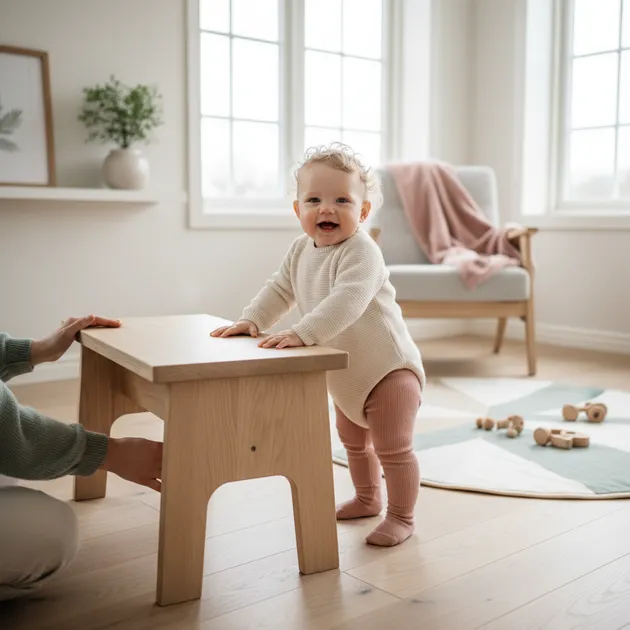
Around twelve months, many children can stand alone without holding onto anything. They may stand for a few seconds before sitting back down. Gradually balance improves, and the child can stand for longer and longer.
First Steps
The first steps come for most children between nine and eighteen months. Typically, the child starts with a few wobbly steps between two pieces of furniture or from the sofa to you.
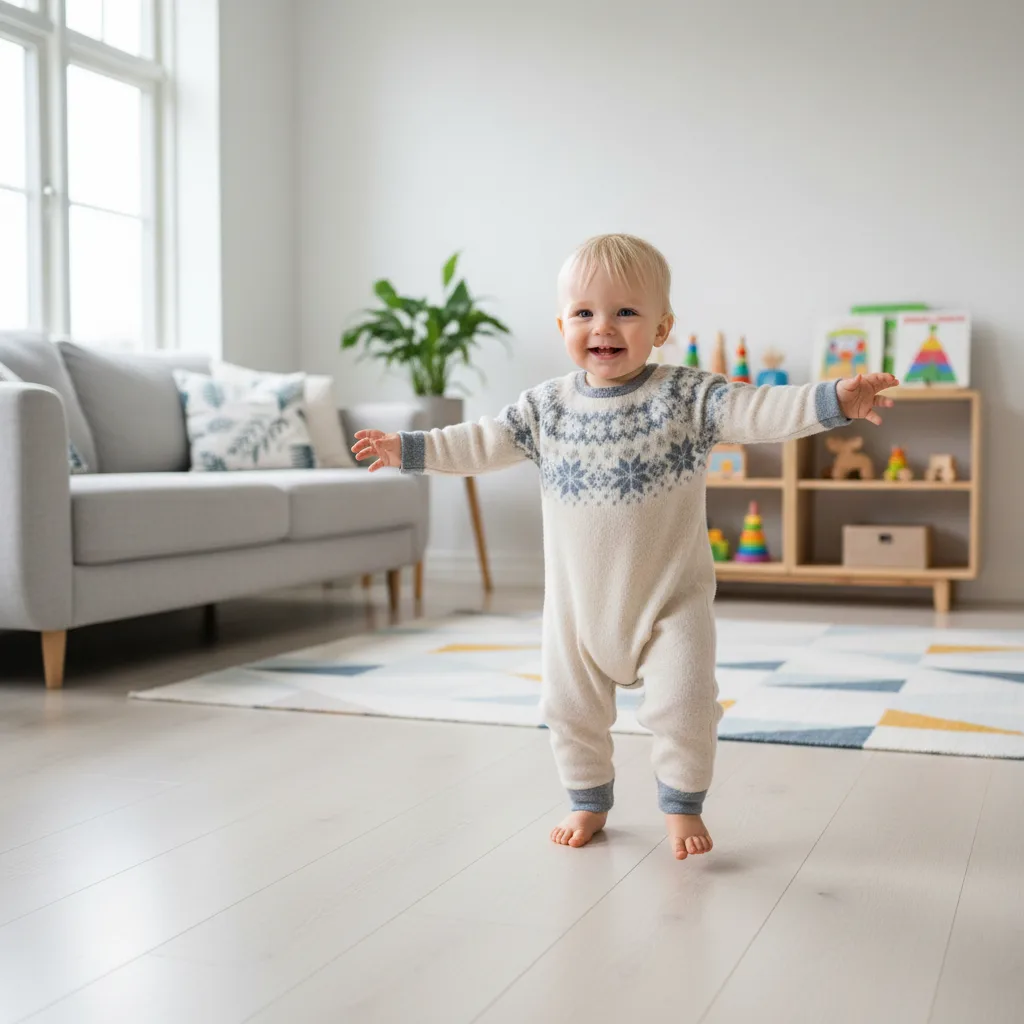
The walking pattern is wide-based and unsteady at first. Arms are held high for balance, almost like a little bear. It's completely normal for the child to fall often, that's how they learn.
Walking Independently
Between twelve and fifteen months, most children begin to walk independently. That doesn't mean they stop crawling, many switch between crawling and walking for a long time, because crawling is still faster.
Over time, walking becomes more confident. The child can carry things while walking, stop and start again, and begin to walk on uneven surfaces.
Let your child walk barefoot indoors as much as possible. Barefoot walking strengthens the foot muscles and provides better balance than shoes. Shoes are only needed outside. Read more about your baby's first shoes.
Climbing Onto Furniture and Stairs
Climbing really begins now. Your child climbs onto the sofa, onto chairs, and up stairs. The problem is that the child can often get up but not back down again.
Stairs are especially tempting. Children crawl up stairs long before they can walk up them. Walking down stairs is much harder and typically comes around age two to three.
Dancing to Music
One of the most charming milestones: your child starts to dance. This usually means bending their knees rhythmically or rocking from side to side when they hear music. Dance-like movements are a sign of good motor control and coordination.
Fine Motor Skills: Precise Grips and Movements
Fine motor skills involve the small, precise movements. Between twelve and eighteen months, a lot happens with the hands and fingers.
The Pincer Grasp Is Perfected
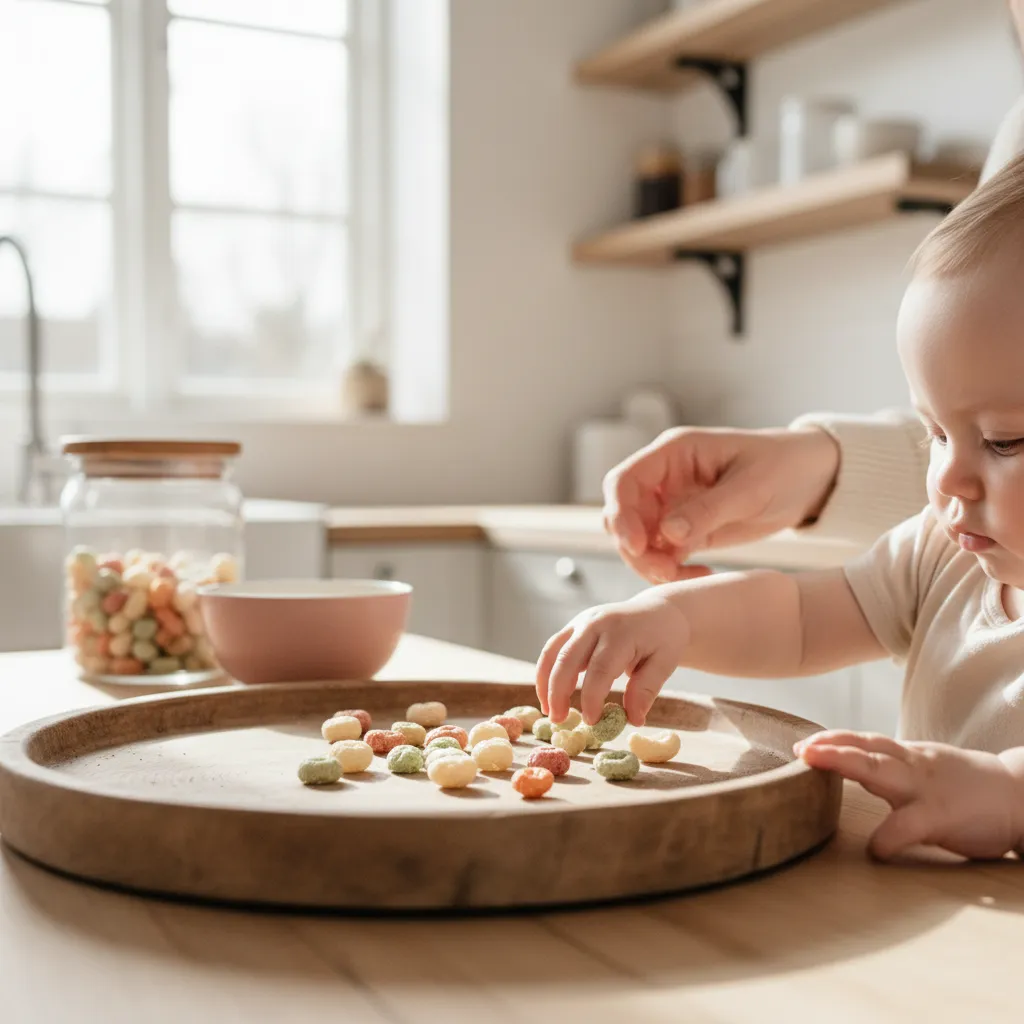
The pincer grasp (gripping with thumb and index finger) began around nine months, but now it becomes truly precise. Your child can pick up tiny things from the floor, breadcrumbs, strands of hair, tiny pebbles.
That also means you need to be extra attentive about what's on the floor. Anything small enough to grasp is small enough to put in the mouth.
Stacking Blocks
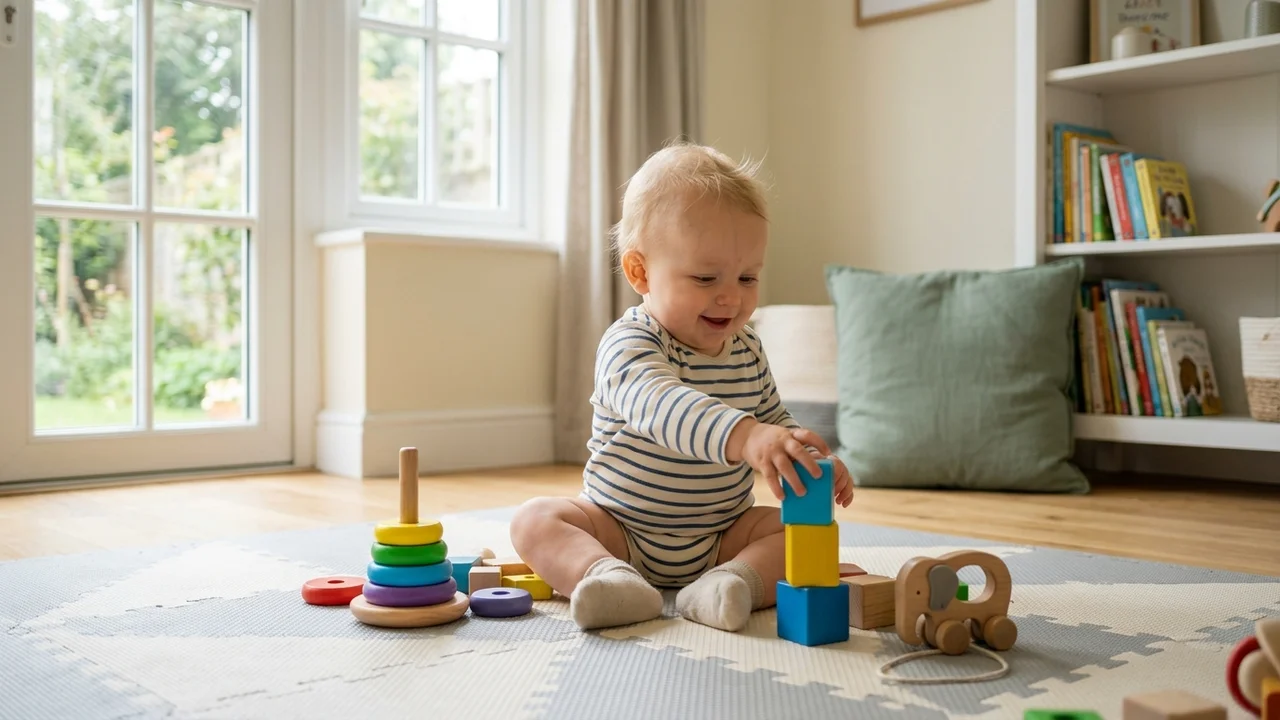
Around twelve months, your child can start stacking two to three blocks on top of each other. This requires good hand-eye coordination. By eighteen months, many can stack four to six blocks.
Holding a Spoon and Starting to Self-Feed
Your child begins to hold a spoon and attempt to eat on their own. Most will miss the mouth at first, but it's important practice. Let the child try, even if it gets messy.
Pointing with the Index Finger
Pointing is an important communication milestone. Your child points to show you things, ask for something, or share attention with you. It's an important step in language development.
Turning Pages in Books
Your child can start turning pages in board books, often several at a time. Eventually they manage to turn one page at a time. Books with thick pages are perfect for this age.
Picture books are invaluable now. Read together with your child, point at pictures, and name what you see. It stimulates fine motor skills, language development, and connection.
How to Stimulate Motor Development
You don't need expensive equipment or special programs. The best activities are simple, everyday things that give your child the opportunity to move freely.
Floor Time with an Obstacle Course
Create a simple obstacle course from sofa cushions, boxes, and blankets. Your child can climb over, crawl under, and balance along. It trains strength, balance, and spatial awareness.
Push Toys and Pull Toys
Toys your child can push in front of them while walking (push toys) or drag behind them (pull toys) are perfect for practicing walking. They give the child something to hold onto and motivate longer walks.
Drawing with Thick Crayons
Give your child thick wax crayons or colored pencils and a large piece of paper. The child will draw with large, uncontrolled movements. This trains grip and hand control.
Sand Play and Water Play
Sand and water provide wonderful sensory stimulation and fine motor training. Scooping, pouring, digging, and splashing all train precision and coordination. A basin of water on the kitchen floor works well indoors.
Other Good Activities
- Ball, rolling, throwing, and kicking
- Music, singing, clapping, and dancing
- Sorting toys, putting things in and out of containers
- Playing with lids, screw-caps, and blocks
Find more tips in our guide to toys for toddlers 1–3 years.
Safety: Childproofing More Important Than Ever
A child who walks and climbs can reach much more than a crawling child. Childproofing needs to be updated now.
Climbing Creates New Dangers
Your child can now climb onto chairs, onto tables, up to windowsills, and on top of dressers. Heavy furniture not anchored to the wall can tip over. Window locks are no longer optional.
Most important steps now:
- Anchor all tall furniture to the wall (bookshelves, dressers, TV stands)
- Install window locks and window stops
- Safety gate at the top and bottom of all stairs
- Remove chairs your child could use to climb up to countertops
- Lock cabinets with cleaning products, medicines, and sharp objects
- Check that the TV is secured or placed stably
Tipping furniture is one of the most common causes of accidents in toddlers. Dressers and bookshelves MUST be anchored to the wall. It takes five minutes and can save a life.
Read the complete guide to childproofing your home.
Wide Variation Is Completely Normal
The most important thing to remember: children develop at their own pace. The variation in motor development is enormous.
Some children walk at nine to ten months. Others don't walk until eighteen months. Children who crawled late may suddenly walk early. Children who walked late may suddenly run.
Early or late motor development says nothing about a child's intelligence or future abilities. It's simply individual differences.
Factors that influence the pace:
- Genetics, many families have early or late walkers
- Temperament, cautious children tend to wait longer
- Body build, heavier children may take a little longer
- Opportunity to practice, children who get lots of floor time develop faster
- Prematurity, use corrected age for milestones
Premature babies (born before 37 weeks) should be assessed by corrected age until the age of two. A baby born four weeks early is expected to reach milestones four weeks later than a full-term baby.
When Should You Contact Your Pediatrician?
The vast majority of children develop completely normally, but sometimes it's wise to check in with your pediatrician.
Contact your pediatrician if your child:
- Cannot walk independently by eighteen months
- Only uses one side of the body (only one hand, only one leg)
- Has lost skills they previously mastered
- Cannot stand with support by twelve months
- Seems very stiff or very floppy in the body
- Does not point or use a pincer grasp by twelve months
One-sided use of the body (only using the right hand, or only kicking with the left foot) should always be evaluated. Children under two should not have a clear preferred side. Speak with your pediatrician.
AAP guidelines recommend monitoring motor development at all well-child visits. Your pediatrician is there to help, and it's always better to check once too often than once too few.
Frequently Asked Questions
My baby is 14 months and not walking yet, is that normal?
Yes, that's within the normal range. Most children walk independently between twelve and eighteen months. As long as your child can stand with support and moves actively (crawling, creeping, scooting), there's no reason for concern. Speak with your pediatrician if the child is not walking by eighteen months.
Does my child need shoes to learn to walk?
No. Barefoot walking is best for developing foot muscles and balance. Shoes are only needed when the child walks outdoors. Choose soft shoes with a flexible sole that lets the foot move naturally. Read more in our guide to baby's first shoes.
My child falls all the time, is that normal?
Completely normal. Falling is part of learning to walk. Your child needs to fall to develop balance and learn to self-correct. As long as the child gets up and tries again, everything is as it should be. Avoid reacting dramatically to falls, your child takes cues from you.
How can I help my child learn to walk?
Give your child the opportunity to stand and move freely. Let them hold onto furniture, offer your hands to hold, and use push toys they can lean on. Avoid baby walkers, the AAP advises against them because they can delay normal motor development and increase the risk of accidents.
My child climbs on everything, how do I handle that?
Climbing is normal and healthy for development. Instead of just stopping your child, create safe climbing opportunities. Sofa cushions on the floor, low stools, and soft obstacle courses give your child sanctioned climbing. Childproof your home thoroughly so your child can explore safely.
Track your child's milestones and see development over time with Babysential's milestone tracker, celebrate every new achievement! See our complete milestone guide for an overview of what to expect at this age. Follow your baby week by week with the timeline, and find safe activities in our guide to toys for toddlers.
Useful Tools on Babysential
- Milestones, record and celebrate progress
- Timeline, follow your baby week by week
- Checklist: Childproofing your home
- SmartStart, meal planner for babies
Sources
🔧 Helpful Tools
- Baby Milestones Tracker. Track your baby's developmental milestones
- Development Leaps. Understand your baby's developmental leaps
- All Baby Tools. Browse all free tools for pregnancy and baby care
📖 Related Articles
- Fine Motor Skills: Development and Activities for Babies 0–3 Years. Complete guide to fine motor skill development in babies and toddlers. Milestones, 10+ age-appropriate activities, and when to seek help.
- Gross Motor Skills in Babies: Activities to Support Development. Support your baby's gross motor development with simple activities. From rolling to crawling and walking, here are age-appropriate tips for every stage.