Children develop rapidly and suddenly do things you aren't prepared for. One day your baby lies still, the next day they roll off the changing table. Childproofing your home is about staying one step ahead.
Here's a room-by-room guide based on recommendations from the AAP (American Academy of Pediatrics) and CPSC (Consumer Product Safety Commission).
Key Takeaways
- Begin childproofing by 5–8 months, before crawling starts, because mobility develops faster than most parents expect.
- The kitchen and bathroom are the two highest-risk rooms: burns, poisoning, and drowning are the leading causes of accidental injury for children under 5 (AAP/CPSC data).
- Children can drown in as little as 2 inches of water, always empty the bath immediately after use and never leave a child alone near any water source.
- Furniture tip-overs injure approximately 11,000 children per year in the US (CPSC), anchor all heavy furniture with anti-tip straps, even if it feels stable.
- Childproofing is not a one-time task: reassess at every new developmental milestone, crawling, pulling to stand, walking, and climbing each reveal new hazards.
When Should You Childproof?
Start early - ideally before your baby starts moving.
- 0-4 months: Secure the changing table, sleep area, and bath routines
- 5-8 months: Baby rolls, grasps, and starts crawling - secure the floor level
- 8-12 months: Baby pulls up and crawls everywhere - secure furniture, stairs, and cabinets
- 1-3 years: Child climbs, opens doors, and is curious about everything - full walkthrough
Tip: Get down on the floor and see the room from your child's perspective. What can you reach? What can you pull on? What can you put in your mouth?
Common Accidents by Age
According to the AAP and Safe Kids Worldwide, the most common accidents for young children include:
Newborns and Infants (0-1 year):
- Falls from changing tables or beds
- Burns from hot liquids (coffee in a cup holder)
- Small objects that get stuck in the throat
- Drowning (even in 4 inches of water)
Toddlers (1-3 years):
- Falls from heights
- Burns from stoves and ovens
- Poisoning (medications, cleaning products)
- Choking on toys and food pieces
- Cuts and scrapes
The Kitchen
The kitchen is the most dangerous room in the house for young children. Here you'll find hot surfaces, sharp objects, and toxic substances.
Measures:
- Install stove guards so the child can't reach pots with hot food
- Put childproof locks on the oven door or keep the child away
- Store knives and sharp objects out of reach
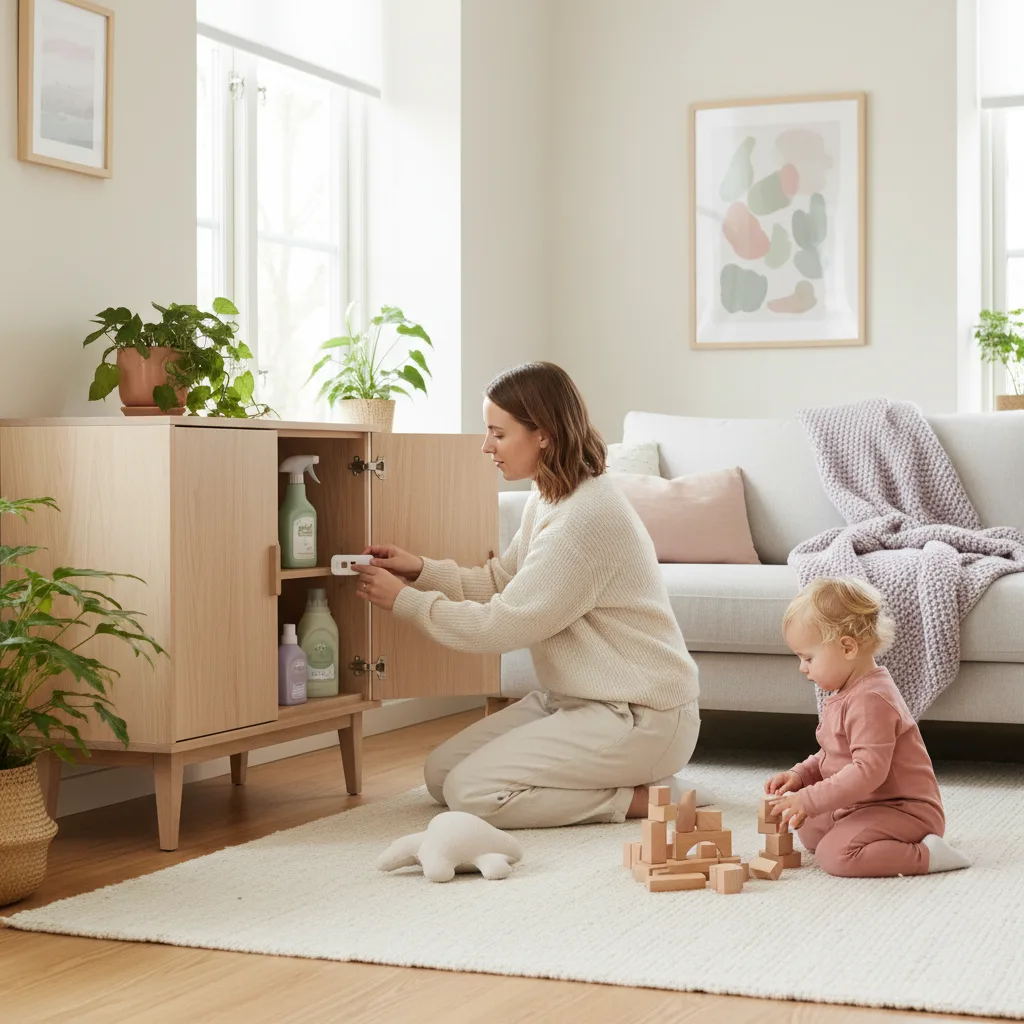
- Move cleaning products and chemicals to high cabinets with childproof locks
- Use the back burners on the stove and turn pot handles inward
- Don't leave hot drinks on the edge of the counter
- Use short cords on kettles and toasters - never let cords hang freely
Burns: Children's skin is extremely sensitive. Burns can occur at temperatures as low as 104°F (40°C). Hot coffee can cause serious burns. Keep hot drinks and food out of reach.
The Bathroom
Water and slippery surfaces make the bathroom a risky room.
Measures:
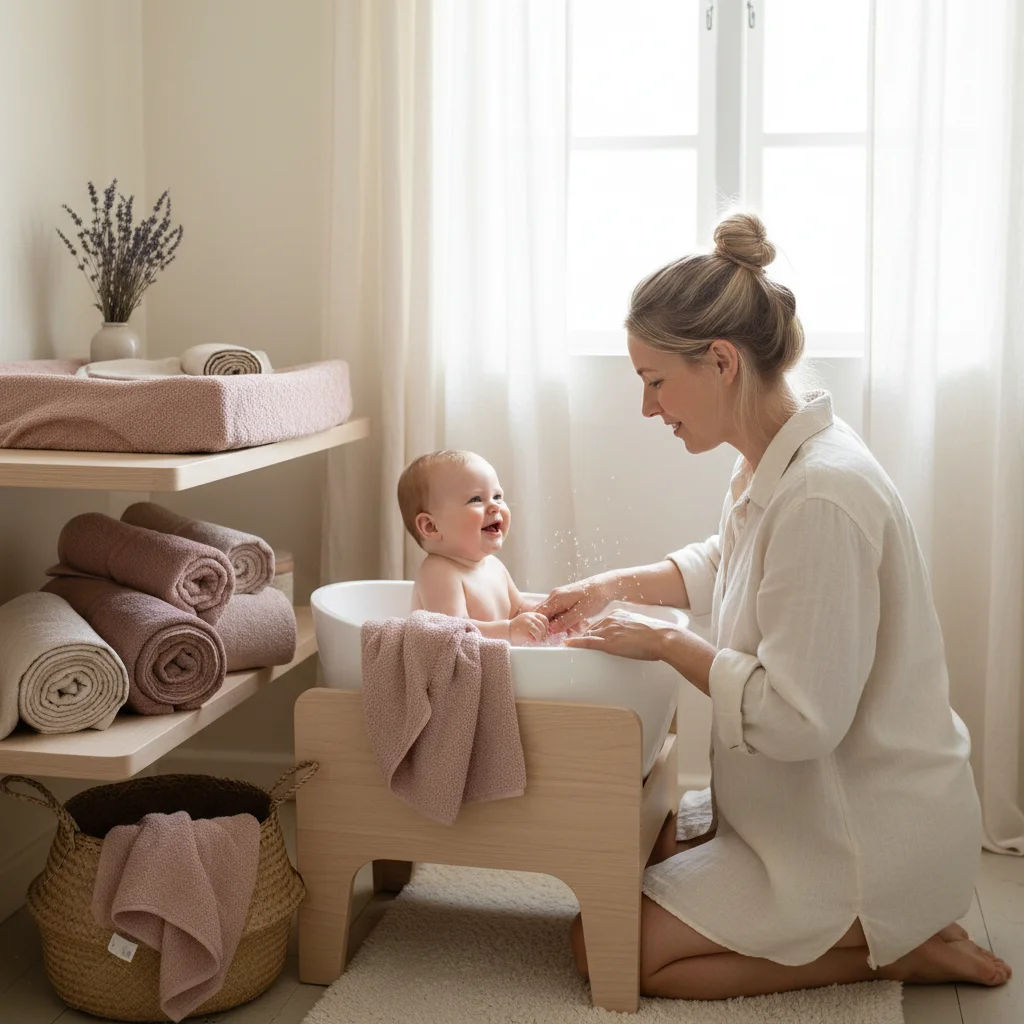
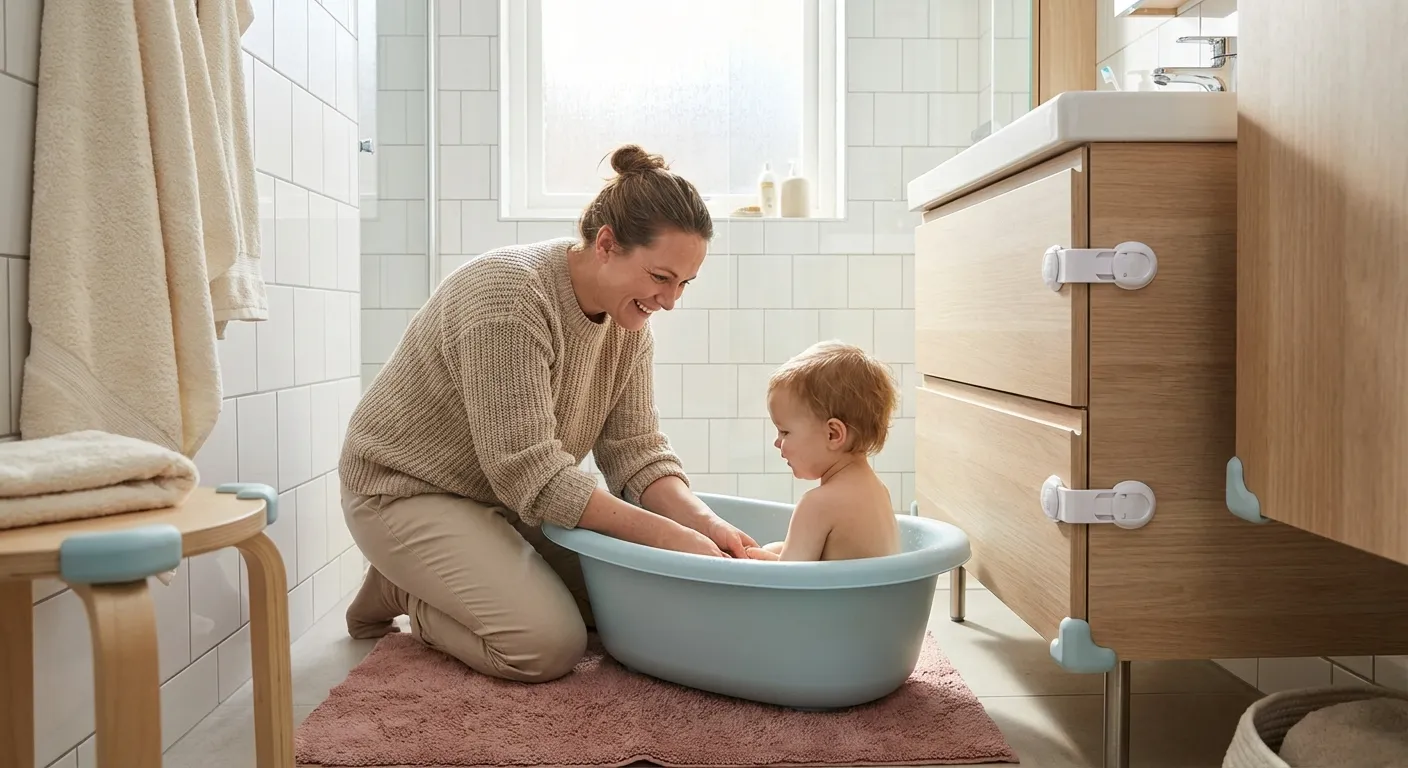
- Always be with your child during bathing - never leave, not even for a moment
- Check bath water temperature - it should not exceed 100°F (38°C)
- Consider faucets with anti-scald devices
- Store medications and cosmetics in cabinets with childproof locks
- Place a non-slip mat in the bathtub
- Keep the toilet lid closed - small children can drown even in shallow water
- Move razors and scissors out of reach
Living Room and Bedroom
The family spends a lot of time here, and the child explores freely.
Measures:
- Install outlet covers on all outlets within reach
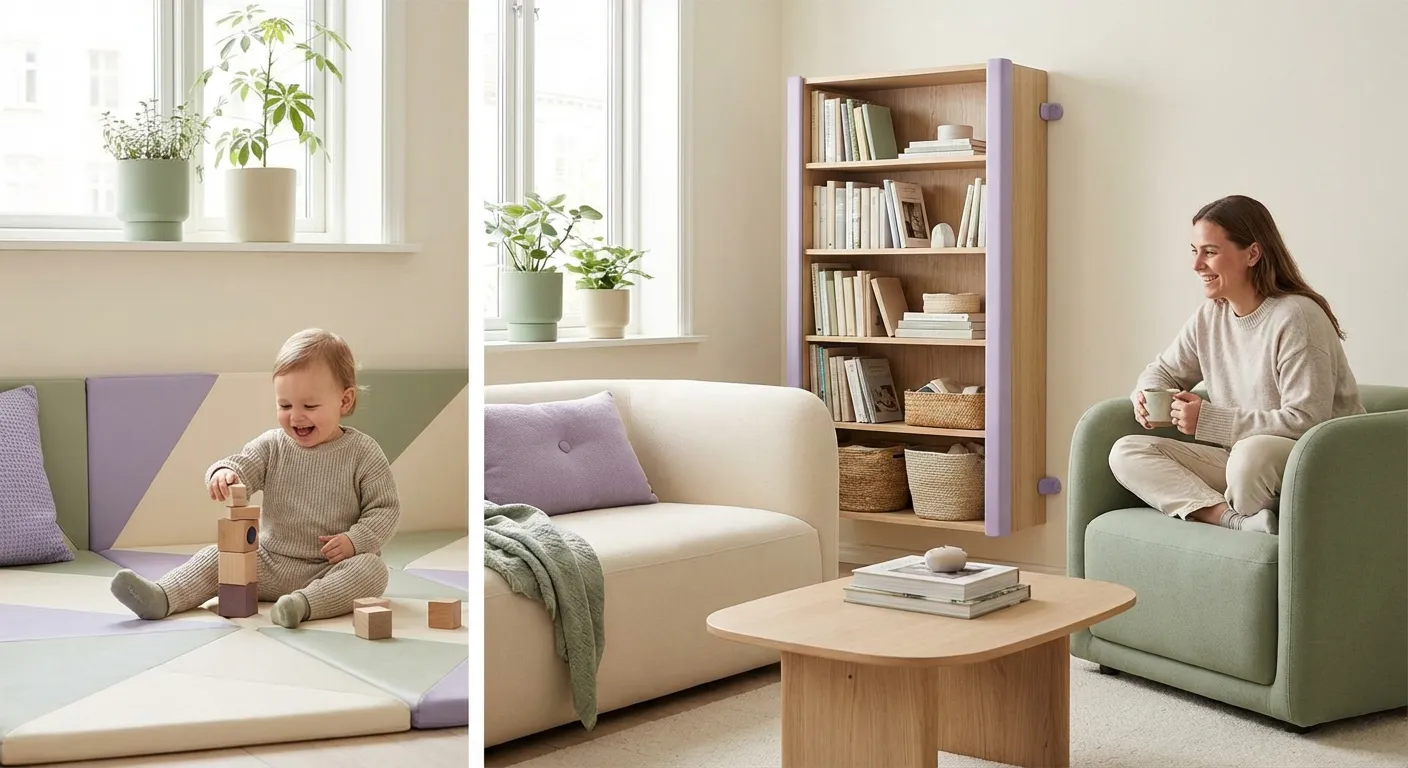
- Anchor furniture to the wall - bookshelves, dressers, and TVs can tip over
- Remove long tablecloths the child can pull on
- Put away small objects the child could swallow (coins, buttons, batteries)
- Use window locks or guards so the child can't open the window
- Remove plastic bags - suffocation hazard
- Secure cords from lamps and chargers
- Put corner and edge protectors on furniture
Crib and Sleeping
- Maximum 2 3/8 inches between slats
- Sides should be at least 26 inches high from where the child can stand
- Use a fitted sheet with no loose bedding, pillows, or stuffed animals
- Infants should sleep on their backs to prevent SIDS
Stairs
Stairs are a common cause of falls for toddlers.
Measures:
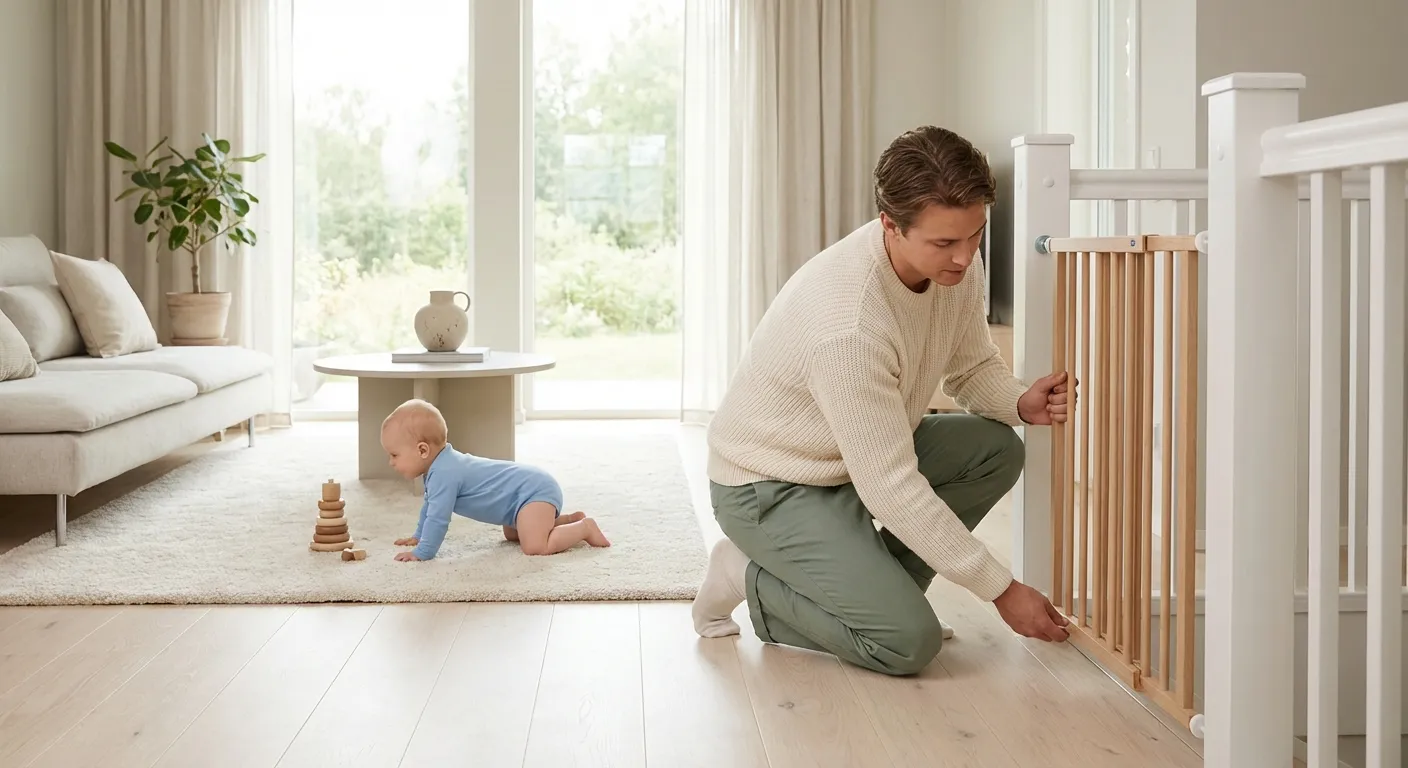
- Install safety gates at the top and bottom of stairs
- The gate should have a childproof opening the child can't figure out
- Teach the child to use the stairs with supervision - don't just block them off forever
- Keep stairs clear of toys and shoes
Balconies and Windows
Measures:
- A child should never be on a balcony or deck without safety measures or supervision
- Install window guards that limit how far windows open
- Don't place furniture under windows that the child could climb on
- Railing gaps should be no more than 4 inches between bars
The Changing Table
Measures:
- Never leave the child on the changing table - not even to grab a diaper
- Have everything you need within arm's reach before you begin
- Take the child with you if you need to step away
- This applies from birth - babies can suddenly move more than you'd expect
Outdoor Safety
Stroller
- Check that the bassinet is properly attached to the frame
- Use the safety harness in the stroller seat
- Avoid completely covering the stroller with blankets - risk of overheating
- Keep hot drinks away from cup holders near the child
Car
- Use an approved car seat appropriate for your child's size and weight
- Rear-facing car seat for as long as possible (recommended until at least age 2, or up to the seat's height/weight limit)
- See NHTSA Car Seat Guidelines for current rules
Poisonous Substances
Poisoning is a common accident for 1-3-year-olds. Children are curious and put everything in their mouths.
Measures:
- Store medications in a locked cabinet - childproof packaging is no guarantee
- Move cleaning products, chemicals, and tobacco out of reach
- Remove poisonous plants from the child's reach
- Store batteries out of reach - button batteries are especially dangerous if swallowed
Poison Control: Call 1-800-222-1222 (US) if you suspect your child has ingested something poisonous. Available 24/7. You can also visit poison.org for more information.
Choking Hazards
Small objects are a serious choking hazard for children under 3 years.
Rule of thumb: Anything small enough to fit through a toilet paper roll can get stuck in a small child's throat.
Measures:
- Keep small objects off the floor (coins, buttons, LEGO pieces)
- Supervise during meals - children can choke on food
- Check that toys are age-appropriate and don't have loose parts
- Make sure pacifiers and bottle nipples are intact and securely attached
Checklist: Quick Walkthrough
- Outlet covers installed
- Stove guard in place
- Safety gates at top and bottom of stairs
- Furniture anchored to walls
- Medications and cleaning products in locked cabinets
- Window guards installed
- Small objects removed from floor level
- Bath water temperature checked
- Cords secured
- Plastic bags removed from reach
Frequently Asked Questions
When should I start childproofing my home?
Start early, ideally before your baby starts moving. Secure the changing table and sleep area from birth. When the baby is 5-8 months and starts rolling and crawling, floor level should be secured. A full walkthrough should be done before the child starts climbing and opening doors.
What are the most common accidents for young children at home?
For infants, falls from changing tables, burns from hot drinks, and choking on small objects are most common. For toddlers 1-3 years, falls from heights, burns from stoves, poisoning from medications and cleaning products, and choking on toys and food are the most frequent accidents.
What should I do if I suspect poisoning?
Call Poison Control at 1-800-222-1222 (US) immediately. They're available 24/7. Always store medications and cleaning products in childproof cabinets out of reach of children.
Summary
Childproofing isn't about turning your home into a fortress, but about removing the biggest dangers so your child can safely explore. Go through your home systematically, and update the childproofing as your child grows and learns new skills.
Read More
- Nursery Decoration Tips - Design a safe and beautiful nursery
- Starting Daycare - Preparing for daycare
Sources
🔧 Helpful Tools
- Baby Milestones Tracker. Track your baby's developmental milestones
- All Baby Tools. Browse all free tools for pregnancy and baby care
📖 Related Articles
- Poisoning in Children. Prevention and First Aid. Child poisoning: how to prevent it and act quickly. Poison control, first aid, and childproofing your home. Evidence-based guidance.
- How to Baby-Proof Your Home: A Room-by-Room Guide. Baby-proofing should start before your baby crawls (around 6 months). This room-by-room checklist covers the most common hazards and how to eliminate them.