The baby who was smiling at everyone is now crying desperately the moment you leave the room. You cannot even go to the bathroom without a full meltdown. Welcome to separation anxiety.
Separation anxiety is a completely normal part of your baby's development. It does not mean you have done anything wrong, and it does not mean your child is especially sensitive. It means their brain is maturing, and that your child has formed a secure attachment to you.
Here is an overview of what separation anxiety is, when it happens, and concrete strategies to help your child through this phase.
What Is Separation Anxiety?
Separation anxiety is your baby's reaction to being separated from their primary caregivers. It is a natural and healthy part of cognitive development.
The key lies in something called object permanence. Around 6–8 months, babies begin to understand that things and people continue to exist even when they are out of sight. Before this stage, it was "out of sight, out of mind." Now your baby knows you are somewhere, but cannot yet understand that you will come back.
This realization is frightening for a small child. Your baby knows you exist, but has no experience of waiting. The result is protest, crying, and clinging.
According to the American Academy of Pediatrics (AAP): Separation anxiety is a sign of normal development and secure attachment. Babies who react when their caregivers leave are showing that they have built a strong bond with the people who care for them.
When Does Separation Anxiety Start?
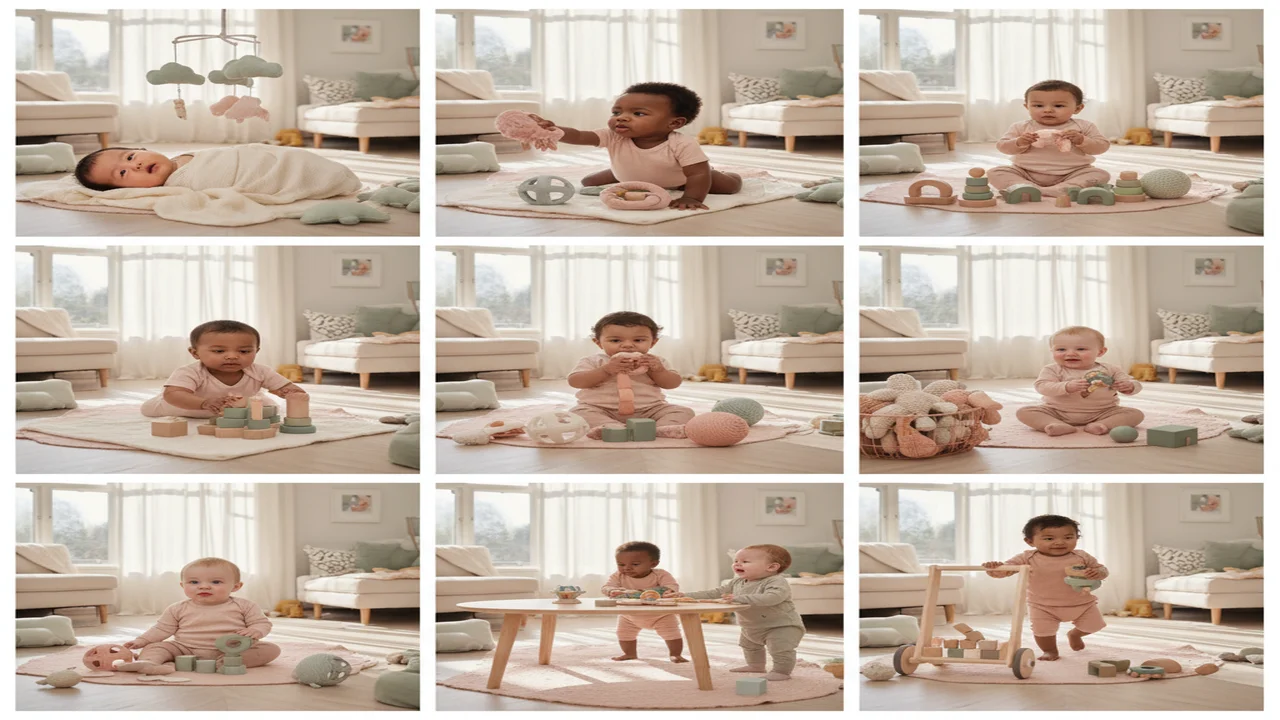
Separation anxiety follows a fairly predictable pattern, though the timing varies from child to child:
| Age | What Happens |
|---|---|
| 6–8 months | First signs. Baby may become unsettled when you leave the room |
| 8–10 months | Often most intense. Stranger anxiety also peaks |
| 10–18 months | Peak phase. Can be intense, especially at daycare drop-off |
| 18–24 months | Gradually decreases, but can flare up with changes |
| 2–3 years | Most children handle separation well |
Some babies show clear signs as early as 6 months, while others do not noticeably show it until closer to 10 months. Both are normal.
Signs of Separation Anxiety
Separation anxiety can show up in many ways. Here are the most common signs:
- Cries when you leave, even if you just step out of the room for a moment
- Clings tightly, refuses to be put down, wants to be held constantly
- Stranger anxiety, becomes scared or wary of unfamiliar people
- Night waking, checks that you are there, cries for you
- Follows you everywhere, crawls or walks after you wherever you go
- Refuses others, only wants Mama or Dada, no one else will do
The intensity varies from child to child and day to day. Some days it is no problem at all; other days it is a crisis the moment you turn away.
Why Separation Anxiety Is a Good Sign
It can be hard to see anything positive when your baby is screaming desperately, but separation anxiety is actually a good sign.
It shows that your child has developed secure attachment to you. Your baby cares who is there, which means the bond between you is strong and healthy.
It also shows that the brain is developing normally. The ability to understand that things exist outside the field of vision (object permanence) is an important cognitive milestone. You can track your baby's development in Milestones.
Tip: It can help to remind yourself that separation anxiety is a positive developmental sign. It is your baby saying: "You are important to me, and I want you here."
How to Handle Separation Anxiety
Here are six concrete strategies that help your child through this phase:
1. Always Say Goodbye. Never Sneak Away
It is tempting to slip away while your baby is busy with something else. Do not. When your child discovers you are gone without warning, their anxiety increases.
Always say goodbye, even if it triggers crying. Over time, your child learns that "goodbye" means you are coming back, not that you have disappeared for good.
2. Keep Goodbyes Short and Calm
Long, emotional goodbyes make things worse. Give a hug, say "Bye, Mama/Dada will be back soon," and go. Keep your voice calm and reassuring.
The more hesitation and worry you show, the more uncertain your child becomes. Your calm is contagious.
3. Practice Short Separations
Start with small exercises at home. Go to another room, talk to your child so they can hear your voice, and come back after a few seconds. Gradually increase the time.
This teaches your child the most important lesson: you go away, but you always come back.
4. Use a Comfort Object
Many children find comfort in a security blanket, a stuffed animal, or another soft object. Let your child have this with them when you are apart.
The comfort object becomes a "bridge" between your child and you. It smells familiar, it is soft, and it provides security when you are not there.
5. Always Come Back When You Said You Would
If you say "I'll pick you up after lunch," do it. Predictability builds trust. Your child needs to experience, again and again, that you keep your word.
6. Acknowledge the Feelings
Say "I can see you are sad that Mama is leaving. It is okay to feel sad. Mama is coming back." Do not dismiss the tears with "There's nothing to cry about."
Even if your baby does not understand all the words, they understand your tone and that their feelings are being taken seriously.
Important: Never use separation as a punishment. Threatening to leave or "abandoning" your child intensifies anxiety and undermines trust.
Separation Anxiety and Starting Daycare
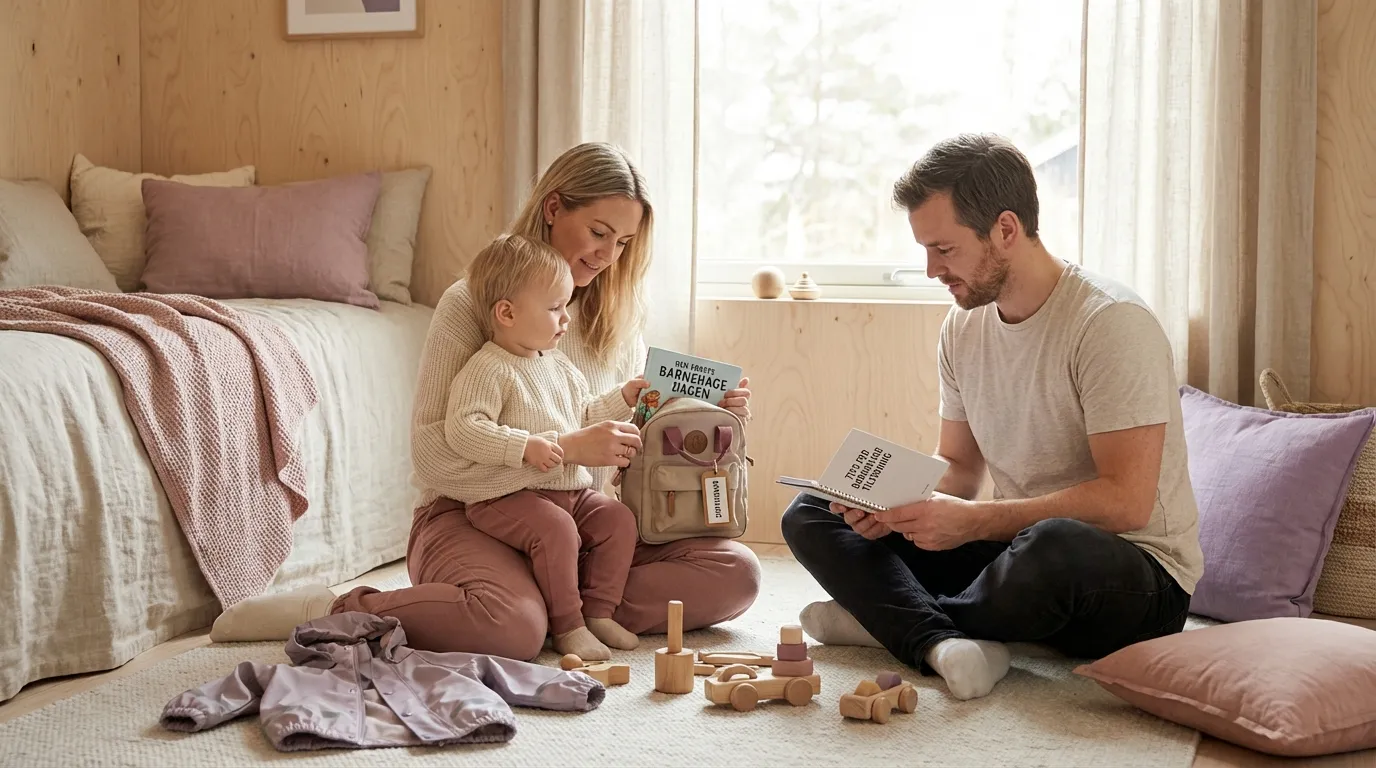
Starting daycare is often the first big test. Your child suddenly has to be away from their parents for several hours, with unfamiliar adults and children.
How to make the transition easier:
- Use the settling-in period well, stay present during the first days and gradually increase separation
- Establish a consistent drop-off routine, the same sequence every day provides predictability
- Comfort object in the bag, something familiar from home that provides comfort
- Tell them what is going to happen, "First daycare, then Dada will pick you up after snack time"
- Trust the caregivers, they have experience with this and know how to provide comfort
Most children stop crying shortly after their parents leave. Caregivers can send you a message or photo if you are worried.
Night Waking and Separation Anxiety
Separation anxiety affects nighttime sleep too. Your baby wakes up, realizes you are not there, and cries. This is especially common around 8–10 months.
The connection between separation anxiety and sleep regression is strong. Many of the hardest nights are caused by exactly this developmental phase.
Tips for better nights:
- Have a consistent, calming bedtime routine that creates security
- Say goodnight in a predictable way, the same words, every evening
- When your baby cries at night, offer brief comfort without bringing them into full light
- A comfort object in the crib can help your baby self-soothe
Night waking linked to separation anxiety passes. It requires patience, but it is a phase, not a permanent problem. Read more about sleep routines for babies.
Pediatrician tip: Your pediatrician can offer guidance on sleep and attachment at well-child visits. If you are struggling with night waking over an extended period, bring it up at your next appointment for personalized advice.
When Should You Seek Help?
Separation anxiety is normal and resolves on its own. But in some cases, it is worth talking to your pediatrician:
- Anxiety persists past age 2–3 with no signs of improvement
- Your child has intense anxiety that affects daily life (refuses to eat, play, or sleep)
- Anxiety appears suddenly after a problem-free period with no obvious cause
- You yourself are struggling with guilt, exhaustion, or uncertainty
There is good help available. Your pediatrician is the first point of contact and can refer you further if needed.
Frequently Asked Questions
Is it normal for a one-year-old to cry every day at daycare drop-off?
Yes, it can be normal in the beginning. Most children adjust within a few weeks. If the crying continues after 4–6 weeks of regular attendance, speak with the caregivers and possibly your pediatrician.
Can separation anxiety come back after it seemed to pass?
Yes, that is common. Major changes such as moving, a new daycare, a new sibling, or illness can trigger another round. Use the same strategies as before, it usually passes more quickly the second time.
Does it mean my child is insecurely attached if they cry a lot?
No, quite the opposite. A strong reaction at separation shows that your child has attached to you. An insecurely attached child may actually seem indifferent at goodbye, precisely because they do not expect comfort.
Does it help to let my child spend time with other caregivers?
Yes, gradual exposure is one of the best things you can do. Let grandparents, friends, or other trusted adults look after your child for short periods, and gradually increase the time. Your child learns that others can also provide comfort and security.
Should I avoid leaving my child at all until the anxiety passes?
No, that is not helpful and is not practical. Your child needs the experience of you leaving and coming back. Avoidance can actually prolong the phase. What matters is making separations safe and predictable.
Read More
- Milestones. Track Your Baby's Development. See what is typical for their age
- Starting Daycare. Prepare your child and yourself
- Sleep Regression in Babies. When sleep gets harder
- Bedtime Routines That Work. Calming evening routines
- Sleep Routine for Newborns. Build good habits early
Sources
- American Academy of Pediatrics. Emotional Development
- Zero to Three. Separation Anxiety
- CDC. Developmental Milestones
Last updated: March 2026
🔧 Helpful Tools
- Baby Milestones Tracker. Track your baby's developmental milestones
- Development Leaps. Understand your baby's developmental leaps
- All Baby Tools. Browse all free tools for pregnancy and baby care
📖 Related Articles
- Starting Daycare: How to Prepare Your Child. Complete guide to starting daycare. Preparation timeline, settling-in process, packing list, separation anxiety, illness policy, and communication with your daycare.
- Stranger Anxiety in Babies: Completely Normal. But What Do You Do?. Stranger anxiety is a normal developmental phase. Learn when it starts, how long it lasts, and get practical tips for handling it with confidence.