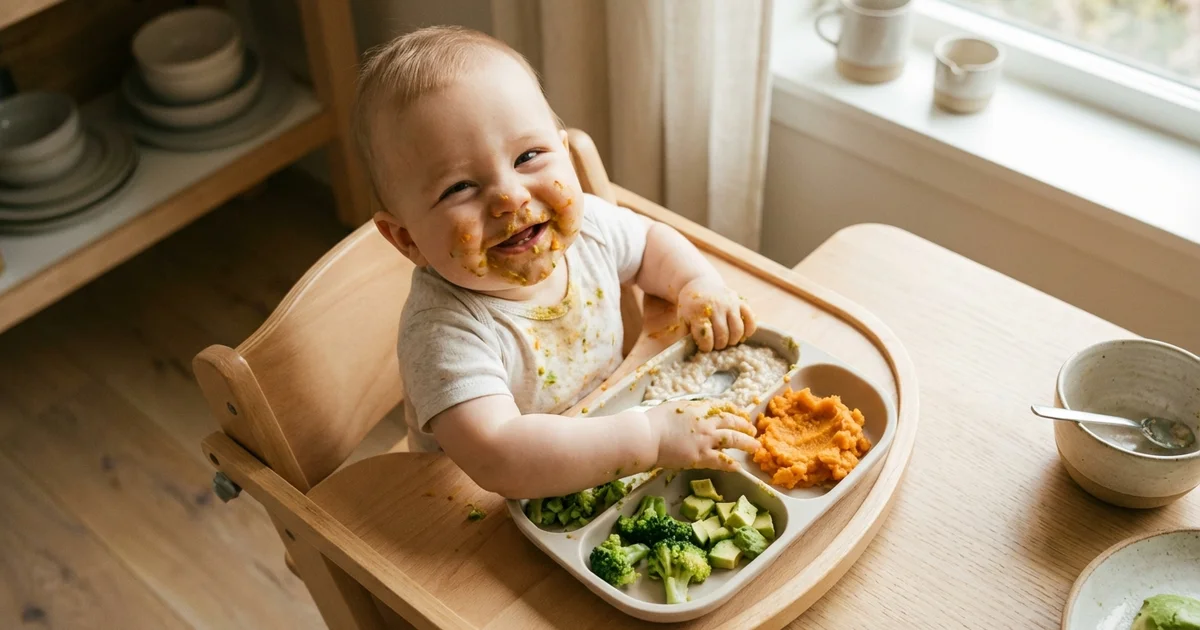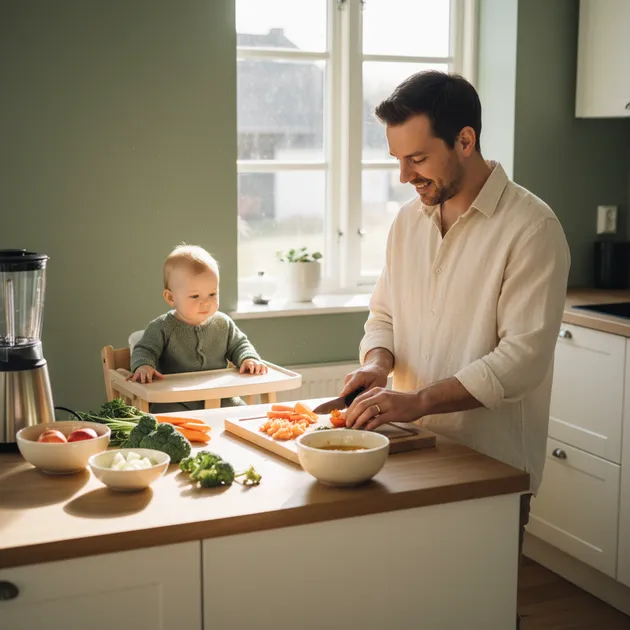
When your baby starts solid foods, the questions pile up: Can the baby have salt in their food? Is fruit too sweet? What about spices? The international guidelines are clear, but knowing where the lines are in practice can be tricky.
Here is an overview of what the WHO and AAP recommend about sugar, salt, and spices in baby food, plus practical tips for everyday life.
Sugar for Babies. What Do the Guidelines Say?
The World Health Organization (WHO) and the American Academy of Pediatrics (AAP) are clear: avoid giving young children foods and drinks with a lot of added sugar, such as juice, soda, cakes, ice cream, and candy. Sugar provides a lot of energy (calories) but none of the important nutrients your baby actually needs.
Why Is Added Sugar a Problem?
Added sugar provides "empty calories", energy without vitamins, minerals, or fiber. For a baby with a small stomach, this means sugary food displaces nutritious food that the baby actually needs to grow and develop.
Sugar also increases the risk of tooth decay (cavities). Dental health is affected as soon as the first teeth appear, usually around 6 months of age.
Children under two should have no added sugars at all, according to the AAP. Young children have low body weight and can easily consume too much sugar per kilogram of body weight. Check the ingredient list on yogurt, crackers, and other products.
What About Natural Sugar in Fruit?
Fruit contains natural fructose, but also fiber, vitamins, and minerals. There is a big difference between giving your baby a banana and giving them juice with added sugar.
Fruit and berries are recommended from the start of solids (around 6 months) and can be given as a porridge topping, snack, or finger food. You do not need to worry about the natural sugar content in whole fruit, it is added sugar that should be avoided.
Common Hiding Places for Added Sugar
Watch out for hidden sugar in these products:
- Commercial baby food: Some ready-made purees and smoothie pouches contain surprisingly high amounts of sugar. Read the ingredient list.
- Yogurt: Many yogurts marketed toward children have a lot of added sugar. Choose plain whole-milk yogurt and mix in your own fruit.
- Cereals: Many breakfast cereals contain a lot of sugar. Choose oatmeal or whole grain porridge without additives.
- Crackers and rice cakes: Some varieties contain more sugar than you would expect.
- Juice: Even 100% juice contains a lot of sugar and should not be given to babies. Water and breast milk/formula are the only recommended drinks in the first year.
Salt for Babies. Why Caution Matters
During the first year, you should not add salt to your baby's food or give them foods that contain a lot of salt. A baby's kidneys are not fully developed and cannot regulate salt balance well enough.
How Much Salt Can a Baby Handle?
Even though the food may taste bland to you as an adult, your baby does not experience it that way. Babies have a much more sensitive palate and notice nuances in food that adults no longer pick up.
Babies under 12 months should get less than 1 gram of salt per day. That figure comes from the UK, where the NHS publishes a maximum recommended salt intake by age. Neither the AAP nor the US reference values set an upper limit. The AAP gives the same advice without any figure, saying all fresh food for babies should be cooked with no added salt or seasoning. The National Academies list no upper intake level for sodium under age 1 and mark it not determined, which means the evidence was judged insufficient to set one, not that more salt is fine. That sounds like a little, but much of this is already covered by the naturally occurring sodium in breast milk, bread, and common foods.
Common Salt Sources to Watch
- Bread: Regular bread contains a fair amount of salt. Choose bread with lower salt content, or bake your own with reduced salt.
- Cheese: Some cheeses can have high salt content. Cheese can be introduced around 10 months, but in moderate amounts.
- Deli meats and sausages: Many meat products are high in salt. Choose reduced-sodium varieties.
- Convenience food and canned goods: Often high in salt content. Make food yourself when you can.
- Salty snacks: Chips, salted crackers, and similar foods are not suitable for babies.
A good tip is to prepare food for your baby from the family dinner, just set aside the baby's portion before you add salt and seasoning to the rest. That way your baby eats the same food as the family, just without the salt.
Spices for Babies. What Can You Use?
Even though salt should be avoided, there is no reason baby food has to be bland. Health authorities recommend exposing babies to a variety of flavors from the start, and spices are a great way to do that.
Safe Spices from Weaning (6 months)
- Cinnamon: Adds lovely flavor to porridge and fruit puree.
- Vanilla: Natural vanilla (not vanilla sugar) works well in porridge.
- Cardamom: Mild and pleasant flavor for babies.
- Basil, parsley, dill: Fresh herbs add good flavor to savory food.
- Ginger: In small amounts, for example in vegetable puree.
- Turmeric: Mild flavor that turns food yellow.
Spices to Use Carefully
- Chili and hot pepper: Too strong for most babies. Wait until the child is a little older and increase gradually.
- Nutmeg: Should only be used in very small amounts for babies.
- Large amounts of garlic and onion: Can cause gas. Start with small amounts.
Practical Tips for Everyday Life
Make Baby Food Without Sugar and Salt
- Cook vegetables in unsalted water and mash or cut into pieces appropriate for your baby's age.
- Use natural flavors: Sweet potato, carrot, and butternut squash are naturally sweet. Onion, garlic, and herbs add plenty of flavor.
- Mix fruit into porridge instead of adding sugar. Banana, blueberries, and apple provide natural sweetness.
- Make your own smoothies with just fruit, berries, and perhaps plain yogurt (from 10 months), without added sugar.
- Read the ingredient list on everything you buy. Sugar can hide behind names like glucose, fructose, maltose, syrup, and honey.
When the Family Eats Differently
It is completely fine to adapt the family meal for your baby. Prepare food as usual, but:
- Set aside the baby's portion before adding salt.
- Use spices and herbs for flavor instead of salt.
- Avoid giving the baby store-bought sauces, ketchup, or soy sauce.
- Offer water at mealtimes, not juice or soda.
Babysential's meal planner helps you find age-appropriate recipes without unnecessary sugar and salt. Try it for free!
After 12 Months. What Changes?
After your baby's first birthday, you can begin offering more flavorful food, but it is still important to limit sugar and salt. General healthy eating guidelines apply:
- Limit processed foods with high amounts of sugar, salt, and saturated fat.
- Choose breads, cereals, and dairy products with lower sugar and salt content.
- Sugary drinks like juice and soda should be limited.
- Cow's milk can be used as a drink from 12 months (maximum 16 oz/day including yogurt).
Frequently Asked Questions
Can babies have honey?
No. Children under one year should not have honey in any form, due to the risk of infant botulism. This includes honey used in baking and cooking. After 12 months, honey is safe.
Is it okay to give babies juice?
No, neither juice nor soda is recommended in the first year. Even 100% juice contains a lot of sugar and little fiber compared to whole fruit. The only recommended drinks for babies are breast milk, formula, and water (from 6 months).
Can I use bouillon cubes in baby food?
Most bouillon cubes contain a lot of salt and are not suitable for babies under 12 months. You can make your own broth by simmering vegetables and bones, completely without added salt.
Won't the food taste boring without salt?
Your baby has a much more sensitive palate than you and experiences food completely differently. Use spices and herbs for flavor, food does not need salt to taste good to your baby.
Read More
- Starting Solids. How to Begin. Complete guide to introducing solid foods
- Homemade Baby Food. Make healthy food without additives
- Spices and Flavor for Babies. How to make baby food flavorful
- Water and Drinks for Babies. What can babies drink?
Sources
- WHO. Complementary feeding
- AAP. Infant Food and Feeding
- NHS. Salt in Your Diet: Maximum Recommended Salt Intake by Age
- AAP. Starting Solid Foods
- National Academies of Sciences, Engineering, and Medicine. Dietary Reference Intakes for Sodium and Potassium
🔧 Helpful Tools
- Baby Food Guide. Safe foods and introduction schedule for your baby
- Breastfeeding Tracker. Log feeds, track supply, and monitor nursing sessions
- All Baby Tools. Browse all free tools for pregnancy and baby care
📖 Related Articles
- Baby Meal Plan 6–12 Months: Week by Week. Practical meal plan for babies from 6 to 12 months. Week-by-week guide with meal suggestions based on WHO and AAP dietary guidelines.