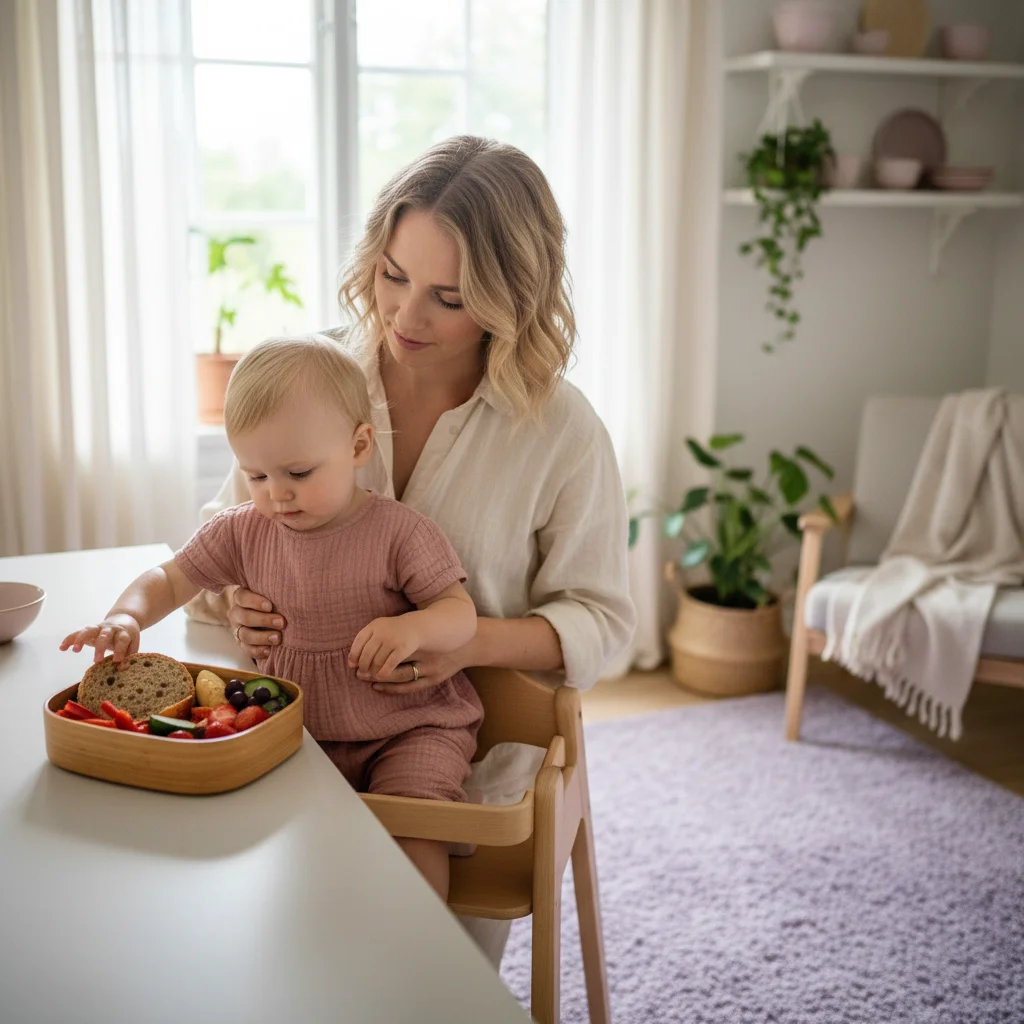
"Don't want it! Want crackers!" The dinner table with a 2-year-old can feel like a daily negotiation. You've cooked, mashed, and plated, and your child only wants bread and butter.
Good news: Children between 2 and 3 years old need simpler food than you think. And the picky phase? Completely normal. Here are evidence-based nutrition tips without the guilt and pressure.
What Do AAP and CDC Recommend?
The American Academy of Pediatrics (AAP) and the CDC are clear: children from age 2 eat essentially the same food as the rest of the family, adjusted for texture and portion size.
According to the AAP, toddlers aged 2–3 should have 3 main meals and 2–3 snacks daily. A varied diet with vegetables, fruits, whole grains, fish, meat, and dairy covers most nutritional needs.
Daily meal pattern:
| Meal | Time | Example |
|---|---|---|
| Breakfast | 7–8 am | Oatmeal with berries, toast with toppings |
| Morning snack | 9–10 am | Fruit, whole grain crackers |
| Lunch | 11 am–12 pm | Sandwich with toppings and vegetables |
| Afternoon snack | 2–3 pm | Yogurt, fruit, vegetables |
| Dinner | 4–5 pm | Warm meal with vegetables |
| Evening snack | 6–7 pm | Toast with toppings, milk |
Key Nutrients for 2–3 Year Olds
Iron
Iron deficiency is the most common nutritional challenge in toddlers. Your child needs iron for brain development, energy, and immune function.
Good sources of iron:
- Meat (especially red meat) and chicken
- Beans, lentils, and chickpeas
- Whole grain products and iron-fortified cereals
- Eggs
- Broccoli and peas
Combine iron-rich foods with vitamin C to increase absorption. A little orange, kiwi, or bell pepper with dinner means your child's body absorbs up to twice as much iron from the meal.
Vitamin D
The AAP recommends vitamin D supplementation for all children who don't get enough from sun exposure. Children between 2 and 3 years should get 600 IU (15 micrograms) of vitamin D daily, ideally as drops or through fortified foods.
Calcium
Dairy products are the main source of calcium for toddlers. The recommended amount of milk and dairy is about 2–2.5 cups per day (including yogurt and cheese). Use whole milk or reduced-fat milk as the regular drink from age 1–2.
Omega-3
Fish should be on the menu 2–3 times a week. Fatty fish like salmon, mackerel, and trout are rich in omega-3 fatty acids that support brain development.
Cod liver oil or fish oil supplements are good options for children who eat little fish.
Portions: Smaller Than You Think
Toddler portions are much smaller than adult portions. A 2-year-old needs roughly a quarter of an adult portion.
Rules of thumb:
- Meat/fish: The size of the child's palm
- Vegetables: 1–2 child-sized handfuls
- Rice/pasta/potato: About 2–3 tablespoons
- Bread: 1/2–1 slice
Don't stress if your child eats little at one meal. Appetite varies from day to day and meal to meal. As long as your child is growing well and has energy, they are eating enough.
The Picky Phase
Between 18 months and 3 years, most children experience a "neophobia" phase where new foods are rejected. This is an evolutionary protection mechanism, the child is now mobile enough to put things in their mouth independently, and the brain signals "unknown = dangerous."
What Works
- Offer without pressure: Put the food on the plate. The child decides whether and how much to eat.
- Repeated exposure: Research shows children may need 10–15 exposures before they'll taste a new food. Keep offering, even when your child says no.
- Eat together: Children who see parents eating something are more likely to try it themselves.
- Involve your child: Let them help wash vegetables, stir the pot, or choose fruit at the store.
- Mix familiar and new: Serve something the child likes alongside something new.
What Does NOT Work
- Pressure and force: "Eat everything up" creates a negative relationship with food
- Bribing: "Eat your vegetables, then you get dessert" turns vegetables into punishment and dessert into a reward
- Alternative meal: Making a separate dish because the child won't eat dinner teaches them they can "order" something else
- Nagging: "Just one more bite" rarely works and creates stress
Never force a child to finish their food. Children have a built-in system for regulating how much they need. Forcing can disrupt this system and create an unhealthy relationship with food.
A Week of Simple Dinners
You don't need to make gourmet meals. Simple, family-friendly dishes work best.
Monday: Baked fish with broccoli and potatoes Tuesday: Chicken stew with rice and carrots Wednesday: Pasta with meat sauce and corn Thursday: Fish fingers with pea puree and potatoes Friday: Tacos with beans, ground beef, and vegetables Saturday: Pancakes with berries (yes, that counts) Sunday: Simple vegetable and meat stew with bread
Make large batches and freeze portions. Half the work with toddler meals is the planning. With a freezer full of individual portions, you always have something to offer.
Drinks
Water and milk are the recommended drinks for toddlers. Juice and soda should be avoided or greatly limited.
Recommendations:
- Whole or reduced-fat milk: 2–2.5 cups per day (including yogurt)
- Water: Offer at every meal and between meals
- 100% juice: Maximum 4 oz (120 ml) per day, diluted
- Soda and sweetened drinks: Avoid as everyday drinks
Too much milk can fill the stomach and reduce appetite for other food. Limit milk intake if your child is eating poorly.
Food at Daycare or Preschool
At daycare, your child typically eats 2–3 meals. Most programs follow nutritional guidelines and offer a variety of foods.
Many parents find that their child eats things at daycare that they refuse at home. This is common, children are influenced by watching other children eat, and a different setting can make food feel more exciting.
Talk with your child's caregivers about eating habits, allergies, and any challenges you're experiencing.
When to Seek Help
Picky eating is common and usually temporary. But sometimes there is reason for concern.
Talk to your pediatrician if:
- Your child eats fewer than 10–15 different foods in total
- Your child refuses entire food groups (for example, all fruits and vegetables)
- The growth curve levels off or drops
- Your child has strong reactions to certain textures (gagging)
- Mealtimes are dominated by stress and conflict every day
Your pediatrician can assess whether your child needs a referral to a registered dietitian or a speech-language therapist (for oral-motor challenges).
Frequently Asked Questions
Does my 2-year-old need supplements?
Most children who eat a varied diet only need vitamin D supplementation. Talk to your pediatrician if your child eats very selectively, they can assess whether additional supplements are needed.
How much candy or sweets is okay?
The AAP recommends limiting sugary food and drinks. There's no exact number, but many families find it helpful to have a designated treat time once a week rather than a little every day.
My child only wants bread. What do I do?
Bread is actually fine food, especially whole grain bread with varied toppings. Vary the toppings (deli meat, cheese, egg, avocado, nut butter) to ensure nutritional breadth. Offer other foods alongside it, but without pressure.
Food for toddlers doesn't need to be complicated. Serve simple, varied meals, eat together, and let your child manage their own appetite. The picky phases pass, we promise.
Want help with meal planning? Try our Babysential meal tools for age-appropriate meal suggestions and recipes.
Read also: Picky Eaters: How to Handle Toddlers Who Won't Eat | Creative Play at Home: 20 Activities for Toddlers
Sources
🔧 Helpful Tools
- Baby Food Guide. Safe foods and introduction schedule for your baby
- Breastfeeding Tracker. Log feeds, track supply, and monitor nursing sessions
- All Baby Tools. Browse all free tools for pregnancy and baby care
📖 Related Articles
- Simple Meals for a 1-Year-Old: Breakfast, Lunch, and Dinner. Practical meal ideas for your 1-year-old. Breakfast, lunch, dinner, and snacks based on WHO and AAP dietary guidelines.
- Breakfast Ideas for Toddlers 1–3 Years, 12 simple and nutritious breakfast ideas for children aged 1 to 3. Quick everyday breakfasts the whole family will enjoy.
- Easter Breakfast with Kids: Festive and Easy for the Whole Family. Create a magical Easter breakfast for the whole family. Simple recipes, kid-friendly food, decoration ideas and tips for all ages from 6 months up.