Starting solid foods is a milestone, but it can also feel overwhelming. What should the baby eat, and how much? This meal plan gives you a practical week-by-week guide from 6 to 12 months, based on WHO and AAP guidelines for infant nutrition.
Remember that breast milk or formula is still the main source of nutrition throughout the entire first year. Solid foods are an addition, not a replacement.
Before You Start. Key Principles
According to WHO and AAP guidelines, the following applies when starting solids:
- Breastfed baby: Start solid foods around 6 months of age.
- Formula-fed baby: Also recommended around 6 months as for breastfed babies. Your pediatrician will give individual guidance.
- Start with tiny portions, the first meals can be just a small teaspoon.
- Increase gradually in line with the baby's signals and needs.
- Introduce many different foods early to develop flavor acceptance.
- Offer allergenic foods (eggs, fish, milk, gluten, nut butters) during the first year.
Phase 1: Starting Solids (Weeks 1–4, from 6 months)
The first weeks are about getting acquainted with food. The baby learns to accept food from a spoon, swallow, and experience new flavors and textures.
Meal Frequency: 1–2 meals per day
| Week | Breakfast/Lunch | Dinner |
|---|---|---|
| Week 1 | 1–3 tsp iron-rich cereal (oat/millet) with breast milk | , |
| Week 2 | Cereal + a little fruit puree (banana/apple) | 1–3 tsp vegetable puree (carrot/sweet potato) |
| Week 3 | Cereal with fruit | Vegetable puree (try a new vegetable: broccoli, cauliflower) |
| Week 4 | Cereal with fruit or berries | Vegetable puree with a little meat or lentils |
Texture
Food should be finely pureed and almost liquid. Mix cereal with breast milk or formula for a familiar taste.
Use whole grain flours (oat, wheat, barley, or rye) for cereal, they contain more iron than white flour. Iron is especially important from 6 months of age.
New Foods to Introduce
- Iron-rich cereals (oat, millet)
- Vegetables: carrot, sweet potato, squash, broccoli, cauliflower, potato
- Fruit: banana, apple, pear, avocado
- Legumes: well-cooked and pureed lentils, beans, chickpeas
- Meat: finely ground chicken or beef
Phase 2: Expanding (Weeks 5–12, 7–8 Months)
The baby can now handle more flavors and a slightly chunkier texture. The number of meals increases and portions gradually grow larger.
Meal Frequency: 2–3 meals per day
Sample daily menu at 7–8 months:
| Meal | Suggestion |
|---|---|
| Breakfast | Oatmeal with banana and cinnamon |
| Lunch/Dinner | Chicken with sweet potato, broccoli, and a little oil |
| Afternoon | Fruit puree with avocado |
Texture
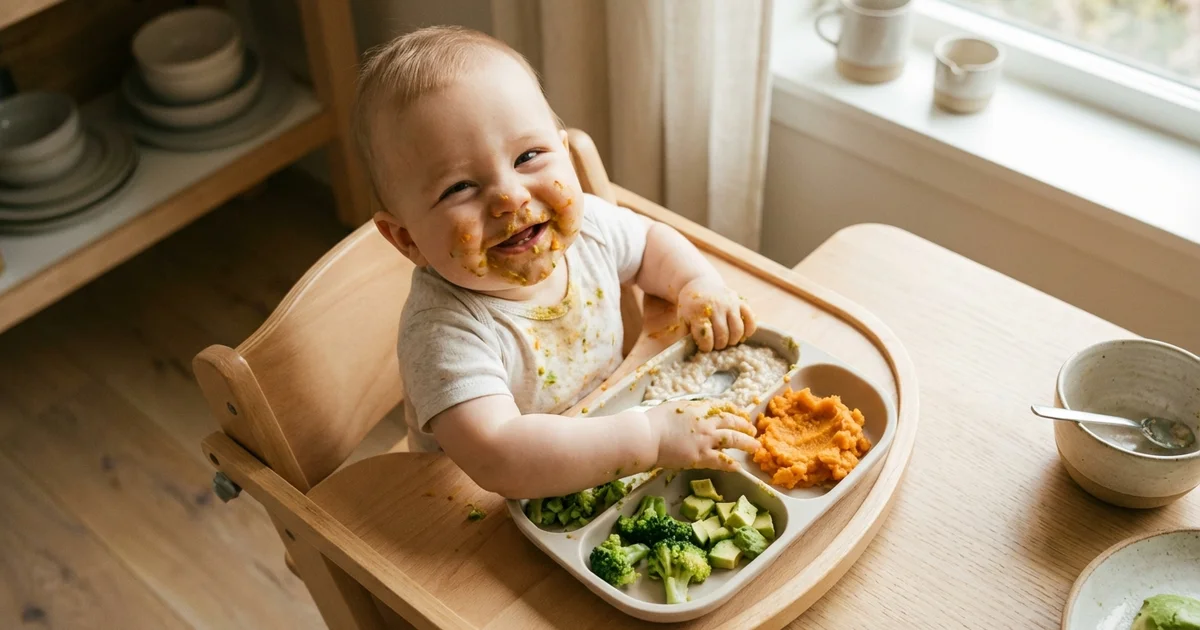
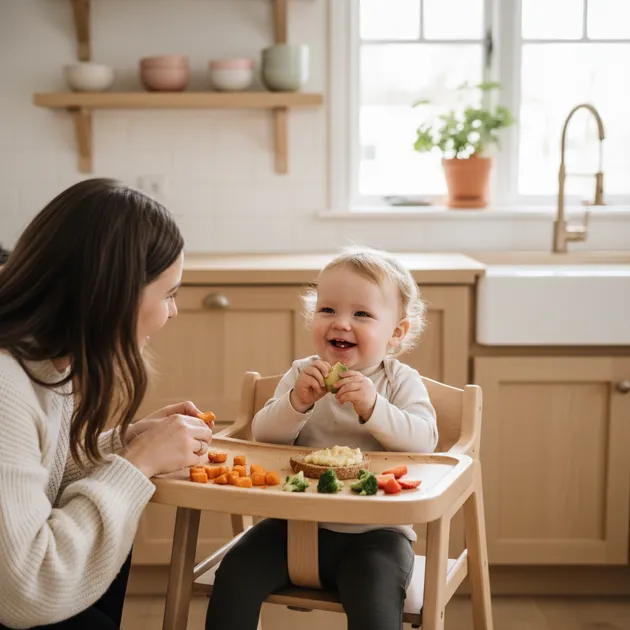
Gradually move from smooth puree to chunkier mash and soft lumps. Let the baby explore finger foods such as soft vegetable sticks and small bread pieces.
New Foods to Introduce
- Fish (salmon, cod, haddock, important for omega-3 and iodine)
- Eggs (boiled or scrambled, start with a small amount)
- Whole grain pasta and couscous
- Bread (preferably soft whole grain)
- More vegetables: cucumber, peas, zucchini, parsnip (avoid spinach, beets, and arugula before 12 months, nitrates)
- Hummus and other legume-based spreads
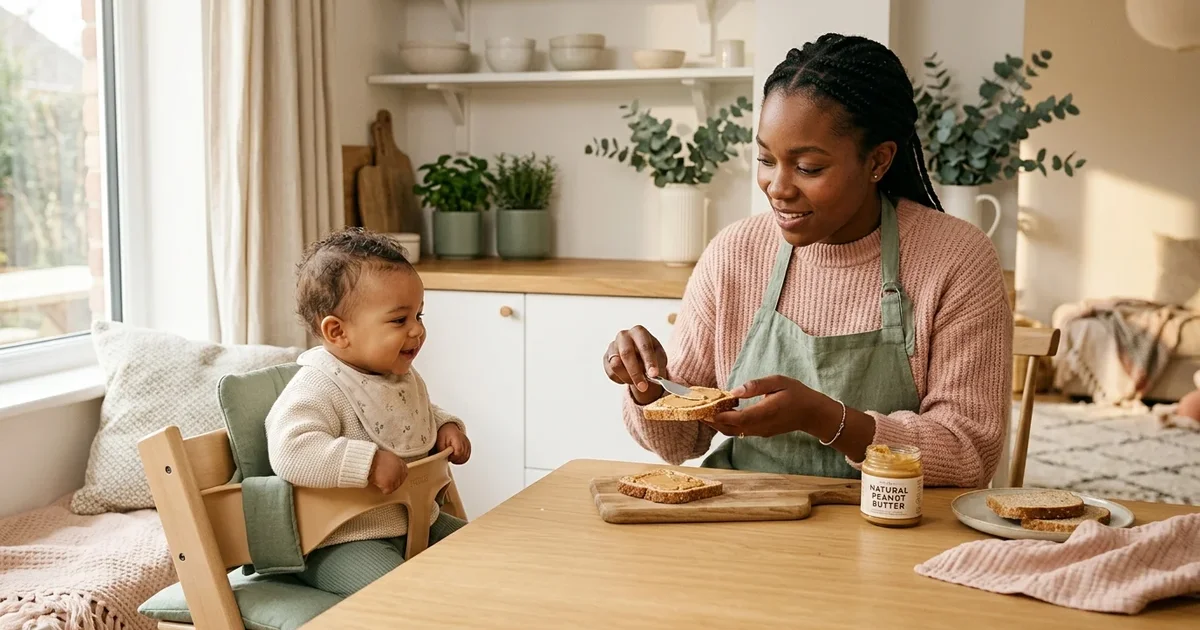
- Nut butter (for example peanut butter, in thin layers)
Avoid whole nuts, grapes, raw carrot, and other hard, round foods that can get lodged in the airway. Everything should be pureed, cooked soft, or cut into safe shapes.
Phase 3: Family Food (Weeks 13–20, 9–10 Months)
The baby can now eat more of the same food as the rest of the family. The texture can be chunkier and the baby practices self-feeding.
Meal Frequency: 3–4 meals + 1–2 snacks per day
Sample daily menu at 9–10 months:
| Meal | Suggestion |
|---|---|
| Breakfast | Oatmeal with blueberries, or bread with avocado |
| Snack | Banana pieces and toasted bread pieces |
| Lunch | Salmon puree with broccoli and potato |
| Snack | Fruit and a little yogurt (from 10 months, max about 2 tablespoons) |
| Dinner | Meat stew with root vegetables and whole grain pasta |
Texture
A portion of about 2/3 cup (roughly 150–200 ml) is appropriate at 8–9 months. Food can now have noticeable pieces and lumps. Let the baby practice with a spoon and finger foods.
New Foods to Introduce (from 10 months)
- Cow's milk in cooking (sauces, baking)
- Yogurt and soured milk (max about 2 tablespoons per day until 12 months, preferably without added sugar)
- Cheese as a topping (cheddar, cream cheese)
- Cottage cheese
- Liver pâté (no more than 1–2 small servings per day)
Phase 4: Toward the First Birthday (Weeks 21–26, 11–12 Months)
The baby is now eating approximately family food. Breast milk or formula is still important, but solid foods cover an ever-larger share of nutritional needs.
Meal Frequency: 3–4 meals + 1–2 snacks
Sample daily menu at 11–12 months:
| Meal | Suggestion |
|---|---|
| Breakfast | Oatmeal with berries, or bread with liver pâté and cucumber |
| Snack | Fruit pieces and toasted bread |
| Lunch | Homemade fish fingers with mashed potato and peas |
| Snack | Yogurt with fruit |
| Dinner | Chicken stew with vegetables and rice |
What Changes After 12 Months?
- Whole milk can be used as a drink (maximum about 16 oz / 500 ml per day including yogurt).
- The baby can eat most family food.
- Still avoid added sugar and salt.
- Honey is safe from 12 months.
Foods to Avoid in the First Year
According to WHO and AAP guidelines, avoid the following during the first year of life:
| Food | Reason |
|---|---|
| Honey | Risk of infant botulism |
| Cow's milk as a drink | Too low in iron, too high in protein |
| Spinach, beets, arugula | High nitrate content, avoid throughout the first year |
| Rice drinks and rice cakes | Arsenic content (avoid until under 6 years) |
| Salt and salty snacks | Kidneys cannot handle much salt |
| Added sugar, juice | Empty calories, dental health |
| Whole nuts, hard pieces | Choking hazard |
| Plant drinks as milk substitute | Not complete nutrition for infants |
Babysential's SmartStart tool helps you keep track of which foods the baby has tried and suggests new foods based on the baby's age. Track progress in the meal planner.
Tips for a Good Start with Solids
- Eat together as a family, the baby learns by watching you eat.
- Never force, let the baby decide how much they want.
- Try again, it can take 10–15 attempts before the baby accepts a new flavor.
- Vary early, babies who taste many different foods early become less picky eaters.
- Use herbs and spices for flavor, not salt.
- Establish good routines with regular meals at regular times.
Frequently Asked Questions
How much food does a baby need at 6 months?
The first weeks are mostly about tasting and practicing. Start with 1–3 teaspoons and increase gradually. Breast milk or formula still covers most nutritional needs. Do not stress if the baby eats little at first.
Can the baby eat the same as us?
Yes, largely, but without added salt and sugar. Cook the family dinner as usual and set aside the baby's portion before seasoning with salt. Adapt the texture to the baby's age.
What if the baby refuses a food?
Keep offering it. Research shows that children need to be exposed to a new flavor up to 10–15 times before they accept it. Never force, just offer and let the baby explore at their own pace.
Should I give purees or try BLW (baby-led weaning)?
Both methods work well and you can combine them. Cereal is a practical way to provide iron-rich food, while finger foods (BLW) let the baby practice self-feeding. AAP recommends adapting texture gradually from smooth puree to pieces.
Read More
- Starting solids: complete guide. Everything about beginning solid foods
- Baby food from 8 months. Next steps in introducing food
- Baby food from 10 months. Toward family food
- Iron-rich foods for babies. Why iron is especially important
- Baby-led weaning guide. How to do it safely
- Homemade baby food. Make healthy food yourself
- SmartStart meal planner. Food suggestions tailored to your baby's age
Sources
🔧 Helpful Tools
- Baby Food Guide. Safe foods and introduction schedule for your baby
- Breastfeeding Tracker. Log feeds, track supply, and monitor nursing sessions
- All Baby Tools. Browse all free tools for pregnancy and baby care
📖 Related Articles
- New Infant and Toddler Feeding Guidelines: What's Changing. Health authorities are updating infant nutrition guidelines for children 0-2 years. Here's what's changing, what the debate is about, and what applies now.
- Sugar and Salt for Babies: What Do the Guidelines Say?. When can babies have sugar and salt? Here are the international guidelines for sugar, salt, and spices in baby food, with practical everyday tips.