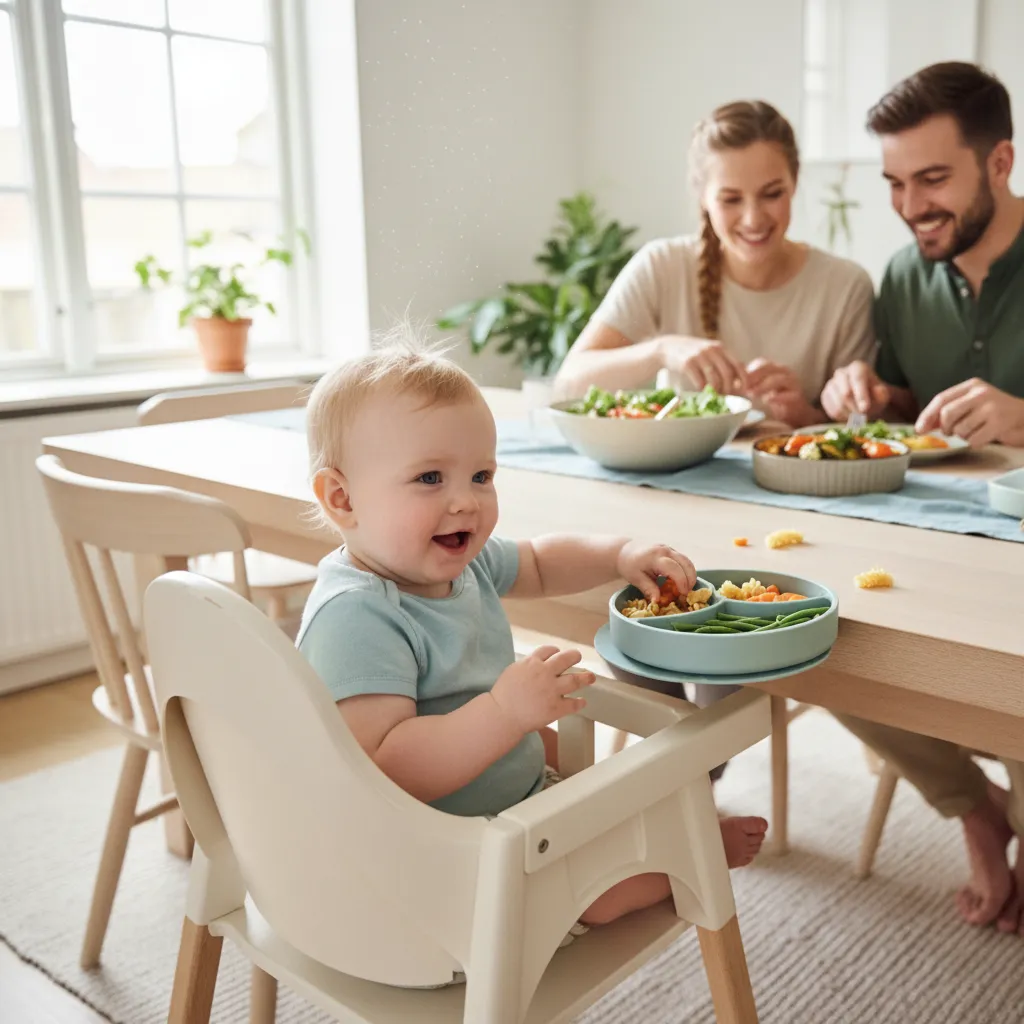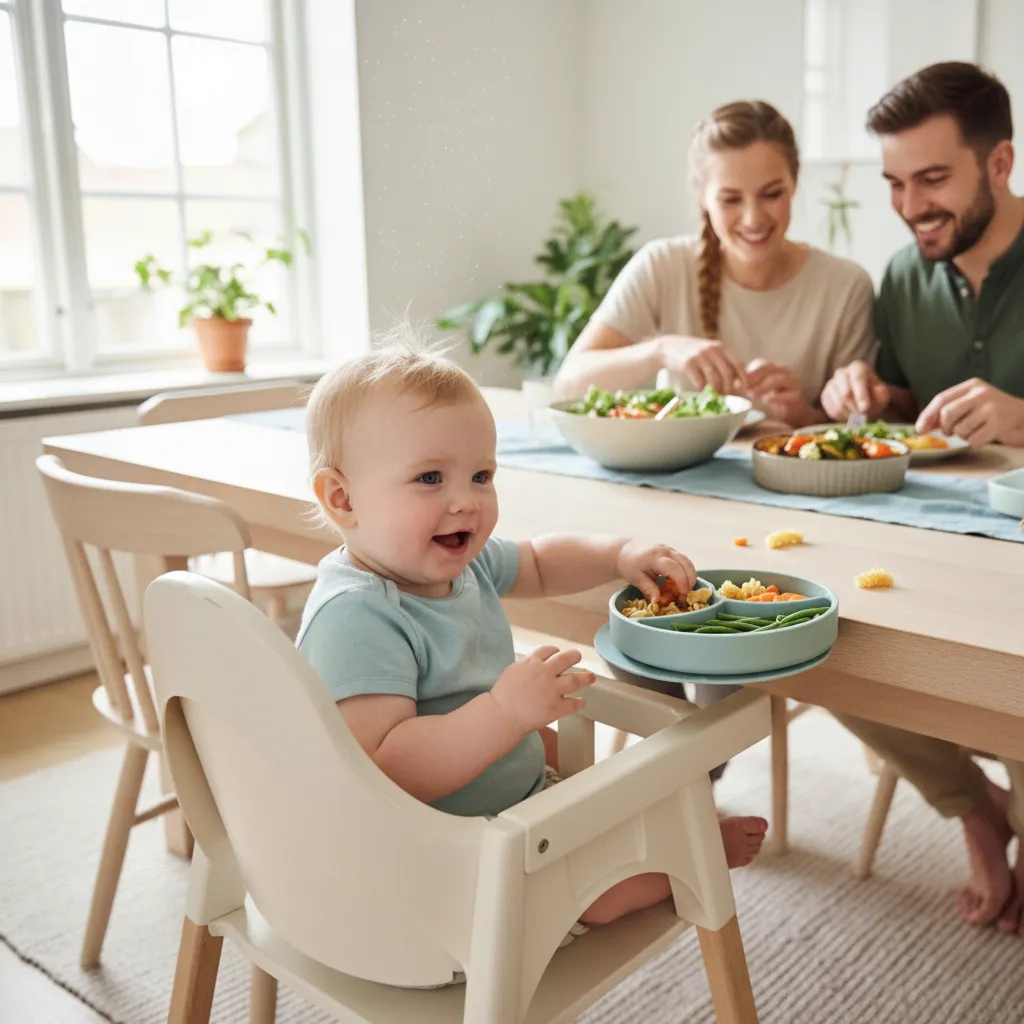
At 10 months, your baby is entering one of the most exciting phases of eating. They're developing real opinions about food, getting better at self-feeding, and moving steadily toward eating what the rest of the family eats. It's a stage of rapid learning, and yes, considerable mess.
Here's what to expect and how to make the most of it.
What's New at 10 Months
Chewing with Gums (and First Teeth)
Most babies have a few teeth by 10 months, but even without teeth, babies this age can chew surprisingly well using their gums. They can manage soft pieces of food that break down easily, you don't need to purée everything anymore.
The Pincer Grasp
Around 9–10 months, most babies develop the pincer grasp, picking up small objects between thumb and index finger. This is a major developmental milestone that transforms mealtimes: your baby can now pick up small pieces of food deliberately and bring them to their mouth.
Encourage this by offering small, appropriately sized finger foods at every meal. It's also excellent fine motor practice.
Interest in the Spoon
Many babies this age start reaching for the spoon during feeding. This is a sign they want to participate. Let them hold a spare spoon while you feed with another, or let them try scooping soft foods like yogurt or mashed potato, even if most of it ends up on the high chair.
Sitting Solidly
By 10 months, most babies can sit independently and maintain an upright posture through a full meal. Good positioning is important for safe swallowing, always ensure your baby is sitting upright, not reclined, during meals.
Texture at 10 Months
The goal at this age is soft pieces and coarsely mashed food, not smooth purées, but not adult-sized chunks either.
Guidelines:
- Soft pieces: about 1–1.5 cm (roughly the size of a blueberry)
- Food should crush easily between your fingers with light pressure, if it does, it's safe for baby's gums
- Coarsely mashed: leave some texture, not completely smooth
- Finger foods: soft sticks or pieces baby can hold and gnaw
Examples of appropriate textures:
- Ripe banana broken into pieces
- Soft-cooked pasta (fusilli or penne)
- Soft-cooked carrot sticks
- Flaked fish with bones carefully removed
- Soft cheese in small pieces
- Scrambled eggs
- Toast fingers with soft toppings
Meal Rhythm at 10 Months
At this age, a typical day looks like:
- Breakfast
- Breast milk or formula (mid-morning)
- Lunch (main hot meal)
- Breast milk or formula (afternoon)
- Dinner
- Breast milk or formula (before bed)
Breast milk or formula remains the primary nutritional source through 12 months, solid meals complement rather than replace it. Aim for 3 solid meals per day, with milk feeds between and around them.
Timing tip: Offer solid food when your baby is hungry but not ravenous, about 30–60 minutes after a milk feed often works well. Avoid offering solids right after a large milk feed when they're already full.
What's New Food-Wise at 10 Months
Dairy Products
Full-fat dairy products, yogurt, cheese, cream cheese, and fromage frais, can be introduced from around 6 months, but 10 months is a good time to increase variety and frequency.
Not yet: Whole cow's milk as a main drink (this starts at 12 months). Dairy in cooking and as food is fine.
Eggs
Whole eggs (including the yolk) are excellent nutrition and should be offered regularly. Scrambled, soft-boiled, or as an ingredient in pancakes and fritters.
Legumes
Lentils, chickpeas, and beans are excellent sources of iron and protein. Mash or serve them soft and well-cooked.
A Wider Range of Fish
Fatty fish (salmon, trout, mackerel, sardines) 2–3 times per week supports brain development. Always check carefully for bones.
Most Fruits and Vegetables
Almost all fruits and vegetables are appropriate now. Offer variety, raw (if soft enough), roasted, steamed, or lightly sautéed.
Based on WHO/AAP guidelines, introduce all major allergens (peanuts, tree nuts, eggs, dairy, wheat, fish, shellfish, sesame, soy) by 12 months unless there is a family history of severe allergy. If you have concerns, speak with your pediatrician before introducing.
Allergen Checklist
By 10 months, you should have introduced or have a plan to introduce:
- Gluten/wheat (bread, pasta, oats)
- Egg (both yolk and white)
- Dairy (yogurt, cheese)
- Fish
- Shellfish
- Peanuts (thinned peanut butter or peanut puffs)
- Tree nuts (almond butter, cashew butter, thinned)
- Soy
- Sesame
Introduce one new allergen at a time, then wait 2–3 days before introducing another so you can identify any reaction.
Iron-Rich Foods
Iron is critical at this age. After 6 months, your baby's birth stores of iron begin to deplete, and dietary iron becomes essential.
Best sources:
- Meat (beef, lamb, pork), heme iron, most bioavailable
- Poultry (chicken, turkey)
- Oily fish
- Eggs
- Legumes (lentils, beans)
- Iron-fortified infant cereals
- Dark leafy greens (spinach, kale, well-cooked and finely chopped)
- Tofu
Serve iron-rich foods alongside vitamin C sources to boost absorption.
Self-Feeding
Encouraging self-feeding from 10 months builds independence, develops fine motor skills, and helps your baby develop a healthy relationship with food.
Practical tips:
- Offer a mix of foods your baby can pick up themselves alongside spoon-fed foods
- Preload a spoon and hand it to your baby, they may manage to get it to their mouth
- Use a suction bowl to reduce tipping
- Accept the mess, it's part of learning
- Don't rush meals; allow 20–30 minutes for your baby to explore and eat
What to offer as finger foods:
- Soft fruit pieces (mango, ripe pear, banana, peach)
- Soft-cooked vegetable sticks (carrot, broccoli florets, green beans)
- Small pasta shapes
- Toast fingers with avocado or cream cheese
- Soft cheese cubes
- Flaked fish
- Small pieces of soft-cooked chicken
- Mini rice cakes
Three Simple Recipes
Mini Fish Cakes
Can be made in batches and frozen
- 200g (7 oz) cooked white fish or salmon, flaked (check for bones)
- 150g (5 oz) mashed potato
- 1 egg, beaten
- 1 tablespoon finely chopped fresh parsley
- Breadcrumbs for coating
Mix fish with mashed potato, egg, and parsley. Form into small patties. Coat lightly in breadcrumbs. Pan-fry in a little butter or bake at 200°C (400°F) for 15–18 minutes, turning once. No added salt. Serve with soft-cooked vegetables.
Banana Oat Pancakes
Quick breakfast, loved by most babies
- 1 ripe banana, mashed
- 1 egg
- 3 tablespoons rolled oats (or oat flour)
- A pinch of cinnamon
Mix all ingredients together. Drop small spoonfuls onto a lightly buttered pan over medium-low heat. Cook 2–3 minutes per side until set. Serve warm with a little full-fat yogurt. No added sugar or salt.
Chicken with Root Vegetables
Ideal family meal adapted for baby
- 1 chicken thigh (boneless, skinless), diced small
- 1 small carrot, diced
- ½ small parsnip or sweet potato, diced
- ½ small onion, finely chopped
- A little butter or olive oil
- Low-sodium chicken stock or water
Sauté onion in butter until soft. Add chicken and cook through. Add vegetables and enough stock to cover. Simmer 15–20 minutes until everything is tender. Mash or serve in soft pieces depending on your baby's preference. No added salt, the stock provides enough flavor.
Common Challenges at 10 Months
Throwing Food
Food throwing is developmentally normal around this age, it's not defiance, it's exploration and also a way of communicating "I'm done." Stay calm, remove the plate when throwing starts, and end the meal. Consistency helps this phase pass faster.
Refusing Previously Accepted Foods
Taste preferences shift. A food your baby ate happily last week may be rejected this week. Continue offering it alongside accepted foods without pressure. This is normal and not a sign of a problem.
Only Wanting to Self-Feed
If your baby refuses spoon feeding and wants to do everything themselves, let them. Lean into it. Offer foods that work for self-feeding and simply offer a preloaded spoon on the side. The goal is positive mealtimes, not a particular feeding method.
Gagging
Gagging is a normal protective reflex as babies learn to manage different textures. It's louder and more dramatic-looking than choking. As long as your baby is making noise (coughing, sputtering, crying), the airway is not blocked. Gagging typically decreases as your baby gains experience with varied textures.
Always stay present at mealtimes. Ensure your baby is seated upright in a properly fitted high chair. Never leave a baby unattended while eating.
The Bigger Picture
At 10 months, the priority is variety, exposure, and positive experiences with food, not hitting exact nutritional targets at every meal. Offer a wide range of foods, eat together when possible, and keep mealtimes relaxed.
Your baby is building a lifelong relationship with food right now. The atmosphere at the table matters as much as what's on the plate.
Sources
- AAP. Infant and toddler nutrition guidelines
- WHO. Global infant feeding recommendations
- CDC. Infant and toddler nutrition resources
🔧 Helpful Tools
- Baby Food Guide. Safe foods and introduction schedule for your baby
- Breastfeeding Tracker. Log feeds, track supply, and monitor nursing sessions
- All Baby Tools. Browse all free tools for pregnancy and baby care
📖 Related Articles
- Baby Food at 10 Months: Family Food in Adapted Form. What can your baby eat at 10 months? Guide to meals, portions, self-feeding, and transitioning to family food based on WHO and AAP recommendations.
- Food for Baby at 1 Year: Transitioning to Family Meals. What can your child eat at 1 year? Guide to family food, cow's milk, portions, and nutrition for your one-year-old based on WHO/AAP guidelines.
- Baby Allergens: A Safe Guide to Introducing Allergenic Foods. How to safely introduce allergens to your baby. Eggs, nuts, milk and gluten - when, how and what to look for. Based on current guidelines.