The Short Answer
Babies can eat tomatoes from around 6 months old. Despite being acidic, tomatoes are safe and nutritious for babies starting solids. Some babies may develop a harmless skin rash from the acidity, which is not an allergic reaction.
Key Takeaways
- Safe from 6 months: The AAP and WHO support tomatoes as part of a varied solid food diet from around 6 months.
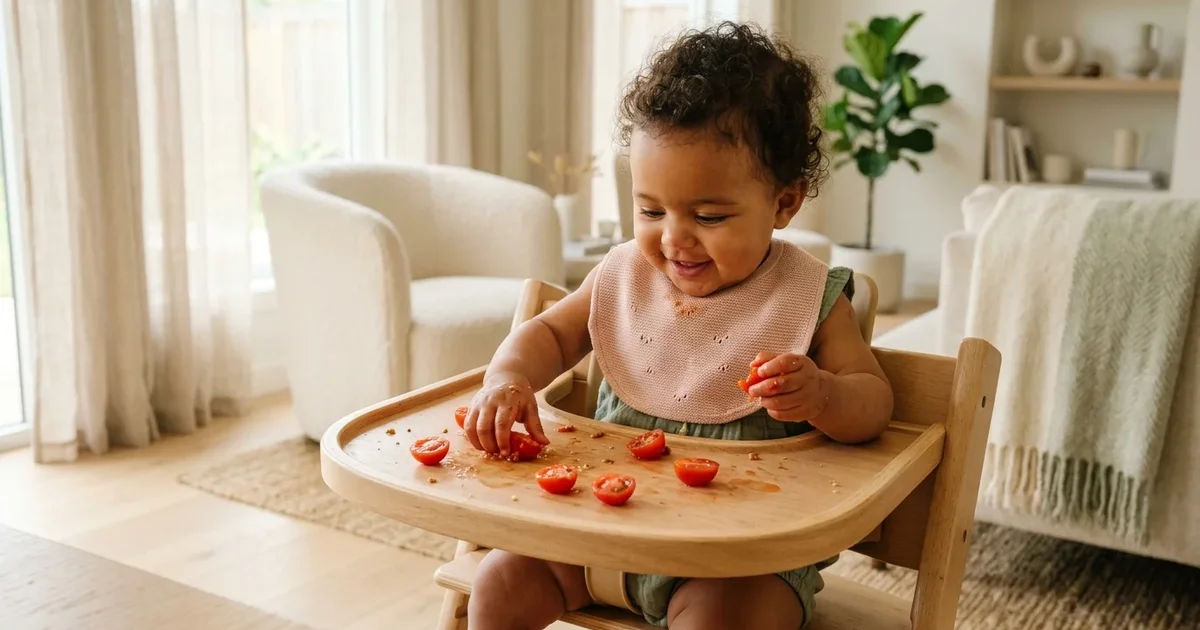
- How to serve: Cut large ripe tomatoes into wedges or thick slices. Always quarter cherry tomatoes lengthwise, whole cherry tomatoes are a choking hazard.
- Not a top allergen: Tomatoes are not a common allergen. A red rash around the mouth is typically a harmless acidity reaction, not an allergic response.
- Cooking reduces acidity: Cooked tomato is softer, sweeter, and less likely to cause rash or reflux, especially helpful for babies 6–8 months.
- Lycopene and vitamin C: Tomatoes are rich in vitamin C and lycopene, an antioxidant that actually increases in availability when cooked.
Nutritional Benefits
Tomatoes are surprisingly nutrient-rich for babies:
- Vitamin C - boosts immune function and helps the body absorb iron from other foods
- Lycopene - a powerful antioxidant that supports overall health (cooking increases lycopene availability)
- Vitamin A - important for vision, skin health, and immune function
Tomatoes also provide potassium, folate, and fiber.
How to Prepare Tomatoes for Different Ages
6 to 8 Months
Baby-led weaning (BLW): Cut large, ripe tomatoes into wedges or thick slices. Remove seeds if desired (they are safe but can be slippery). Cherry tomatoes must be quartered lengthwise. You can also offer cooked tomato in sauces mixed with pasta or other foods.
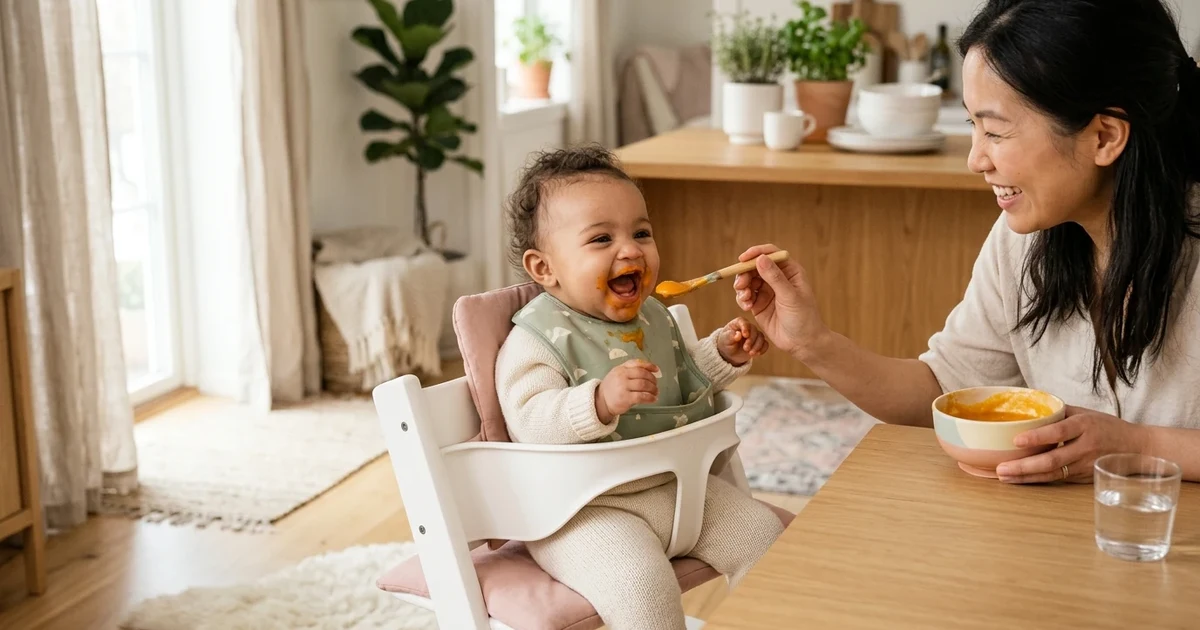
Puree approach: Cook tomatoes until soft (roasting brings out sweetness), remove skin and seeds, and blend until smooth. Mix with other vegetables like sweet potato or carrot to balance the acidity.
To easily peel tomatoes for baby: score an X on the bottom, dip in boiling water for 30 seconds, then transfer to ice water. The skin will slip right off.
9 to 12 Months
Offer diced tomatoes (skin removed if preferred), tomato-based pasta sauces, or small wedges. Cooked tomato mixed into rice, pasta, or scrambled eggs adds flavor and nutrition.
12+ Months
Serve tomatoes in all forms: raw in salads (quartered cherry tomatoes), in sandwiches, as pasta sauce, in soups, or as part of family meals.
Acidity Concerns
Tomatoes are naturally acidic, which can cause:
- Diaper rash - the acidity in tomatoes can irritate sensitive skin during digestion. If this happens, reduce the amount and reintroduce gradually.
- Mouth rash - a red, contact rash around the mouth is common and harmless. It usually fades within 30 minutes. This is not an allergic reaction.
- Reflux - if your baby has reflux, tomatoes may worsen symptoms. Consult your pediatrician if concerned.
Cooking tomatoes reduces perceived acidity and can make them easier on baby's stomach.
Choking Hazards
- Cherry and grape tomatoes are a choking hazard when whole. Always quarter them lengthwise.
- Raw tomato skin can be tough to chew. Peel for younger babies if needed.
- Remove seeds if they seem to bother your baby (though they are safe to eat)
- Always supervise your baby during meals
Frequently Asked Questions
Will tomatoes give my baby a rash?
Some babies develop a red rash around their mouth or on their bottom after eating tomatoes. This is usually a contact reaction from the natural acidity, not an allergy. It is harmless and typically fades quickly. If your baby develops hives, swelling, or vomiting, that could indicate a true allergy and you should contact your pediatrician.
Are canned tomatoes safe for babies?
Yes, but choose varieties with no added salt or sugar. Canned tomatoes are actually higher in lycopene than fresh because cooking increases its availability. Rinse canned tomatoes if sodium content is a concern.
Should I cook tomatoes before giving them to my baby?
Cooking is not required, but it can be helpful for younger babies (6 to 8 months). Cooked tomatoes are softer, sweeter, and less acidic. From around 9 months, most babies can handle raw tomato pieces.
Explore More
Use our SmartStart Food Guide to check which foods are safe for your baby's age. For a complete guide to starting solids, read our Baby-Led Weaning Complete Guide.
Looking for more first foods? Check our guides on Pasta for Babies and Avocado for Babies.
More Foods to Explore
Sources
- American Academy of Pediatrics (AAP) - Starting Solid Foods
- World Health Organization (WHO) - Complementary Feeding
- NHS Start4Life - First Foods
🔧 Helpful Tools
- Baby Food Guide. Safe foods and introduction schedule for your baby
- All Baby Tools. Browse all free tools for pregnancy and baby care
📖 Related Articles
- When Can Babies Eat Avocado? Age, Safety & How to Serve. Learn when babies can eat avocado, the nutritional benefits, how to prepare it for BLW and puree feeding, plus safety tips from AAP and WHO guidelines.
- When Can Babies Eat Banana? Age, Safety & How to Serve. Find out when your baby can eat banana, how to prepare it for different ages, nutritional benefits, and choking safety tips backed by WHO and AAP guidelines.
- When Can Babies Eat Blueberries? Age, Safety & How to Serve. Learn when babies can eat blueberries, how to serve them safely at different ages, choking prevention tips, and nutritional benefits based on AAP guidelines.