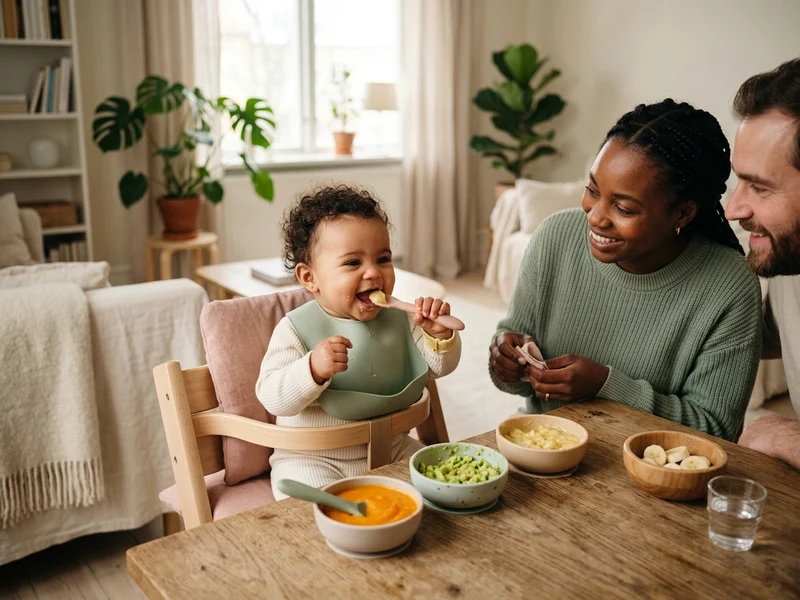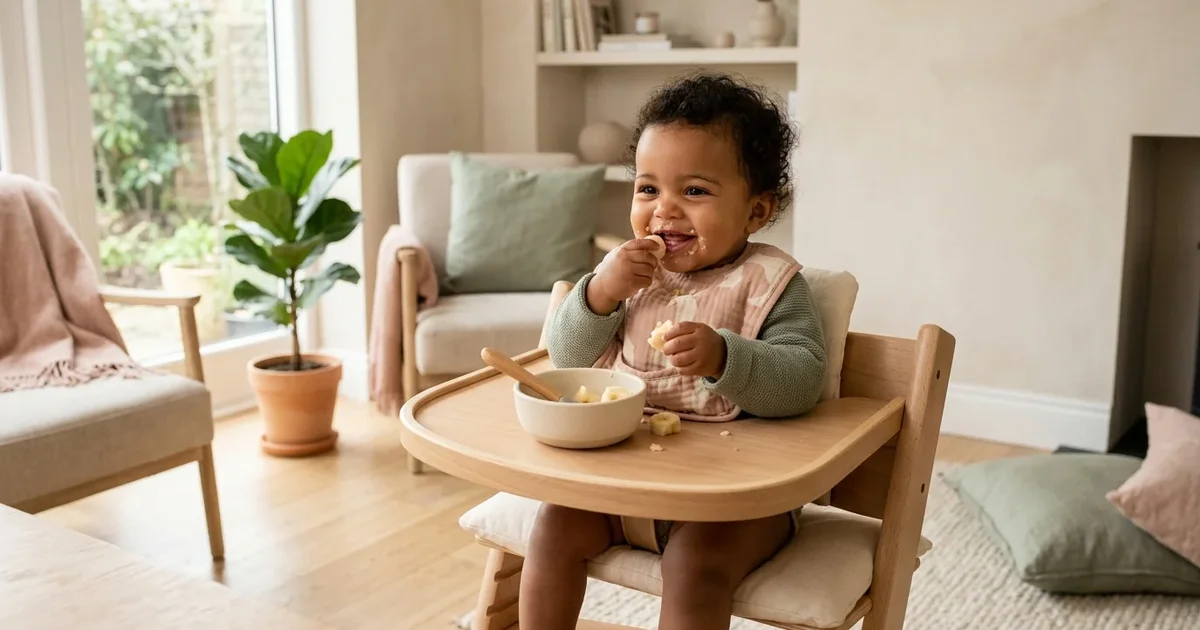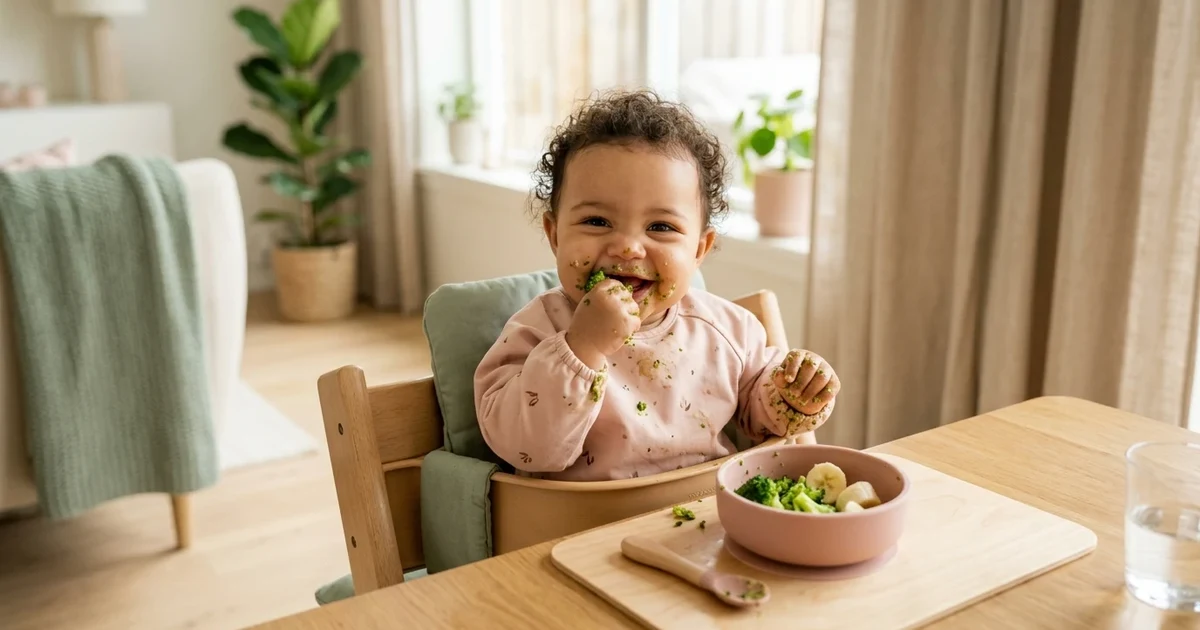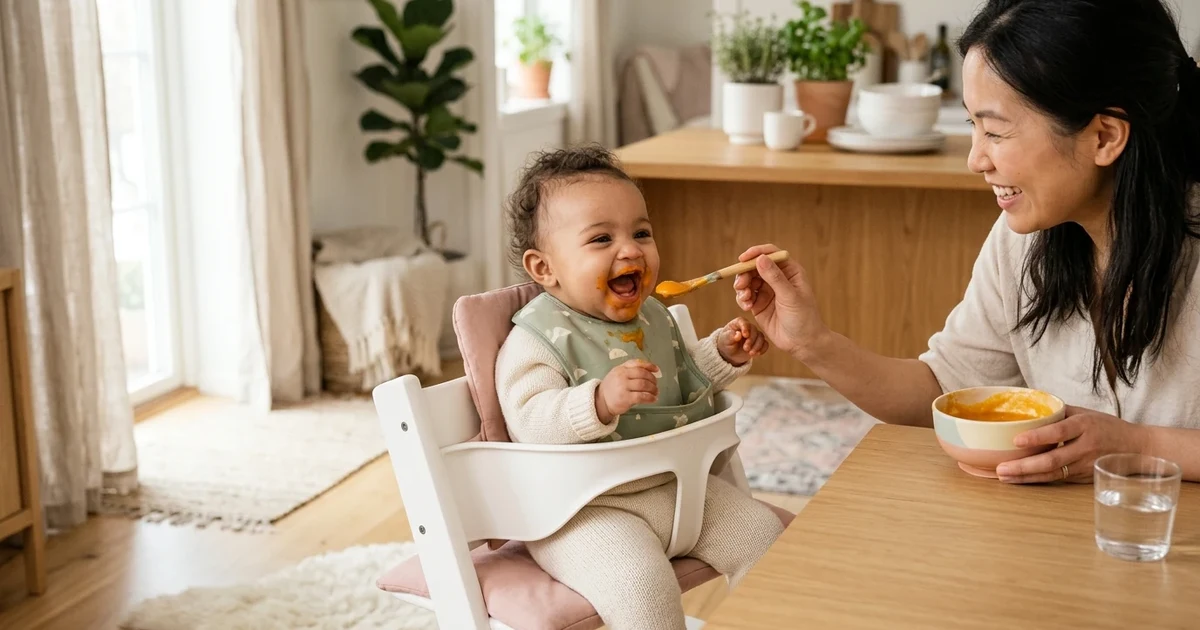
The Short Answer
Most babies can start solid foods at around 6 months of age when they can control their head and neck, sit with support, and swallow food rather than push it back out. The WHO recommends complementary foods at 6 months, while AAP and CDC guidance says about 6 months and not before 4 months.
Key Takeaways
- Most babies start solid foods at around 6 months, and complementary foods should not begin before 4 months
- Readiness matters alongside age: look for steady head control, sitting with support, and the ability to swallow food
- Iron-rich foods are an important early choice as babies' iron needs increase around 6 months
- Introduce common allergens in age-appropriate forms once your baby is ready, with clinician guidance for babies with severe eczema or an existing food allergy
- Breast milk or formula remains the main source of nutrition while solids are introduced
Why 6 Months?
Starting solids too early or too late carries risks:
Too early (before 4 months):
- The digestive system is not mature enough to process solid food
- Increased risk of choking, the tongue-thrust reflex that pushes food out is still dominant
- Associated with higher risk of obesity, food allergy, and digestive upset
Too late (after 7–8 months):
- Increased risk of iron deficiency (breast milk alone no longer meets iron needs after 6 months)
- Harder to accept new textures and flavours, a natural "flavour window" may close
- WHO and AAP both identify 6 months as the ideal introduction point
Signs of Readiness. All Three Must Be Present
Do not start solids based on age alone. Look for all three signs:
- Can sit up with minimal support and hold their head steady
- Has lost the tongue-thrust reflex, does not automatically push food out with their tongue
- Shows interest in food, reaches for food, watches others eat, opens mouth when food approaches
Note: Chewing fists, waking at night, or wanting more milk are NOT reliable signs of solid food readiness.
What Foods to Start With
The best first foods are:
- Iron-rich foods: Pureed meat, chicken, or fish; iron-fortified baby cereal; mashed legumes (lentils, chickpeas)
- Vegetables: Sweet potato, butternut squash, pea puree, broccoli
- Fruits: Pureed or mashed banana, mango, pear, apple
- Healthy fats: Avocado, full-fat yoghurt (plain, from 6 months)
AAP and NHS both recommend introducing allergenic foods (peanut, egg, fish) early (from 6 months) rather than avoiding them, as early introduction reduces allergy risk.
How to Start
- Offer 1–2 teaspoons once daily to start, gradually increasing
- Introduce one new food every 3–5 days to identify any allergic reactions
- Milk (breast or formula) remains the primary nutrition source until 12 months
- Never add salt, sugar, or honey to baby's food
- Expect mess and refusal, it takes 10–15 exposures for some babies to accept a new food
What to Avoid Under 12 Months
- Honey (risk of infant botulism)
- Cow's milk as a main drink (formula or breast milk only)
- Whole nuts (choking hazard)
- Added salt and sugar
- Certain fish high in mercury (shark, swordfish, tilefish)
See our full guide on Foods to Avoid for Babies Under 1.
Explore Tools
Use our SmartStart Food Guide to find age-appropriate foods and track your baby's food introduction.
Related Articles
Frequently Asked Questions
When can babies start eating solid foods?
Babies are ready for solid foods at around 6 months, not before 4 months. The WHO, AAP, and NHS all recommend around 6 months as the ideal starting point. Starting before 4 months is unsafe regardless of readiness signs.
What are the signs that my baby is ready for solids?
All three signs must be present: baby can sit up with minimal support and hold their head steady; has lost the tongue-thrust reflex (no longer automatically pushes food out with their tongue); and shows clear interest in food by reaching, watching others eat, and opening their mouth. Chewing fists, waking at night, and wanting more milk are not reliable indicators.
What are the best first foods for babies?
Iron-rich first foods are a priority, pureed meat, chicken, iron-fortified baby cereal, and mashed lentils. Good vegetable options include sweet potato, butternut squash, and broccoli. Fruits such as banana, mango, and pear work well pureed or mashed. The AAP and NHS recommend introducing allergens (peanut, egg, fish) early from 6 months to reduce allergy risk.
How much food should I give a baby starting solids?
Start with 1–2 teaspoons once daily and increase gradually over several weeks. At 6–7 months, most babies eat a few tablespoons at one meal per day. By 9–12 months, the goal is 3 meals per day of varied foods. Breast milk or formula remains the primary nutrition source until 12 months.
How do I know if my baby is allergic to a new food?
Introduce one new food every 3–5 days and watch for allergic reactions: hives, rash around the mouth, swelling, vomiting, or difficulty breathing. If a mild reaction occurs, stop that food and consult your doctor before reintroducing it. A severe allergic reaction (anaphylaxis) is a medical emergency, call emergency services immediately.
Is it safe to start solids at 4 months?
Most babies should wait until around 6 months and show developmental readiness. Complementary foods should not start before 4 months. If your clinician recommends starting between 4 and 6 months for your baby, ask which readiness signs, foods, textures, and allergy precautions to follow.
Can I start with purees or should I go straight to finger foods?
Both approaches are supported by the AAP and NHS. Traditional weaning starts with smooth purees and gradually progresses to lumpier textures and finger foods. Baby-led weaning skips purees and starts with soft finger foods from the beginning. A combination approach, some purees and some finger foods, also works well for many families.
Sources
- World Health Organization (WHO), Complementary Feeding
- American Academy of Pediatrics (AAP), Starting Solid Foods
- NHS Start4Life, First Foods
- Centers for Disease Control and Prevention (CDC), Infant and Toddler Nutrition
🔧 Helpful Tools
- Baby Food Guide. Safe foods and introduction schedule for your baby
- All Baby Tools. Browse all free tools for pregnancy and baby care