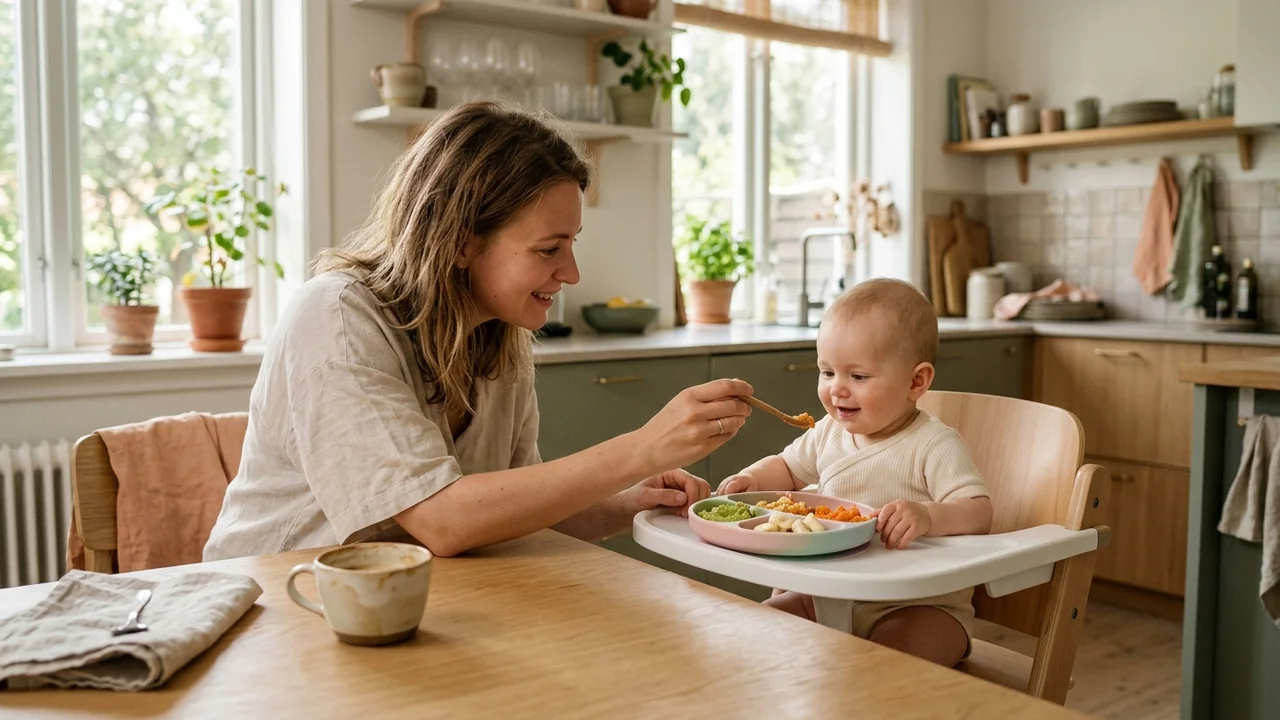
When Can Babies Eat Eggs?
Babies can eat eggs from around 6 months of age when starting solid foods. In fact, the American Academy of Pediatrics (AAP) now recommends introducing eggs early, not avoiding them, because early allergen introduction reduces the risk of egg allergy.
Key Takeaways
- Babies can eat eggs from 6 months, the AAP and NHS both recommend early introduction, not avoidance
- Early egg introduction reduces the risk of developing egg allergy by up to 40% (EAT study, 2016)
- Eggs must be fully cooked (no runny yolk) for babies under 12 months due to Salmonella risk
- Egg allergy affects approximately 1.5–2% of infants; reactions typically occur within 2 hours
- High-risk babies (severe eczema or existing food allergy) should consult a pediatrician before introduction
The Old Advice vs. New Guidelines
For years, parents were told to delay introducing allergenic foods like eggs, peanuts, and fish. This advice has been reversed by all major health authorities:
| Organization | Current Recommendation |
|---|---|
| AAP (USA) | Introduce eggs around 6 months, no delay needed |
| WHO | Begin at 6 months with complementary foods including eggs |
| NHS (UK) | Eggs can be introduced from 6 months |
| ASCIA (Australia) | Early introduction recommended |
The LEAP study (2015) and EAT study demonstrated that early introduction of common allergens significantly reduces allergy risk.
How to Introduce Eggs to Your Baby
Best First Egg Preparations (6+ months)
- Scrambled eggs: Soft, easy texture, fully cooked
- Hard-boiled egg: Mashed or cut into strips for baby-led weaning
- Omelette strips: Good BLW option
- Egg mixed into purée: E.g., egg yolk stirred into sweet potato purée
Safety Guidelines
- ✅ Cook eggs fully, no runny yolks before 12 months (Salmonella risk)
- ✅ Start with a small amount (1/4 teaspoon) on first introduction
- ✅ Offer in the morning so you can monitor for reactions during the day
- ✅ Wait 3–5 days before introducing another new allergenic food
- ❌ No raw or undercooked eggs (Caesar dressing, mousse, soft boiled) before 12 months
Nutritional Benefits of Eggs for Babies
Eggs are one of the most nutrient-dense first foods:
- Protein: Complete amino acid profile for growth
- Iron: Important as breast milk iron decreases after 6 months
- Choline: Critical for brain development (egg yolk is the richest dietary source)
- Vitamin D & B12
- DHA (omega-3 fatty acid for brain development)
Egg Allergy: Signs to Watch For
Egg allergy affects approximately 1.5–2% of infants. Reactions typically occur within 2 hours of eating:
Mild symptoms:
- Hives (red, itchy bumps on skin)
- Eczema flare
- Runny nose, watery eyes
Severe symptoms (call 911/emergency services):
- Difficulty breathing, wheezing
- Swelling of face, lips, tongue
- Vomiting + other symptoms together
- Loss of consciousness
High-Risk Babies: Talk to Your Doctor First
If your baby has severe eczema or an existing food allergy, talk to your pediatrician before introducing eggs. They may recommend allergy testing or supervised introduction.
🔗 Track egg introduction and all allergens with our Food Introduction Timeline.
Sources: American Academy of Pediatrics (AAP). Preventing Allergies Through Early Introduction; LEAP Study (NEJM, 2015); NHS UK. Food Allergies in Babies and Young Children; WHO. Complementary Feeding
Frequently Asked Questions
When can babies eat eggs?
Babies can eat eggs from around 6 months when starting solid foods. The AAP and NHS both recommend introducing eggs early, around 6 months, because early introduction of common allergens reduces the risk of developing egg allergy by up to 40%.
Can a 6-month-old eat scrambled eggs?
Yes. Well-cooked scrambled eggs are an excellent first food for babies at 6 months. They are soft, easy to eat, and rich in protein, iron, and choline for brain development. Always ensure eggs are fully cooked (no runny yolk) before 12 months.
Do I need to cook eggs thoroughly for babies?
Yes, babies under 12 months should only eat fully cooked eggs with no runny yolk. This is due to the risk of Salmonella contamination. Scrambled eggs, hard-boiled eggs, and omelettes are all suitable when cooked through. Raw egg in mousse, certain dressings, or soft-boiled eggs should be avoided before 12 months.
What are the signs of an egg allergy in babies?
Signs of egg allergy typically appear within 2 hours of eating: hives (red, itchy bumps), eczema flare, runny nose, or watery eyes. Severe reactions include difficulty breathing, swelling of the face or tongue, and vomiting combined with other symptoms, call emergency services immediately if these occur.
What if my baby already has eczema, should I still introduce eggs?
Babies with severe eczema are at higher risk of egg allergy and should be discussed with a pediatrician before introduction. The doctor may recommend allergy testing or a supervised first introduction. Babies with mild eczema can generally follow the standard 6-month introduction guideline.
Sources
- AAP. Infant and toddler nutrition guidelines
- WHO. Global infant feeding recommendations
- CDC. Infant and toddler nutrition resources
🔧 Helpful Tools
- Baby Food Guide. Safe foods and introduction schedule for your baby
- Breastfeeding Tracker. Log feeds, track supply, and monitor nursing sessions
- All Baby Tools. Browse all free tools for pregnancy and baby care
📖 Related Articles
- When Can Babies Eat Peanuts?. Babies at high risk of peanut allergy should be introduced to peanut products as early as 4–6 months. Low-risk babies can start at 6 months. Early introduction reduces peanut allergy risk by 86%.
- When Can Babies Start Eating Solid Food?. Babies are ready to start solid foods at around 6 months of age. Here are the signs of readiness, what to introduce first, and what to avoid.
- When Can Babies Eat Avocado? Age, Safety & How to Serve. Learn when babies can eat avocado, the nutritional benefits, how to prepare it for BLW and puree feeding, plus safety tips from AAP and WHO guidelines.