The Short Answer
Babies can eat blueberries from around 6 months old. Blueberries are packed with antioxidants and vitamins, but their small, round shape means they must be prepared carefully to prevent choking.
Key Takeaways
- Safe from 6 months: Both the AAP and WHO support blueberries as part of a varied diet from around 6 months when solids are introduced.
- Always smash or halve: Whole blueberries are a choking hazard for babies under 12 months. Always flatten them with a fork or cut in half before serving.
- No top allergen: Blueberries are not a common allergen, making them a safe choice for most babies.
- Superfood nutrients: Blueberries contain among the highest antioxidant levels of any fruit, plus vitamin C, vitamin K, and fiber.
- Frozen works too: Frozen blueberries are equally nutritious, thaw completely and smash before serving.
Nutritional Benefits
Blueberries are often called a "superfood" for good reason:
- Antioxidants (anthocyanins) - among the highest antioxidant levels of any fruit, supporting brain health and development
- Vitamin C - boosts immune function and iron absorption
- Vitamin K - important for blood clotting and bone health
Blueberries also provide fiber and manganese, with relatively low natural sugar compared to many other fruits.
How to Prepare Blueberries for Different Ages
6 to 8 Months
Baby-led weaning (BLW): Flatten each blueberry by pressing it with a fork or your fingers until the skin breaks. This removes the round shape that makes whole blueberries a choking hazard. You can also cut each berry in half.
Puree approach: Blend blueberries until smooth, then strain through a fine mesh sieve to remove skins if desired. Mix with banana, yogurt, or oatmeal.
Never serve whole blueberries to babies under 12 months. Their small, round shape and slippery skin make them a choking hazard. Always smash, flatten, or cut them.
9 to 12 Months
Continue smashing or halving blueberries. At this age, flattened blueberries are excellent for practicing pincer grasp. Mix into oatmeal, yogurt, or pancake batter.
12+ Months
Most toddlers can eat halved blueberries safely. Some toddlers over 18 months with a confident chewing pattern can manage whole blueberries, but halving remains the safer choice until age 2 to 3.
Choking Hazards
Blueberries require extra attention when it comes to choking prevention:
- Whole blueberries are a choking hazard due to their small, round, firm shape
- Always smash, flatten, or halve blueberries for babies under 12 months
- The skin can be slippery and difficult for babies to chew through
- Frozen blueberries become hard and are a greater choking risk. Thaw completely before serving.
- Always supervise your baby during meals
Frequently Asked Questions
How do I prepare blueberries for a 6-month-old?
Flatten each blueberry by pressing it with a fork or between your fingers until the skin breaks and the berry is no longer round. This simple step significantly reduces choking risk. You can also blend blueberries into a puree and mix with other foods.
Are frozen blueberries safe for babies?
Frozen blueberries are just as nutritious as fresh. Always thaw them completely and then flatten or halve before serving. Never give frozen, hard blueberries to babies as they are a choking hazard. Thawed frozen blueberries are actually easier to smash than fresh ones.
Will blueberries stain my baby's clothes and skin?
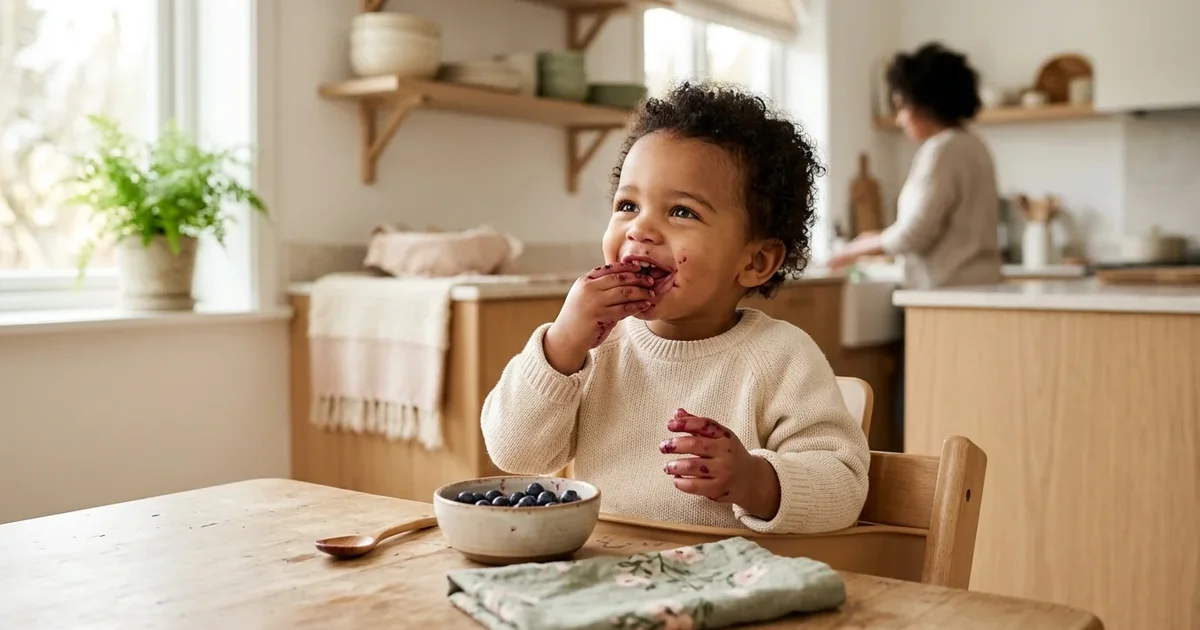
Yes, blueberries stain everything. The anthocyanin pigments that make blueberries so nutritious also create stubborn stains. Use a bib, consider dark-colored clothing during meals, and treat stains promptly with cold water and soap. Staining on skin is harmless and washes off.
Explore More
Use our SmartStart Food Guide to check which foods are safe for your baby's age. For a complete guide to starting solids, read our Baby-Led Weaning Complete Guide.
Looking for more first foods? Check our guides on Strawberries for Babies and Bananas for Babies.
More Foods to Explore
Sources
- American Academy of Pediatrics (AAP) - Starting Solid Foods
- World Health Organization (WHO) - Complementary Feeding
- NHS Start4Life - First Foods
🔧 Helpful Tools
- Baby Food Guide. Safe foods and introduction schedule for your baby
- Baby Milestones Tracker. Track your baby's developmental milestones
- All Baby Tools. Browse all free tools for pregnancy and baby care
📖 Related Articles
- When Can Babies Eat Banana? Age, Safety & How to Serve. Find out when your baby can eat banana, how to prepare it for different ages, nutritional benefits, and choking safety tips backed by WHO and AAP guidelines.
- When Can Babies Eat Strawberries? Age, Safety & How to Serve. Learn when babies can eat strawberries, how to cut them safely, nutritional benefits, allergy info, and age-appropriate serving suggestions from WHO and AAP.
- When Can Babies Eat Avocado? Age, Safety & How to Serve. Learn when babies can eat avocado, the nutritional benefits, how to prepare it for BLW and puree feeding, plus safety tips from AAP and WHO guidelines.