The Short Answer
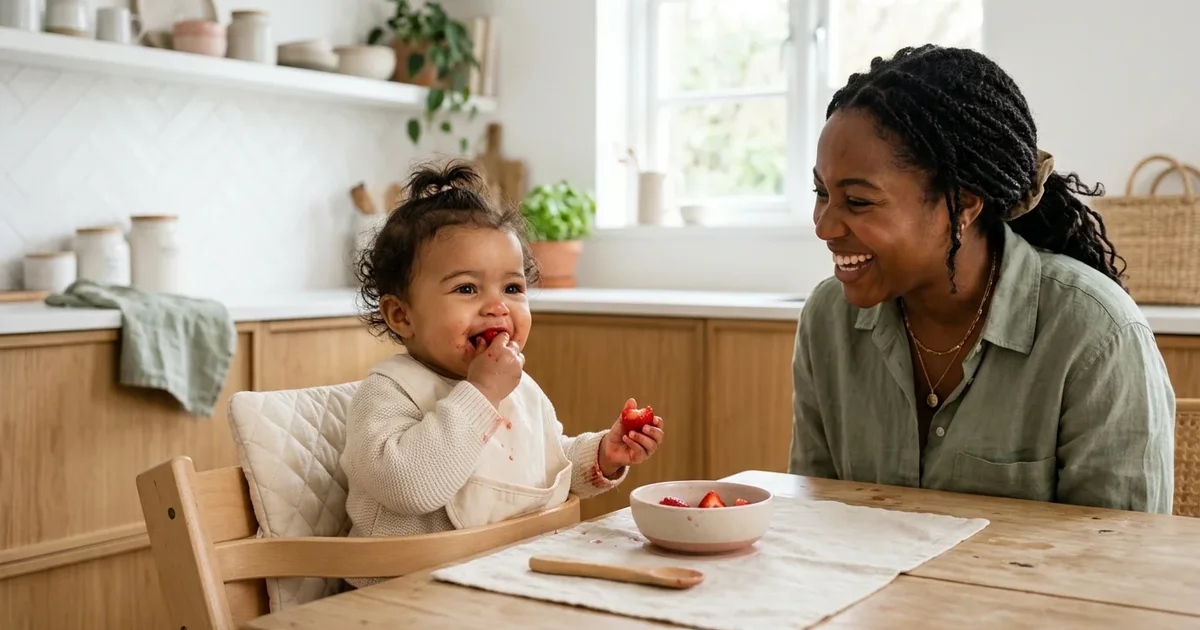
Babies can eat strawberries from around 6 months old. Despite their bright red color, strawberries are not a common allergen and are a great source of vitamins for your baby.
Key Takeaways
- Safe from 6 months: Both the AAP and WHO support strawberries as part of a varied diet from around 6 months when solids begin.
- How to serve: Cut large ripe strawberries in half or quarters lengthwise. For BLW, a large whole strawberry for gnawing is also safe. For purees, mash or blend until smooth.
- Not a top allergen: Strawberries are not among the top 9 allergens. A red rash around the mouth is usually a harmless contact reaction from acidity, not an allergy.
- Vitamin C powerhouse: Strawberries are one of the richest fruit sources of vitamin C, boosting immune function and helping the body absorb iron.
- Cut to the right size: Small whole strawberries are a choking hazard, always cut appropriately and always supervise.
Nutritional Benefits
Strawberries offer impressive nutrition for such a small fruit:
- Vitamin C - one of the richest fruit sources, supporting immune function and iron absorption
- Folate - important for cell growth and development
- Fiber - promotes healthy digestion
Strawberries also contain antioxidants and manganese, which support bone health.
How to Prepare Strawberries for Different Ages
6 to 8 Months
Baby-led weaning (BLW): Cut large, ripe strawberries in half lengthwise or into quarters. For very large berries, you can flatten them slightly with a fork. Some parents offer a whole large strawberry for baby to gnaw on, which reduces choking risk compared to small pieces.
Puree approach: Blend or mash ripe strawberries until smooth. Strain through a fine mesh sieve to remove seeds if desired. Mix with banana or yogurt for variety.
9 to 12 Months
Cut strawberries into small pieces appropriate for baby's pincer grasp. Quarter or dice medium-sized berries. At this age, most babies can handle the soft texture well.
12+ Months
Serve strawberries sliced, quartered, or whole (for larger berries). Add to cereal, yogurt, pancakes, or smoothies.
Allergen Info
Strawberries are not one of the top allergens, but some babies may experience a skin reaction (red rash around the mouth) due to the fruit's acidity. This is usually a contact reaction, not a true allergy, and is harmless.
If your baby develops hives, swelling, or vomiting after eating strawberries, consult your pediatrician as this could indicate a true allergy.
Choking Hazards
- Cut strawberries appropriately for age. Whole small strawberries or large pieces can be a choking risk.
- Remove the green stem and leaves before serving
- Choose ripe, soft strawberries rather than firm ones
- Always supervise your baby during meals
Frozen strawberries (thawed) make an excellent teething relief. The cold soothes sore gums, and the soft texture is easy to chew. Just make sure they are cut to the right size.
Frequently Asked Questions
Do I need to buy organic strawberries for my baby?
Strawberries often appear on the "Dirty Dozen" list of produce with higher pesticide residues. If budget allows, choosing organic strawberries is a reasonable choice for babies. Either way, always wash strawberries thoroughly under running water before serving.
Why does my baby get a red rash from strawberries?
A red rash around the mouth after eating strawberries is usually a harmless contact reaction caused by the fruit's natural acidity. It typically fades within 30 minutes. This is different from an allergic reaction, which would involve hives, swelling, or vomiting. If you are unsure, ask your pediatrician.
Can I give frozen strawberries to my baby?
Yes. Thaw frozen strawberries before serving and cut them to the appropriate size for your baby's age. Frozen strawberries are just as nutritious as fresh and are available year-round.
Explore More
Use our SmartStart Food Guide to check which foods are safe for your baby's age. For a complete guide to starting solids, read our Baby-Led Weaning Complete Guide.
Looking for more first foods? Check our guides on Blueberries for Babies and Bananas for Babies.
More Foods to Explore
Sources
- American Academy of Pediatrics (AAP) - Starting Solid Foods
- World Health Organization (WHO) - Complementary Feeding
- NHS Start4Life - First Foods
🔧 Helpful Tools
- Baby Food Guide. Safe foods and introduction schedule for your baby
- Baby Milestones Tracker. Track your baby's developmental milestones
- All Baby Tools. Browse all free tools for pregnancy and baby care
📖 Related Articles
- When Can Babies Eat Banana? Age, Safety & How to Serve. Find out when your baby can eat banana, how to prepare it for different ages, nutritional benefits, and choking safety tips backed by WHO and AAP guidelines.
- When Can Babies Eat Blueberries? Age, Safety & How to Serve. Learn when babies can eat blueberries, how to serve them safely at different ages, choking prevention tips, and nutritional benefits based on AAP guidelines.
- When Can Babies Eat Avocado? Age, Safety & How to Serve. Learn when babies can eat avocado, the nutritional benefits, how to prepare it for BLW and puree feeding, plus safety tips from AAP and WHO guidelines.