The Short Answer
Babies can eat pasta from around 6 months old. Pasta is an excellent early finger food that is easy to prepare, affordable, and versatile. Cook it softer than you would for adults and choose shapes that are easy for small hands to grip.
Key Takeaways
- Safe from 6 months: The AAP and WHO support pasta as part of solid food introduction from around 6 months when babies show signs of readiness.
- How to serve: Cook pasta 2–3 minutes longer than package directions until very soft. Fusilli (spiral) is the best BLW shape, easy to grip and holds sauce well.
- Contains gluten (allergen): Pasta made from wheat contains gluten, a top allergen. Current research supports early introduction around 6 months rather than delaying.
- No salt in the cooking water: Babies under 12 months need very little sodium, cook pasta in plain water and add flavor through sauce or herbs.
- Gluten-free options available: Rice, corn, or lentil pasta are suitable alternatives if gluten must be avoided.
Nutritional Benefits
Pasta provides important nutrients for growing babies:
- Carbohydrates - provides sustained energy for active babies
- Iron (enriched varieties) - many pastas are fortified with iron, supporting brain development
- B vitamins - including folate, which supports cell growth
Whole wheat pasta adds extra fiber, though regular pasta is perfectly fine for babies.
How to Prepare Pasta for Different Ages
6 to 8 Months
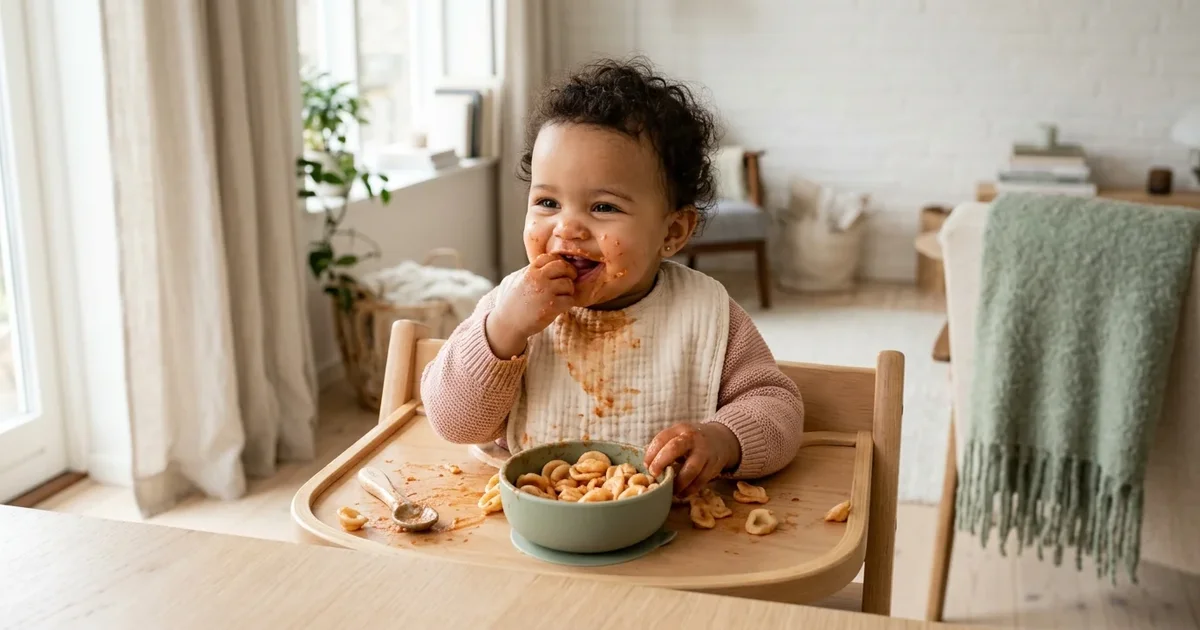
Baby-led weaning (BLW): Cook pasta until very soft (2 to 3 minutes past the package directions). Choose large shapes that are easy to grip: fusilli (spirals) is the top choice for BLW because babies can hold the spiral. Penne and rigatoni also work well. You can also offer a single long piece of spaghetti or linguine.
Puree approach: Cook small pasta shapes until very soft, then blend or mash with vegetable sauce, breast milk, or formula until the desired consistency.
Fusilli (spiral pasta) is the best shape for baby-led weaning. The spirals are easy for small hands to grip and the grooves hold sauce well. Cook it extra soft and it becomes a perfect first finger food.
9 to 12 Months
Offer a wider variety of pasta shapes cut into smaller pieces. Macaroni, small shells, and orzo are good for pincer grasp practice. Pasta can be tossed with olive oil, butter, tomato sauce, or pesto (without added salt).
12+ Months
Serve pasta as part of regular family meals. Spaghetti with sauce, mac and cheese, pasta bakes, and pasta salads are all appropriate. Your toddler can eat the same pasta as the rest of the family.
Best Pasta Shapes by Age
| Age | Best Shapes | Why |
|---|---|---|
| 6-8 months | Fusilli, penne, rigatoni | Easy to grip with a palmar grasp |
| 9-12 months | Macaroni, small shells, orzo | Good for pincer grasp practice |
| 12+ months | Any shape | Toddler can manage most textures |
Allergen Info
Pasta contains wheat (gluten), which is one of the top 9 allergens:
- Introduce pasta around 6 months as part of the normal introduction of solid foods
- Current research supports early gluten introduction rather than delaying
- Watch for signs of wheat allergy: hives, vomiting, diarrhea, or swelling
- Celiac disease may present with poor weight gain, bloating, and persistent diarrhea. Contact your pediatrician if you notice these symptoms.
- Gluten-free pasta (made from rice, corn, or lentils) is available if needed
Choking Hazards
- Cook pasta until very soft for babies. It should squish easily between your fingers.
- Cut long pasta (spaghetti, linguine) into shorter pieces for babies 9+ months
- Avoid very small pasta shapes (like couscous) for early eaters as they can be frustrating to pick up
- Do not serve pasta with large chunks of meat or vegetables that could pose a choking risk
- Always supervise your baby during meals
Frequently Asked Questions
What is the best pasta shape for a 6-month-old?
Fusilli (spiral) pasta is widely considered the best shape for babies starting solids. The spiral shape is easy to grip, holds sauce in its grooves, and the texture encourages chewing. Cook it 2 to 3 minutes longer than package directions for a softer result.
Should I add salt to pasta water when cooking for my baby?
No. Babies under 12 months should have very little sodium. Cook pasta in plain water without salt. You can add flavor with sauce, herbs, garlic, or a small amount of butter or olive oil instead.
Can babies eat whole wheat pasta?
Yes, from 6 months. Whole wheat pasta has more fiber and nutrients than regular pasta. However, it has a slightly firmer texture and nuttier flavor that some babies may not prefer initially. Regular (white) pasta is equally acceptable as a starting point.
Explore More
Use our SmartStart Food Guide to check which foods are safe for your baby's age. For a complete guide to starting solids, read our Baby-Led Weaning Complete Guide.
Looking for more first foods? Check our guides on Bread for Babies and Rice for Babies.
More Foods to Explore
- When Can Babies Eat Tomatoes?
- When Can Babies Eat Eggs?
- When Can Babies Eat Avocado?
- When Can Babies Eat Cheese?
Sources
- American Academy of Pediatrics (AAP) - Starting Solid Foods
- World Health Organization (WHO) - Complementary Feeding
- NHS Start4Life - First Foods
🔧 Helpful Tools
- Baby Food Guide. Safe foods and introduction schedule for your baby
- Baby Milestones Tracker. Track your baby's developmental milestones
- All Baby Tools. Browse all free tools for pregnancy and baby care
📖 Related Articles
- When Can Babies Eat Bread? Age, Safety & How to Serve. Find out when babies can eat bread, which types are best, how to serve bread at different ages, and gluten allergy info based on AAP and WHO guidelines.
- When Can Babies Eat Rice? Age, Safety & How to Serve. Learn when babies can eat rice, arsenic concerns, how to prepare rice safely for different ages, and what the AAP and WHO recommend about rice for infants.
- When Can Babies Eat Avocado? Age, Safety & How to Serve. Learn when babies can eat avocado, the nutritional benefits, how to prepare it for BLW and puree feeding, plus safety tips from AAP and WHO guidelines.