The Short Answer
Babies can eat meat from around 6 months old, and many pediatricians encourage it as one of the first foods. Meat is one of the best sources of iron and zinc, two nutrients that babies need more of starting at 6 months when their natural stores begin to deplete.
Key Takeaways
- Safe from 6 months, and actively recommended: The AAP specifically recommends iron-rich foods like meat as among the very first complementary foods for breastfed babies.
- How to serve: For BLW, offer slow-cooked, finger-sized strips that baby can gnaw. For purees, blend very tender meat with cooking liquid or vegetable broth.
- No major allergen: Meat is not a top allergen, making it a safe first food for most babies.
- Critical for iron: Babies' natural iron stores deplete around 6 months. Heme iron from meat is the most easily absorbed form, more effective than plant sources.
- Avoid processed meat: Hot dogs, sausages, deli meat, and bacon are high in sodium and nitrates, not appropriate for babies.
Nutritional Benefits
Meat is a nutritional powerhouse for babies:
- Heme iron - the most easily absorbed form of iron, critical for brain development and preventing iron-deficiency anemia
- Zinc - supports immune function and growth
- Complete protein - provides all essential amino acids for muscle and tissue development
Meat also provides B vitamins (especially B12), selenium, and phosphorus.
The AAP specifically recommends iron-rich foods like meat as among the first complementary foods for breastfed babies, since breast milk iron levels naturally decrease after 6 months.
How to Prepare Meat for Different Ages
6 to 8 Months
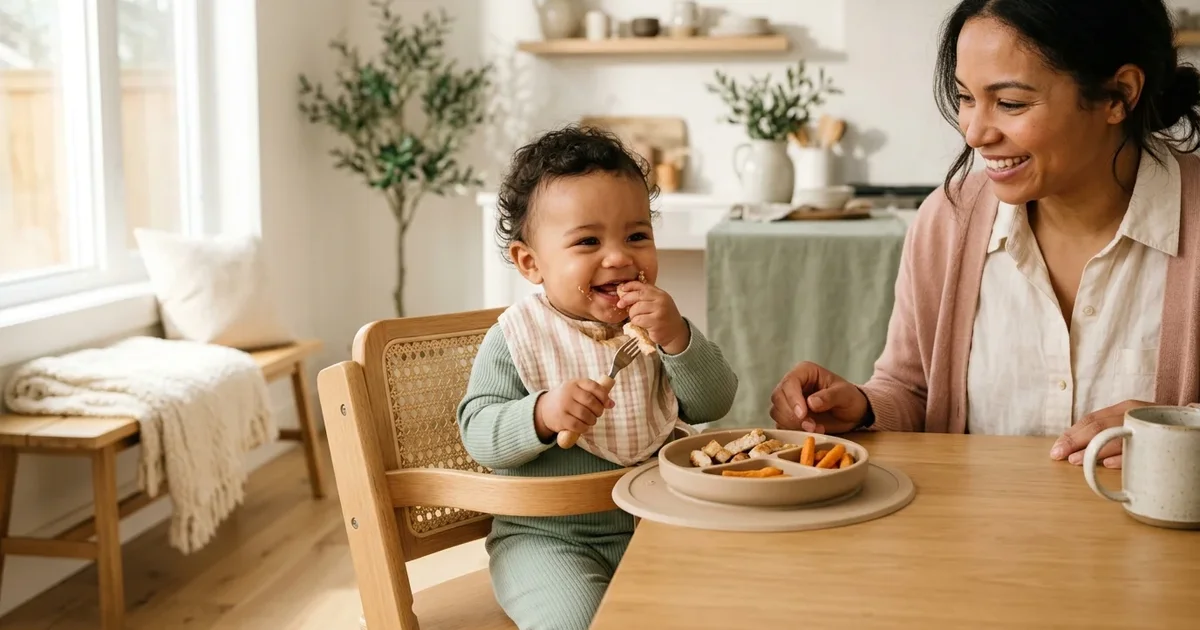
Baby-led weaning (BLW): Offer a large, soft piece of slow-cooked meat (about the size of your finger) that baby can hold and gnaw on. Drumsticks with cartilage removed work well. Meatballs (made without salt) flattened slightly are another good option. Ground meat cooked into a thick, moist patty and cut into strips also works.
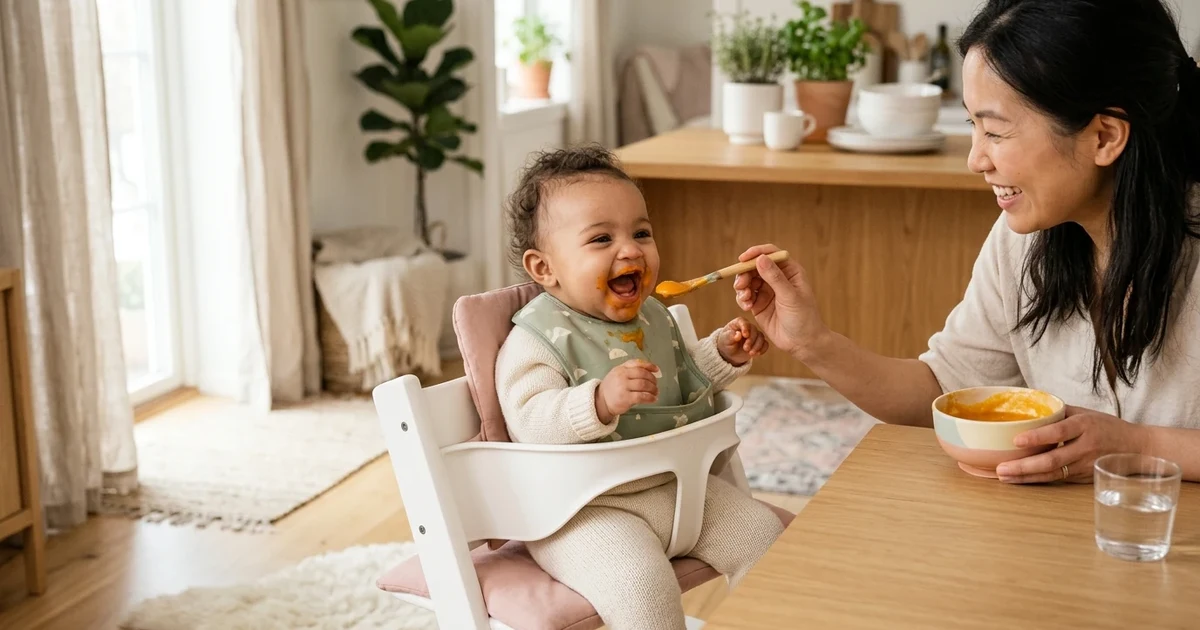
Puree approach: Cook meat until very tender (slow cooking works best), then blend with cooking liquid, breast milk, or vegetable broth until smooth. Mix with sweet potato, carrot, or pea puree for a balanced meal.
9 to 12 Months
Offer shredded or finely chopped tender meat. Small, soft meatballs are excellent for pincer grasp practice. Ground meat mixed into pasta sauce or rice is an easy way to include meat in meals.
12+ Months
Serve meat in small, bite-sized pieces as part of family meals. Stews, meatballs, mild curries, tacos, and pasta with meat sauce are all suitable.
Best Meats to Start With
- Chicken - mild flavor, easy to cook tender
- Turkey - lean, mild, similar to chicken
- Beef - excellent iron content, best slow-cooked for tenderness
- Lamb - rich in iron and zinc
- Pork - tender when slow-cooked, good source of B vitamins
Avoid for babies: processed meats (hot dogs, deli meat, sausages, bacon) due to high sodium, nitrates, and choking risk.
Choking Hazards
- Avoid dry, tough, or stringy meat that is difficult to chew
- Cook meat until very tender (slow cooking, braising, or pressure cooking)
- Cut meat into appropriate sizes for age (strips for 6-8 months, small pieces for 9+)
- Avoid processed meat like hot dogs, which are a leading choking hazard for children
- Remove all bones, skin, cartilage, and fat before serving
- Always supervise your baby during meals
Frequently Asked Questions
Is meat safe as a first food?
Yes. The AAP and WHO both support meat as one of the first complementary foods, particularly for breastfed babies who need additional iron from 6 months onward. Meat puree or soft strips of slow-cooked meat are excellent starter options.
Can babies eat ground beef?
Yes, from 6 months. Cook ground beef thoroughly (no pink remaining), keep it moist, and serve in age-appropriate sizes. For younger babies, form into flat patties or meatballs. For older babies, crumble finely into pasta sauce or rice.
How much meat does a baby need?
About 1 to 2 tablespoons of meat per meal is appropriate for babies 6 to 12 months, offered once or twice daily. The key is providing enough iron-rich food rather than a specific quantity. Variety across protein sources (meat, fish, eggs, legumes) is important.
Explore More
Use our SmartStart Food Guide to check which foods are safe for your baby's age. For a complete guide to starting solids, read our Baby-Led Weaning Complete Guide.
Looking for more first foods? Check our guides on Fish for Babies and Eggs for Babies.
More Foods to Explore
Sources
- American Academy of Pediatrics (AAP) - Starting Solid Foods
- World Health Organization (WHO) - Complementary Feeding
- NHS Start4Life - First Foods
🔧 Helpful Tools
- Baby Food Guide. Safe foods and introduction schedule for your baby
- Baby Milestones Tracker. Track your baby's developmental milestones
- All Baby Tools. Browse all free tools for pregnancy and baby care
📖 Related Articles
- When Can Babies Eat Avocado? Age, Safety & How to Serve. Learn when babies can eat avocado, the nutritional benefits, how to prepare it for BLW and puree feeding, plus safety tips from AAP and WHO guidelines.
- When Can Babies Eat Banana? Age, Safety & How to Serve. Find out when your baby can eat banana, how to prepare it for different ages, nutritional benefits, and choking safety tips backed by WHO and AAP guidelines.
- When Can Babies Eat Blueberries? Age, Safety & How to Serve. Learn when babies can eat blueberries, how to serve them safely at different ages, choking prevention tips, and nutritional benefits based on AAP guidelines.