The Short Answer
Babies can eat rice from around 6 months old. Rice is a common first food around the world, but it is important to be aware of arsenic levels and to offer variety rather than relying on rice as the primary grain.
Key Takeaways
- Safe from 6 months: The AAP and WHO support rice as a first food from 6 months, but recommend it as part of a varied grain diet, not the only grain.
- How to serve: Cook rice until very soft and sticky. For BLW, press into small balls or strips. For purees, blend with breast milk, formula, or water.
- Arsenic concern: Rice absorbs more arsenic from soil than other grains. Rinse well and cook in a 6:1 water-to-rice ratio, then drain, to reduce arsenic by up to 60%.
- Not a top allergen: Rice rarely causes allergic reactions and is naturally gluten-free, making it suitable for most babies.
- Rotate your grains: Oats, barley, quinoa, and millet are excellent alternatives with lower arsenic levels and similar nutritional benefits.
Nutritional Benefits
Rice provides several benefits for growing babies:
- Carbohydrates - provides energy for active, growing bodies
- Iron (fortified rice cereal) - supports cognitive development and prevents iron deficiency
- Easy to digest - gentle on developing stomachs, rarely causes allergic reactions
Rice also provides B vitamins and is naturally gluten-free.
How to Prepare Rice for Different Ages
6 to 8 Months
Baby-led weaning (BLW): Cook rice until very soft and sticky. Form into small balls or press into a thin layer and cut into strips that baby can grip. You can also mix cooked rice into mashed vegetables for texture.
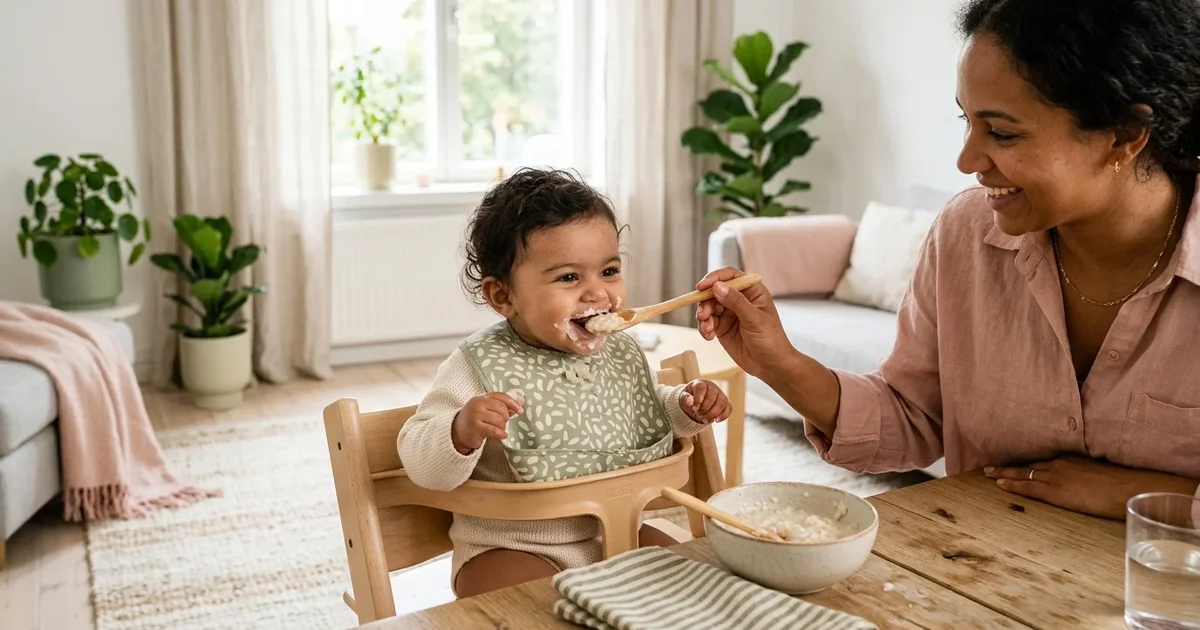
Puree approach: Cook rice until very soft, then blend with water, breast milk, or formula into a smooth puree. Iron-fortified rice cereal mixed with liquid is also a common first food.
9 to 12 Months
Offer soft, well-cooked rice mixed with vegetables, meat, or beans. At this stage, baby can pick up individual grains with a pincer grasp, though this can be challenging. Mixing rice into other foods or forming it into balls helps.
12+ Months
Serve rice as part of regular family meals. Rice bowls, fried rice (low sodium), rice with curries, and rice pudding are all appropriate.
Arsenic Concerns
Rice naturally absorbs arsenic from soil and water at higher levels than other grains. The FDA and AAP have issued guidance:
- Do not use rice cereal as the only grain - rotate with oat, barley, and multigrain cereals
- Rinse rice thoroughly before cooking and cook in excess water (6:1 ratio), then drain, which can reduce arsenic by up to 60%
- Brown rice contains more arsenic than white rice because arsenic concentrates in the outer bran layer
- Basmati rice (from India, Pakistan, California) tends to have lower arsenic levels
- Rice milk and rice-based drinks should be avoided for children under 5 years
The AAP recommends offering a variety of grains rather than relying on rice alone. Oatmeal, barley, quinoa, and multigrain cereals are excellent alternatives that provide similar nutrition with lower arsenic exposure.
Choking Hazards
- Individual rice grains are small and generally not a choking hazard
- Sticky rice balls should be kept small enough to manage
- Rice cakes can be hard and crumbly. Choose the thin, dissolvable type for younger babies.
- Always supervise your baby during meals
Frequently Asked Questions
Is rice cereal a good first food?
Rice cereal was traditionally recommended as a first food, but current AAP guidance suggests it should not be the only grain offered. Iron-fortified oat cereal is a good alternative with lower arsenic content. If you choose rice cereal, use it as one of several grain options.
How can I reduce arsenic in rice?
Rinse rice thoroughly under running water before cooking. Cook in extra water (use a 6:1 water-to-rice ratio) and drain the excess water after cooking, similar to how you would cook pasta. This method can reduce arsenic levels by up to 60%.
What grains are good alternatives to rice for babies?
Oats, barley, quinoa, millet, and amaranth are all excellent alternatives. They provide similar energy and nutrients with lower arsenic levels. Iron-fortified oat cereal is particularly recommended as a first cereal.
Explore More
Use our SmartStart Food Guide to check which foods are safe for your baby's age. For a complete guide to starting solids, read our Baby-Led Weaning Complete Guide.
Looking for more first foods? Check our guides on Pasta for Babies and Bread for Babies.
More Foods to Explore
Sources
- American Academy of Pediatrics (AAP) - Arsenic in Rice and Rice Cereals
- FDA - Arsenic in Rice and Rice Products
- World Health Organization (WHO) - Complementary Feeding
🔧 Helpful Tools
- Baby Food Guide. Safe foods and introduction schedule for your baby
- Baby Milestones Tracker. Track your baby's developmental milestones
- All Baby Tools. Browse all free tools for pregnancy and baby care
📖 Related Articles
- When Can Babies Eat Bread? Age, Safety & How to Serve. Find out when babies can eat bread, which types are best, how to serve bread at different ages, and gluten allergy info based on AAP and WHO guidelines.
- When Can Babies Eat Pasta? Age, Safety & How to Serve. Find out when babies can eat pasta, the best shapes for each age, how to cook it safely, and gluten allergy guidance based on AAP and WHO recommendations.
- When Can Babies Eat Avocado? Age, Safety & How to Serve. Learn when babies can eat avocado, the nutritional benefits, how to prepare it for BLW and puree feeding, plus safety tips from AAP and WHO guidelines.