The Short Answer
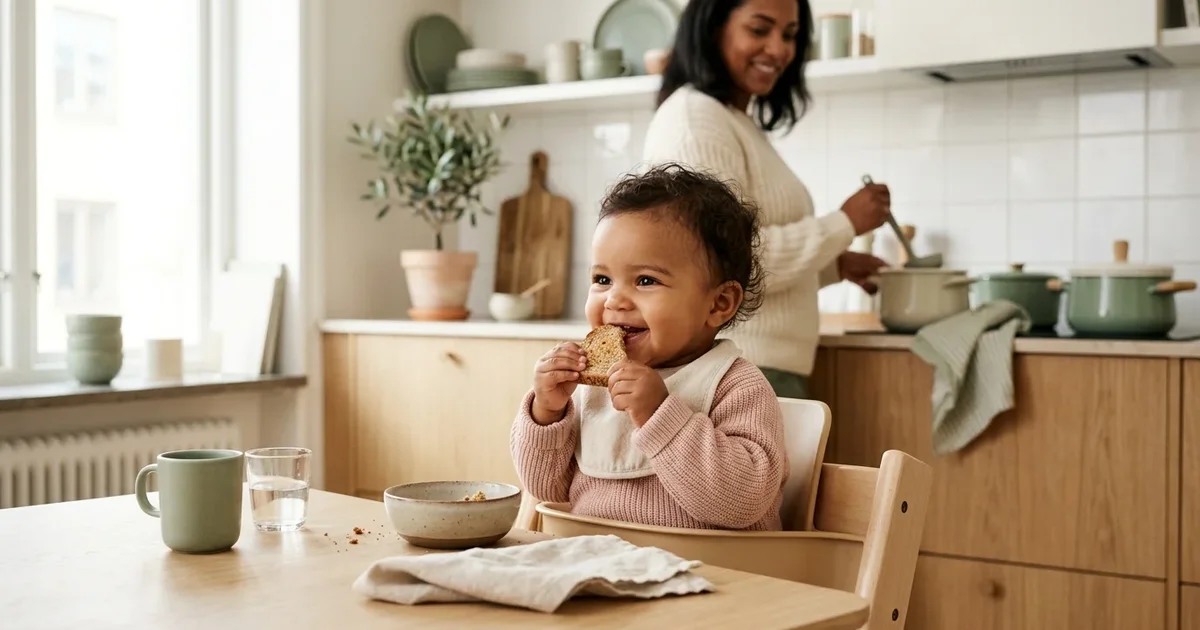
Babies can eat bread from around 6 months old. Bread is a versatile first finger food, especially when lightly toasted and cut into strips. Choose simple varieties without added honey, seeds, or excessive salt.
Key Takeaways
- Safe from 6 months: The AAP and WHO support bread as part of solid food introduction from around 6 months, toast it lightly for the safest texture.
- How to serve: Cut lightly toasted bread into finger-length strips. You can top with mashed avocado, thinned nut butter, or hummus.
- Contains gluten (allergen): Bread made from wheat is a gluten-containing food. Current research supports early gluten introduction, do not delay beyond 6 months.
- Avoid honey bread: Never give bread containing honey to babies under 12 months due to the risk of infant botulism.
- Choose simple varieties: Avoid bread with seeds, nuts, or very high sodium. White or whole wheat bread without additives is ideal.
Nutritional Benefits
Bread provides useful nutrition for growing babies:
- Carbohydrates - a reliable energy source for active babies
- Iron (fortified varieties) - supports brain development and prevents anemia
- B vitamins - important for energy metabolism and nervous system function
Whole grain bread also provides fiber for healthy digestion.
How to Prepare Bread for Different Ages
6 to 8 Months
Baby-led weaning (BLW): Lightly toast bread and cut into finger-length strips. Toasting changes the texture from gummy to easier-to-manage. You can spread a thin layer of mashed avocado, nut butter (thinned), or hummus on the strips.
Puree approach: Bread is not typically pureed, but you can soften bread in warm breast milk or formula to make a porridge-like consistency.
Toast is easier and safer for babies than fresh bread. Fresh, soft bread can become gummy and stick to the roof of a baby's mouth, making it harder to manage. Light toasting solves this.
9 to 12 Months
Offer smaller pieces of toast with toppings. Bread can be cut into squares or triangles for pincer grasp practice. French toast (well-cooked egg, no added sugar) is a great option at this age.
12+ Months
Serve bread as sandwiches, toast with various toppings, bread rolls, or as part of regular meals. At this age, most toddlers can manage a variety of bread textures.
Which Bread to Choose
Good Choices
- Simple white bread - soft, mild, low sodium
- Whole wheat bread - more fiber and nutrients
- Sourdough - easier to digest due to fermentation
- Pita bread - soft, easy to tear
Bread to Avoid for Babies
- Bread with honey - botulism risk for babies under 12 months
- Seeded or nut-topped bread - choking hazard from seeds and nuts
- Very crusty bread (hard baguette) - too difficult to chew
- High-sodium bread - check labels, some breads are surprisingly high in salt
Allergen Info
Bread contains wheat (gluten), which is one of the top 9 allergens:
- Introduce bread when starting solids around 6 months
- Current research suggests that early gluten introduction (not delayed) may help reduce the risk of celiac disease
- Watch for signs of wheat allergy: hives, vomiting, diarrhea, or swelling
- Celiac disease symptoms include poor weight gain, bloating, and persistent diarrhea. If you notice these, consult your pediatrician.
Choking Hazards
- Avoid large, gummy pieces of fresh bread that can clump in the mouth
- Toast lightly to improve texture and reduce gumminess
- Cut bread into manageable strips or small pieces
- Avoid very crusty bread that can break into hard pieces
- Always supervise your baby during meals
Frequently Asked Questions
Should I toast bread for my baby?
Yes, lightly toasting bread is recommended, especially for babies 6 to 9 months. Toasting changes the texture from soft and gummy to slightly firmer, making it easier for babies to chew and reducing the risk of it sticking in their mouth.
Can babies eat white bread or should it be whole wheat?
Both are fine from 6 months. White bread is softer and lower in fiber, which can be easier to start with. Whole wheat bread has more nutrients and fiber. Offering both as part of a varied diet is ideal. Avoid very dense whole grain bread for younger babies.
How much bread can a baby eat per day?
One to two small servings (about half a slice each) is appropriate for babies 6 to 12 months. Bread should be part of a varied diet that includes fruits, vegetables, protein, and other grains.
Explore More
Use our SmartStart Food Guide to check which foods are safe for your baby's age. For a complete guide to starting solids, read our Baby-Led Weaning Complete Guide.
Looking for more first foods? Check our guides on Pasta for Babies and Rice for Babies.
More Foods to Explore
Sources
- American Academy of Pediatrics (AAP) - Starting Solid Foods
- World Health Organization (WHO) - Complementary Feeding
- NHS Start4Life - First Foods
🔧 Helpful Tools
- Baby Food Guide. Safe foods and introduction schedule for your baby
- Baby Milestones Tracker. Track your baby's developmental milestones
- All Baby Tools. Browse all free tools for pregnancy and baby care
📖 Related Articles
- When Can Babies Eat Pasta? Age, Safety & How to Serve. Find out when babies can eat pasta, the best shapes for each age, how to cook it safely, and gluten allergy guidance based on AAP and WHO recommendations.
- When Can Babies Eat Rice? Age, Safety & How to Serve. Learn when babies can eat rice, arsenic concerns, how to prepare rice safely for different ages, and what the AAP and WHO recommend about rice for infants.
- When Can Babies Eat Avocado? Age, Safety & How to Serve. Learn when babies can eat avocado, the nutritional benefits, how to prepare it for BLW and puree feeding, plus safety tips from AAP and WHO guidelines.