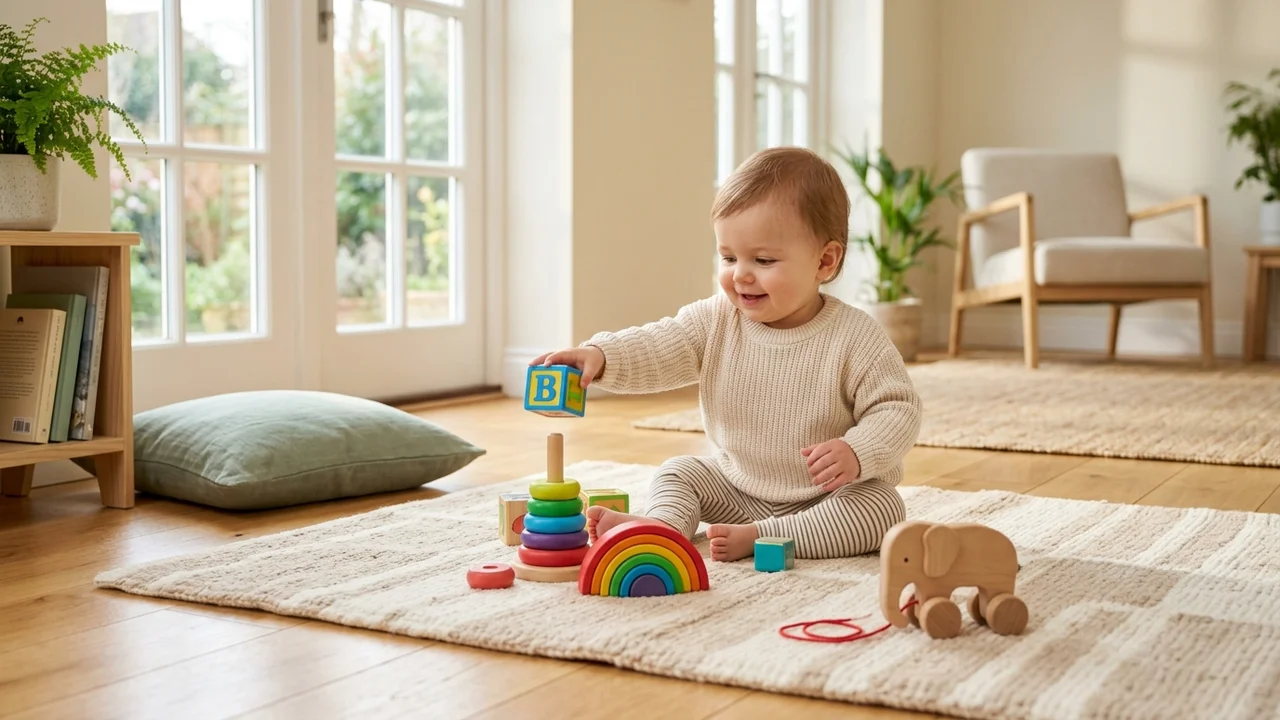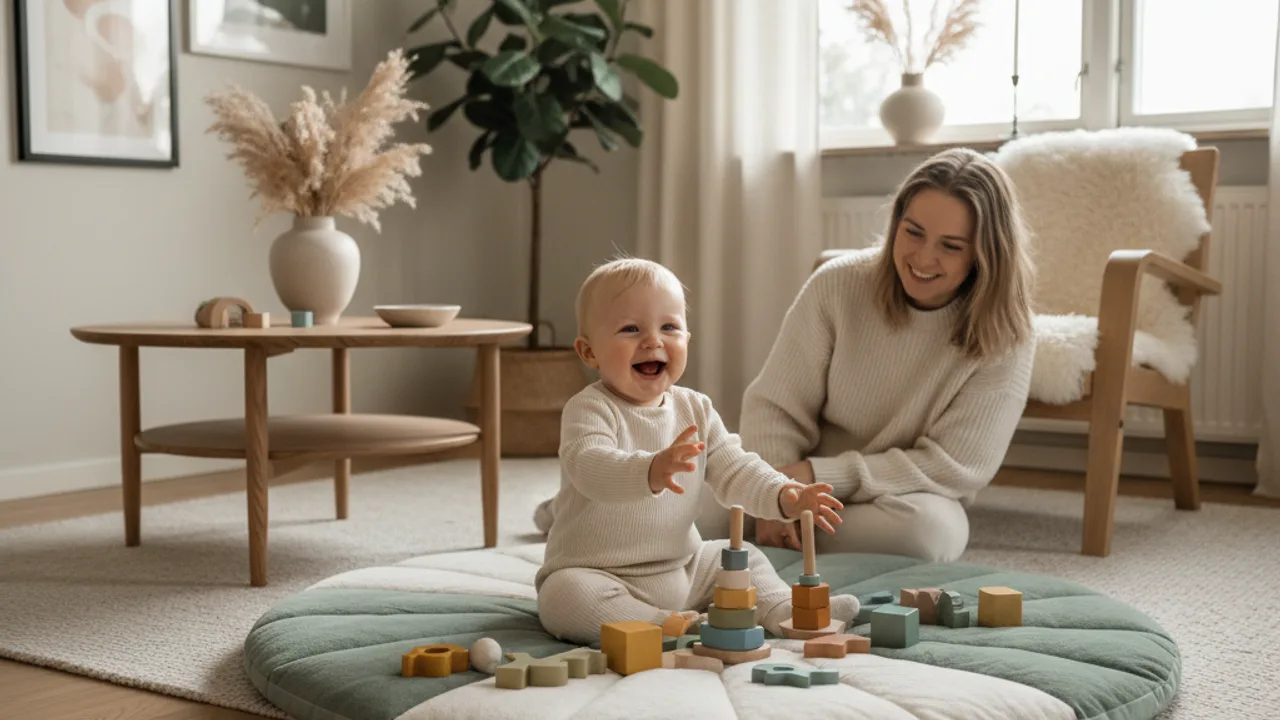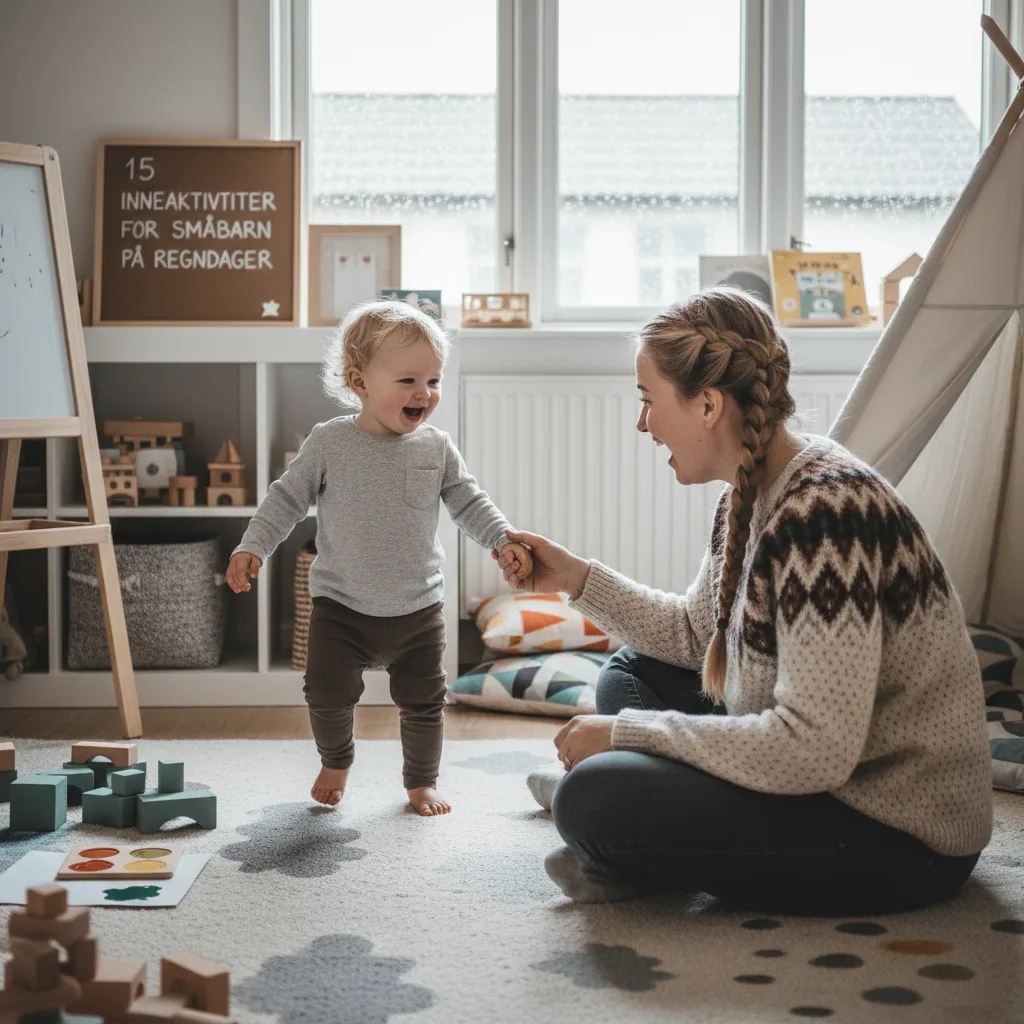
Rain drumming against the window, grey skies outside, and your toddler has already emptied the toy box twice. It's only ten o'clock and the whole day stretches ahead of you. Sound familiar?
Here are 15 indoor activities that require minimal preparation, use things you already have at home, and actually support your child's development. Screen-free bonus included.
Sensory Play: Let Their Hands Explore
1. Water Play in the Bathtub
Fill the tub with a few inches of water and give your child cups, funnels, sieves, and plastic animals. Water play supports fine motor development and cause-and-effect understanding. Put a towel on the floor beside it to contain the splashing.
2. Homemade Playdough
Mix flour, salt, water, and cooking oil to make a soft dough. Add a little food coloring for extra effect. Let your child roll it, press it, cut it with plastic cutlery, and poke things into it. This activity can keep a toddler occupied for a long time.
Recipe: 2 cups flour, 1 cup salt, 1 cup water, 1 tbsp cooking oil. Can be stored in a zip-lock bag in the fridge for up to a week.
3. Dry Rice or Pasta Play
Pour dry rice or pasta into a large dish or tray. Give your child spoons, cups, and small figures to hide in it. A simple, inexpensive sensory activity that invites lots of exploration.
Lay an old sheet under the tray. It makes cleanup much faster, and you can pour the rice back in and use it again.
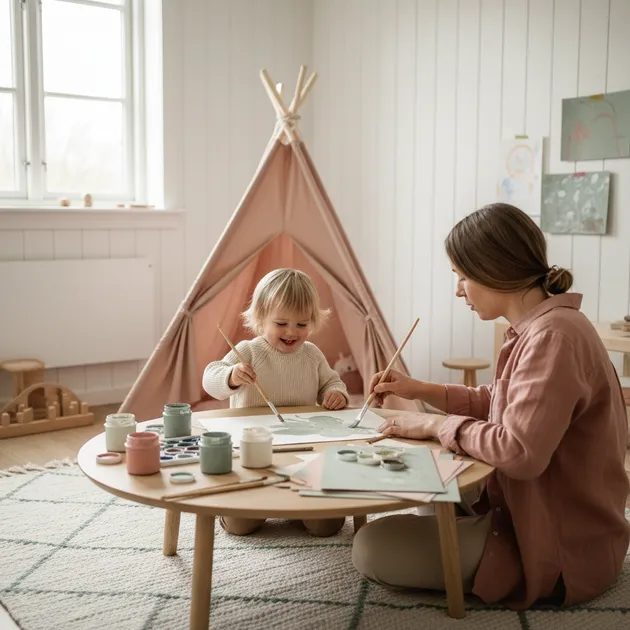
4. Finger Painting
Use child-safe finger paint, or make your own from yogurt and food coloring for the very youngest. Tape a large piece of paper to the table and let your child freely explore the colors. It's about the process, not the result.
Active Play: Burn Off That Energy
5. Indoor Obstacle Course
Use sofa cushions, blankets, chairs, and boxes to build an obstacle course. Climb over cushions, crawl under the table, jump from pillow to pillow. Gross motor play is essential for toddlers, especially on days when they can't get outside.
6. Dance Party
Turn up the music and dance! Switch between fast and slow songs. Freeze dance (stop when the music stops) is a hit with most two-year-olds and trains impulse control. All you need is a speaker.
7. Balloon Play
Blow up a balloon and play keep-it-up. Toddlers love the unpredictable movement. Balloons are safe because they move slowly and don't hurt when you get hit by one.
Supervise children during balloon play at all times. Broken balloon pieces can be a choking hazard. Clean up any pieces immediately.
Creative Play: Let the Imagination Take Over
8. Fort Building
Use blankets, pillows, and chairs to build a fort. Add flashlights, books, and stuffed animals. The fort can become a reading nook, a restaurant, or a spaceship. For toddlers, the building process itself is at least as fun as sitting inside afterward.
9. Baking Together
Even two-year-olds can help with baking. Give your child a bowl, a whisk, and ingredients to pour in. Simple recipes like banana pancakes or oat cookies work well. Baking trains fine motor skills, patience, and early math concepts like quantity and sequence.
10. Drawing and Cutting
For children over 2: round-tipped scissors, scrap paper, and glue. Let your child cut freely and glue the pieces onto a large sheet. For younger toddlers, chunky markers and a big piece of paper on the floor is plenty.
Learning Through Play: Explore and Understand
11. Sorting Games
Gather objects in different colors, sizes, or shapes. Let your child sort socks by color, Lego by size, or books by "big and small." Sorting trains logical thinking and is surprisingly engaging for toddlers.
12. Hide-and-Seek Objects
Hide 3–5 familiar objects around the living room. Give your child clues: "There's something red under the sofa cushion!" For older toddlers you can draw a simple picture map. This game trains memory and spatial thinking.
13. Deluxe Story Time
Turn book reading into a full experience. Read a book and talk about the pictures. "What do you think happens next?" "Can you find the cat?" Afterward, your child can draw something from the book or act out the story with dolls.
Your local library is free and has a huge selection of children's books. Many libraries also offer story time and baby/toddler groups. A perfect rainy day outing, with a breath of fresh air on the way there.
Pretend Play: Be Someone Else
14. Restaurant or Shop
Set up a "shop" with items from the kitchen cupboard or a "restaurant" with plastic plates. Let your child take orders, cook in a toy kitchen, and serve you. Pretend play develops language, social skills, and creativity.
15. Dress-Up
You don't need costumes. Old scarves, hats, sunglasses, and oversized shoes are all you need. Let your child try on and mix and match in front of a mirror. Dress-up sparks imagination and produces plenty of laughter.
Tips for a Good Indoor Day
- Rotate activities: Don't do everything in one day. 3–4 activities with quiet breaks in between makes for a good day
- Low prep wins: The best activities use things you already have
- Accept the mess: Sensory play is messy. That's part of the deal. Clean up together afterward
- Include quiet time: Toddlers also need calm moments. Alternate between active and quiet play
- Go outside anyway: Even on rainy days, 15 minutes in rain gear and rubber boots can do wonders for everyone's mood
Frequently Asked Questions
How long can a toddler focus on one activity?
Most 1-year-olds concentrate for 5–10 minutes, while 2–3-year-olds can stay with an engaging activity for 15–30 minutes. Don't expect long stretches, have several short activities ready.
Is a little screen time okay on rainy days?
The WHO and AAP recommend avoiding screen time for children under 18–24 months, and no more than 1 hour per day for children aged 2–5. A short show can give you a break, but try to fill the rest of the day with active play.
What do I do when my child is bored of everything?
Sometimes the best activity is letting your child be a little bored. Boredom sparks creativity. Put out a few toys and step back. Most children find something to do within a few minutes.
Rainy days don't have to be a crisis. With a few simple ideas and a bit of creativity, indoor days can be just as fun as outdoor ones.
Read also: Music Play and Development | Songs and Rhymes for Toddlers | Fine Motor Activities
Sources
🔧 Helpful Tools
- Baby Milestones Tracker. Track your baby's developmental milestones
- Development Leaps. Understand your baby's developmental leaps
- All Baby Tools. Browse all free tools for pregnancy and baby care
📖 Related Articles
- 15 Indoor Activities for Toddlers on Rainy Days, 15 simple and creative indoor activities for toddlers when it's raining outside. Play that stimulates development without screens.
- Creative Play at Home: 20 Activities for Toddlers, 20 simple and fun activities you can do at home with toddlers. Creative play that supports development without expensive equipment.
- Play and Development Ages 1–3: An Age-by-Age Guide. Discover age-appropriate play ideas for 1-, 2-, and 3-year-olds that stimulate motor development, language, creativity, and social skills.