
Breastfeeding is one of the most natural things you will do as a new mother, but finding clothes that work for it does not always feel natural. You want to nurse quickly and easily, without having to undress halfway at a coffee shop.
Good nursing clothes make everyday life easier. In this guide you will find an overview of the types available, what to look for, and how to combine function with style.
Why Nursing-Friendly Clothing Makes a Difference
In the first weeks you may be nursing 8–12 times a day. Each feeding means you need access to your breast, and it should happen quickly and comfortably.
With regular clothes you often have to pull up an entire sweater, unbutton a shirt, or twist awkwardly. Nursing clothes are designed with hidden openings that give you discreet access without exposing your stomach or back.
Start with 3–4 nursing tops and 2 nursing bras. You will figure out what you like best after a few weeks and can add to your wardrobe from there.
Types of Nursing Clothing
Nursing Top
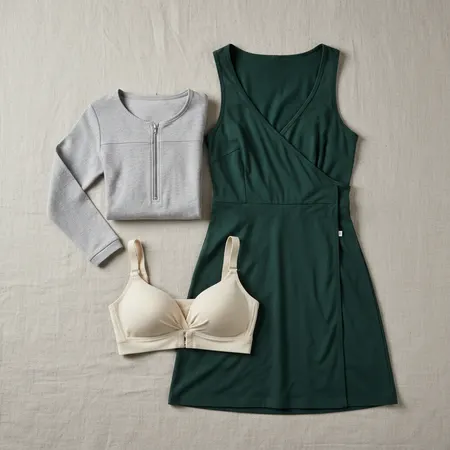
The nursing top is the everyday workhorse. It looks like a regular top but has hidden openings at the chest, either a double layer you lift, a clip on the strap, or a wrap function.
Available in many styles:
- Tank top, perfect as a layer under a sweater
- T-shirt, the most versatile, works for everything
- Long sleeve, great for colder days
- Wrap top, elegant and easy to open
Nursing Bra
The foundation of a nursing wardrobe. A nursing bra has clips or fold-down cups that give quick access to the breast without removing the bra.
See our complete nursing bra guide for help with sizing and selection.
Nursing Dress
A nursing dress is perfect for special occasions, summer, or simply when you want to feel put-together. Most have either:
- Hidden side zippers
- Wrap design that opens at the front
- Buttons or snap closures along the chest
A good nursing dress looks like a completely ordinary dress. No one needs to know it has a hidden nursing function.
Nursing Shirt
A shirt with extra buttons or snaps over the chest area. Works well for work and more formal settings. Look for models with hidden buttons behind the visible row.
Nursing Camisole and Undershirts
Soft camisoles and undershirts with nursing function are perfect as a base layer. They hold breast pads in place and add an extra layer under regular clothing. Many mothers wear a nursing camisole under a regular sweater as a smart alternative to dedicated nursing tops.
La Leche League recommends soft, comfortable clothing in the first weeks after birth. Avoid clothing that is tight across the chest, as this can contribute to blocked milk ducts.
What Should You Look For?
Opening and Access
The most important thing is that you can reach your breast quickly with one hand, you are holding the baby with the other. Try it in the store: can you open the clip or pull the fabric aside with just one hand?
Fit
Nursing clothes should feel comfortable without pulling. Your breasts change size throughout the day (full in the morning, lighter after feeding), so choose clothing with some stretch.
Fabric
Good materials make a big difference for comfort:
| Material | Advantages | Disadvantages |
|---|---|---|
| Cotton | Breathable, natural, hypoallergenic | Can shrink in the wash |
| Bamboo viscose | Ultra-soft, temperature-regulating, antibacterial | More expensive |
| Modal | Silky, holds its shape well | Less common |
| Merino wool | Warm, temperature-regulating, odor-resistant | Expensive, requires gentle washing |
| Polyester blend | Affordable, dries quickly | Less breathable |
Bamboo viscose and modal are favorite materials among nursing mothers. They are soft against sensitive skin, dry quickly after milk spills, and hold up well after many washes.
Washability
You are going to wash your nursing clothes often, milk spills, spit-up, and sweat are part of daily life. Choose clothing that can be machine washed and ideally tumble dried.
Nursing Clothes for Different Situations
At Home Every Day
At home it is all about comfort. A soft nursing top in cotton or bamboo, paired with joggers or comfortable trousers, is all you need.
Keep a couple of extra nursing tops on hand, it is frustrating to need to wash the only one you have in the middle of the night.
At Work
Work nursing clothes should look professional. A high-quality nursing shirt, a wrap blouse, or a smart nursing top under a blazer all work well. Darker colors hide any milk stains.
Formal Occasions
A nursing dress in a nice fabric (jersey, silk blend, or modal) looks elegant and gives discreet nursing access. Wrap designs are especially practical because they look sophisticated and are simple to use.
Outdoors and on the Go
For outdoor activities, a nursing top in merino wool under a fleece or jacket is ideal. Look for jackets with a zip you can open from the bottom, so you can nurse without getting cold.
Popular Brands and Where to Shop
Budget Options
- H&M Mama, good range of basics; nursing tops and dresses at accessible prices
- Lindex, solid nursing bras and camisoles at affordable prices
- Target Maternity, some nursing-friendly styles
Mid-Range
- Noppies. Dutch brand with a wide nursing clothing range, available online
- Mamalicious (via Zalando, ASOS), trendy nursing clothes at reasonable prices
- JoJo Maman Bébé. British brand with good nursing dresses
Premium
- Boob Design. Swedish brand, sustainable and high quality; known for timeless nursing tops and dresses
- Seraphine. British luxury brand with a celebrity following
- Frugi, organic cotton and sustainable nursing clothing
Check secondhand apps and local resale groups for used nursing clothes. Many sellers offer barely-worn nursing tops and dresses because they quickly move past the nursing phase. You can save 50–70 percent.
DIY. Regular Clothes That Work for Nursing
You do not need to buy an entirely new wardrobe. Many regular clothes work beautifully for nursing with a little creativity.
Clothes You Probably Already Have
- Button-front blouses and shirts, open the buttons from the bottom up
- Wrap dresses and tops, designed to open at the front
- Stretch V-neck tops, pull down from the neckline
- Loose T-shirts, lift from the bottom (wear a nursing camisole underneath to cover your stomach)
The "Two-Layer Trick"
The most popular DIY tip: wear a nursing camisole or fitted top under a loose sweater. Lift the sweater up and pull the camisole down. Your stomach stays covered and you have access to the breast. Simple, affordable, and discreet.
Modifications
Some mothers cut a discreet opening in a regular top and add snap closures. Nursing clips are also available that can be attached to existing clothing to add a simple nursing function.
Nursing Clothes Through the Seasons
Winter
Layering is the key. Nursing camisole against the skin, merino wool nursing top over it, fleece or cardigan on top. Look for jackets with dual zippers (opening from both top and bottom).
Spring and Fall
Long-sleeve nursing tops in cotton or bamboo. A nursing-friendly cardigan or knit jacket with front buttons makes it easy to nurse outdoors.
Summer
Nursing dresses in lightweight fabric are perfect. A short-sleeve nursing top in bamboo is cool and breathable. Wrap designs allow air circulation and easy access.

Care and Maintenance
Your nursing clothes will be washed often. Here is how to keep them in good condition:
- Wash at 85–105°F / 30–40°C (check care label)
- Use liquid detergent rather than powder to protect elasticity
- Avoid the dryer for clothes with stretch and clips
- Air dry when possible
- Remove milk stains quickly with cold water before washing
Frequently Asked Questions About Nursing Clothes
When should I start buying nursing clothes?
You can buy nursing tops from around weeks 36–38 of pregnancy. Many nursing tops fit well during pregnancy too. Wait before buying too many until you know what works best for you after birth.
Do I need special nursing clothes, or can I use regular clothes?
You do not need specialty clothing, but it makes daily life much easier. Especially in the first weeks, when you may be nursing up to 12 times a day, you save time and frustration with clothing designed for nursing. The "two-layer trick" with a nursing camisole under regular clothes is a great middle ground.
How many nursing tops do I need?
Start with 3–4 nursing tops and 2–3 nursing bras. That gives you enough to have clean clothes between washes. You can add more as you discover what you prefer.
Can I nurse discreetly in regular clothes?
Yes, with the right technique. Button-front blouses, V-neck tops, and the "two-layer trick" make it entirely possible. A nursing scarf or cover provides extra coverage if you prefer that. But nursing clothes with hidden openings generally make it easier and more discreet.
Are nursing clothes available in plus sizes?
Yes. H&M Mama, Boob Design, and Noppies carry nursing clothing up to size 3X/4X and beyond. Online retailers like ASOS Maternity also offer a wide size range.
Read More
- Nursing Bra Guide
- Preparing for Breastfeeding During Pregnancy
- Breastfeeding Class Guide
- Breastfeeding Positions Guide
- Breastfeeding Challenges and Solutions
Sources
- La Leche League International. llli.org
- WHO. "Breastfeeding." who.int
- AAP. "Breastfeeding and the Use of Human Milk." aap.org
Last updated: March 2026
🔧 Helpful Tools
- Breastfeeding Tracker. Log feeds, track supply, and monitor nursing sessions
- Baby Food Guide. Safe foods and introduction schedule for your baby
- All Baby Tools. Browse all free tools for pregnancy and baby care