
Your breasts change significantly during pregnancy and breastfeeding, they become larger, heavier, and more tender. A regular bra can pinch, dig in, and make nursing awkward.
A good nursing bra provides support without pressure, and lets you nurse quickly and discreetly with one hand. Here's an overview of the different types, how to find the right size, and what to prioritize.
Why Do You Need a Nursing Bra?
Breasts can grow 1–2 cup sizes during pregnancy, and further still when milk production starts. Regular underwire bras can press on milk ducts and increase the risk of blocked ducts and mastitis (breast infection).
A nursing bra is designed to:
- Provide support without compression, soft construction that adapts to changes in your breasts
- Give easy access, clips or drop-down cups you can open with one hand
- Adapt to you, stretchy materials that follow breast changes throughout the day
- Reduce complications, no underwire to press on milk ducts
La Leche League and AAP lactation guidance recommends avoiding underwire bras in the early weeks after birth. Underwires can press on milk ducts and contribute to engorgement or blocked ducts, especially before milk production has stabilized.
Types of Nursing Bras
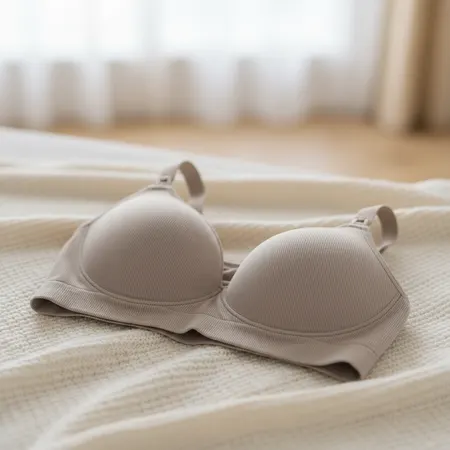
Seamless Nursing Bra (Everyday)
The most popular type. Soft, stretchy, and without seams that irritate. Works well under thin clothing and stays comfortable all day.
Best for: Daily wear, under T-shirts and tops.
Clip-Down Nursing Bra
Classic design with clips or hooks on the straps that let you fold down the cup. Often provides a little more support than seamless styles.
Best for: Larger breasts that need extra support.
Nursing Sports Bra
Supportive bra for exercise and activity. Many have a drop-down cup or pull-aside access for easy nursing. Wider straps and a firm underbust band.
Best for: Exercise, walks, active days.
Nursing Tank Top / Camisole
A camisole with built-in bra support and a nursing function. Works as an extra layer under clothing or worn on its own at home.
Best for: Nighttime nursing, home use, an extra layer under sweaters.
How to Find the Right Size
Sizing is where many people get stuck. Your breasts change throughout the entire pregnancy and nursing period.
When Should You Shop?
Week 36–38 of pregnancy is a good time for your first purchase. Breasts have grown somewhat by then, but haven't yet reached their nursing peak.
Buy 2–3 to start with. Wait to buy more until after birth, when you know how your breasts change as milk comes in.
Sizing Tips
- Measure your underbust, the band size should fasten on the loosest hook during pregnancy, so you can tighten it after birth
- Go up one cup size from your normal size at week 36, breasts will grow further when milk comes in
- Choose stretch fabrics that allow for changes throughout the day (breasts are largest in the morning before the first feed)
- Two fingers under the band, you should be able to slip two fingers between the band and your body
Many specialty stores and department stores offer nursing bra fittings. Take advantage of this, especially for your first purchase. A staff member can help you find the right size.
Common Sizing Reference
| Regular bra size | Nursing bra at week 36 | After milk comes in |
|---|---|---|
| 32B | 32C–D or S/M | 32D–E |
| 34C | 34D–E or M/L | 34E–F |
| 36D | 36E–F or L/XL | 36F–G |
Many nursing bras use S/M/L sizing. Always check the manufacturer's size guide, they vary between brands.
Materials
Cotton
Breathable and soft against sensitive skin. Can be washed frequently at higher temperatures. The downside is that cotton dries slowly.
Bamboo/Modal
Extra soft and moisture-wicking. A good choice for sensitive skin and those who run warm. Dries faster than cotton.
Microfiber/Stretch
Seamless nursing bras are often made from microfiber with good stretch. They conform well to the body and sit discreetly under clothing.
Avoid nursing bras with lots of lace and decorative details in the early weeks. Prioritize function over appearance, a soft, well-fitting nursing bra without irritating details is what will make your nursing days easier.
Features to Look For
- Wide straps, distribute weight and don't dig into your shoulders
- Easy one-hand clip, you should be able to open it while holding your baby
- No underwire, especially important for the first 6–8 weeks after birth
- Soft lining, protects tender nipples
- Room for nursing pads, a small pocket keeps pads in place
- Full coverage cup, gives better support than a half cup
How Many Do You Need?
3–4 nursing bras covers the needs of most people:
- 2 seamless for daily wear
- 1 nursing sports bra for exercise and active days
- 1 nursing tank top / soft bra for nighttime nursing
Have at least two in rotation so you have a clean one while the other is being washed. Nursing pads can leak, and you'll want to change your bra daily.
Shopping Guide
Look for nursing bras at:
- Specialty baby/maternity stores, wide selection, multiple price ranges
- Department stores, often have fitting services
- Online retailers, great for comparison shopping; read reviews carefully
- Brands to consider: Bravado Designs, Kindred Bravely, Cake Maternity, Hotmilk, all made specifically for nursing and breastfeeding
Pricewise, a good nursing bra costs between $30–80. More expensive doesn't necessarily mean better, try a mid-range option first before investing in premium styles.
Care and Washing
- Wash nursing bras in a mesh laundry bag in the machine on a gentle cycle, 86°F (30°C)
- Use fragrance-free detergent to avoid skin irritation
- Avoid the dryer, heat destroys elasticity
- Hang to dry, preferably flat
- Replace your nursing bra when the elastic starts to give, usually after 6–9 months of daily wear
Frequently Asked Questions
Can I wear a regular bra while breastfeeding?
You can, but it isn't recommended in the early weeks. Regular underwire bras can press on milk ducts and make nursing more difficult. After milk production is well established (around 6–8 weeks), you can wear a bra with a soft underwire if it fits properly.
When should I buy a nursing bra during pregnancy?
Week 36–38 is a good time. Breasts have grown significantly by then but haven't reached their full nursing size. Buy 2–3, and wait on the rest until you see how your breasts change after birth.
Do I need a nursing bra at night?
Many people prefer a soft nursing tank top or sleep bra in the early weeks, especially if they're leaking. A nursing tank provides light support without pressure and keeps nursing pads in place.
How long do you wear a nursing bra?
For as long as you're breastfeeding. Most people use them for 6–18 months. Afterward you can gradually return to regular bras once your breasts have stabilized in size.
Is there a difference between nursing bras for larger and smaller busts?
Yes. For larger busts (D-cup and above), look for models with wide straps, full cups, and a firm underband. Seamless stretch styles work well for smaller busts, while more structured clip-down models provide better support for larger sizes.
Read More
- Breastfeeding Preparation During Pregnancy
- Nursing Pillow Guide
- Breastfeeding Positions Guide
- Breastfeeding Challenges and Solutions
Sources
- La Leche League International. "Breastfeeding and Bras." llli.org
- AAP. "Breastfeeding and Human Milk." healthychildren.org
- Kellymom. "Nursing bras and breast pads." kellymom.com
Last updated: March 2026
🔧 Helpful Tools
- Breastfeeding Tracker. Log feeds, track supply, and monitor nursing sessions
- All Baby Tools. Browse all free tools for pregnancy and baby care
📖 Related Articles
- How to Prepare for Breastfeeding During Pregnancy. Learn how to prepare for breastfeeding during pregnancy, from what to expect in your body to classes, support, and practical supplies that can make the early days easier.