
A breastfeeding class gives you knowledge and confidence before your baby arrives. Women who prepare for breastfeeding during pregnancy experience fewer problems and tend to breastfeed longer.
You do not need to wait until your baby is born to start learning. Here is an overview of what types of classes are available, what you will learn, and how to get ready at home.
Why Take a Breastfeeding Class?
Breastfeeding is natural, but that does not mean it happens automatically. Most people need some guidance to get off to a good start. A breastfeeding class gives you:
- Knowledge of technique, latch, positions, and signs of effective nursing
- Reduced risk of problems, women who have taken a class experience fewer sore nipples and engorgement
- Greater confidence, you know what to do right from the delivery room
- Tools to solve challenges, you recognize problems early and know where to get help
According to WHO and AAP guidelines, breastfeeding is recommended as the sole nutrition for the first six months. Good preparation increases the chances of achieving this.
Women who have attended breastfeeding classes have higher nursing rates at six weeks. The class does not need to be long, even a few hours makes a measurable difference.
When Should You Take a Breastfeeding Class?
Most midwives and childbirth educators recommend attending a breastfeeding class around weeks 30–35 of pregnancy. By then you are far enough along that nursing feels relevant, but not so close to your due date that you risk delivering before the class.
Some classes are part of a childbirth preparation course and cover breastfeeding as one of several topics. Others are dedicated breastfeeding classes that go deeper into technique and troubleshooting.
Book early. Popular classes fill up quickly, especially in larger cities.
Types of Breastfeeding Classes
Hospital Classes
Most birth hospitals offer childbirth preparation classes with a breastfeeding component. These are often free or have a small co-pay. You get guidance from nurses and midwives who work on the labor and delivery unit and know the routines where you will give birth.
Advantages: Free or low-cost, professionally vetted, you get familiar with the facility.
La Leche League and Peer Support Organizations
La Leche League International is a volunteer organization that offers mother-to-mother support. They run meetings and classes worldwide, both in person and online.
Advantages: Free, experience-based, available after birth as well. La Leche League leaders can be a vital resource if you run into problems.
Private Midwife or Lactation Consultant Classes
Many private-practice midwives and IBCLC lactation consultants offer specialized breastfeeding classes. These typically allow more time for individual questions and hands-on practice.
Advantages: Smaller groups, more personalized attention, flexible scheduling. Cost: Typically $50–150 per class.
Online Breastfeeding Classes
For those who live far from local options, or who prefer learning at home, video-based courses are available. Several midwives and lactation consultants offer courses you can watch at your own pace.
Advantages: Flexible, you can re-watch after birth, accessible regardless of location.
Ask your OB, midwife, or pediatrician to recommend local breastfeeding classes at your next prenatal appointment.
What Will You Learn in a Breastfeeding Class?
Latch Technique and Positions
You will learn to recognize a good latch, the most important factor for successful breastfeeding. A good latch prevents sore nipples and ensures the baby gets enough milk.
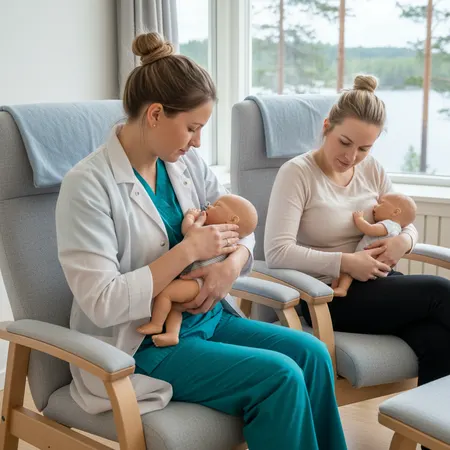
The class will show you the most common breastfeeding positions in practice: laid-back nursing, cradle hold, cross-cradle, and football hold. You will practice the positions with a doll so the movements feel familiar.
Signs That Breastfeeding Is Going Well
You will learn to see and hear that nursing is working:
- Baby has a large amount of breast in the mouth, not just the nipple
- Calm swallowing sounds
- Baby seems full and content after feeding
- Enough wet and dirty diapers per day
Common Challenges
The first days of breastfeeding often bring surprises. The class prepares you for:
- Engorgement, when milk production gets going (days 2–5)
- Sore nipples, most often caused by a poor latch
- Cluster feeding, periods when the baby wants to nurse very frequently
- Worry about whether the baby is getting enough, normal signs vs. warning signs
When to Seek Help
You will learn exactly who to contact and when. Your pediatrician, a lactation consultant, and La Leche League are all important resources. The sooner you seek help for a problem, the easier it is to solve.
Bring Your Partner
Partners who understand breastfeeding give better support. They know what a good latch looks like, understand cluster feeding, and can encourage you during the tough moments.
At the class, your partner will learn:
- How to help with positioning and pillows
- Signs that nursing is going well
- When there is reason to seek help
- How to take over everything else, meals, diapers, household tasks
Many couples say that a breastfeeding class gave them a shared language for the first weeks with their baby.
Prepare at Home
You need surprisingly little equipment, but a few things make daily life easier.
Create a Nursing Corner
Find a spot in your home where you can sit comfortably for a long time. Think about:
- Supportive seat, a good chair or sofa corner with back support
- Nursing pillow, relieves pressure on arms and shoulders
- Side table, for a water glass, phone, and snacks
- Charging cable, you will use your phone a lot while nursing
Equipment to Have Ready
- Nursing bras (2–3), soft, wire-free, in a size larger than your current size
- Breast pads, for leaks between feedings (reusable or disposable)
- Lanolin cream, prevents and soothes sore nipples
- Nursing pillow, especially helpful in the first weeks
- Warm/cold compresses, for engorgement or blocked ducts
You do not need to buy a pump in advance. Wait to see whether you need one. The hospital has pumps you can borrow if needed right after birth.
Support After Birth
A breastfeeding class is just the beginning, support after birth is at least as important. Have these resources ready:
- La Leche League International: llli.org (find your local group)
- IBCLC lactation consultant: find one at ilca.org
- Your pediatrician: monitors weight gain and can refer to a specialist
- Hospital lactation support line: many hospitals offer postpartum phone support
Read more about breastfeeding challenges and solutions and preparing for breastfeeding during pregnancy.
What If Breastfeeding Does Not Go as Planned?
Sometimes breastfeeding does not work out as expected, despite good preparation. This can be due to medical reasons, premature birth, or difficulties the baby has with latching.
Whatever the outcome, the class gives you knowledge you will use. You know how to seek help quickly, and you can make informed decisions about the path forward, whether that means more nursing, combining with supplementation, or fully transitioning to formula.

Frequently Asked Questions About Breastfeeding Classes
How much does a breastfeeding class cost?
Many classes are free. Hospital childbirth preparation classes and La Leche League meetings typically cost nothing. Private classes with a midwife or lactation consultant are typically $50–150. Online courses vary widely, from free to around $100.
When should I take a breastfeeding class?
Take a class around weeks 30–35 of pregnancy. That is early enough that the information sticks, but not so late that you risk delivering before the class. Some mothers choose to take a class as early as the second trimester.
Should my partner come to a breastfeeding class?
Yes. Partners who understand breastfeeding provide better practical and emotional support in the first weeks. They learn to recognize a good latch, understand cluster feeding, and know when to seek help.
What is La Leche League?
La Leche League International is a nonprofit organization that provides mother-to-mother breastfeeding support. They offer meetings worldwide, an online community, and free support from trained volunteer Leaders. Available both during pregnancy and after birth. Visit llli.org.
Do I need to prepare my breasts for breastfeeding?
No, you do not need to do anything to your breasts. Your body handles this on its own during pregnancy. Avoid scrubbing or toughening the nipples, it has no documented benefit and can cause irritation. Have lanolin cream ready to soothe any soreness in the first days.
What is the most important thing to learn before birth?
A correct latch is the single most important thing. A good latch prevents most breastfeeding problems. Learn to recognize it: the baby has a large amount of breast in the mouth, the chin is pressed into the breast, and you hear calm swallowing sounds with no pain. Read our breastfeeding positions guide to learn the techniques in advance.
Read More
- Breastfeeding Positions: Find the Position That Works for You
- Breastfeeding Challenges and Solutions
- Preparing for Breastfeeding During Pregnancy
- Cluster Feeding: What It Is and How to Handle It
Sources
- WHO. "Infant and Young Child Feeding." who.int
- AAP. "Breastfeeding and the Use of Human Milk." Updated 2022. aap.org
- La Leche League International. "About La Leche League." llli.org
🔧 Helpful Tools
- Breastfeeding Tracker. Log feeds, track supply, and monitor nursing sessions
- Baby Food Guide. Safe foods and introduction schedule for your baby
- All Baby Tools. Browse all free tools for pregnancy and baby care