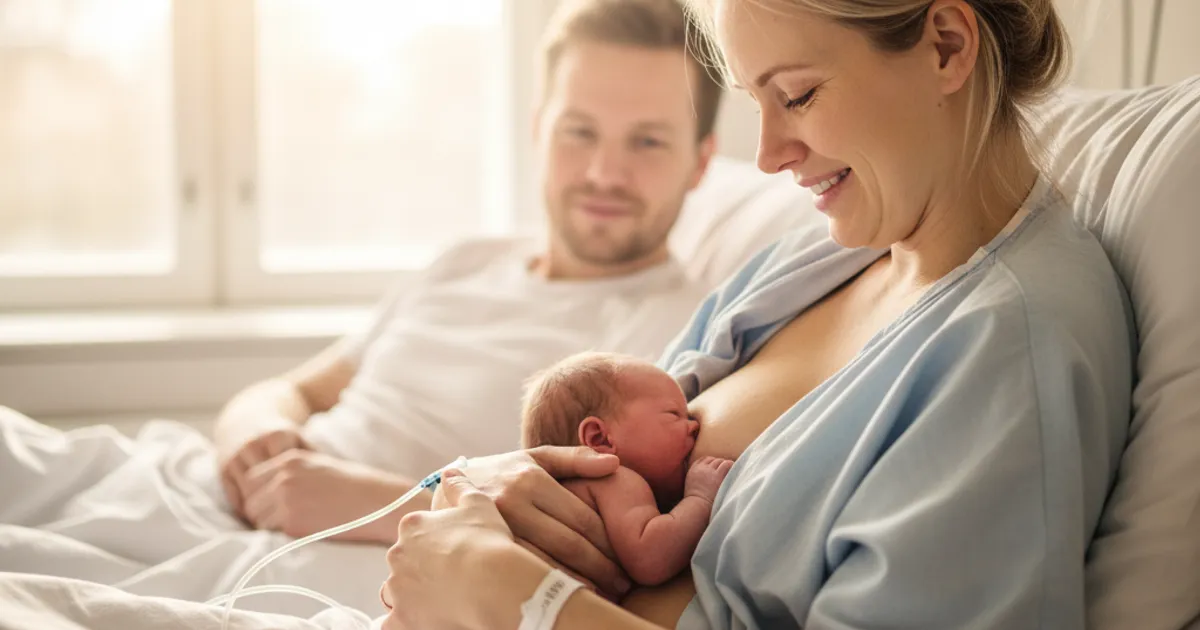
The first days and weeks of breastfeeding can feel overwhelming. The baby is new, your breasts are new in this role, and it is normal to feel unsure. But the most important thing to know is that breastfeeding is a skill learned by both you and your baby.
Many public health organizations recommend exclusive breastfeeding for about the first six months when breastfeeding is going well for both mother and baby. All breastfeeding is valuable, including partial breastfeeding. This guide helps you through the first weeks with safe, evidence-based guidance.
🎬 Video: Breast is best, short version (WHO/UNICEF)
First breastfeeding after birth
The first breastfeeding session ideally happens within the first hour after birth. When the baby is placed skin-to-skin on the mother’s chest right after birth, strong instincts are activated. Many newborns will begin to crawl toward the breast and search for it on their own. This is called the "breast crawl".
Early skin-to-skin contact and breastfeeding right after birth can help establish feeding and support milk production. The baby’s sucking soon after birth can also help the uterus contract and reduce bleeding.
What if it does not work right away?
Not all births allow breastfeeding in the first hour. After a cesarean section, complicated births, or illness in the mother or child, it may take a little longer. This is completely normal and does not mean breastfeeding is ruined.
Sources
- AAP. Breastfeeding guidelines and support
- WHO. Global breastfeeding recommendations
- CDC. Breastfeeding support and resources
🔧 Helpful Tools
- Breastfeeding Tracker. Time feeds, remember the last side, and review nursing sessions
- Baby Food Guide. Safe foods and introduction schedule for your baby
- All Baby Tools. Browse all free tools for pregnancy and baby care
📖 Related Articles
- Breastfeeding a Newborn: Complete Guide to the First Weeks. Everything about breastfeeding a newborn: first latch, colostrum, feeding positions, and cluster feeding. Based on WHO and AAP guidelines.
- Alcohol and Breastfeeding: What Does the Research Say?. Can you drink alcohol while breastfeeding? Learn what the guidelines say, what current research shows, and how long you should wait before nursing.
- Alcohol and Breastfeeding: What Does the Research Say?. Can you drink alcohol while breastfeeding? Learn about recommendations, new research, and how long you should wait before nursing.