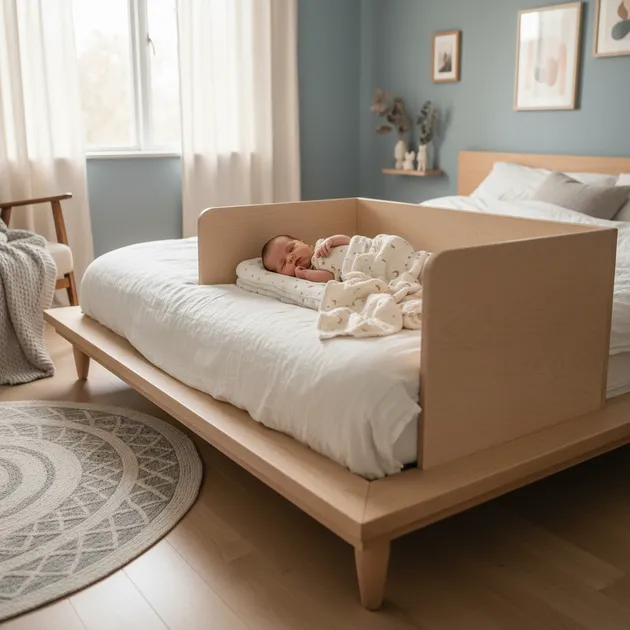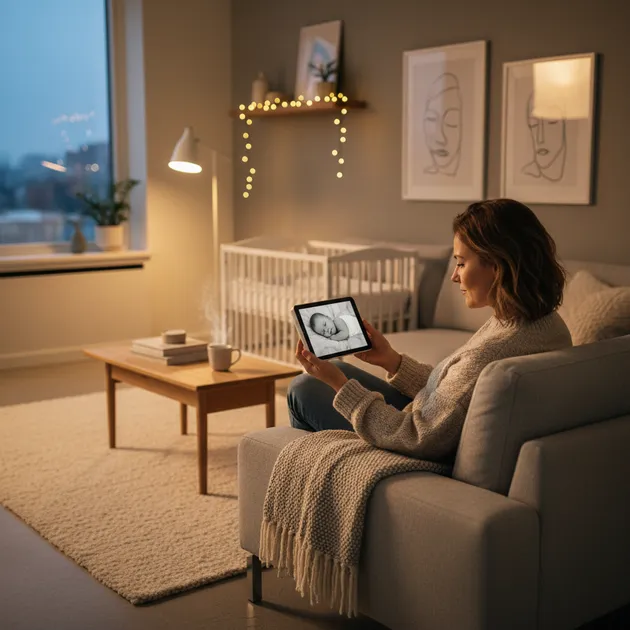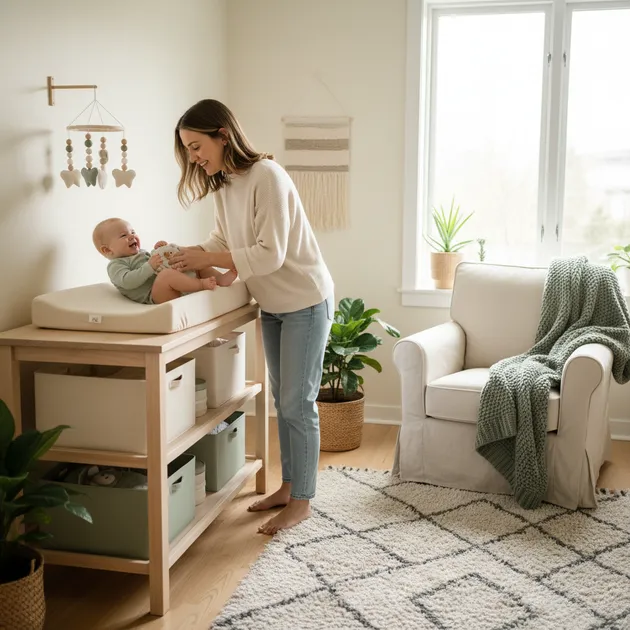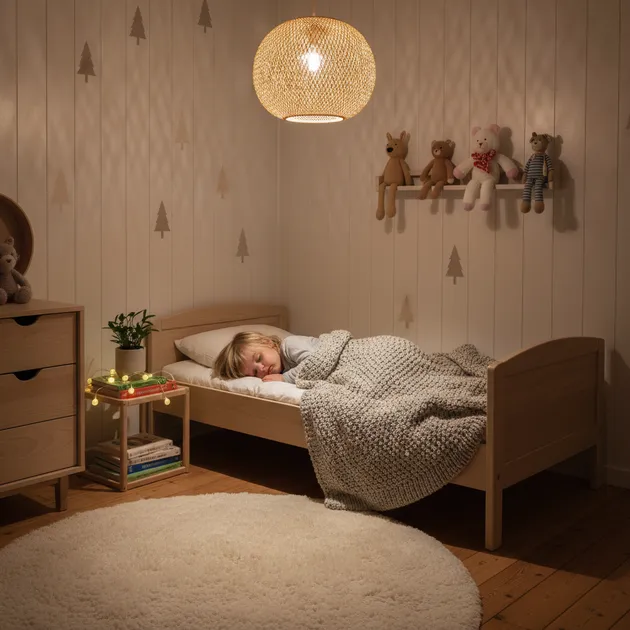
A night light in the nursery can make nights safer for your child and easier for you. But the wrong type of light can disrupt sleep more than it helps. Here is a complete guide to choosing the right night light for babies and children.
Do babies need a night light?
Newborns don't need a night light. They have no fear of the dark, and sleep is regulated by feeding and closeness, not light.
In fact, light in the room can interfere with the development of the circadian rhythm. Melatonin, the sleep hormone, is best produced in darkness. The AAP and pediatric sleep experts recommend a dark sleep environment for good infant sleep.
When a night light makes sense for babies
For you as a parent nursing or bottle-feeding at night, a dimmed night light is invaluable. It gives you enough light to see what you're doing without fully waking the baby.
A night light for nighttime feeds should:
- Be as dim as possible
- Have red or warm orange light
- Be easy to turn on and off with one hand
- Be positioned so it doesn't shine directly on the baby's face
Tip for night nursing: A rechargeable night light with touch activation is perfect. You don't need to fumble for a switch in the dark, and you can take it with you to the changing table.
When should a child get a night light?
Fear of the dark typically develops between 18 months and 3 years. That's when imagination flourishes and children start imagining things in the dark. A night light can make bedtime feel safer and reduce how often your child calls out for you.
Signs your child may need a night light:
- Protests being put to bed in the dark, cries or calls out when you turn off the light
- Talks about monsters or scary things in the room
- Wakes at night scared, doesn't want to go back to sleep in the dark
- Asks for the door to be left open for the hallway light
This is completely normal and will pass. A night light is a simple solution that gives children security without disrupting sleep, as long as you choose the right color.
Color: Why red and orange are best
Not all colors work equally well as night lights. Color directly affects melatonin production.
Avoid blue and white light
Blue light (including "cool white" LED light) suppresses melatonin the most. It's the same wavelength emitted by screens and daylight. A night light with blue or white light can make it harder for your child to fall asleep and lead to more restless sleep.
Red and orange light are safe choices
Red light has the least impact on melatonin. It provides enough light for the child to feel safe without sending "wake up" signals to the brain. Warm orange is also a good option.
Avoid color-cycling night lights that shift between red, blue, green, and white. Even though they look fun, they emit blue light part of the time. Choose a night light with a steady, warm color.
Color ranking for night lights
| Color | Melatonin impact | Recommended |
|---|---|---|
| Red | Minimal | Best choice |
| Orange/amber | Low | Good choice |
| Yellow (warm) | Low–moderate | OK |
| Green | Moderate | Not ideal |
| Blue | High | Avoid |
| White (cool) | High | Avoid |
Types of night lights, pros and cons
Plug-in night lights (wall outlet)
Plugs directly into the wall outlet. Simple, affordable, and takes up no space.
Best for: Hallways, bathrooms, and nurseries where you want light all night without thinking about charging.
Pros: Always ready, no batteries, often with a dusk sensor that activates automatically in the dark.
Cons: Fixed location (depends on outlet position), some models are too bright.
Rechargeable / portable night lights
Charged via USB and can be moved freely. Many come in animal shapes or fun designs kids love.
Best for: Night nursing, moving between rooms, children who want the night light in their bed.
Pros: Can be taken anywhere, many have touch activation and dimmer. Safe to touch (no heat).
Cons: Need regular charging (typically 8–20 hours of battery life).
Projector night lights
Projects stars, moons, or characters onto the ceiling. Popular with toddlers.
Best for: Children from 2–3 years who like having something to look at at bedtime.
Pros: Children love them, can be incorporated into the bedtime ritual.
Cons: Can become stimulating and keep children awake. Many include blue light. A timer is essential.
Night lights with a timer
Automatically turns off after a set time, typically 15, 30, or 60 minutes.
Best for: Children who need light to fall asleep but sleep better in the dark.
Pros: Child falls asleep with light but sleeps in darkness for the rest of the night.
Cons: If the child wakes and the light is off, they may become unsettled.
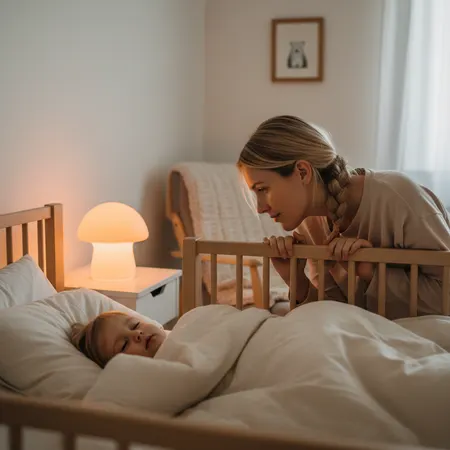
Night light placement
Where you place the night light makes a big difference:
- Low in the room, light from floor level disrupts sleep less than light at eye level
- Never aimed at the face, the light should create a soft glow in the room, not shine on the child
- Near the door or in the hallway, gives enough light for the child to see the room without direct exposure
- Near the changing table, for nighttime nursing and diaper changes
Practical tip: A plug-in night light at the outlet near the door and a rechargeable night light at the changing table covers most needs.
Dimmer, the most important feature
If you're going to prioritize just one feature in a night light, choose a dimmer. A night light that's too bright can disrupt sleep just as much as an overhead light.
A good night light for children should go down to truly minimal light, just enough to make out the outline of the room. Many parents find that a night light on its lowest setting is more than enough to give their child a sense of security.
Night lights and sleep quality
Research shows that even low levels of artificial light at night can affect sleep quality. For children who sleep well and aren't afraid of the dark, complete darkness is the best solution.
But for children with a fear of the dark, the sense of security outweighs the minimal sleep impact of a dim, red night light. A child lying awake in fear will sleep poorly regardless.
Use a sleep tracker app to log sleep before and after introducing a night light. You'll quickly see whether it makes a difference for your particular child.
Checklist: Choosing the right night light
- Color: Red or warm orange (never blue or white)
- Dimmer: Can be adjusted to very low brightness
- Placement: Low in the room, not aimed at the face
- Timer: Useful for children who only need light while falling asleep
- Charging/power: Rechargeable for flexibility, plug-in for "always on"
- Child safety: No small parts, BPA-free plastic, no heat generation
Frequently asked questions
Can a night light disturb a baby's sleep?
Yes, if it's the wrong color or too bright. Blue and white light suppresses melatonin and can make it harder to fall asleep. Choose red or warm orange light on the lowest dimmer setting to minimize the impact.
At what age do children need a night light?
Most children develop a fear of the dark between 18 months and 3 years. Before that, they rarely need a night light for their own sake. For nighttime nursing and diaper changes, a dim night light is useful from day one, but that's for the parents' benefit.
Is it safe to leave a night light on all night?
Yes, as long as it's LED-based (no heat), the right color, and dim enough. LED night lights use minimal power and pose no fire risk.
What is the best night light for breastfeeding?
A rechargeable night light with red or orange light and touch activation. It should give enough light to see your baby and your breast, while being dim enough that the baby doesn't fully wake up.
Should I use a night light or leave the door open?
A night light is better than hallway light. Hallway lighting is often white or cool-toned, and it's hard to control its intensity. A dedicated night light with the right color and a dimmer gives you more control over the sleep environment.
Can a night light create dependency?
No, fear of the dark is a developmental phase that passes. A night light is a tool that makes the phase easier. Most children stop needing a night light on their own by around age 5–7.
Read more
- Sleep environment for baby, how to prepare the nursery. Temperature, darkness, sound, and more
- Bedtime routines that work. Evening routines for better sleep
- Night terrors in children. What they are and what to do
- Night waking, tips that help. When the baby wakes frequently
- Indoor climate in the nursery. Air, temperature, and humidity
Sources
- American Academy of Pediatrics (AAP). Safe Sleep Guidelines
- National Sleep Foundation. Light and sleep
- Harvard Medical School. Blue light and sleep
- WHO. Child health and development
🔧 Helpful Tools
- Baby Sleep Tracker. Track and optimize your baby's sleep
- All Baby Tools. Browse all free tools for pregnancy and baby care
📖 Related Articles
- Baby Monitor: Complete Guide to Choosing the Right One. Everything about baby monitors. Types, features, safety tips, and the most popular models to consider.
- Changing Table: How to Choose the Right One for Your Baby. Complete guide to choosing a changing table. Types, safety, popular brands, and budget tips for new parents.
- Changing Tables: How to Choose the Right One for Your Baby. Complete guide to choosing a changing table. Types, safety requirements, popular brands, and budget tips for new parents.