The right temperature and indoor climate in the nursery isn't just about comfort, it's about safety. Overheating is a known risk factor for Sudden Infant Death Syndrome (SIDS), and good ventilation is important for your baby's sleep quality.
Here you'll find practical advice on temperature, humidity, ventilation, and clothing.
Optimal Sleep Temperature for Baby
The AAP and SIDS prevention organizations recommend a room temperature of approximately 68°F (20°C) where the baby sleeps. This is the most optimal temperature for preventing SIDS.
For older children and adults, 60–68°F (15–20°C) is recommended for the bedroom.
Excessively high temperature in the bedroom is statistically linked to an increased risk of SIDS. Make sure the room isn't too warm, especially for infants under 6 months.
Why Is 68°F (20°C) Optimal?
Infants can't regulate their body temperature as well as adults. They shed excess heat primarily through their head. That's why babies should:
- Not wear a hat indoors, the head is the baby's "radiator"
- Sleep on their back, this provides the best temperature regulation
- Have clear airways, no blankets or stuffed animals over the face
An overly warm sleep environment forces the body to use a lot of energy to bring the temperature down. This can lead to poorer sleep quality and, in the worst case, increased SIDS risk.
How to Check If Your Baby Has the Right Temperature
Babies' hands and feet can often feel cold without meaning the baby is actually cold. This is completely normal.
Check here instead:
- Neck, feel the back of the baby's neck
- Back, feel between the shoulder blades
- Tummy, feel the baby's stomach
The baby should feel warm but not sweaty. If the skin is damp and warm, the baby is too hot.
Signs the baby is too warm:
- Damp hair or sweaty neck
- Red, warm skin
- Rapid breathing
- Restless sleep
- Rash
Signs the baby is too cold:
- Cold tummy or back (not just hands and feet)
- Pale or mottled skin
- Restless and difficult to soothe
Nighttime Clothing
Proper clothing is just as important as room temperature. A rule of thumb is that the baby needs one more layer than what you're comfortable in.
At 68°F / 20°C (Recommended)
- Long-sleeve bodysuit
- Sleep sack (1–2.5 TOG depending on season)
- Optionally a light pajama under the sleep sack
At Higher Temperatures (Over 72°F / 22°C)
- Short-sleeve bodysuit
- Light sleep sack (0.5–1 TOG)
- Or just a bodysuit and a thin blanket
At Lower Temperatures (60–65°F / 16–18°C)
- Long-sleeve bodysuit
- Pajamas
- Warm sleep sack (2.5 TOG)
Sleep sacks are safer than loose blankets and covers for infants. The baby can't kick off a sleep sack or pull it over their head. Choose the right TOG value for the season.
Humidity in the Nursery
Ideal indoor humidity is between 30 and 50 percent. During winter, indoor air can become very dry, especially in homes with electric heating.
Problems with Air That's Too Dry
- Dry mucous membranes in nose and throat
- Increased risk of colds and respiratory infections
- Dry and irritated skin
- Nasal congestion that disrupts sleep
Solutions for Dry Air
- Ventilate regularly, short and effective (cross-ventilation for a few minutes)
- Dry laundry indoors (adds moisture to the air)
- Use a humidifier if needed (keep it clean to avoid mold and bacteria)
- Lower the temperature, warmer air holds less moisture relatively speaking
Problems with Air That's Too Humid
Excessively high humidity (above 60%) can lead to mold and dust mites, which are common allergens. Ensure good ventilation and avoid drying large amounts of laundry in the nursery.
Ventilation and Air Quality
Good ventilation is one of the most important factors for a healthy indoor climate. Fresh air ensures sufficient oxygen and removes CO2, dust, and other pollutants.
Daily Airing
- Air the room well during the day, open the window for at least 10–15 minutes
- Cross-ventilation is most effective, open windows on two sides
- At night you can leave the window slightly open if it's not too cold outside
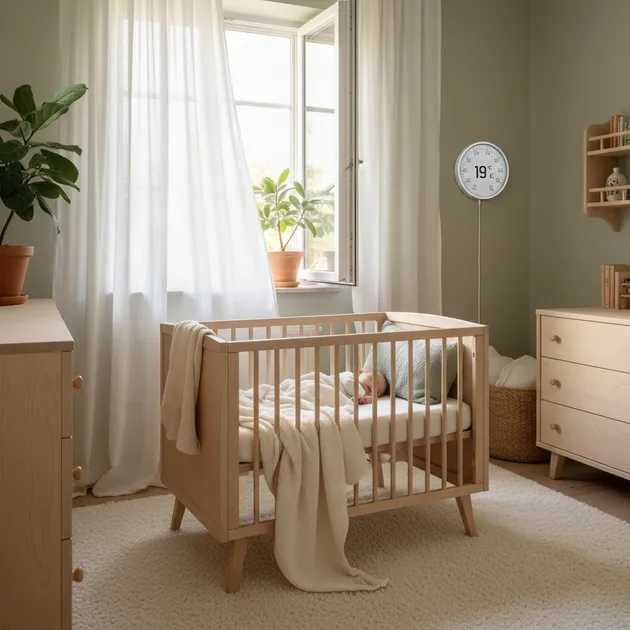
- Place the crib away from the window so there's no draft blowing directly on the baby
Research shows that drafts are not harmful to babies or adults, as long as the person doesn't get cold. Fresh air is good for sleep quality.
Avoid Indoor Pollution
The air quality in the nursery is affected by what you bring into the room:
- Never smoke indoors, smoking significantly increases the risk of SIDS
- Avoid candles and incense, they emit soot and particles
- Limit use of scented products, air fresheners, scented candles, and strong cleaning products
- Vacuum and dust regularly, especially important for allergies
- Avoid wood-burning in the room where the baby sleeps (particle pollution)
Summer Tips. When It's Too Hot
Summer can bring surprisingly high indoor temperatures, especially in bedrooms that face south.
How to keep the room cool:
- Draw curtains or blinds during the day
- Ventilate well in the evening and at night when it's cooler outside
- Use a fan to circulate air (not directly at the baby)
- Dress the baby in just a bodysuit or light outfit
- Use a thin sleep sack or just a thin sheet
If the room is above 77°F (25°C), the baby can sleep in just a diaper and a light sleep sack.
Winter Tips. Balancing Warmth and Ventilation
In winter, the challenge is keeping the room warm enough without making the air too dry.
Good winter advice:
- Keep the bedroom at about 68°F (20°C), don't heat more than necessary
- Air briefly and effectively (5–10 minutes of cross-ventilation rather than a window cracked for hours)
- Use a room thermometer to check the temperature
- Remove the baby's outdoor clothes and hat as soon as you come indoors, even if the baby is sleeping
In winter, indoor temperatures are often higher than in summer. Always remove the baby's warm outdoor clothes when you come inside to heated spaces. Do this immediately, even if the baby is sleeping.
Frequently Asked Questions
Do I need a thermometer in the nursery?
A room thermometer is a useful investment. It gives you concrete information about the temperature and makes it easier to adjust. Many baby monitors have built-in thermometers, or you can buy a simple digital thermometer.
Can my baby catch a cold from sleeping in a cool room?
Colds are caused by viruses, not cold temperatures themselves. A bedroom at 68°F (20°C) is not cold, it's optimal. Make sure the baby is dressed appropriately and use a suitable sleep sack. Fresh, cool air is actually better for sleep than warm, stagnant air.
What do I do if the nursery is above 77°F (25°C)?
Dress the baby lightly (just a bodysuit or diaper), use the thinnest sleep sack you have or just a thin sheet. Ensure maximum ventilation. A fan that circulates air (not aimed directly at the baby) can help. Consider whether the baby can sleep in a cooler room that night.
Is an air purifier necessary in the nursery?
For most families, good ventilation is sufficient. An air purifier with a HEPA filter can be useful if the child has allergies or asthma, or if you live in an area with a lot of air pollution. Talk to your pediatrician if you're unsure.
Read More
- Safe Sleep and SIDS Prevention, the most important guidelines
- Sleep Routine for Newborns, good sleep habits from the start
- Baby Clothes for All Seasons, dressing guide
- Sleep Tracker, monitor your baby's sleep patterns
Sources
- AAP. Safe Sleep Recommendations
- CDC. Sudden Unexpected Infant Death
- WHO. Infant and young child health
🔧 Helpful Tools
- Baby Milestones Tracker. Track your baby's developmental milestones
- Baby Sleep Tracker. Track and optimize your baby's sleep
- All Baby Tools. Browse all free tools for pregnancy and baby care
📖 Related Articles
- Night Lights for Kids: How to Choose the Right One. Complete guide to night lights for babies and children. Which color is best, when does your child need one, and what to look for when buying.
- Nursery Decoration: Design and Safety Tips. Practical guide to decorating your nursery. Safety tips, furniture choices, storage solutions, and inspiration for a safe and beautiful room for baby and toddler.