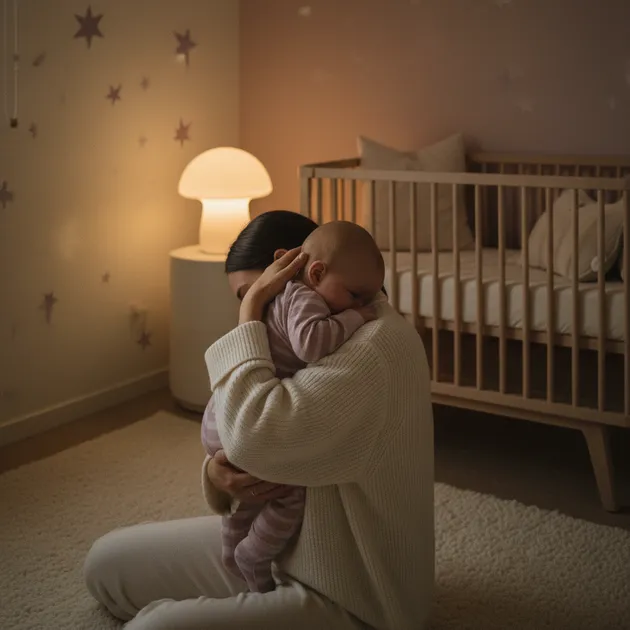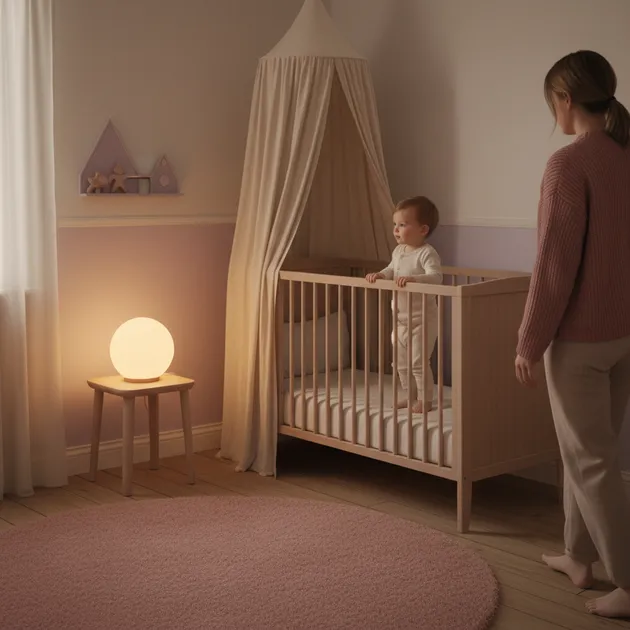
Your child suddenly sits up in bed, screams loudly, and stares right through you with wide-open eyes. You try to comfort them, but nothing gets through. After a few minutes, the child lies back down and falls asleep, as if nothing happened.
The next morning, they remember nothing.
Have you experienced this? Then your child has most likely had a night terror episode. It's a common and harmless sleep disorder that affects many young children. Frightening for you, but completely harmless for your child.
What are night terrors?
Night terrors (also called sleep terrors) are a type of parasomnia, a sleep disorder in which the child is in a state between deep sleep and wakefulness. The child is not fully awake and not fully asleep.
During an episode, the child may:
- Scream, shout, or cry loudly
- Sit up or stand in bed
- Have wide-open eyes without seeing you
- Sweat, have a rapid heart rate, and fast breathing
- Push you away if you try to hold them
An episode typically lasts between 5 and 20 minutes. Afterward, the child falls back asleep calmly and remembers nothing the next day.
According to the American Academy of Sleep Medicine, around 1–6% of all children experience night terrors at some point. The AAP describes it as a normal part of sleep development.
Night terrors or nightmares? How to tell the difference
Many people confuse night terrors with nightmares, but they are two completely different things.
| Night Terrors | Nightmares | |
|---|---|---|
| Timing | First half of the night (1–3 hours after bedtime) | Second half of the night (closer to morning) |
| Consciousness | Child is not awake, difficult to rouse | Child wakes up and is conscious |
| Memory | Remembers nothing the next day | Remembers the dream and can describe it |
| Reaction | Pushes away comfort, doesn't respond to your voice | Seeks comfort, wants to be held |
| Eyes | Open, but staring and unfocused | Open and aware |
| After the episode | Falls back asleep on their own | Needs help calming down and falling back asleep |
The rule of thumb: If the child seeks comfort and remembers it the next day, it's a nightmare. If the child pushes you away and goes back to sleep with no memory of it, it's a night terror.
What age are night terrors most common?
Night terrors occur most often in children between 2 and 6 years of age, with a peak around 3–4 years. Some children can experience them as early as 18 months.
Most children grow out of them. Episodes become less frequent with age, and the vast majority have stopped having night terrors by the time they start school.
Causes of night terrors in children
Night terrors are not caused by the child being frightened, insecure, or having experienced something traumatic. They are about sleep physiology, the brain has an incomplete transition between deep sleep and light sleep.
The most common triggering factors:
- Overtiredness, by far the most important cause. Children who go to bed too late or skip their nap are at higher risk
- Irregular sleep schedule, varying bedtimes from day to day disrupts the sleep cycle
- Fever and illness, the body sleeps more deeply when sick, which can trigger episodes
- Full bladder, pressure on the bladder can trigger incomplete waking
- Genetics, night terrors have a hereditary component. If one parent had them, the chances are higher
- Sleep apnea or snoring, breathing difficulties during sleep can be a contributing factor
Note: Night terrors are not a sign of psychological problems. The AAP emphasizes that this is a normal and harmless part of sleep development in children.
What to do during a night terror episode
The most important advice is counterintuitive: don't try to wake the child.
Waking a child in the middle of a night terror episode makes the situation worse. The child becomes disoriented, confused, and may become even more upset.
Do this:
- Stay calm, your child is not in danger, even if it looks dramatic
- Ensure safety, make sure the child doesn't fall out of bed or hit themselves on furniture
- Don't restrain the child, unless there is risk of injury. Physical contact can worsen the episode
- Speak softly, but expect no response, a low, soothing voice can help
- Wait for it to pass, the child will lie back down on their own
- Don't bring it up the next morning, the child remembers nothing and doesn't need to worry about it
Safety first: If the child walks around during an episode (sleepwalking combined with night terrors), make sure stairs are secured and windows are locked. Remove sharp objects from the area around the bed.
How to prevent night terrors
Since overtiredness is the most common trigger, prevention is primarily about good sleep habits.
Fixed bedtime and routine
Put the child to bed at the same time every evening, including weekends. A predictable bedtime routine signals to the brain that it's time for sleep.
Enough total sleep
Children between 1 and 3 years need 11–14 hours of sleep per 24 hours. Children between 3 and 5 years need 10–13 hours. Include naps if the child still needs them.
Avoid overtiredness
Signs of overtiredness in toddlers:
- Hyperactive and giddy behavior before bedtime
- Rubbing eyes, yawning, pulling at ears
- Becoming clumsy and uncoordinated
- Meltdowns over small things
If you see these signs, the child is already overtired. The next evening, move bedtime 15–30 minutes earlier.
Calm evenings
Avoid rough play, screens, and heavy stimulation in the last hour before bedtime. A calm transition from day to night makes sleep deeper and more stable.
Scheduled awakening, a technique that can help
If your child has night terrors at roughly the same time every night, you can try scheduled awakening:
- Log the times, note when the episodes occur in a sleep tracker app over a week
- Find the pattern, night terrors often happen at roughly the same time
- Gently rouse the child, 15–30 minutes BEFORE the usual time
- Light awakening, you don't need to fully wake them. Gently stroking the child or adjusting the blanket so they stir a little is enough
- Let the child fall back asleep, the light awakening resets the sleep cycle
- Repeat for 2–4 weeks, most families see improvement within this period
This technique is well-supported by sleep research and recommended by pediatric sleep specialists. The prerequisite is that the episodes occur at roughly the same time each night.
Use a sleep tracker to log the episodes, see if there is a pattern in when the night terrors occur. With a sleep tracking app you can easily note the time and duration.
When should you contact a doctor?
Night terrors are almost always harmless and pass on their own. But contact your child's pediatrician if:
- The episodes occur multiple times per night over an extended period
- The child injures themselves during the episodes
- The episodes last over 30 minutes
- Night terrors begin after age 6 or suddenly start in an older child
- The child snores heavily or has pauses in breathing during sleep (may indicate sleep apnea)
- You suspect that sleep deprivation is affecting the child's daytime functioning
- You yourself are exhausted and need support
The doctor can assess whether there are underlying causes and refer to a sleep evaluation if needed.
Frequently asked questions about night terrors
Can night terrors harm the child?
No. Night terrors are harmless. The child remembers nothing and has no negative effects from the episode itself. The only danger is physical injury if the child falls or collides with objects during an episode.
Should I tell my child about the night terror?
No, it's not necessary. The child remembers nothing, and telling them about it can create unnecessary worry and anxiety around bedtime. Older children who wake during an episode may need a brief, reassuring explanation.
Can night terrors return after a break?
Yes. Some children have periods of night terrors, then a break of weeks or months, and then a new period. Common triggers for recurrence are illness, travel, changes in routine, or periods of insufficient sleep.
Does a night light help with night terrors?
A night light doesn't help with the night terrors themselves, but it makes it easier for you to keep watch and ensure the child doesn't injure themselves. A dimmed light can also make things safer for children who combine night terrors with sleepwalking.
Is there a difference between night terrors in babies and toddlers?
In babies under 18 months, night terrors are rare. Restless wake-ups at this age are more often caused by hunger, diaper changes, sleep regressions, or separation anxiety. Night terrors in the classic sense rarely begin before 18 months.
Summary
Night terrors look dramatic, but they are a harmless and common sleep disorder. Your child is not frightened, is not in pain, and remembers nothing.
The best thing you can do: ensure enough sleep, maintain consistent routines, and let the episode pass on its own. Scheduled awakening can help if the episodes are frequent and predictable.
Use a sleep tracker app to log the episodes. A clear pattern makes it easier to prevent them, and gives you something concrete to show the doctor if you need help.
Read more
- Sleep problems in toddlers, solving bedtime challenges
- Bedtime routines that work
- Sleep regression at 18 months
- Baby sleep schedule by age
Sources: American Academy of Pediatrics (AAP), American Academy of Sleep Medicine (AASM), National Sleep Foundation. Night Terrors in Children
Last updated: March 2026
Sources
- AAP. Safe sleep guidelines for infants
- NICHD. Safe to Sleep campaign. SIDS prevention
- CDC. Infant safe sleep practices
🔧 Helpful Tools
- Baby Sleep Tracker. Track and optimize your baby's sleep
- Soothing Sounds. White noise and soothing sounds to help your baby sleep
- All Baby Tools. Browse all free tools for pregnancy and baby care