You are halfway out the door, the baby is dressed, and then you realize the wipes are still on the changing table.
A good diaper bag is less about owning a special bag and more about having the right small kit in one place. This diaper bag checklist covers the everyday basics, the extras that save a trip, and the safety details that matter when feeding, changing, and traveling with a baby.
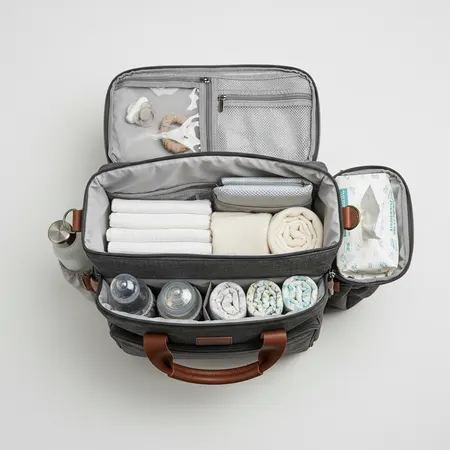
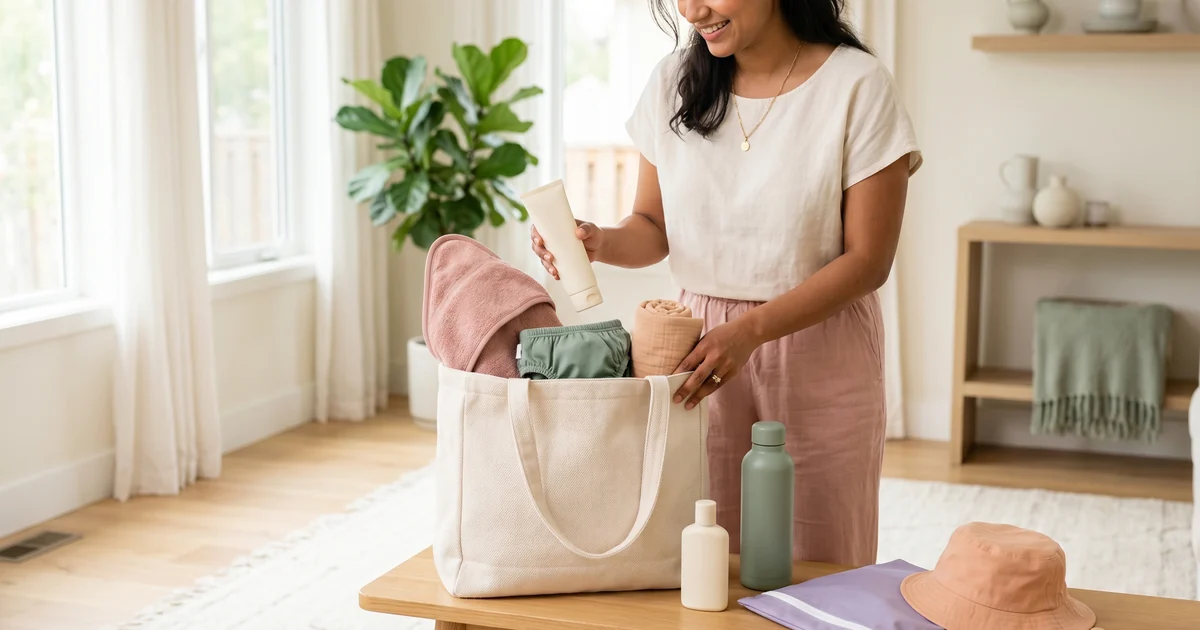
Pack one diaper for every 2 hours away from home, then add two extras. Add wipes, a changing pad, diaper cream, disposal bags, hand sanitizer, spare clothes, feeding supplies, and one small comfort item.
Key Takeaways
- Start with the change kit: diapers, wipes, changing pad, cream, disposal bags, and clean clothes.
- Pack by outing length: a quick errand needs a light kit; a day trip needs backup feeding, clothing, and weather supplies.
- Use safe feeding rules: prepared formula should be used within 2 hours unless it is refrigerated.
- Choose organization over size: the best diaper bag is easy to clean, easy to carry, and simple to restock.
- Keep a tiny parent kit: phone, wallet, keys, water, snack, and a clean shirt can save the day.
The Fast Diaper Bag Checklist
Use this as your default packing list. Save a custom version in the Babysential Checklists tool if you want a reusable before-you-leave-home list.
| Category | Pack this | Good default |
|---|---|---|
| Diapering | Diapers, wipes, changing pad, cream, disposal bags | One diaper per 2 hours plus two extras |
| Clothes | One baby outfit, socks, bib or burp cloth | Two outfits for newborns or blowout-prone days |
| Feeding | Bottle, formula or milk plan, bib, burp cloth, snack if age-appropriate | Only pack prepared formula if timing stays safe |
| Comfort | Pacifier in a case, small toy, light blanket | One or two items, not the whole toy bin |
| Parent basics | Hand sanitizer, water, snack, keys, wallet, phone | Keep these in one zip pouch |
| Seasonal | Hat, sunscreen or shade plan, insect protection, extra layer | Adjust before each outing |
Minimalist 30-Minute Errand
For a quick pharmacy run or preschool pickup, keep it lean:
- 2 diapers
- Travel wipes
- Foldable changing pad
- 1 disposal or wet bag
- Hand sanitizer
- 1 spare outfit
- Pacifier or small toy if your baby uses one
This is the version to keep in a stroller basket or car backup pouch. It should be light enough that you actually bring it.
Half-Day Outing
For brunch, a doctor visit with waiting time, or a few hours away from home, add:
- 4 to 6 diapers for most babies
- A fuller pack of wipes
- Diaper cream
- 2 spare outfits for newborns or reflux days
- Feeding supplies
- Burp cloth and bib
- Thin blanket
- Small toy or board book
- Parent snack and water
Newborns can need 10 to 12 diaper changes in a day, according to NHS guidance. Older babies may need closer to 6 to 8. That is why diaper count depends more on your baby's age and the length of the outing than on any single universal number.
Full-Day or Travel Bag
For a long car ride, airport day, family visit, or emergency-ready bag, pack the half-day kit plus:
- Extra diapers and wipes in a separate refill pouch
- Resealable gallon-size bags for dirty clothes or diapers
- Backup formula or ready-to-feed option if your baby uses formula
- Baby-safe medication only if prescribed or recommended for your child
- Copy or photo of insurance and medical details
- Blanket or sleep sack if nap time may happen away from home
- Extra shirt for the parent carrying the baby
The American Academy of Pediatrics recommends keeping back-seat baby essentials close during car trips, including diapers, wipes, cream, changing supplies, clean clothes, garbage bags, and hand sanitizer. For road trips, AAP also suggests regular breaks so babies can be fed, changed, and taken out of the car seat.
What Should Go in a Diaper Bag?
The core diaper bag has four zones: changing, feeding, clothing, and comfort. If those are covered, the bag will work even if it is not fancy.
1. Diapers and Wipes
Pack one diaper for every 2 hours away from home, then add two extras. For newborns, round up. For toddlers, you can usually pack fewer, but do not cut the spare outfit.
Wipes do more than clean bottoms. They handle sticky hands, changing tables, stroller trays, and unexpected spills. A half pack is usually better than a tiny sample pack because the tiny pack is always empty at the worst time.
2. Changing Pad or Towel
Public changing tables vary. A foldable changing pad gives your baby a cleaner surface and gives you one familiar setup.
NHS guidance lists a changing mat or towel as part of a basic diaper-changing setup, alongside wipes or cotton wool, a disposal bag, barrier cream, a clean diaper, and clean clothes.
3. Diaper Cream
You do not need a huge tub. A small tube of barrier cream is enough for most outings.
Mayo Clinic notes that frequent changes, gentle cleaning, drying, and barrier cream or ointment can help prevent diaper rash. Zinc oxide and petroleum jelly are common barrier ingredients. Skip talcum powder; Mayo Clinic advises against it during diaper changes.
4. Disposal Bags or Wet Bag
Pack a few resealable bags or a reusable wet bag. You need somewhere for dirty diapers when there is no bin nearby, and somewhere for clothes after a blowout.
CDC emergency guidance also includes resealable gallon-size bags for dirty diapers and clothes. This is one of those boring items that becomes the most useful thing in the bag.
5. Spare Clothes
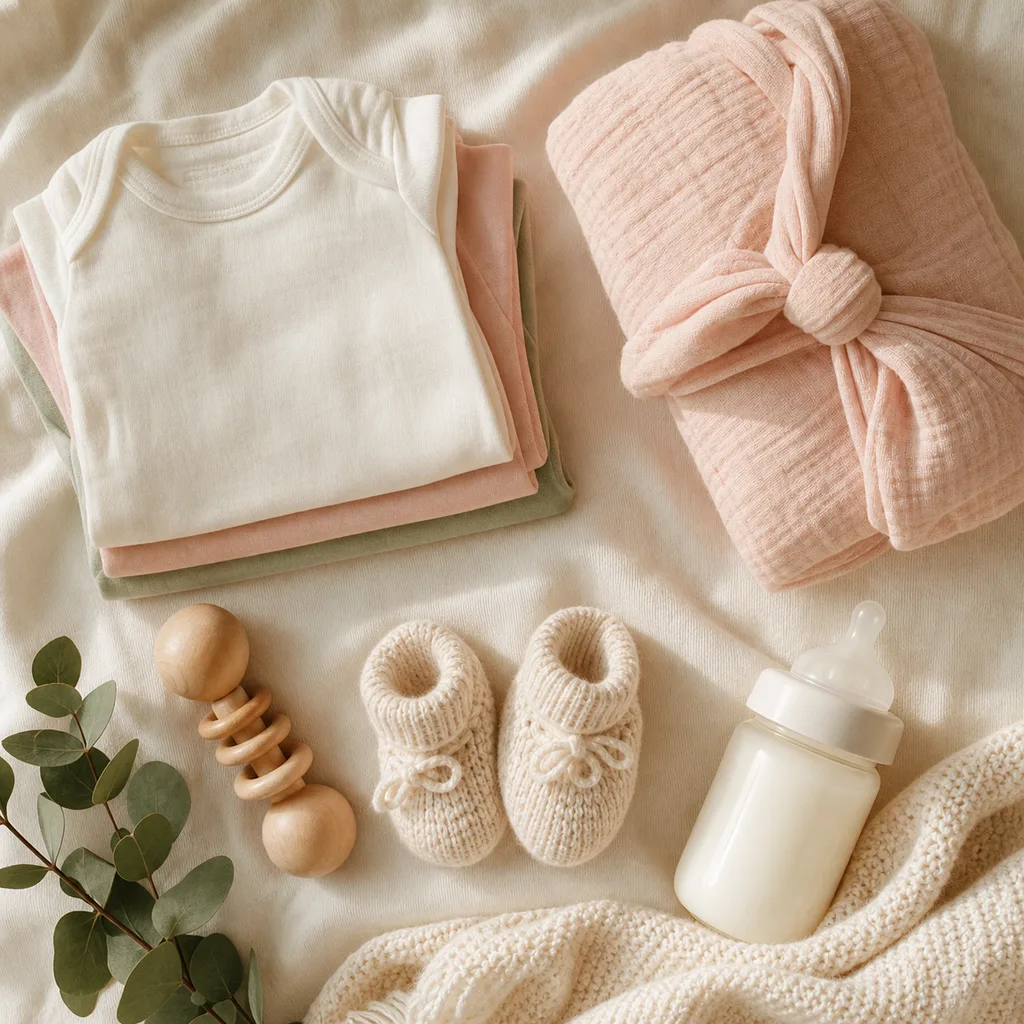
Pack one complete outfit for most outings: bodysuit, pants, and socks. For newborns, reflux days, or long outings, pack two.
Keep the outfit in a clear pouch or zip bag. If the outfit gets used, the same pouch can hold the dirty clothes on the way home.
6. Feeding Supplies
Feeding gear depends on your baby:
- Bottle-feeding: bottle, formula plan, clean nipple, bib, burp cloth.
- Breastfeeding: nursing cover if you use one, breast pads, burp cloth.
- Pumping: milk storage bag or bottle, cooler plan, pump parts if needed.
- Solids: spoon, bib, snack cup, water cup if age-appropriate.
Formula timing matters. FDA guidance says prepared infant formula should be used within 2 hours. If it is not used right away, refrigerate it and use it within 24 hours. After a baby starts feeding from a bottle, leftover formula should be thrown away because saliva can allow bacteria to grow.
For emergencies or days where clean water is uncertain, CDC says ready-to-feed formula is the safest formula option because it does not require mixing with water.
Do I Actually Need a Diaper Bag?
No. You need a reliable baby-care bag, not necessarily a product called a diaper bag.
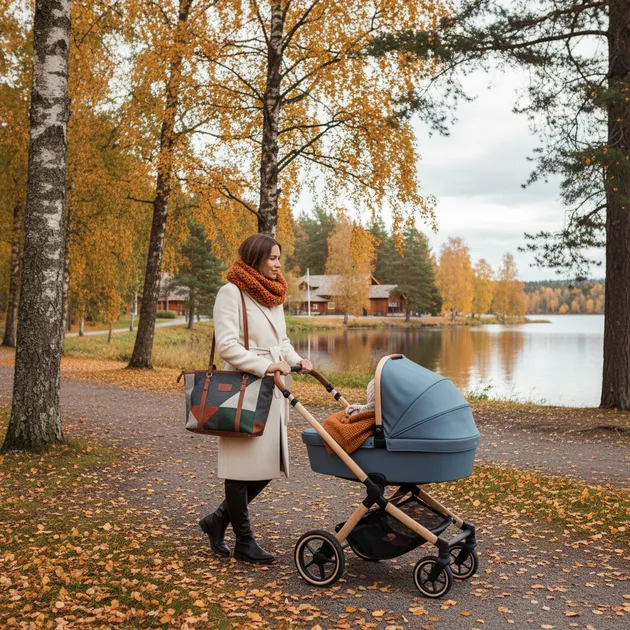
A diaper bag backpack is helpful if you walk a lot, push a stroller, or need both hands free. A diaper bag tote can work well if you like open access and short trips. A regular backpack can also work if it is washable and has enough pouches to separate clean, dirty, wet, and feeding items.
Use these decision rules:
| If your life looks like this | Choose |
|---|---|
| Stroller walks, transit, airport travel | Backpack diaper bag |
| Car errands and short visits | Tote or compact organizer |
| Twins or baby plus toddler | Larger backpack with refill pouch |
| Minimalist packing | Regular washable backpack |
| Shared between caregivers | Neutral bag with labeled pouches |
The trendiest diaper bag is not always the best one. The best one is the one you can repack in 3 minutes with one tired hand.
How Much Should a Diaper Bag Cost?
Most families can get a useful diaper bag without buying the most expensive option. Spend for comfort, wipe-clean materials, strong zippers, and enough pockets. Do not spend only for a logo.
Good features to look for:
- Wide opening: you can see the contents without digging.
- Wipe-clean lining: leaks happen.
- Comfortable straps: especially for postpartum shoulders and long walks.
- Insulated pocket: useful for bottles, but not a substitute for safe timing.
- Changing pad included: convenient, though you can buy one separately.
- Stroller clips: nice to have, but never overload the stroller handle.
Skip a bag that is heavy while empty. Once you add diapers, wipes, clothes, bottles, and parent supplies, a heavy empty bag becomes annoying fast.
What Is the Trendy Diaper Bag in 2026?
The practical 2026 trend is a diaper bag that does not look like baby gear. Parents are choosing backpacks, crossbody totes, and modular pouches that can move between a stroller, car, and work bag.
Look for calm colors, durable fabric, and fewer decorative parts. Cream, sage, black, taupe, and soft blush bags hide daily wear better than pale white bags with lots of seams.
Still, trend should come after function. Before buying, check whether the bag can hold:
- A full changing kit
- One spare outfit
- Feeding supplies
- A wet bag
- Your phone, keys, and wallet
- A water bottle
If it cannot hold those without turning into a rummage pit, it is not the right everyday bag.
Seasonal and Safety Extras
Add seasonal items only when they match the day. A permanently overpacked bag becomes too heavy, and heavy bags get left behind.
Sun
For babies under 6 months, the safest plan is shade, protective clothing, and a hat. AAP says sunscreen may be used on small exposed areas if shade and protective clothing are not available. NHS guidance is stricter and says sunscreen is not recommended for babies under 6 months.
The shared practical answer: keep young babies out of direct sun whenever possible. Pack a brimmed hat, stroller shade, and light clothing before you rely on sunscreen.
Insects
For mosquito-heavy days, CDC recommends EPA-registered insect repellents and clothing that covers arms and legs. Do not apply repellent to a child's hands, eyes, mouth, cuts, or irritated skin.
If sunscreen and insect repellent are both needed, CDC says sunscreen goes on first, then insect repellent.
Cold
Pack one extra layer more than you think you need, especially for stroller naps. Avoid bulky coats in car seats; use a blanket over the harness after the baby is buckled instead.
How to Organize a Diaper Bag
The easiest system is pouches:
- Change pouch: diapers, wipes, cream, changing pad, disposal bags.
- Clothes pouch: spare outfit, socks, bib.
- Feeding pouch: bottle, bib, burp cloth, spoon, snack.
- Parent pouch: wallet, keys, lip balm, snack, charger.
- Dirty pouch: wet bag or resealable bags.
Restock the bag when you get home, not when you are leaving. Put a reminder in your evening routine or use the Pregnancy Journal during late pregnancy to build a calmer "leaving the house" rhythm before the baby arrives.
If your baby is starting solids, the Food Guide can help you plan age-appropriate snacks before you pack them.
Common Diaper Bag Mistakes
The first mistake is packing too much. A bag that hurts your shoulder is a bag you will stop carrying.
The second mistake is forgetting the dirty-item plan. A wet bag, disposal bag, or resealable bag solves diapers, spit-up clothes, and snack messes.
The third mistake is packing unsafe feeding supplies. Prepared formula cannot sit in a warm bag all day. Use safe timing, a cooler plan, or ready-to-feed options when needed.
The fourth mistake is never checking sizes. Babies outgrow backup outfits quietly. Check the spare outfit every few weeks so you do not discover a newborn onesie in a 6-month-old's emergency kit.
FAQ
What should go in a diaper bag?
Pack diapers, wipes, a changing pad, diaper cream, disposal bags, hand sanitizer, spare clothes, feeding supplies, and a small comfort item. Add seasonal items only when needed.
How many diapers should I pack?
Pack one diaper for every 2 hours away from home plus two extras. For newborns, pack more because diaper changes can happen 10 to 12 times per day.
Do I actually need a diaper bag?
No. Any washable, easy-to-organize bag can work if it has space for diapering, feeding, spare clothes, and dirty-item storage.
What should I not pack in a diaper bag?
Skip talcum powder, loose medication, heavy full-size containers, and prepared formula that will sit unrefrigerated for more than 2 hours.
Bottom Line
The best diaper bag is a small mobile care station: change the baby, feed the baby, dress the baby, clean the mess, and get home with your sanity intact.
Start with the basic checklist, adjust for your outing length, and restock the bag as soon as you return. That boring habit is what makes the bag feel magic when the next blowout happens in a parking lot.
This article is for informational purposes only and does not replace professional medical advice. Always consult your pediatrician for guidance specific to your child.
Sources:
- American Academy of Pediatrics: Car seat travel essentials
- NHS: How to change your baby's nappy
- CDC: Emergency list for families with infants and young children
- FDA: Handling infant formula safely
- Mayo Clinic: Diaper rash symptoms and causes
- CDC: Preventing mosquito bites
- American Academy of Pediatrics: Sun safety
- NHS: Keeping your baby safe in the sun