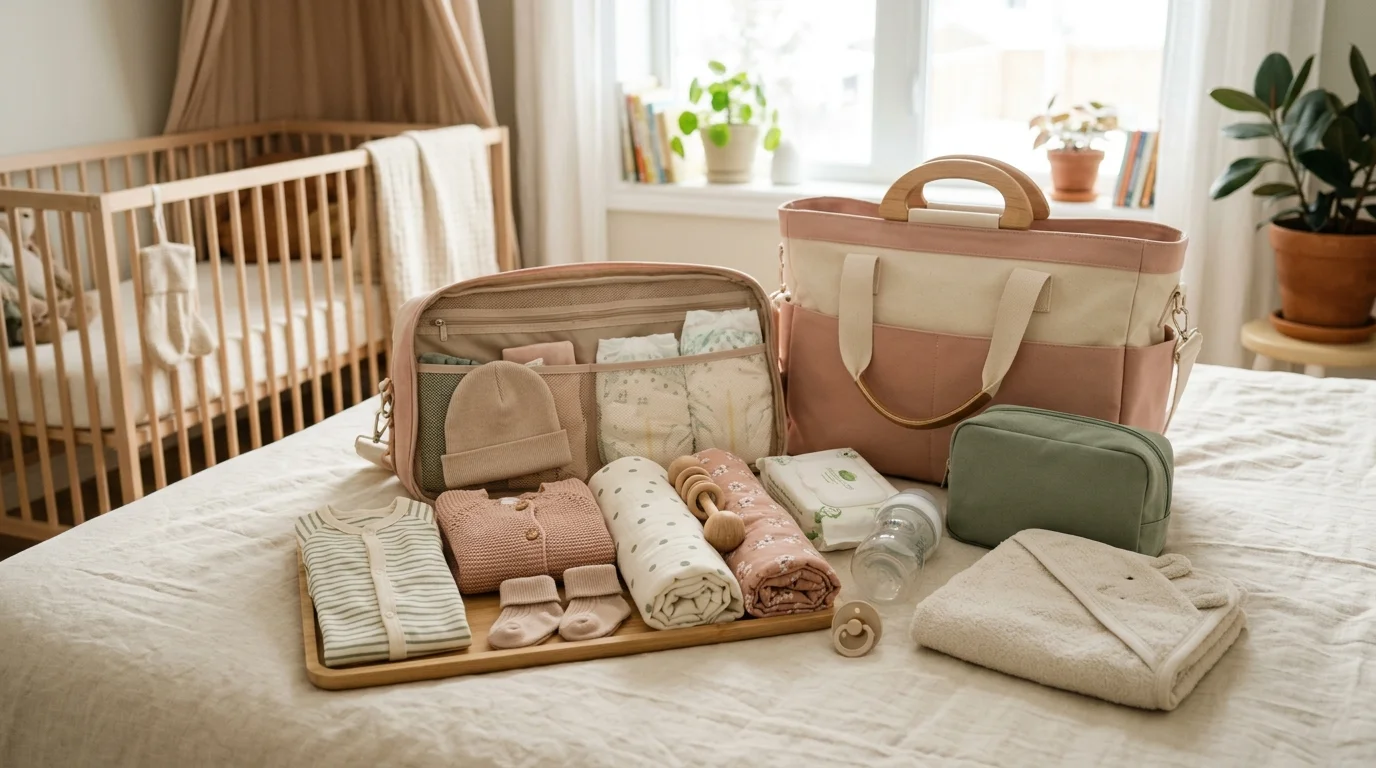
When to Pack Your Hospital Bag
Start packing your hospital bag around week 35–36 of pregnancy. Babies do not always wait for their due date, and having a bag ready removes one source of stress when labor begins. Keep it by the door or in the car so you can grab it and go.
Most hospital stays for a vaginal delivery last 24–48 hours. For a cesarean, plan for 2–4 days. Pack accordingly, you want comfort essentials without overpacking.
For the Birthing Parent
These are the items you will actually use and appreciate during labor and recovery:
During Labor:
- Photo ID and insurance card, you will need these at check-in
- Birth plan (printed copies), one for your nurse, one for your partner
- Comfortable robe or nightgown, hospital gowns work but your own feels better
- Grip socks or slippers, hospital floors are cold
- Hair ties and lip balm, your lips will get dry, and hair in your face is annoying
- Phone and charger (with a long cord), you will want to reach it from bed
- Snacks and drinks, granola bars, coconut water, honey sticks for energy
For Recovery:
- Going-home outfit, something loose and comfortable (you will still look 5–6 months pregnant)
- Nursing bra and breast pads, even if you plan to bottle-feed, milk may come in
- High-waisted underwear, bring several pairs you do not mind staining
- Toiletries, your own shampoo, toothbrush, face wash, deodorant
- Pillow from home, use a colored pillowcase so it does not get mixed up with hospital linens
For the Baby
Hospitals typically provide diapers, wipes, and blankets during your stay. But you will need:
- Going-home outfit, bring two sizes (newborn and 0–3 months) since you will not know baby's size
- Car seat, installed and rear-facing before you go into labor. The hospital will not let you leave without one
- Swaddle blanket, a soft muslin for the ride home
- Hat and socks, newborns lose heat quickly, especially from their head
- Pacifier (optional), if you plan to use one, have it ready
For the Partner or Support Person
The support person often forgets to pack for themselves. Here is what they need:
- Change of clothes, at least one extra outfit
- Toiletries, toothbrush, deodorant, basic hygiene items
- Snacks, lots of them. Cafeteria hours are limited
- Phone charger, you will be the family communication hub
- Cash or card, for vending machines, parking, or cafeteria
- Pillow and blanket, the partner couch is not known for comfort
- Entertainment, a book, headphones, or downloaded shows for waiting periods
What NOT to Pack
Skip these common overpacks:
- Valuables, leave jewelry and large amounts of cash at home
- Too many baby outfits, you really only need the going-home outfit
- Your entire makeup bag, a few basics are enough
- Bath towels, the hospital provides these
- Diapers and wipes, the hospital supplies them during your stay
A Final Tip
Put everything for the baby in a separate, clearly labeled bag. If things happen fast, your partner can grab exactly what is needed without digging through your toiletries. And remember: the hospital has seen it all. If you forget something, they can almost always help. The only true essentials are you, your baby, and the car seat.
Sources
- ACOG. Clinical guidance on labor and delivery
- WHO. Global maternal health recommendations
- Mayo Clinic. Labor and delivery medical guidance
🔧 Helpful Tools
- Due Date Calculator. Calculate your estimated due date
- Contraction Timer. Track your contractions during labor
- All Baby Tools. Browse all free tools for pregnancy and baby care
📖 Related Articles
- Hospital Bag Checklist for Labor and Delivery. A trimester-tested hospital bag checklist for labor and delivery. What to pack for the birthing parent, baby, and partner, with practical tips so nothing gets forgotten.
- Third Trimester: Everything You Should Do Now. Complete overview of everything to prepare in the third trimester, from hospital bag to birth plan and practical preparations.