Safest Infant Car Seats: Complete Buying & Safety Guide (2026)
Car crashes are a leading cause of death for U.S. children under 13. A correctly installed, properly used car seat reduces fatal injury risk by 71% for infants (NHTSA), yet 3 out of 4 are installed or used incorrectly. "Safest" isn't a single model, it's the seat that fits your baby, fits your car, and is installed without a wobble.
What's the Safest Car Seat for an Infant?
The safest infant car seat is any U.S. federally certified, rear-facing seat that fits your baby's current weight and length and can be installed snugly in your specific car (less than 1 inch of movement at the belt path). Every seat sold in the U.S. has passed the same minimum crash standard (FMVSS 213). What separates "safe" from "safest in your car" is fit, install, and consistent use, not price.
What actually moves the needle:
- A model with a clearly readable level indicator and easy harness adjustment
- A base your car can install without contortions (LATCH or seat belt, both equally safe when correct)
- A height/weight range that lasts past 12 months so you're not rushing the rear-facing transition
- A confirmed installation check at a NHTSA-certified inspection station
If you're early in the planning stage, our newborn essentials checklist walks through what to buy first (and what to skip), and the Smart Start tool covers the first 72 hours home including the car-seat ride.
Key Takeaways
- A correctly installed car seat reduces fatal injury risk by 71% for infants (NHTSA), but 3 in 4 are installed incorrectly.
- The AAP recommends keeping children rear-facing as long as possible, until they reach the maximum height or weight of their seat (typically age 2–4), not just until age 2.
- Rear-facing reduces severe injury by approximately 75% compared to forward-facing in front-impact crashes.
- All car seats expire, typically 6–10 years from manufacture date; the date is on a sticker on the seat.
- Never use a secondhand car seat unless you know its complete history (no crashes, not expired, full manual included).
Car Seat Types by Age
Stage 1: Infant Car Seat (Birth – 12–18 months)
- Rear-facing only
- Specifically designed for small babies (typically 4–35 lbs)
- Has infant insert for newborns
- Portable with carry handle, car seat "buckets"
- Pros: Compact, easy to carry, great fit for newborns
- Cons: Short lifespan, outgrown by 12–18 months
Stage 2: Convertible Car Seat (Birth – ~4 years)
- Rear-facing initially, converts to forward-facing
- Larger capacity: typically 5–65 lbs rear-facing, to 40–65 lbs forward-facing
- Stays in the car (not portable)
- Pros: Long-lasting, better value, can use from birth
- Cons: Bulky, harder to transfer between cars
Stage 3: Combination/Booster Seat (4–12 years)
- Forward-facing with harness, converts to belt-positioning booster
- Use until child fits seat belt correctly (typically 4'9" / 145cm, approximately age 8–12)
The #1 Rule: Rear-Facing as Long as Possible
AAP Recommendation (current): Keep children rear-facing until they reach the maximum height or weight allowed by their convertible car seat manufacturer, typically until age 2–4.
Why rear-facing is safer:
- In a crash, rear-facing seats spread the force of impact across the entire back, shoulders, and head
- A forward-facing child's neck and spine absorb much more force
- Rear-facing reduces severe injury by ~75% compared to forward-facing in front-impact crashes
How to Install Correctly
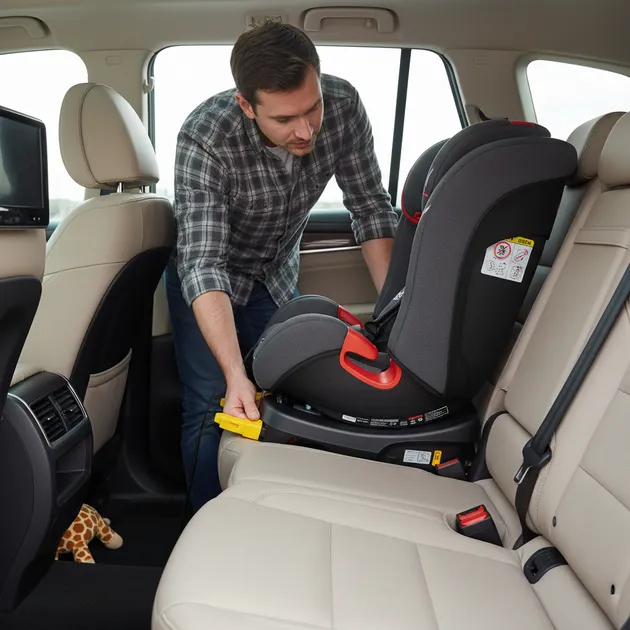
Using LATCH vs. Seat Belt
Both are equally safe when used correctly. LATCH (Lower Anchors and Tethers for Children) is often easier.
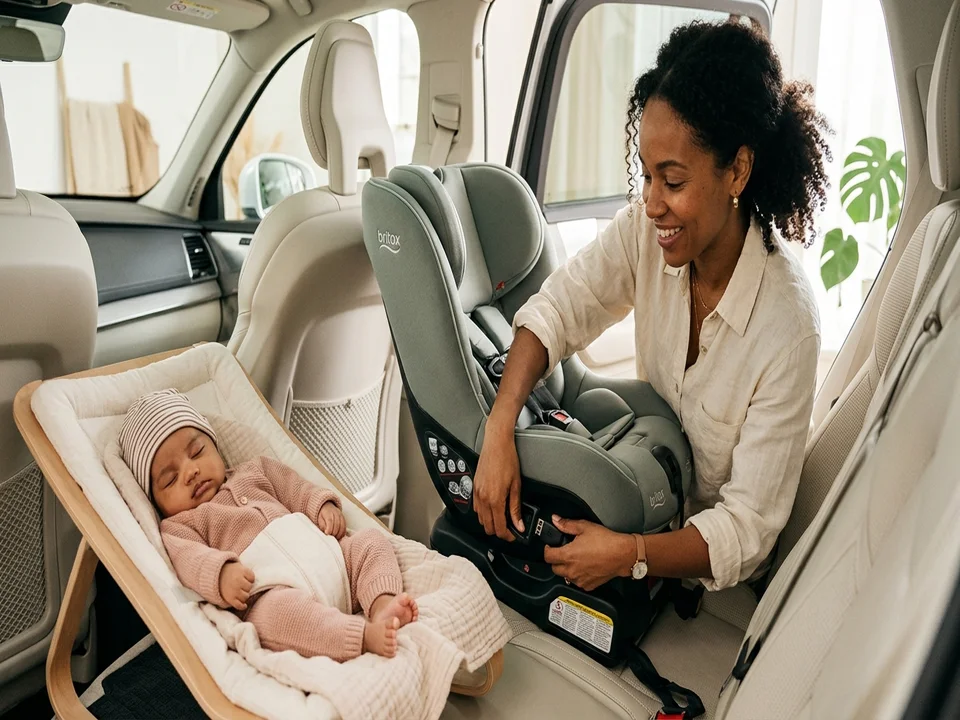
Rear-facing installation checklist:
- Seat does not move more than 1 inch in any direction at belt path
- Recline angle correct: 30–45° for rear-facing infants (use built-in level indicator)
- No twisted straps
- Chest clip at armpit level (not stomach, not throat)
- Harness straps come from at or below shoulders for rear-facing
Common Installation Mistakes
| Mistake | Risk | Fix |
|---|---|---|
| Seat too upright (rear-facing) | Airway compression, worse crash protection | Adjust recline angle to 30–45° |
| Loose harness ("two-finger rule") | Child moves forward in crash | Harness should be snug, barely fits one finger |
| Chest clip too low | Abdominal injury | Chest clip at armpit level |
| Aftermarket products (cushions, covers) | Untested safety performance | Only use products tested with the seat |
| Expired car seat | Unknown structural integrity | Replace after 6–10 years (check label) |
Car Seat Expiration
All car seats expire, usually 6–10 years from manufacture date, printed on a sticker on the seat. After expiration:
- Plastic may degrade
- Harness webbing may weaken
- Safety standards may have changed
Never use a secondhand car seat unless you know its full history (no crashes, not expired, complete with manual).
Get a Free Car Seat Check
In the US: NHTSA.gov/car-seats, find a certified Child Passenger Safety Technician near you for a free inspection. This is highly recommended, especially for first-time parents.
🔗 New to baby gear? Use our hospital bag & newborn checklists to make sure the car-seat trip home is one less thing to figure out at 2 a.m.
Sources: American Academy of Pediatrics (AAP). Car Seat Safety Guidelines 2023; National Highway Traffic Safety Administration (NHTSA); NHS UK. Child Car Seats; CDC, Child Passenger Safety; Pediatrics, "Car Seat Use and Child Injury Risk"
Frequently Asked Questions
When can a baby face forward in a car seat?
The AAP recommends keeping babies rear-facing as long as possible, until they reach the maximum height or weight limit of their convertible seat, which is typically age 2–4. Turning forward-facing at exactly 2 years is outdated guidance. Rear-facing is substantially safer in front-impact crashes, which are the most common type.
What is the safest car seat for a newborn?
Any rear-facing seat that fits your newborn's weight (typically starting at 4–5 lbs) is safe. Infant-only car seats are specifically designed for newborns, they come with an infant insert and a carry handle. Convertible seats can also be used from birth and last longer. Neither type is "safer" than the other when properly installed.
How do I know if my car seat is installed correctly?
After installation: the seat should not move more than 1 inch in any direction at the belt path; the recline angle should be 30–45° for rear-facing infants; the harness should be snug (you cannot pinch fabric at the shoulder); the chest clip should be at armpit level. A free inspection is available at NHTSA-certified stations, find one at nhtsa.gov/car-seats.
Can I use a secondhand car seat?
Only if you know its complete history, no crashes (even minor), not expired, and you have the full manual. Car seats involved in moderate or severe crashes must be replaced even without visible damage. If you cannot verify the history, buy new.
Sources
- AAP. Child safety and injury prevention
- CDC. Child injury prevention resources
- WHO. Reducing child mortality globally
🔧 Helpful Tools
- Newborn & Hospital Bag Checklists. Confirm everything you need (including the right rear-facing seat) is ready before delivery day.
- Smart Start: First 72 Hours Home. A guided walk-through of the ride home, the first night, and the first feeds.
- Milestone Tracker. When you're getting close to the 1-year window where families consider transitioning car seat stages, use the tracker to log height, weight, and motor milestones.
- Due Date Calculator. If you haven't ordered a seat yet, work backwards from your due date to leave 2–3 weeks for shipping, install, and an inspection-station check.
📖 Related Articles
- How to Choose a Car Seat for Your Baby. Choosing the right car seat depends on your child's age, weight, and height. Learn the stages of car seats, key safety features, and installation tips.
- How to Choose the Right Car Seat for Baby. A second deep-dive on fit, install, and the trade-offs between infant-only and convertible seats.
- ISOFIX Car Seat Guide. How LATCH/ISOFIX works, when to switch to a seat-belt install, and the weight thresholds that matter.
- Baby Carrier Guide. For the in-between moments between car seat trips, picking a safe carrier with proper hip and head support.