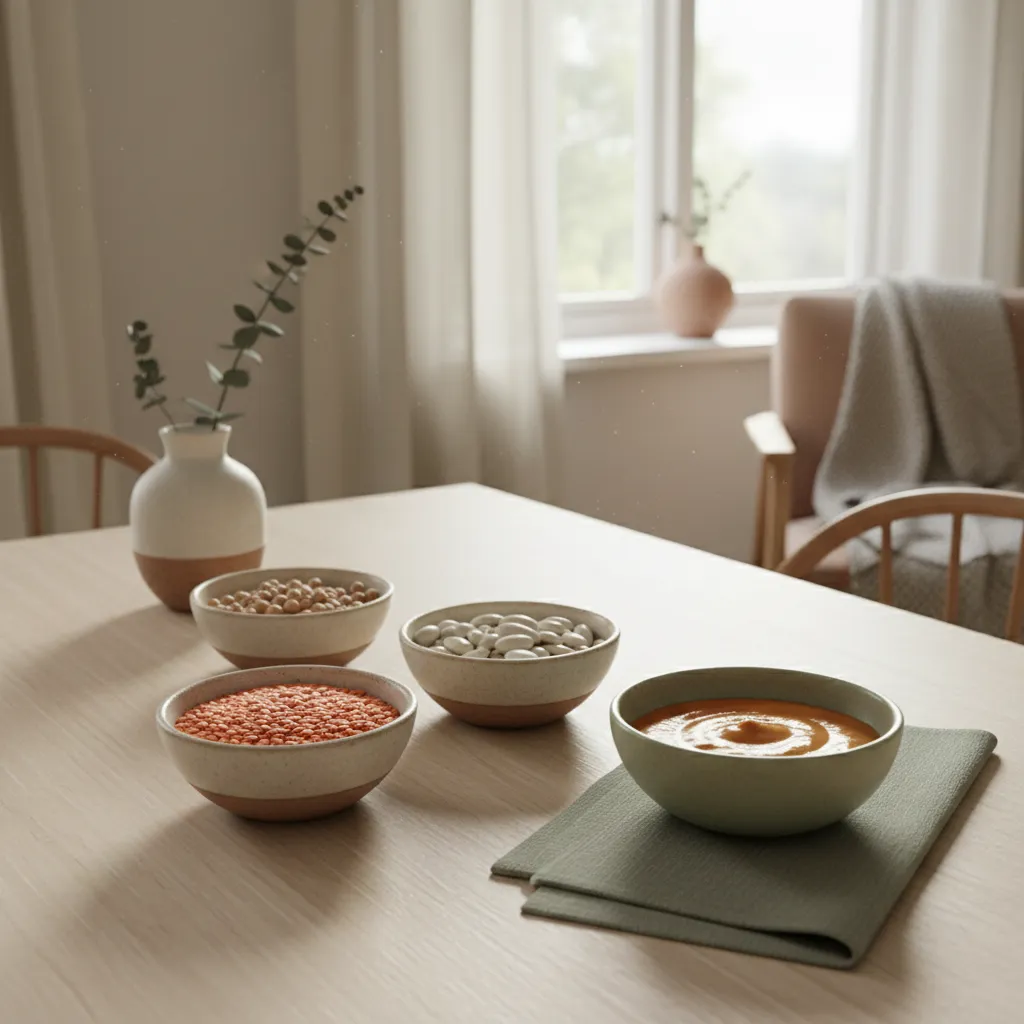
Legumes like lentils, chickpeas and beans are among the most nutritious foods you can give your baby. They are rich in plant-based iron, protein and fiber, and they are affordable and easy to prepare. For families who eat little meat, legumes are especially important.
Here is the complete guide to legumes for babies, based on WHO and AAP recommendations.
When can babies eat legumes?
Babies can have legumes from 6 months. According to the WHO and AAP, legumes are an excellent source of plant-based iron and protein, and can be introduced as part of standard solid food introduction.
- Legumes provide protein, iron, zinc and fiber
- They are an important iron source for babies who eat little or no meat
- Legumes should be well mashed for young babies (skins can be hard to swallow)
- Combine with vitamin C-rich foods to improve iron absorption
Iron from plants (non-heme iron) is less well absorbed than iron from meat. To improve absorption, always combine legumes with vitamin C-rich foods, such as broccoli, bell pepper, tomato or orange. Vitamin C can double the absorption of plant-based iron.
Legumes by type
Lentils (from 6 months)
Lentils are the easiest legume for babies because they cook soft without soaking.
- Red lentils. Cook soft in 15–20 min, break down naturally, perfect as puree
- Yellow lentils. Similar to red, mild flavor
- Green lentils. Firmer texture, cook 25–30 min, mash well
- Brown lentils. Firmer, best from 8–10 months
Tip: Red lentils are best for the youngest babies. They dissolve during cooking and need no blending.
Chickpeas (from 6 months)
- Use canned chickpeas (rinsed well) or cook dried chickpeas until very soft
- Mash well or blend, the skins can be tough
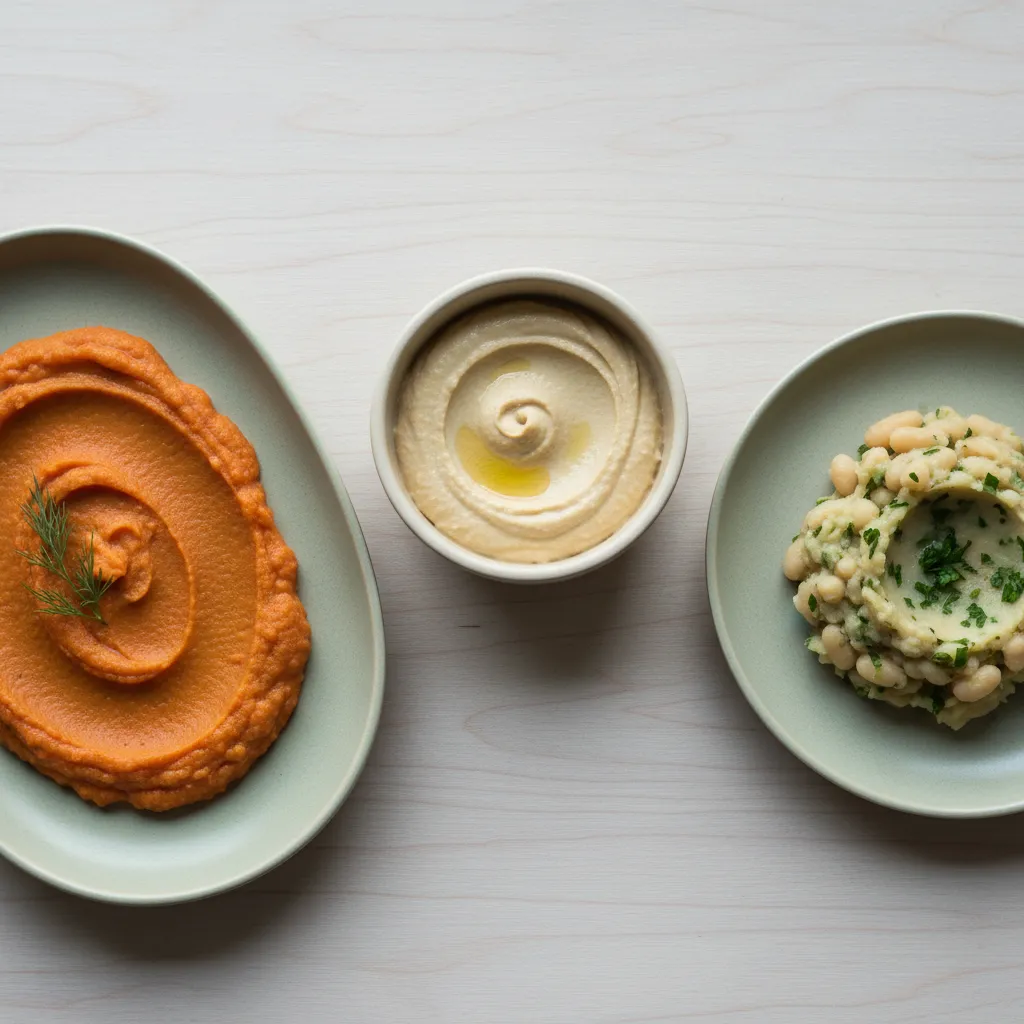
- Hummus (without added salt for young babies) is an excellent baby-friendly form
- Chickpeas are rich in protein, iron and folate
Beans (from 6 months)
- White beans. Soft, mild flavor, easy to mash
- Black beans. Nutritious, slightly stronger flavor
- Kidney beans. Must be well cooked and mashed (raw kidney beans are toxic)
- Edamame. Cooked and mashed, good protein source
Raw kidney beans contain lectins (phytohemagglutinin) which are toxic. Dried kidney beans MUST be soaked for at least 12 hours and then boiled vigorously for at least 30 minutes. Canned kidney beans are already cooked and safe. For babies, canned beans are the simplest and safest option.
Peas (from 6 months)
- Frozen peas. Cook and mash (break the skins)
- Split yellow peas. Cook soft, mash into puree
- Sugar snap peas. Cook well, finely chop for older babies (10+ months)
How to prepare legumes for baby
6–8 months: Smooth puree
- Cook legumes until very soft
- Blend or mash to a completely smooth consistency
- Optionally sieve to remove skins (especially chickpeas and beans)
- Mix with vegetables and a little olive oil
Consistency: Thick, smooth puree, like thick yogurt.
8–10 months: Coarser mash
- Cook until very soft
- Mash with a fork (leave small, soft pieces)
- Mix into sauces, soups or vegetable blends
- Baby can start picking up soft bean pieces themselves
10–12 months: Pieces and finger food
- Whole, well-cooked beans and chickpeas as finger food
- Hummus on bread or as a dip
- Lentil patties or bean balls
- In the family's soups and stews
Nutrition in legumes
| Legume (100 g cooked) | Protein | Iron | Fiber | Notes |
|---|---|---|---|---|
| Red lentils | 9 g | 2.5 mg | 2 g | Dissolves well, perfect puree |
| Chickpeas | 9 g | 2.9 mg | 8 g | Versatile, great in hummus |
| White beans | 7 g | 2.5 mg | 6 g | Mild, easy to mash |
| Black beans | 9 g | 2.1 mg | 9 g | Rich in antioxidants |
| Green peas | 5 g | 1.5 mg | 5 g | Naturally sweet |
3 simple recipes
1. Red lentil puree (from 6 months)
- ¼ cup red lentils
- 1 carrot, peeled and chopped
- 1 small potato, peeled and chopped
- 1 tsp olive oil
Cook everything in 1 cup of water until soft (approx. 20 min). The lentils will dissolve. Mash with a fork or blend. Add olive oil. Add more water to reach the desired consistency.
2. Baby hummus without added salt (from 6 months)
- 1 can chickpeas (rinsed)
- 1 tbsp olive oil
- 1 tbsp tahini (optional, allergen, observe baby)
- Juice of half a lemon
- 2–3 tbsp water
Blend until smooth. Add water to reach desired consistency. Serve on bread, as a dip for vegetable sticks, or mixed into puree.
3. Lentil patties (from 10 months)
- ½ cup cooked red lentils
- 1 tbsp oat flour
- 1 finely grated carrot
- 1 egg
Mix everything together. Shape into small flat patties. Fry in a little oil over medium heat, about 3 min per side. Cool before serving.
Canned legumes are just as nutritious as dried. They save you soaking time and long cooking. Rinse thoroughly under running water to remove excess salt from the brine.
Legumes and digestion
Some babies may experience more gas from legumes. This is normal and is due to the fiber content. Tips to reduce gas:
- Start with small amounts (1–2 teaspoons)
- Increase gradually over weeks
- Red lentils usually cause the least gas
- Soak dried legumes for at least 8 hours and discard the soaking water
- Cook thoroughly (undercooked legumes cause more gas)
- Add cardamom or fennel to cooking (traditional remedy)
Frequently asked questions
Can a 6-month-old baby eat lentils?
Yes. Red lentils are an excellent first food for babies from 6 months. They cook soft in 15–20 minutes without soaking, dissolve into a natural puree, and are rich in iron and protein. Start with 1–2 teaspoons mixed with vegetables.
Are legumes enough as a protein source for baby?
Legumes are a good protein source, but the protein is not as complete as from animal sources. For babies who eat little meat, combine legumes with grains (e.g. lentils + rice, hummus + bread) to get all essential amino acids. According to the AAP, these combinations do not need to be in the same meal.
Can baby eat canned beans?
Yes. Canned beans are safe and convenient. Rinse thoroughly under running water to remove excess salt. Choose varieties without added salt if possible. Mash or blend for babies under 10 months.
Do legumes cause a lot of gas?
It is common for babies to have a bit more gas at first. Start with small amounts and increase gradually. Red lentils usually cause the least trouble. Soaking dried legumes and thorough cooking reduces gas production.
Is edamame safe for baby?
Yes, edamame is safe from 6 months. It is a good source of protein and iron. Cook well and mash for young babies. Edamame is a soy product, which is a common allergen, observe your baby upon introduction.
Summary
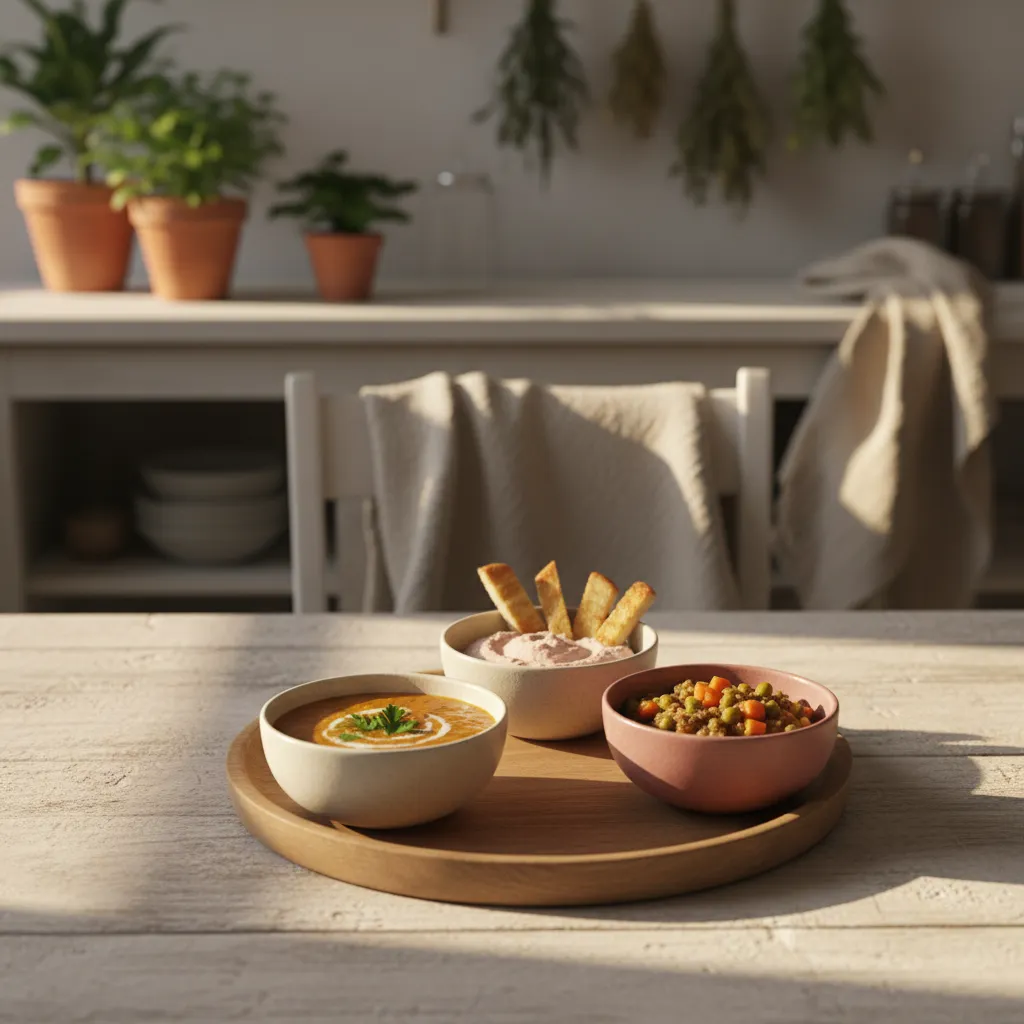
Legumes are safe from 6 months and are an important source of plant-based iron and protein. Start with red lentils (easiest to prepare and mash). Always combine with vitamin C-rich food for better iron absorption. Canned varieties are just as nutritious as dried.
Read more
- Iron-rich foods for baby
- Solid food introduction, complete guide
- Meat for baby
- Eggs for baby
- Baby food from 6 months
- Homemade baby food: Recipes and tips
- Allergens for baby: Safe introduction
Sources
🔧 Helpful Tools
- Baby Food Guide. Safe foods and introduction schedule for your baby
- Breastfeeding Tracker. Log feeds, track supply, and monitor nursing sessions
- All Baby Tools. Browse all free tools for pregnancy and baby care
📖 Related Articles
- Baby Allergens: A Safe Guide to Introducing Allergenic Foods. How to safely introduce allergens to your baby. Eggs, nuts, milk and gluten - when, how and what to look for. Based on current guidelines.
- Introducing Allergens to Your Baby: A Safe Step-by-Step Guide. How to safely introduce allergens to your baby. Eggs, peanuts, dairy, and gluten, when, how, and what to watch for. Based on current AAP and WHO guidelines.
- Baby Food at 1 Year: Transitioning to Family Meals. What can your child eat at 1 year old? Guide to family foods, cow's milk, portions, and diet for one-year-olds based on WHO and AAP recommendations.