"I do it myself!" Have you heard this a hundred times this week? Congratulations. Your child is in the middle of one of the most exciting developmental phases.
Between ages 1 and 3, the drive for independence awakens in full force. The child wants to get dressed alone, eat alone, wash their hands alone, and ideally do everything their own way. It takes time. There will be mess. But it's worth its weight in gold for their development.
Here are 10 everyday situations where you can give your child room to build mastery themselves, without the morning routine taking three hours.
Why Independence Is So Good for Your Child
When a child gets to try something themselves and experiences success, something happens in the brain. Dopamine is released, and the child feels joy and motivation. This feeling makes them want to try again and again.
Research on child development shows that children who are given age-appropriate challenges early on develop better self-regulation, stronger self-esteem, and greater persistence. They don't give up as easily when things are difficult.
Early childhood education philosophy consistently emphasizes independence as a core value. The Montessori approach, developmental research, and the AAP all underscore that children should experience mastery and be able to express their own competence. This applies just as much at home.
The Montessori principle "Help me do it myself" is not about letting the child manage entirely alone. It's about arranging the environment so the child can do as much as possible themselves, with you as support in the background.
10 Everyday Situations for Building Mastery
1. Getting Dressed
Start with the simplest items. Most 2-year-olds can:
- Take off shoes (with velcro)
- Pull off socks and a hat
- Pull down pants
From around age 2.5, many can also:
- Put on shoes (with velcro)
- Pull up pants
- Put on a hat and mittens
Tip: Lay out two choices in the morning. "Do you want the red sweater or the blue one?" The child feels like they're deciding, and you avoid the argument.
2. Mealtimes
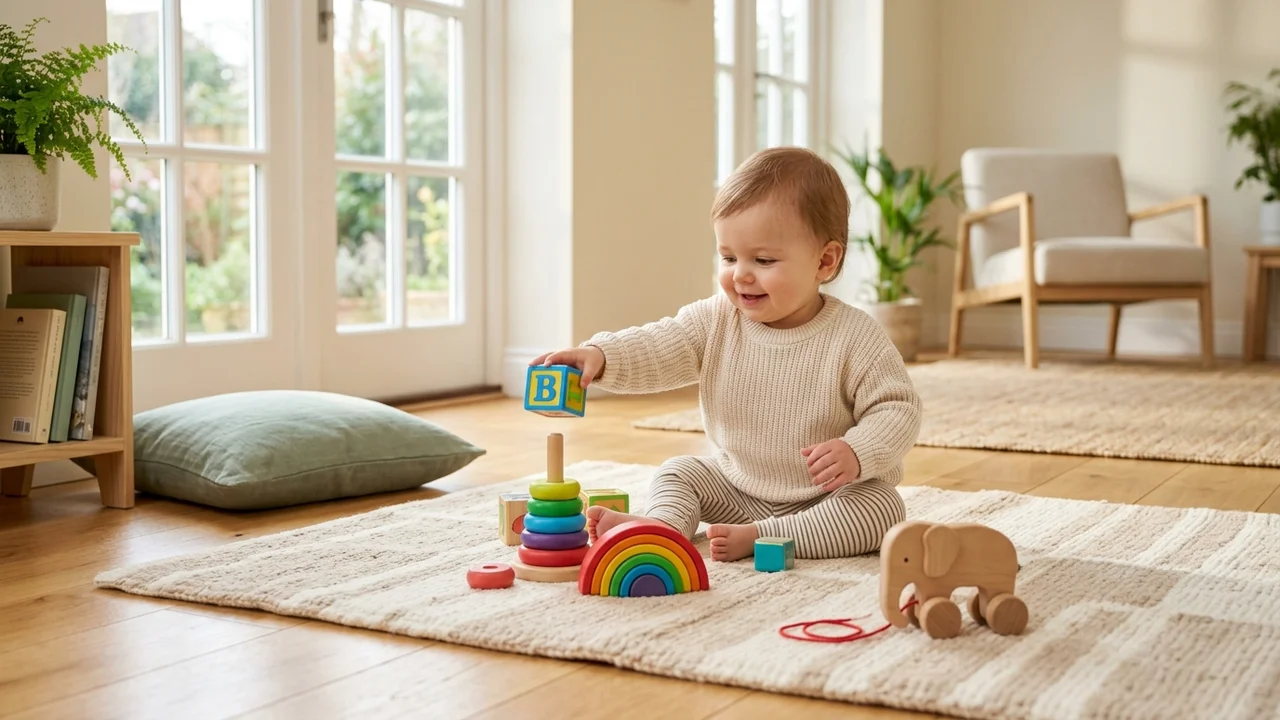
Let the child eat with their own spoon from around age 1. Yes, there will be mess. But fine motor skills develop quickly with practice.
- Use a spoon with a wide handle and deep bowl
- Let the child have their own small cup with a little water to pour from
- Offer finger foods the child can pick up themselves
- Let the child spread their own bread (with a child-friendly butter knife)
Practical tip: Put an old tablecloth or a large bib under the chair. It makes cleaning up easier and helps you stress less about the mess. Read more about meals for toddlers in simple meals for 1-year-olds.
3. Handwashing
Place a stable step stool by the sink. Let the child:
- Turn on the tap themselves
- Pump soap from the dispenser
- Rub their hands together
- Rinse and dry with their own hand towel
Make it a routine: "After the toilet, we always wash our hands. Can you show me how?"
4. Tidying Up
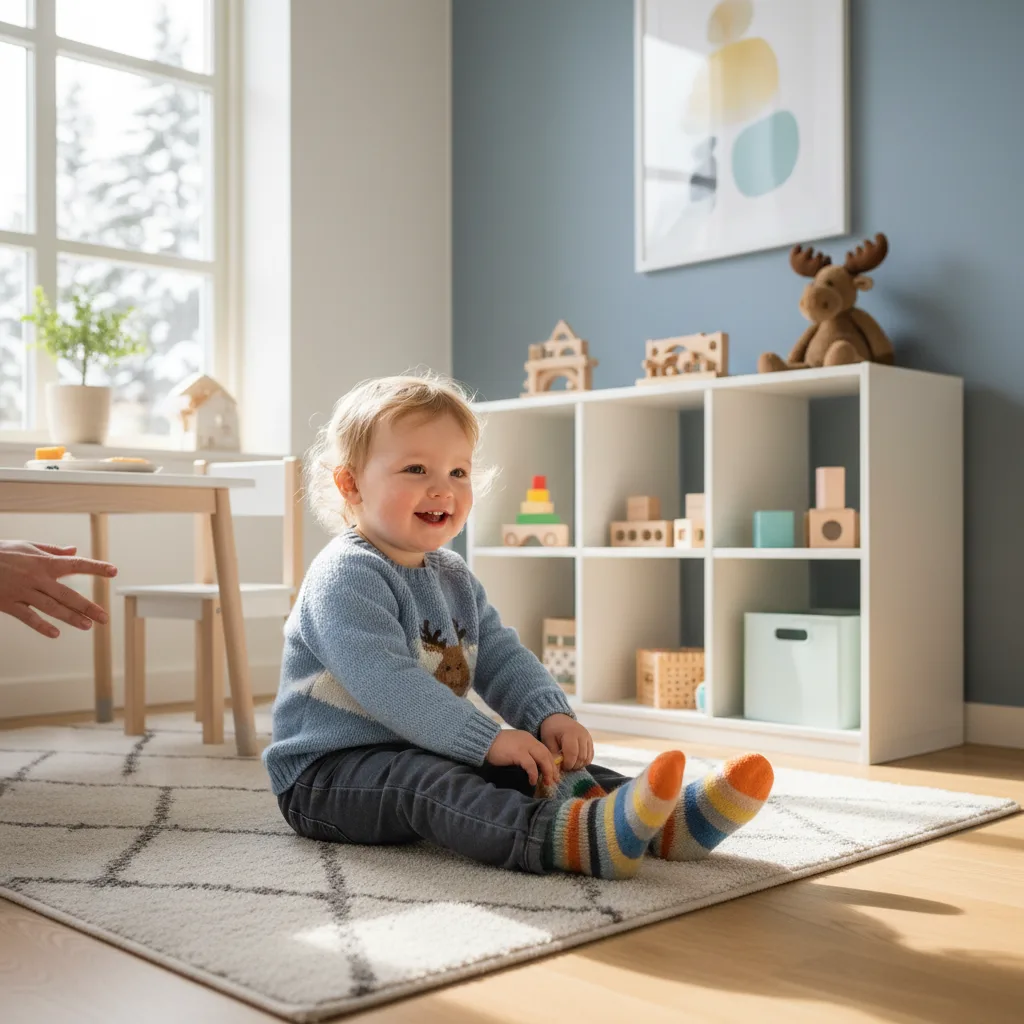
Children from around 18 months can help with simple tidying:
- Put toys in a box
- Place books on the shelf
- Throw trash in the bin
- Put dirty clothes in the laundry basket
The key: Make it fun. "Can you throw the ball into the box? Goal!" Sing a clean-up song. Do it together, don't send the child off to tidy alone.
5. Brushing Teeth
Let the child try brushing themselves first (they'll do a poor job, and that's completely fine). Then you come in and "check" afterward. This order means the child experiences mastery, while you make sure the teeth actually get clean.
6. Choosing in the Shop
"Can you find the bananas?" Give the child a simple task at the grocery store. Let them place items in the basket. Older toddlers can hold a small shopping list with pictures.
7. Carrying and Fetching Things
Toddlers love to carry things. Let the child:
- Carry their own lunchbox to the table
- Put the diaper in the trash
- Bring clothes to the laundry machine
- Carry in the mail (lightweight items)
8. Helping in the Kitchen
Even 18-month-olds can participate:
- Wash vegetables
- Tear salad leaves
- Stir batter
- Press the button on the mixer (with an adult holding it)
For older toddlers: cut soft foods with a child's knife, crack an egg (yes, there will be some shell in the bowl).
Learning through cooking: Cooking together is a fantastic arena for independence and motor development. Use age-appropriate recipes and let your child be a real helper.
9. Using the Toilet
When the child shows signs of being ready for potty training:
- Let them sit on the potty themselves
- Let them pull their pants down and back up
- Let them pull off toilet paper (yes, they use too much)
- Wash hands afterward (see point 3)
10. The Daycare Cubby
Most daycares expect children to gradually manage more themselves in the cloakroom. Practice at home:
- Hang up their jacket on a hook at the child's height
- Put their shoes in the right place
- Take their lunchbox out of their bag
The Balance Between Help and Independence
The hardest part is holding back. It's tempting to step in when the child spends five minutes trying to pull up a zipper. But every attempt builds competence.
Step in when:
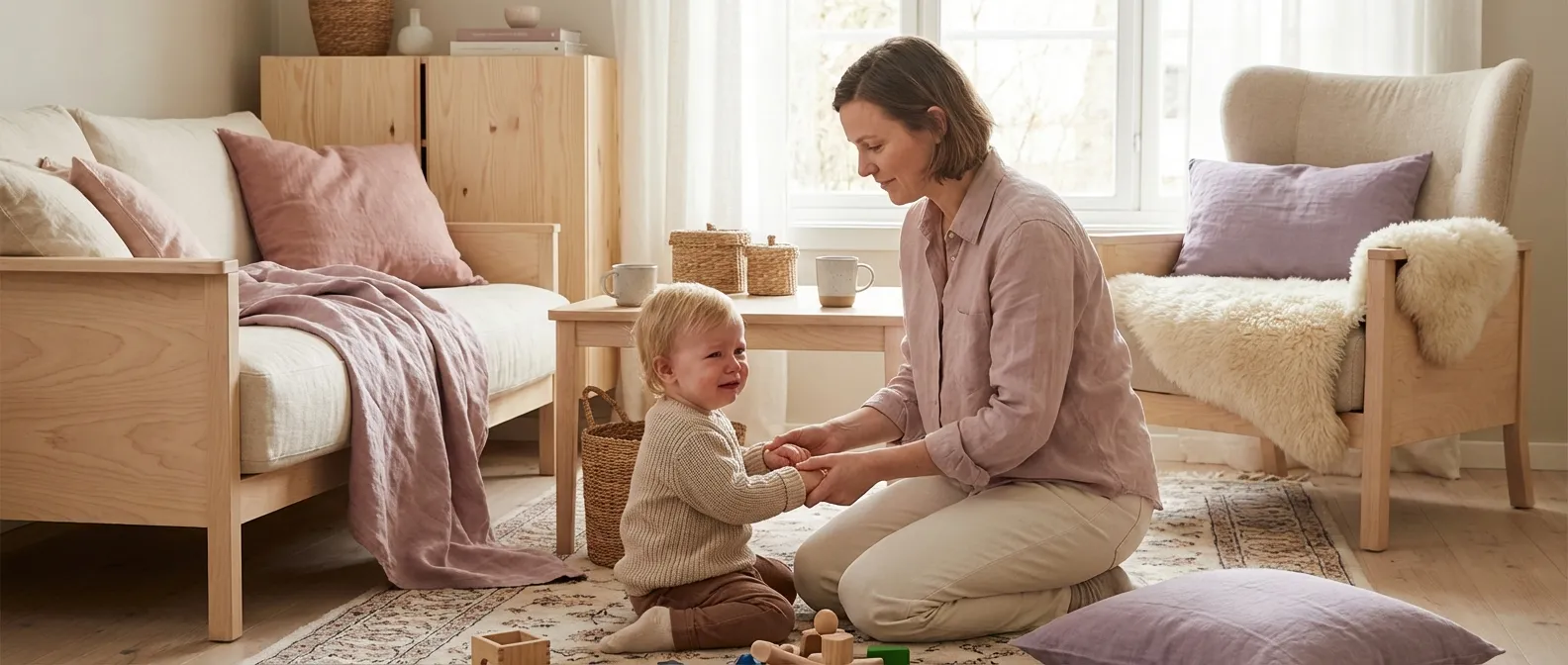
- The child is clearly frustrated and crying
- The situation is dangerous
- You genuinely don't have time (choose your battles)
Hold back when:
- The child is trying with concentration
- They're doing it "wrong" but not dangerously (shoes on the wrong feet don't hurt)
- You just want to do it faster
Early childhood education consistently emphasizes that children learn through participation and exploration. Letting your child try at home reinforces what daycare is working on. Talk to your child's daycare about what they're practicing, and follow up at home. Read more about preparing for daycare.
Age-Appropriate Expectations
Not all children develop at the same pace. Here is a rough overview:
12–18 months:
- Eat finger food
- Drink from a cup (with spills)
- Put objects in a box
18–24 months:
- Eat with a spoon
- Take off simple clothing
- Help with simple tidying
2–3 years:
- Get dressed with a little help
- Wash hands
- Help with household tasks
- Begin potty training
Remember: These are general guidelines, not goals the child must reach. Some 3-year-olds are masters at getting dressed. Others need more time, and that is completely normal.
When the Child Says "No, You Do It!"
Some days the child suddenly doesn't want to do anything themselves. That's completely normal. Independence comes in waves. The child may have had a long day, be tired, or need extra closeness.
Never force independence. Say: "That's fine, I'll help you today. Tomorrow you can try again." The security of knowing help is available makes it easier to try themselves next time.
Frequently Asked Questions
Can a child become too independent too early?
No. A child who is given age-appropriate challenges with a trusted adult nearby develops healthy independence. There is a difference between a child who gets to try with support and a child who is left to fend for themselves.
My child wants to do everything themselves and refuses all help. What do I do?
Offer choices: "Do you want to put your shoes on yourself, or shall we do it together?" Acknowledge the need: "I can see you want to do it yourself. That's great." Set limits when needed: "You can try the zipper, but I'll help with the buttons because we need to catch the bus."
What do I do when other parents or grandparents take over?
Explain briefly: "We're practicing letting them manage themselves. It takes a little extra time, but it's good practice." Most people understand once you explain the reasoning. Read more about setting limits for toddlers.
How do I know if my child is ready for a new challenge?
Look for interest. If the child reaches for your spoon, they're ready to try themselves. If they watch you pull up the zipper, they're curious. Follow the child's gaze and initiative.
Read More
- Motor Development in Babies
- Setting Limits for Toddlers
- Starting Daycare. Preparation Guide
- Play and Development for Toddlers
Sources
🔧 Helpful Tools
- Baby Milestones Tracker. Track your baby's developmental milestones
- Development Leaps. Understand your baby's developmental leaps
- All Baby Tools. Browse all free tools for pregnancy and baby care
📖 Related Articles
- Daycare Lunchbox Ideas. Healthy and Easy. Practical lunchbox ideas for daycare. Healthy, simple, and child-friendly suggestions based on WHO and AAP dietary guidelines for toddlers.
- Lunchbox for Daycare: Healthy and Easy Ideas. Tired of packing the same lunch every day? Here are 10 easy and healthy lunchbox ideas for daycare, plus tips on keeping food fresh, nut-free options, and what to do when the lunchbox comes home full.
- Lunchbox for a 1-Year-Old: Easy and Nutritious Ideas. How to pack a great lunchbox for your 1-year-old at daycare. 10 easy and nutritious lunchbox ideas plus a practical checklist.