Your two-year-old holds a banana to their ear and says "Hello?" Your three-year-old puts the teddy bear to bed, covers it with a cloth, and whispers "Sleep tight." The doll is "sick" and needs "medicine" from the toy doctor kit.
This is imaginative play, and it's one of the most important things your child does.
Pretend play looks like pure entertainment, but behind the scenes, your child is practicing language, empathy, problem-solving, and social skills. Educators have long understood this: play is learning.
What Is Imaginative Play?
Imaginative play, role play, or pretend play is when a child acts as if something is something else. A block becomes a phone. A box becomes a boat. The child takes on the role of mum, firefighter, doctor, or dog.
This ability to imagine something that isn't physically present is an enormous cognitive achievement. It requires:
- Symbolic thinking, understanding that one thing can represent another
- Working memory, holding an imaginary situation in mind
- Perspective-taking, understanding that others can have different thoughts and feelings
- Language skills, expressing and negotiating roles and events
Research consistently shows that imaginative play is especially valuable for social and language development. It is considered a key milestone in early childhood by both the AAP and developmental psychologists worldwide.
When Does Imaginative Play Start?
Imaginative play develops gradually through the toddler years.
12–18 Months: Imitation
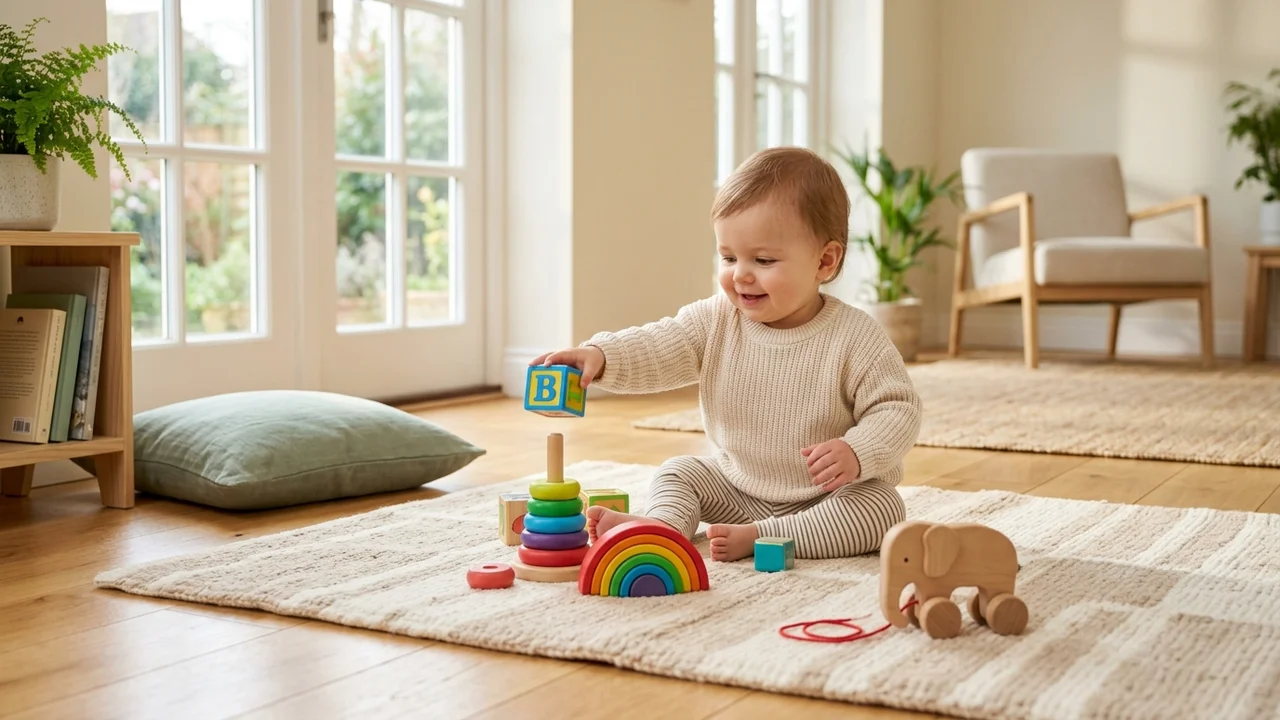
The child copies everyday actions. They pretend to drink from an empty cup, brush their hair with a toy brush, or hold a phone to their ear. This is functional play, the child is copying what they see.
18–24 Months: Symbolic Play
The banana becomes a phone. The block becomes a car. The child starts using objects as symbols for something else. This is a significant cognitive leap.
2–3 Years: Role Play
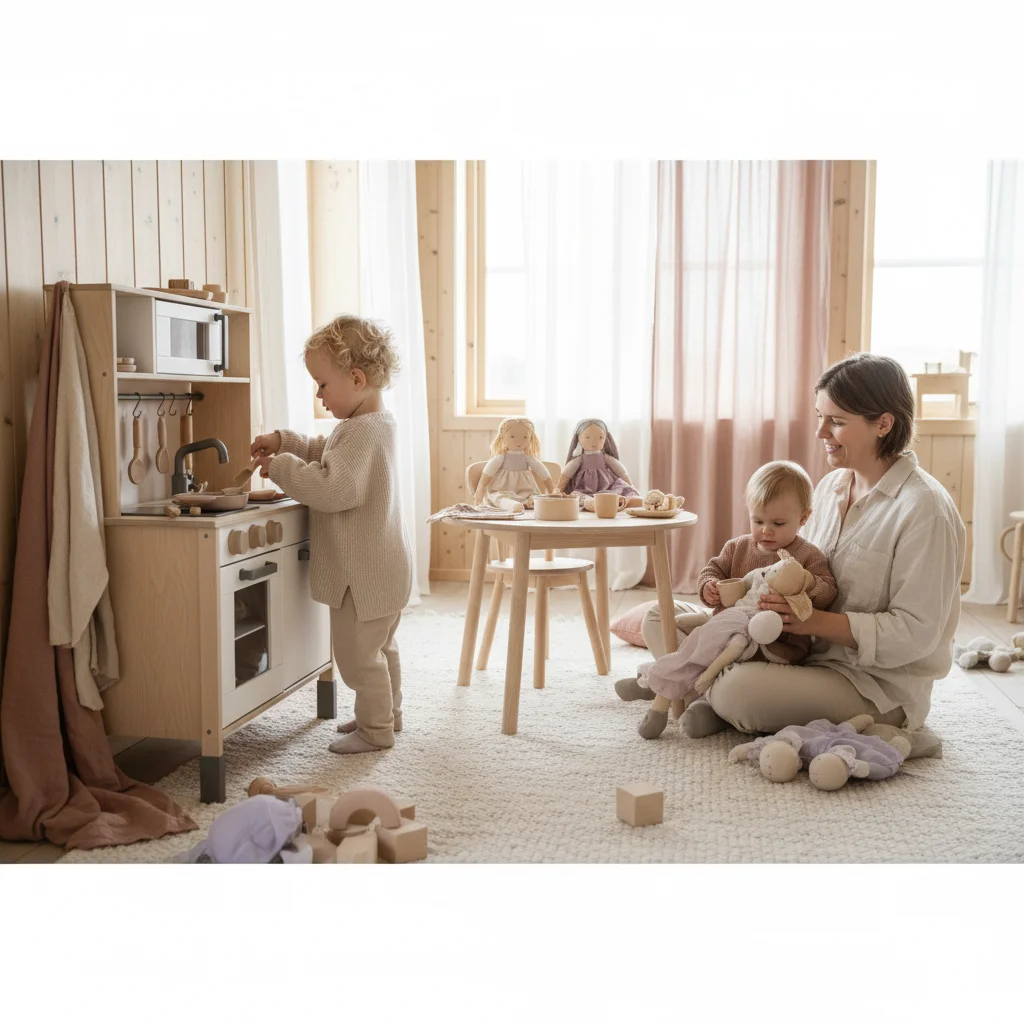
The child takes on roles, "I'm the mummy," "you're the baby." Actions become more complex and follow a kind of story. The child uses dialogue between toy figures or between themselves and playmates.
3–5 Years: Advanced Imaginative Play
Play becomes planned and negotiated. Children discuss rules ("You have to be sick, and I'm the doctor"). Stories become longer and more detailed. Imaginary friends may appear.
Why Is Imaginative Play Important?
Research shows clear links between imaginative play and children's development across multiple areas.
Language Development
During role play, children use more advanced language than in ordinary conversation. They negotiate, explain, give instructions, and use dialogue. A child playing doctor-patient is practicing sentences they would never otherwise use.
Social Skills
Imaginative play with other children requires negotiation, cooperation, and compromise. Who plays what? What happens in the story? Children who engage in lots of imaginative play develop stronger social skills.
Emotional Regulation
Through play, children process experiences and emotions. The child who plays "doctor" after a medical visit is processing the experience. The child who puts a teddy bear to bed and says "don't be scared" is practicing how to handle their own fear.
Creativity and Problem-Solving
Open-ended imaginative play trains creative thinking. What do we do when "the boat sinks"? How do we "fix" the broken car? Children who engage in imaginative play score higher on creativity tests.
Note new skills and play patterns in your baby journal or milestone tracker. The first time your child uses an object as a symbol for something else? That's a cognitive milestone worth celebrating.
How to Support Imaginative Play
You don't need to instruct, organize, or lead. The child is the director. Your role is to create space and join in on the child's terms.
Give Time and Space
Imaginative play needs time without interruption or structured activities. Don't fill every hour with organized programming. Boredom is imaginative play's best friend.
Offer Open-Ended Materials
The best imaginative play doesn't require expensive toys. Open-ended materials that can become anything stimulate imagination the most:
- Blocks and building toys, become houses, bridges, spaceships
- Fabric and cloth, costumes, tents, capes
- Boxes in various sizes, cars, shops, houses
- Natural materials, sticks, stones, pinecones
- Kitchen items, cups, pots, wooden spoons
Join In, but Don't Take Over
Accept your invitation into the play. Accept the role you're given. Ask open questions that extend the story: "Where are we going?" "What shall we make for dinner?" But don't take over the direction.
Limit Screen Time
Screen time replaces time spent on active imaginative play. Research suggests that open-ended play stimulates imagination more than passive content. That doesn't mean zero screens, but conscious choices.
Toys That Encourage Imaginative Play
You don't need to buy everything. But some types of toys are especially good at inviting imaginative play.
Good choices:
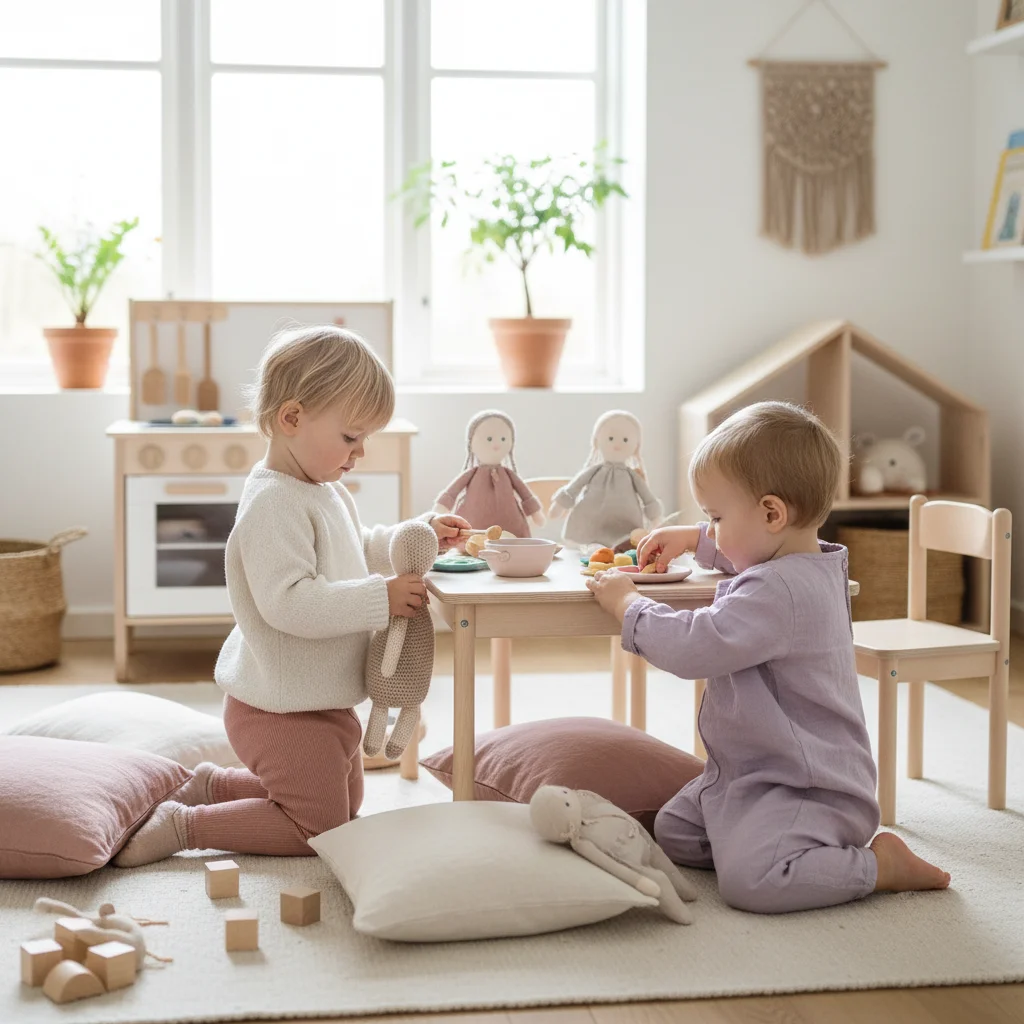
- Dolls and soft toys, children practice care, dialogue, and social situations
- Play kitchen and toy food, cooking, restaurant play, dinner parties
- Doctor kit, doctor-patient play, processing medical visits
- Dress-up clothes, costumes open up role play
- Toy cars and trains, transport, journeys, adventures
- Building blocks, open material that becomes anything
- Animal figures, stories, farm life, jungle adventures
Less suitable:
- Toys with only one function (press here, sound plays)
- Electronic toys that "do the play for the child"
- Toys based on branded characters with a fixed narrative
Nursery and Daycare Approaches
Early childhood education programs recognize that play is learning. In well-run daycare settings, imaginative play has a central place in the daily routine.
Typical imaginative play areas in nursery settings:
- Home corner with kitchen, beds, and dress-up clothes
- Shop play with a cash register, goods, and shopping bags
- Building corner with blocks and figures
- Outdoor play with natural materials
Talk to your childcare provider about what your child plays during the day. It gives you insight into their development and interests.
When Should You Pay Attention to Its Absence?
Most children begin simple imaginative play around 18–24 months. Some start a little earlier, others a little later.
Speak with your pediatrician if:
- The child shows no signs of pretend play by age 3
- The child only engages in repetitive play (lining up cars but not playing with them)
- The child consistently avoids playing with other children
- The child seems uninterested in imitating everyday actions
The absence of imaginative play isn't necessarily a problem, but it may be worth following up.
All children develop at different rates. The fact that your child doesn't engage in imaginative play as much as peers doesn't automatically mean something is wrong. But if you are concerned, it is always right to raise the question with your pediatrician.
Imaginary Friends
Around 20–30% of children create an imaginary friend between ages 2 and 7. This is completely normal and a sign of a lively imagination.
Imaginary friends help children:
- Process experiences and emotions
- Practice social situations
- Handle loneliness or change
- Explore boundaries and rules
You don't need to worry unless the child becomes anxious, refuses to interact with real friends, or the imaginary friend consistently encourages negative behavior.
Frequently Asked Questions
My child only wants to play alone. Is that normal?
Yes, especially for children under 3. Parallel play (playing alongside other children but not with them) is completely normal at this age. Cooperative play develops gradually from age 2.5–3.
My son plays with dolls. Is that fine?
Absolutely. Research shows that nurturing play with dolls develops empathy, language, and social skills in all children. Let your child follow their own interests in play.
How much should I join in with imaginative play?
Follow your child's invitation. Some children love having adults involved; others prefer to play alone or with other children. When you do join in, let the child lead. Ask questions rather than giving answers.
Read More
- Social Skills in Toddlers, how peer interaction develops
- Emotional Development in Children, feelings from 0 to 3
- Toys for Toddlers 1–3 Years, recommended toys by age
- Milestones. Track Your Baby's Development
Sources
🔧 Helpful Tools
- Baby Milestones Tracker. Track your baby's developmental milestones
- Development Leaps. Understand your baby's developmental leaps
- All Baby Tools. Browse all free tools for pregnancy and baby care
📖 Related Articles
- 15 Indoor Activities for Toddlers on Rainy Days, 15 simple and creative indoor activities for toddlers when it's raining outside. Play that stimulates development without screens.
- 15 Indoor Activities for Toddlers on Rainy Days, 15 simple and creative indoor activities for toddlers when the weather keeps you inside. Screen-free play that stimulates development.