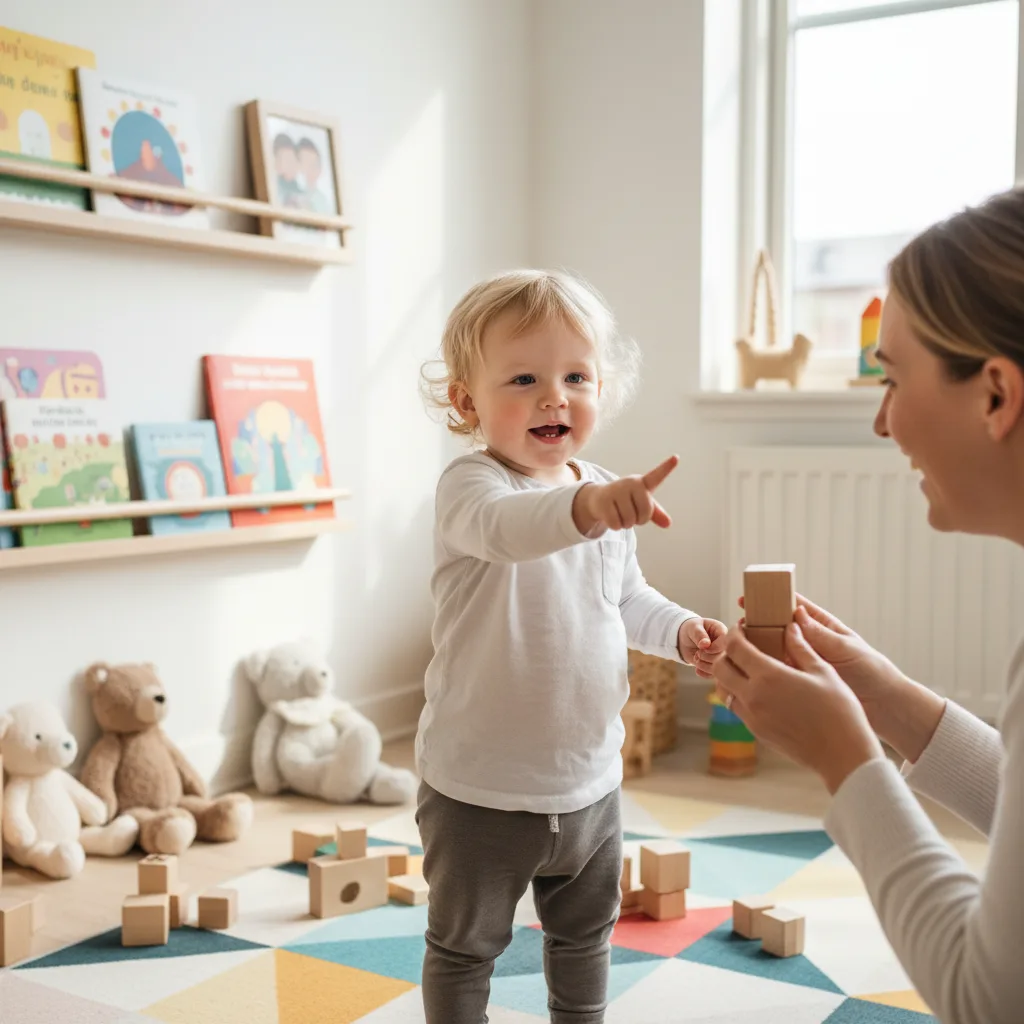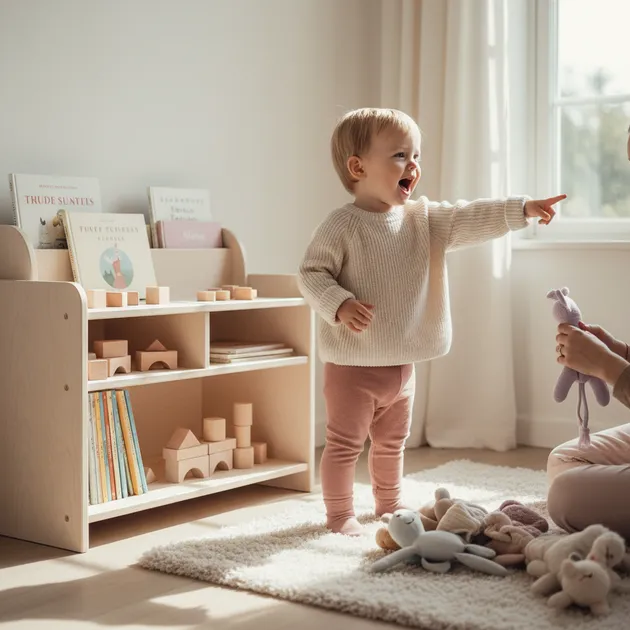
The neighbor's child the same age is already talking in full sentences, while your two-year-old still points and says "dat!" You nod and smile, but inside the worry grows: Is this normal? Should I do something?
Speech development varies enormously between children. Some talk early and a lot, others take their time. Most "late talkers" catch up with their peers by age 3–4. But sometimes delayed speech is a sign that a child needs a little extra support, and early action makes all the difference.
Normal speech development: what to expect
Speech development follows a broad pattern, with a great deal of individual variation. Here are the most important milestones:
12 months
- Babbling with varied sounds (ba-ba, da-da, ma-ma)
- Understands simple words like "no," "bye-bye," and their own name
- Points and uses gestures to communicate
- May have 1–3 meaningful words
18 months
- Typically has 10–50 words (wide variation)
- Understands simple instructions ("Get your shoe")
- Points to familiar things in books
- Starting to use words instead of just pointing
2 years
- Usually has 50–200 words
- Combines two words ("Daddy car," "More milk")
- Understands simple questions ("Where's the teddy?")
- Can point to body parts
- Strangers understand about half of what the child says
3 years
- Uses 3–4 word sentences
- Asks questions (who, what, where)
- Can talk about something that happened
- Strangers understand most of what the child says
- Uses "I," "you," "we"
Language comprehension always comes before spoken language. A child who understands a lot but says little usually just needs more time. A child who neither understands nor speaks needs evaluation sooner.
What is a "late talker"?
A "late talker" is a child who has delayed expressive language (says little), but normal language comprehension and otherwise normal development. Around 10–15% of two-year-olds fall into this category.
Signs of a late talker:
- Fewer than 50 words at age 2
- Not combining two words at age 2
- Understands what is said to them
- Otherwise developing typically (motor skills, play, social functioning)
- Communicates actively with gestures, pointing, and sounds
About 50–70% of late talkers catch up with their peers by age 3–4 without any intervention. But the remaining 30–50% can benefit from early speech-language guidance.
Red flags: when should you act?
Some signs indicate that a child should be evaluated by a professional:
Contact your pediatrician if your child:
- Is not babbling with varied sounds at 12 months
- Is not using gestures (pointing, waving) at 12–14 months
- Has fewer than 10 words at 18 months
- Does not understand simple instructions at 18 months
- Has fewer than 50 words at 2 years AND is not combining two words
- Loses words they previously used
- Shows no interest in communicating with others
- Does not consistently respond to their name
Loss of language skills (regression) should always be evaluated. If your child stops using words they had, contact your pediatrician or doctor promptly.
What can your pediatrician do?
Pediatricians conduct routine developmental screenings that include speech at the 18-month and 24-month well-child visits. If you're concerned between visits, you can always call and ask.
Your pediatrician can:
- Assess your child's language comprehension and expressive speech
- Check hearing (reduced hearing is a common cause of delayed speech)
- Refer to a speech-language pathologist for evaluation and possible therapy
- Refer to early intervention services for further assessment
- Give you practical tips to support speech development at home
Early action gets the best results. Don't wait and see, it's always better to request an evaluation and find out everything is fine than to wait too long.
How to support your child's speech development at home
You are your child's most important language model. Here are concrete things you can do every day:
Talk with your child, a lot and often
Narrate what you're doing: "Now we're putting on your jacket. First one arm, then the other." Point out what you see: "Look, a big red bus!" The more language a child hears in meaningful contexts, the faster their vocabulary grows.
Read books together
Daily reading aloud is one of the most effective things you can do for speech development. Choose books with pictures and talk about what you see. Ask open questions: "What is the dog doing?" The library is a fantastic free resource.
Follow your child's lead
When your child points at something or shows interest, put words to it: "Yes, that's a cat! The cat says meow." Building on what your child is already curious about is more effective than steering the conversation yourself.
Expand your child's utterances
When your child says "car," expand it: "Yes, a big blue car! The car is going fast." When they say "daddy car," expand to "Yes, daddy is sitting in the car." You're showing the child the next step without correcting them.
Give your child time to respond
Some children need more time to process and formulate a response. Ask a question and wait. Count to 10 in your head. Many parents fill the silence too quickly.
Limit screen time
Passive screen time (TV, tablets without interaction) does not support speech development. Conversation with an adult is far more effective than a screen. If you do use screens, watch together and talk about what you see.
Songs and rhymes are gold for speech development. Melody helps children remember words, and repetition builds vocabulary. Sing in the car, at bath time, at bedtime. You don't need to sound good!
Speech development 0–3 years: what's typical?
Speech development varies widely between children, but there are milestones that most children reach within certain age ranges. The table below gives an overview based on guidance from the AAP (American Academy of Pediatrics) and WHO.
| Age | Comprehension | Spoken Language | Act if child does not... |
|---|---|---|---|
| 0–3 months | Reacts to sound, recognizes parents' voices | Cooing, vowel sounds | ...react to sound at all |
| 3–6 months | Turns toward sound, understands tone of voice | Babbling, "aaa," "ooo," laughter | ...babble or make vowel sounds |
| 6–9 months | Understands "no," reacts to own name | Varied babbling (ba-ba, da-da) | ...babble with consonants by 9 months |
| 9–12 months | Understands simple words, follows pointing | Points, waves, 1–3 meaningful words | ...use gestures (point, wave) by 12 months |
| 12–18 months | Understands simple instructions | 10–50 words, lots of pointing | ...have at least 10 words at 18 months |
| 18–24 months | Understands 2-step instructions | 50–200 words, two-word phrases | ...have 50 words or combine 2 words at 24 months |
| 2–3 years | Understands complex sentences, "why" | 3–4 word sentences, asks questions | ...use sentences or be understood by strangers at 3 years |
Important: This table shows average milestones. Some typically developing children reach these a little later. What matters most is that development is progressing and that the child shows interest in communication. If you're concerned, contact your pediatrician for an evaluation.
Signs that a child needs evaluation, by age
At 6 months: The child is not babbling, does not react to your voice, or does not smile back.
At 12 months: The child uses no gestures (not pointing, not waving), did not babble with consonant sounds (ba, da, ma), or does not respond to their name.
At 18 months: The child has fewer than 10 words, doesn't understand simple instructions like "give me the ball," or has stopped using words they had before.
At 2 years: The child has fewer than 50 words, is not combining two words, or is hard to understand even for those closest to them.
At 3 years: The child is not using 3-word sentences, strangers understand very little of what the child says, or the child asks no questions.
For more on what to do when a child needs extra support, read our article on speech-delayed children, steps and help.
Bilingualism: two languages does not mean delayed
Children growing up with two or more languages are not delayed. They may have a smaller vocabulary in each individual language, but their total vocabulary across both languages is just as large as that of monolingual children.
It is safe and recommended to speak your native language with your child. Bilingualism is an asset. Talk to your pediatrician if you're unsure how to best support your child's bilingual development.
Frequently asked questions
Do boys talk later than girls?
Statistically, girls have a small head start in early speech development, but the difference is smaller than most people think. Individual variation is far greater than differences between sexes. Don't use "he's a boy" as an explanation if you're concerned.
Can too much screen time delay speech?
Research suggests that a lot of passive screen time (background TV, tablets without interaction) can negatively affect speech development because it replaces conversation and interaction. Interactive screen time (video calls with grandparents, watching something together) is a different matter.
My child talks a lot but is hard to understand. Is that a problem?
At age 2, it's normal for strangers to understand about half of what a child says. By age 3, most of what they say should be understandable. Pronunciation issues alone are rarely cause for concern before age 3–4, unless the child is frustrated by not being understood.
What is a speech-language pathologist?
A speech-language pathologist (SLP) is a specialist in language, speech, and communication who can provide direct therapy and guidance. SLPs work with children of all ages, and many can be accessed through your pediatrician, early intervention programs, or school districts. Some services are publicly funded; check with your insurance or local early intervention program.
Should I stop using baby talk?
Simplified adult speech (shorter sentences, exaggerated intonation) is actually beneficial for language learning. That's different from replacing real words with made-up ones. Speak clearly with the correct words, but feel free to use shorter sentences and expressive intonation.
Most children with delayed speech develop completely normally given time and a rich language environment. But early support where it's needed can make a big difference. Trust your gut, you know your child best. If you're concerned, talk to your pediatrician. That's what they're there for.
Read more about speech development in children or when babies crawl, walk, and talk.
Read also: Language and vocabulary in 2-year-olds | Reading with baby | Autism, early signs in babies
Sources
- AAP. Language Development: 1 Year Old
- CDC. Developmental Milestones
- ASHA. Late Language Emergence
- WHO. Child Development
🔧 Helpful Tools
- Baby Milestones Tracker. Track your baby's developmental milestones
- Development Leaps. Understand your baby's developmental leaps
- All Baby Tools. Browse all free tools for pregnancy and baby care
📖 Related Articles
- Delayed Speech Development: When Should You Be Concerned?. Is your two-year-old saying very little? Learn how to assess whether speech development is delayed and when to contact your pediatrician.
- Language Development in 2-Year-Olds: From Words to Sentences. How your 2-year-old's language develops. Milestones, tips for supporting speech, and when to contact your pediatrician.
- Speech Development at Age 2: From Words to Sentences. How your 2-year-old develops language. Milestones, tips for speech stimulation, and when to contact your pediatrician.