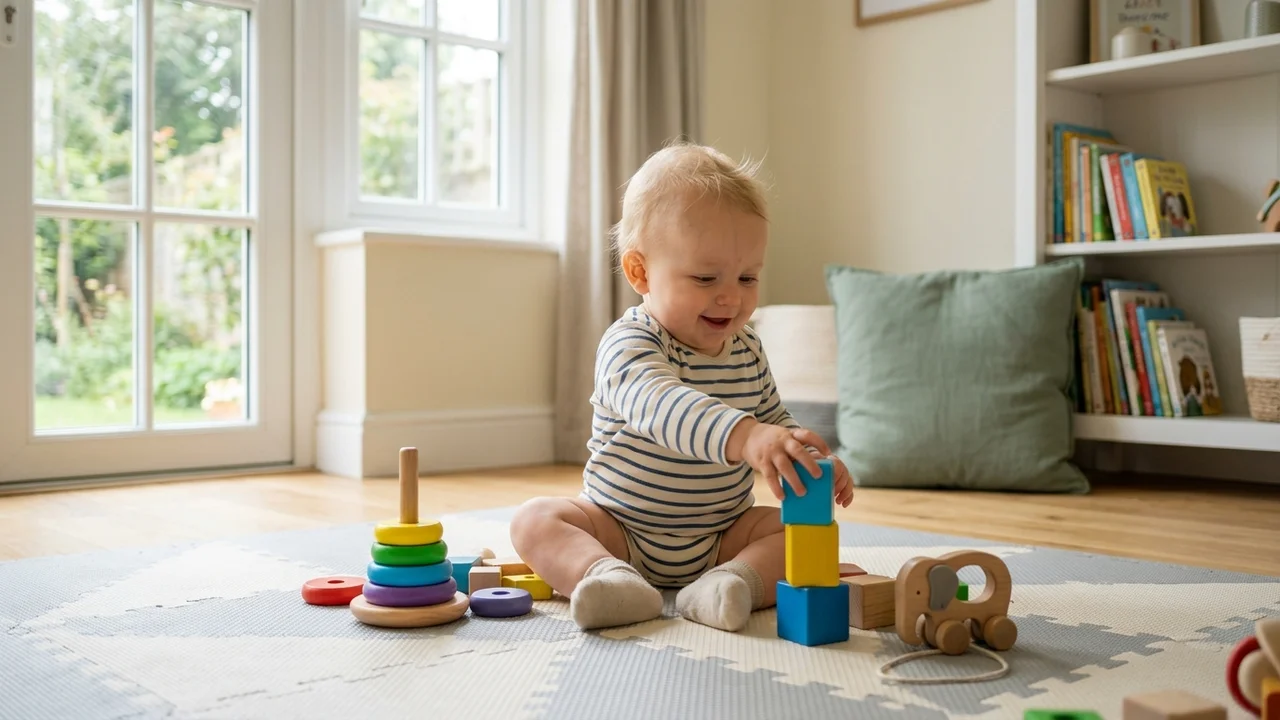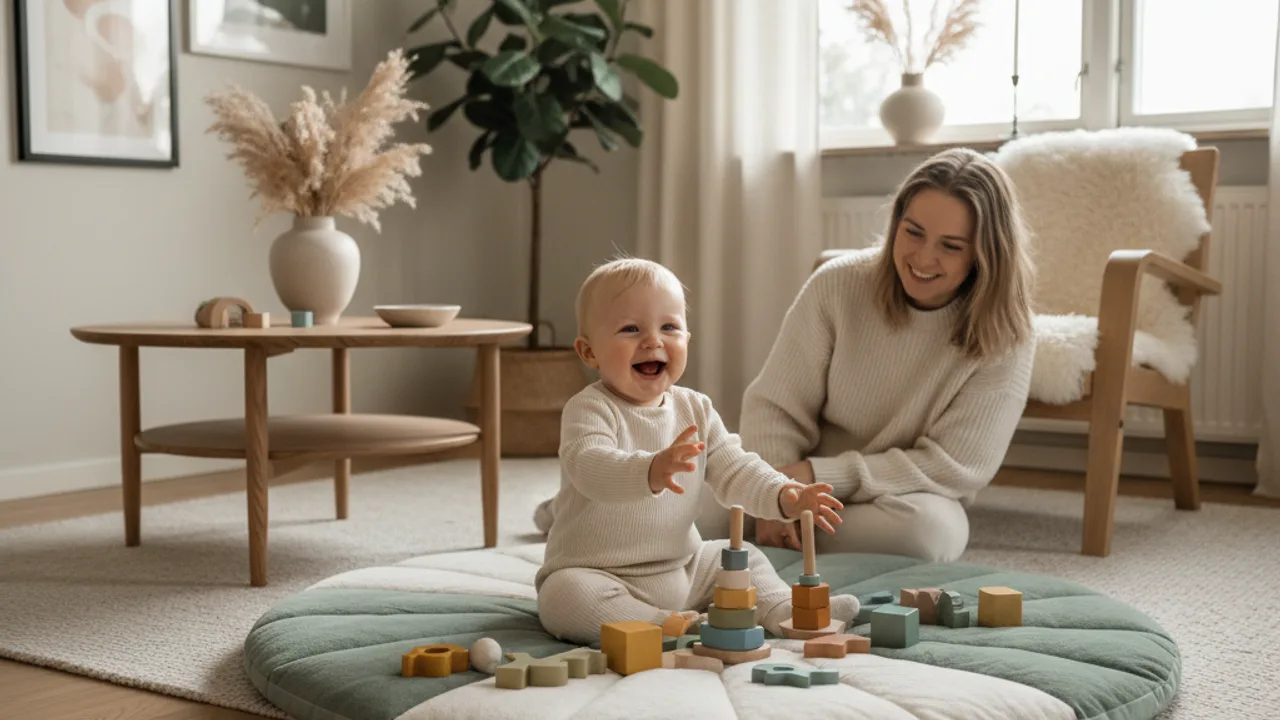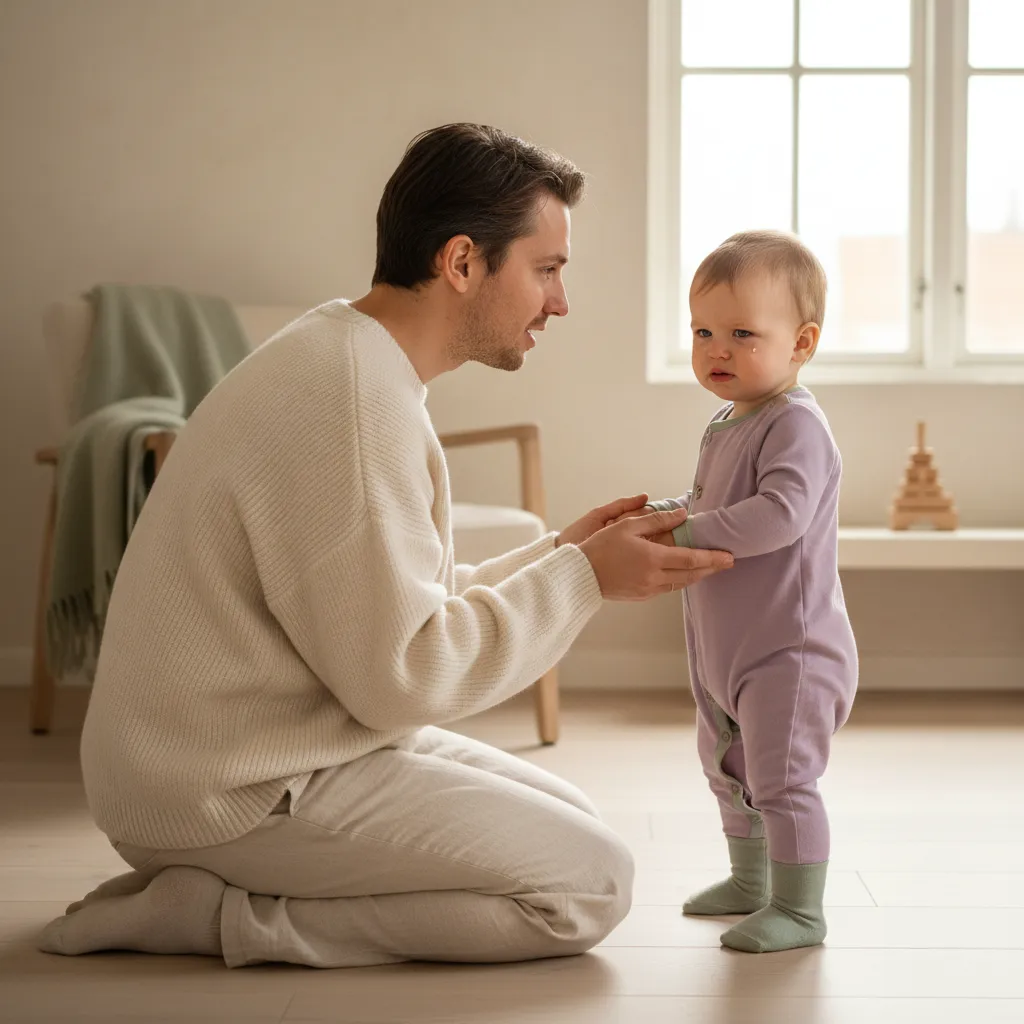
Your baby cries because their diaper is wet. The one-year-old throws themselves on the floor in the store. The two-year-old gently hugs their teddy bear and says "teddy is sad." All of this is emotional development in action.
From birth, your child learns to recognize, express, and eventually manage emotions. This development doesn't happen on its own, you as a parent play the leading role as your child's emotional guide.
What Is Emotional Development?
Emotional development is about how your child learns to understand and handle their emotions. It includes three things:
- Recognition, the child learns to recognize different emotions in themselves and others
- Expression, the child finds ways to show what they feel, from crying to words
- Regulation, the child gradually learns to calm down and handle difficult emotions
Emotional development is closely linked to attachment. A child who feels safe and loved has better conditions for exploring their emotions.
From the AAP: Children learn to regulate their emotions through interaction with safe adults. It is a gradual process that takes several years.
0–6 Months: The Basic Emotions
Newborn babies have a surprisingly rich emotional life. From birth, the child shows basic emotions such as discomfort, contentment, and interest.
What the Child Feels
The first months are mostly about two states: well-being and discomfort. The baby cries when something is wrong (hunger, wet diaper, tiredness) and shows contentment when needs are met. Over time, emotions become more nuanced:
- Around 6 weeks: The first conscious smile. The child smiles at your face because they recognize you and feel happy.
- 2–3 months: Joy, interest, and surprise. The baby laughs, shows curiosity, and reacts with surprise to new things.
- 4–6 months: Frustration begins to show. The baby can become irritated when a toy is out of reach.
What You Can Do
In this phase, you are the child's whole world. When you respond quickly and lovingly to crying, the child learns that their emotions are taken seriously.
- Respond to crying. You cannot spoil a baby. A quick response builds security.
- Mirror emotions. Smile when the baby smiles. Show with your facial expression that you see the child.
- Use your voice. The baby doesn't understand the words, but tone communicates safety.
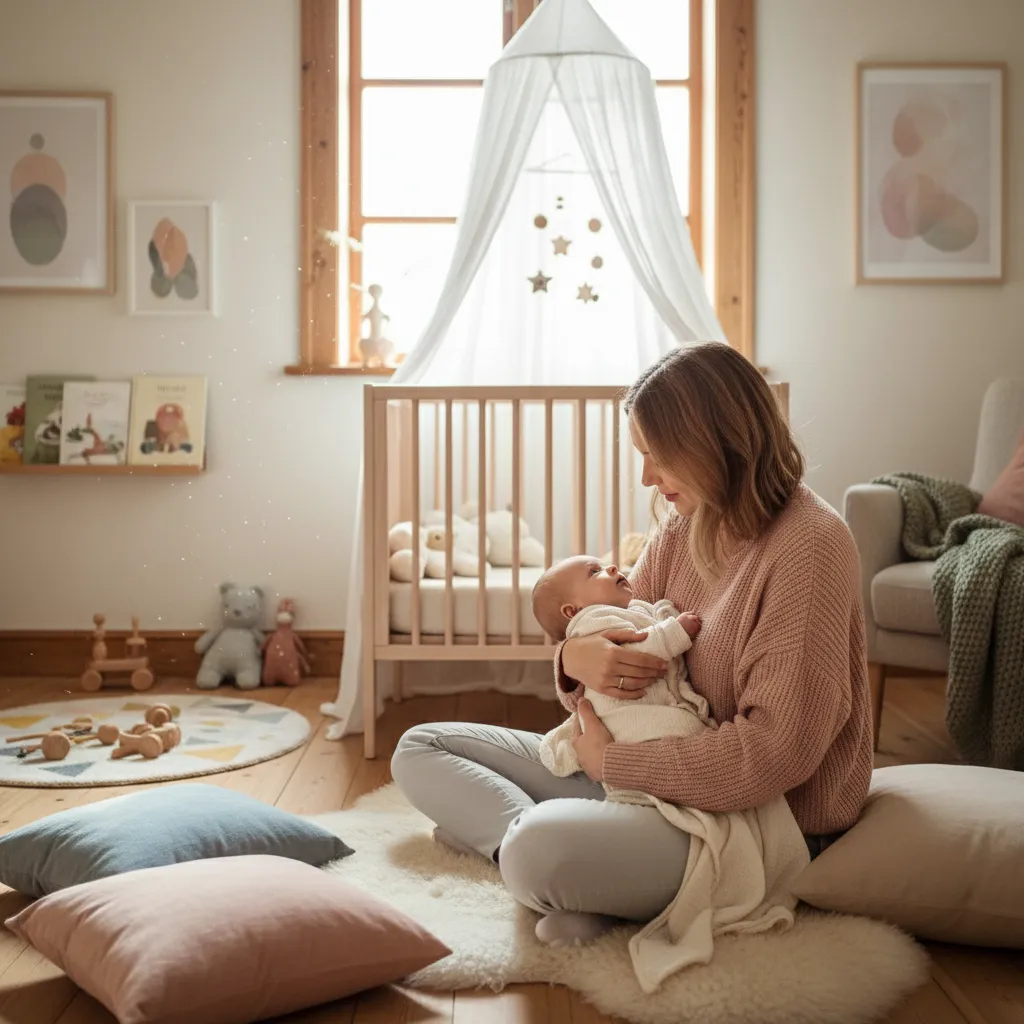
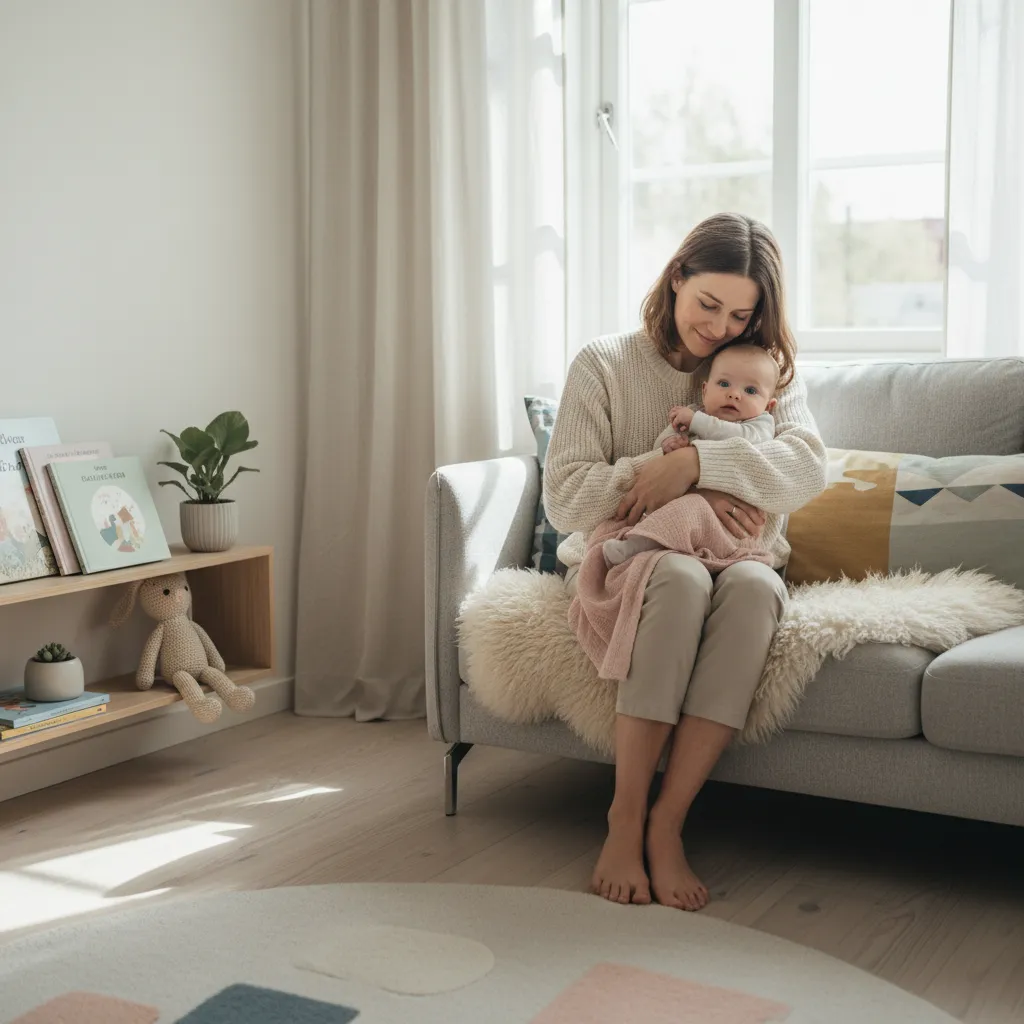
Skin-to-skin contact strengthens attachment and helps the baby regulate stress in the first weeks.
Co-regulation: When you hold the baby close and breathe calmly, you help the child regulate their own stress level. Your body is the child's most important tool for calming down.
6–12 Months: Attachment and Stranger Anxiety
Around the six-month mark, something big happens. The child has now formed clear attachment bonds and begins to distinguish between familiar and unfamiliar faces.
What the Child Feels
- Separation anxiety. The baby cries when you leave the room. This is a sign of secure attachment.
- Stranger anxiety. The child reacts with unease or crying at unfamiliar faces. Even grandma can be rejected if she has been away for a while.
- Joy and affection. The child clearly shows who they prefer and reaches their arms toward you.
- Frustration and anger. The child can become clearly frustrated when they can't manage something, such as reaching a toy.
What You Can Do
- Be predictable. Always say goodbye when you leave, and come back when you say you will.
- Name the emotions. "You got scared when it banged. That was unpleasant." The child doesn't understand the words yet, but begins to connect voice and emotion.
- Give time with strangers. Let the child get to know new people in safe surroundings, with you present.
1–2 Years: The Toddler Stage Begins
Around the first birthday, there is an explosion in the child's emotional life. The child discovers that they are their own person with their own will, and it can get intense.
What the Child Feels
- Self-assertion. "NO!" becomes a favorite word. The child tests limits and wants to decide for themselves.
- Frustration. The child knows what they want, but lacks the language and motor skills to achieve it. The gap between will and ability creates intense frustration.
- Tantrums. Throwing themselves on the floor, screaming, and crying are common expressions of overwhelming emotions the child cannot manage.
- Pride and mastery. The child shows clear joy when they manage something, such as stacking blocks or putting on shoes by themselves.
How to Handle Tantrums
Tantrums are not bad behavior. The child simply hasn't yet developed the ability to regulate strong emotions. The prefrontal cortex, the part of the brain that controls impulse control, isn't fully developed until around age 25.
- Stay calm. The child needs you to be the anchor. If you also lose control, the situation escalates.
- Stay close. Don't leave the child during a tantrum. Sit beside them and show that you are there.
- Put words to the emotions. "You're angry because you didn't get the cookie. You wanted it right now."
- Don't punish the emotion. Say "it's okay to be angry, but you can't hit", not "stop crying."
- Wait. The tantrum will pass. Comfort them afterward.
Avoid this: Never say "there's nothing to cry about" or "big kids don't cry." Dismissing emotions teaches the child that there is something wrong with feeling.
2–3 Years: Empathy and Nuanced Emotions
Between two and three years, something remarkable happens. The child begins to understand that other people also have feelings, and that they can be different from their own.
What the Child Feels
- Empathy. The child can comfort another child who is crying, give you their teddy bear if you pretend to be sad, or become concerned about an animal that is hurting.
- Shame and embarrassment. The child begins to understand social norms and can feel embarrassed.
- Jealousy. Especially noticeable if a little brother or sister arrives.
- Pride and guilt. More nuanced self-evaluations emerge.
Language and Emotions
Around the age of two, language explodes, and it changes everything. A child who can say "angry" instead of hitting has a powerful new tool for emotion regulation.
- Teach the child emotion words. Happy, angry, sad, scared, surprised, frustrated. The more words the child has, the better they can communicate.
- Read books about emotions. Picture books where characters experience different emotions give the child a safe space to explore.
- Talk about your own emotions. "I got a little irritated just now because the milk spilled. Now I'll take a deep breath, and then we'll wipe it up."
Name it, don't fix it. When the child is sad, it is tempting to fix the problem right away. Try first to put words to the feeling: "You're sad because Ola took your toy." Often, just being seen and heard is enough.
Co-Regulation: You Are the Child's Emotional Guide
Children don't learn to regulate their emotions alone. They learn it through you. This process is called co-regulation, and it is the foundation of all emotional development.
How Co-Regulation Works
When the child is overwhelmed by an emotion, they cannot calm down on their own. The nervous system is immature. That is where you come in. Your calm rubs off on the child through voice, touch, and presence.
Over time, the child internalizes this ability. What the child first needed you to do, they gradually manage more and more on their own. But it takes time, several years.
Practical Techniques
- Breathe together. "Shall we blow out the candles? Breathe in... and blow out." Deep breathing activates the parasympathetic nervous system.
- Use touch. Hold the child, stroke their back, let the child sit in your lap.
- Lower your voice. The more upset the child is, the calmer your voice should be.
- Give space. Some children need a little distance during big emotional outbursts. Respect that, but stay nearby.
Your Pediatrician and Early Interaction
Your child's pediatrician monitors development through regular check-ups. The doctor observes the interaction between you and your child and can offer guidance if needed.
If you experience that:
- The child rarely shows joy or interest
- The child does not seek comfort from you when upset
- You struggle to read the child's signals
- The interaction feels difficult or exhausting
...talk to your pediatrician. There are good options such as parenting guidance programs (for example, Circle of Security. COS-P) and parent-child interaction groups in many areas.
Circle of Security (COS-P): A guidance program that helps parents understand their child's attachment needs. Available through many pediatric practices and early childhood programs.
Frequently Asked Questions
Are tantrums normal in two-year-olds?
Yes, completely normal. Tantrums are the child's way of handling emotions they don't yet have tools to regulate. Most children have fewer tantrums after age three, when language and emotion regulation mature.
When do children start showing empathy?
The first signs of empathy appear around 18–24 months. The child may show concern for others who are crying, offer comfort objects, or gently pat someone. Full empathic understanding develops gradually throughout childhood.
Can you spoil a baby with too much comfort?
No. Research shows that babies who receive quick and loving responses to crying develop more secure attachment and better emotion regulation. You cannot give too much closeness to a baby.
What do I do when my child hits or bites?
Stay calm and physically stop the action. Say "I won't let you hit. Hitting hurts." Put words to the feeling behind it: "You're angry. It's okay to be angry, but you can't hit." Offer an alternative: "You can stomp on the floor or punch the pillow."
Should I hide my own emotions from my child?
No, on the contrary. Showing your child that you also have emotions, and how you handle them, is one of the best ways to teach emotion regulation. "I got a little sad just now. I'll take a deep breath, and then I feel better."
Summary
Emotional development is a gradual process that takes several years. The most important things you can do:
- Respond to emotions. Don't dismiss or minimize the child's experiences.
- Name emotions. Give the child words for what they experience.
- Be the co-regulator. Your calm is the child's most important tool.
- Have patience. Emotion regulation is a skill that takes time to learn.
- Seek help early if the interaction feels difficult.
Read More
Sources
- American Academy of Pediatrics. Child Development
- WHO. Early Childhood Development
- Zero to Three. Social-Emotional Development
🔧 Helpful Tools
- Baby Milestones Tracker. Track your baby's developmental milestones
- Development Leaps. Understand your baby's developmental leaps
- All Baby Tools. Browse all free tools for pregnancy and baby care