Dining Out With a Baby. Tips for a Great Experience
You miss it. Sitting down at a table, ordering food someone else has cooked, and enjoying a meal without thinking about the dishes. Going to a restaurant is one of those things many new parents think they have to give up, but they don't.
With a little planning and realistic expectations, dining out with a baby can be a great experience for the whole family. Here is everything you need to know.
Timing Is Everything
The most important tip for dining out with a baby can be summed up in one word: timing.
Best Times to Go
- Early dinner: Aim for 4:30–5:00 PM. The restaurant is quieter, service is faster, and the baby is not overtired
- After a nap: Plan the visit right after the baby has slept. A well-rested baby is a cooperative baby
- Aligned with feeding: If the baby usually eats at 5 PM, book the table for 4:45 PM so you can feed them at the same time
Times to Avoid
- Right before bedtime, an overtired baby is no fun at a restaurant
- Peak dinner rush (6–7 PM), long waits and lots of noise
- When the baby is sick or unsettled, it will be stressful for everyone
Fridays and Saturdays between 5 and 7 PM are the busiest times at most restaurants. Midweek dinners (Tuesday–Thursday) offer a calmer atmosphere and more space.
Choose the Right Restaurant
Not all restaurants are equally suited for families with young children. Here is what to look for.
Family-Friendly Restaurant Checklist
- High chair: Call ahead and ask if they have one. Most do, but not all
- Changing room: Check if there is a changing table or somewhere to change a diaper
- Kids' menu: Not a requirement, but a sign they are used to families
- Outdoor seating: Perfect in summer, more space and less worry about noise
- Location: Close to parking or stroller access at the entrance
- Noise level: A place with background noise (music, conversation) means a fussing baby is less noticeable
Cafe Culture With a Baby
Cafes are generally very family-friendly. Many have room for strollers, kids' corners with toys, and changing facilities. Cafes are a low-pressure alternative to restaurants, shorter visits, simpler food, and no expectation that you will sit still for two hours.
Many restaurants and cafes list themselves as family-friendly on Google Maps and TripAdvisor. Check reviews where other parents have left comments.
What to Bring
The Little Bag That Saves Everything
- Bib: Preferably one with a catch pocket
- Wet wipes: For hands, face, the table, the high chair, everything
- A change of clothes: Because babies spill, spit up, and make messes
- One small toy or book: One favorite is enough, too many choices create chaos
- Snacks: Rice cakes, puffed corn snacks, or pieces of fruit to keep the baby occupied while you wait
- Diaper and changing mat: Even if the restaurant has a changing room
What You Don't Need
- The entire toy box
- An iPad or phone (especially for babies under two)
- Pre-made food for twelve meals, the restaurant has food
Ordering Strategy
Once you are finally seated, efficiency is key.
Order Smart
- Order for the baby first: If the child is having something from the menu, say so right away. The kitchen can start early
- Choose fast dishes: Avoid slow-cooked dishes with a 45-minute wait. Pizza, pasta, stir-fry, and salads come quickly
- Skip the starter: With a baby, it is smarter to go straight to the main course. The visit should ideally not last more than an hour
- Ask for the bill early: When ordering, tell the server: "We're a little pressed for time with the baby, could we get the bill quickly after eating?"
Food You Can Order for Your Child
From the menu you can often order simple dishes that work for children:
- Pasta with a mild sauce (ask for it without added salt if possible)
- Steamed vegetables (ask for a side without spices)
- Bread and butter
- Rice
- Shredded chicken
Most restaurants are happy to adapt dishes for children if you ask. It is completely normal to request food without salt, without strong spices, or in a smaller portion.
Tips by Age
0–6 Months. The Easiest Period
Surprisingly, this is the easiest age for restaurant outings. Babies at this stage sleep a lot, feed from the breast or bottle, and are generally content to lie in the stroller or be held.
- Bring the baby in the stroller, many sleep through the entire meal
- Breastfeed or give a bottle at the table. This is completely normal
- The baby does not need their own food from the menu
- Go to restaurants while it is easy, it gets more challenging later
6–12 Months. The Explorer Stage
The baby is awake, curious, and starting to eat solid food. Now there is a bit more to plan.
- Bring finger food: Pieces of banana, steamed broccoli, bread sticks. Read more about finger foods and transitioning from puree
- Use a suction plate: It sticks to the table and reduces food-throwing
- Let the baby taste: Many babies are interested in what their parents are eating. Let them try (with allergen awareness)
- Keep visits short: Aim for 45–60 minutes maximum
Be aware of choking hazards. Avoid whole grapes, nuts, hard vegetables, popcorn, and chewy meat for babies. Read more about choking hazards for babies.
1–3 Years. The Most Challenging Period
Toddlers have short attention spans, strong opinions, and loud voices. But that does not mean restaurant visits are impossible.
- Short and efficient: Maximum one hour. Order quickly, eat quickly, pay quickly
- Involve your child: Let the child choose between two dishes. "Do you want pasta or chicken?"
- Talk and point: Talk about things in the room, point out colors and objects
- Coloring supplies: A few crayons and a piece of paper can buy you ten valuable minutes
- Accept some noise: It is okay for a child to make a little noise. Do not stress about what others think
Read more about food for children 1–3 years and picky eaters and food.
Allergens and Restaurants
If your child has a food allergy, restaurant visits require extra planning.
Before the Visit
- Call the restaurant ahead of time and inform them of the allergies
- Ask if they can adapt dishes
- Check if they have an allergen overview (required in most countries)
During the Visit
- Repeat the allergies to the server, do not assume the information has been passed on
- Ask the kitchen to confirm the ingredients
- Have antihistamines or an epinephrine auto-injector available if your child has a severe allergy
Read more about allergens and babies and food allergies in babies.
Handling Meltdowns
It happens. The baby cries, the toddler screams, and you feel like the whole restaurant is staring. Here is the exit strategy.
Prevention
- Do not wait too long to order
- Have snacks and distractions ready
- Watch for tiredness signals and react early
- Check the diaper, a wet diaper can ruin everything
When the Crisis Hits
- Take a break: One parent takes the child outside for a short walk while the other finishes eating
- Don't give up right away: Children often calm down after a minute or two with new stimulation
- It's okay to leave: Some days it just is not the day. Ask to have the food packed up to go
- Don't worry about other people's looks: Most people around you understand. Those who don't have forgotten their own time with young children
Most adults are understanding of families with babies at restaurants, as long as parents make a reasonable effort to keep the child comfortable.
Hygiene at the Restaurant
The High Chair
The restaurant's high chair has been used by many children. A quick wipe with a wet wipe before you put your child in is a good idea. Straps and buckles often collect food debris.
The Table Surface
Babies eating finger food directly from the table surface should have a clean surface underneath. A silicone mat takes up little space in your bag and provides a clean eating surface.
Hands
Wash or wipe the baby's hands before and after eating. Wet wipes are your best friend.
Practice at Home First
If you are unsure how it will go, you can practice at home.
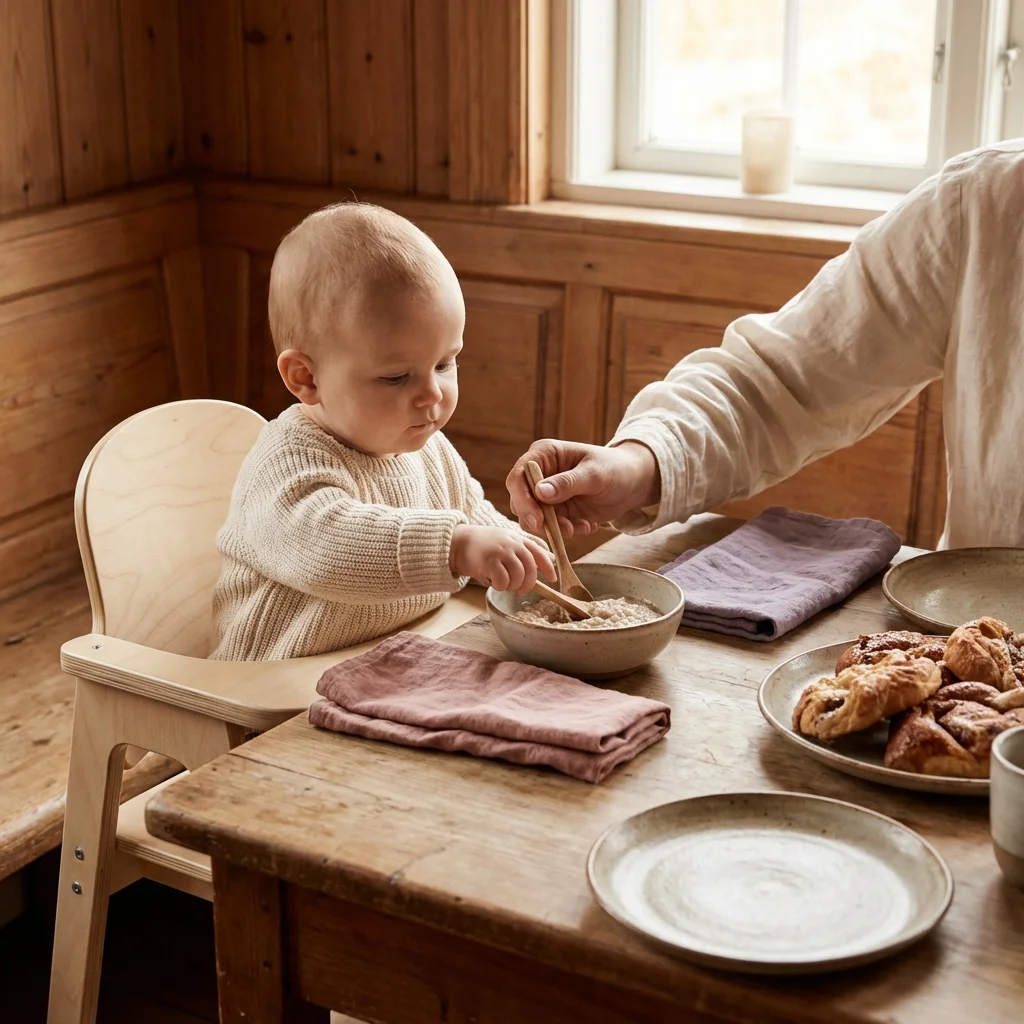
- Put the baby in the high chair at the dining table
- Pretend you are at a restaurant, serve the food, eat together, talk about things
- Practice having the child sit in the chair for 20–30 minutes
- Try a family-friendly cafe first, and work your way up
Babies who are used to sitting in a high chair at the dinner table at home handle the transition to restaurants better.
Restaurant Etiquette With Children
Most restaurants welcome families with children. That said, there are a few unwritten rules.
- Clean up after yourselves: Pick up food from the floor, stack plates, and leave the table reasonably tidy
- Alert staff: If there is a big mess, let them know, it is better than pretending nothing happened
- Timing: Avoid upscale restaurants on Saturday night at 8 PM. An early dinner on a weekday is more appropriate
- Noise level: Try to calm your child, but don't stress. Restaurants are used to families
- Breastfeeding: Breastfeeding at a restaurant is completely normal and accepted
Frequently Asked Questions
When Can My Baby Start Going to Restaurants?
Babies can come to restaurants from birth. They do not need their own food from the menu until they start solid foods around six months. Before that, it is just breastfeeding or bottle feeding.
Should We Make a Reservation?
Yes, always. When you call to reserve, mention that you have a baby. The restaurant can then seat you in a suitable spot, preferably near the exit, with room for the stroller, and a little away from other guests.
What Do We Do If the Baby Won't Sit in the High Chair?
Don't force it. Some babies prefer a lap. Let one adult hold the baby while the other eats, and take turns. Alternatively, the baby can sit in the stroller next to the table.
Is It Rude to Bring Our Own Baby Food to a Restaurant?
No. It is completely normal to bring your own baby food, especially for babies under one year. Most restaurants understand this. Pouches, crackers, fruit, and finger foods are completely normal to bring.
How Do We Handle a Diaper Change at a Restaurant?
Use the changing room if there is one. If not, the car can work as an emergency option. Never change a diaper at the table, it is unhygienic and inconsiderate to other guests.
Dining out with a baby is not about recreating the child-free life you had before. It is about creating new experiences as a family. Sometimes it is chaotic, sometimes it is perfect, and most of the time it is a mix of both.
The best thing you can do is lower your expectations, plan a little, and remember that everyone around you was once that parent with the fussing baby.
Read More
- Food for baby at 1 year
- Picky eaters and food
- Transitioning from puree to finger foods
- Choking hazards in babies
- Allergens and babies
Sources
Last updated: March 2026
🔧 Helpful Tools
- All Baby Tools. Browse all free tools for pregnancy and baby care
📖 Related Articles
- May 17th with baby and toddlers: Complete guide to Norway's National Day. How to celebrate May 17th with baby and toddlers. Tips for the children's parade, traditional costumes, food, and a stress-free day.
- Baby Food at 1 Year: Transitioning to Family Meals. What can your child eat at 1 year old? Guide to family foods, cow's milk, portions, and diet for one-year-olds based on WHO and AAP recommendations.
- How Much Should Your Baby Eat? Portion Sizes by Age. How much should your baby eat? A guide to portion sizes from 6 months to 3 years. Amounts per meal, signs of hunger and fullness, and when to talk to your pediatrician.