Whether it is a trip to the cabin, visiting grandparents or this summer's big holiday, a road trip with a baby requires a little extra planning. But with good preparation, the journey can be a great experience for the whole family, not just a stressful move from A to B.
Here is everything you need to know for a safe and enjoyable car journey with children of all ages, from newborn to toddler.
Car seat safety: The most important thing first
The car seat is the most critical piece of equipment for your child in the car. Correct use can save lives.
Rear-facing is safest
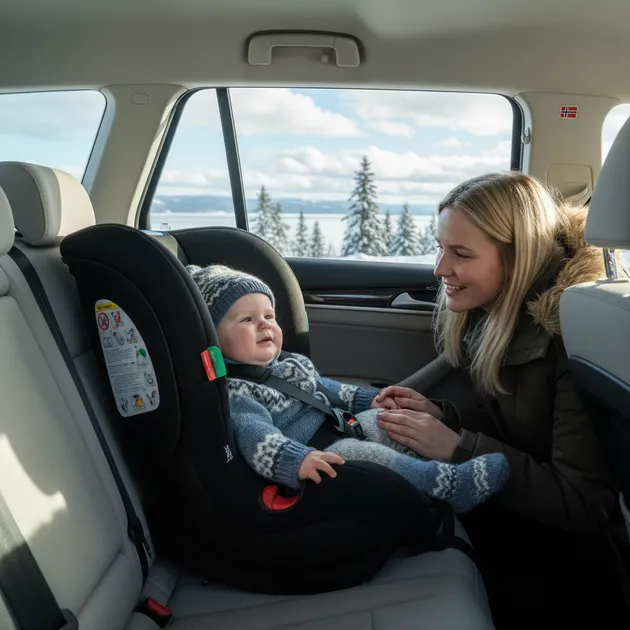
Safety experts strongly recommend keeping children rear-facing for as long as possible, ideally until your child reaches the maximum height or weight limit of their rear-facing seat. The AAP endorses this approach.
Why rear-facing?
- The neck and head are most vulnerable in a frontal crash
- Rear-facing distributes forces across the entire back
- Children have relatively large heads and weak necks
- Rear-facing reduces the risk of serious injury by up to 90 percent compared to forward-facing
Never turn a child forward-facing just because they cry when rear-facing. Crying is not dangerous , a frontal crash forward-facing can be. Most children get used to sitting rear-facing. Speak with your pediatrician or a certified car seat technician if your child has significant trouble.
Car seat checklist
- Seat correctly installed, test by twisting and pulling, it should not move more than 2–3 cm
- Harness snug enough, you should not be able to fit more than one finger under the strap
- No thick jackets under the harness, remove the outer jacket and lay it as a blanket on top
- Headrest correctly adjusted, should be at the right height for your child's head
- No loose objects in the car, they become projectiles in a sudden stop
Read more about regulations and choosing the right seat in our complete car seat guide.
The airbag rule
Children sitting rear-facing should NEVER be placed in the front seat if the airbag is active. The airbag can be fatal for a child in a rear-facing seat. Deactivate the airbag or place the child in the back seat.
Planning the trip
Good planning is half the battle. Here is what to think about:
Timing
- Drive when the child sleeps, many families start the journey at bedtime or early in the morning
- Avoid rush hour, standstill traffic with a restless baby is no dream
- Allow extra time, add 30–50 percent extra travel time
Route planning
- Find rest stops with facilities, changing rooms, playgrounds, food options
- Plan stops every 1.5–2 hours, babies and toddlers should not sit in a car seat for extended periods
- Have a Plan B, alternative rest stops or overnight options on long trips
- Download offline maps, mobile coverage is not always guaranteed in remote areas
Newborns and young babies should not sit in a car seat for more than 1.5–2 hours at a stretch. The semi-reclined position can affect breathing, especially in the youngest babies. Take breaks where the child is taken out of the seat and gets to stretch.
Check the car
Before a longer road trip:
- Check tires, oil and coolant
- Make sure the spare tire and tools are in place
- Fill the tank (or charge the car) before departure
- Test that the air conditioning works
- Clear the car of loose objects
Packing: What you need
In the passenger cabin (easily accessible)
Bag 1. Emergency bag (in the front seat or between front seats):
- 2–3 diapers + wipes
- Extra change of clothes for the child (one complete set)
- Pacifier with clip and spare pacifier
- Water bottle / drinks
- Small snacks (dry, not messy)
- Plastic bags for dirty clothes/diapers
Bag 2. Entertainment bag:
- Board books (cardboard pages, they handle everything)
- 2–3 small toys (attached with a cord to the car seat)
- Music or audiobook ready on the phone
- Optionally a tablet with content downloaded offline (for older children)
- Mirror for rear-facing seat (so the child can see you and you can see the child)
In the boot
- Stroller or baby carrier for breaks
- Extra diapers and clothes for the rest of the trip
- Food and drinks for the whole family
- First aid kit
- Window sun shade (suction cup type)
- Mat or blanket for outdoor breaks
Create a fixed road trip packing list you can reuse. Then you do not need to think through everything from scratch each time.
During the drive: Breaks and comfort
Break routine
- Stop every 1.5–2 hours for babies, every 2–2.5 hours for older children
- Take the child out of the car seat at every stop
- Let the child crawl/walk/play, they need movement after sitting still
- Feed and change diapers, combine practical with the break
- Fresh air, even a short outdoor stop works wonders
Temperature in the car
- Not too warm, 68–72°F (20–22°C) is ideal
- Never leave a child alone in the car, temperatures rise quickly, even on a cloudy day
- Sun shade on windows, protects against direct sun
- Light clothing, remember that thick clothes under harness straps are dangerous, but the child does not need to be cold either
Car sickness
Children over two years old can experience car sickness. Signs to look for:
- Paleness
- Yawning
- Restlessness and crying
- Nausea and vomiting
Prevention:
- Stop and get fresh air when you see the first signs
- Let the child look out of the window (not down at toys/screens)
- Avoid heavy meals right before or during driving
- Drive smoothly without sudden braking and sharp turns
- Keep sick bags accessible
Entertainment by age
0–6 months
Babies at this age need little entertainment. What works:
- Car seat mirror, the child can see their own face and yours
- Music or white noise, calm music, lullabies or engine sounds are soothing
- Talking and singing, your voice is the best entertainment
- Toy arch attached to the car seat
6–12 months
- Toys attached to the car seat with a cord (so they don't fall to the floor)
- Board books, handle being chewed and thrown
- Singing songs, "Wheels on the Bus" is a classic for a reason
- Snacks that take time, rice cakes, bread sticks (from 6 months)
- Window game, point at things you drive past
1–2 years
- Magnetic drawing board, fun and mess-free
- Stickers, can be stuck on the window or a book
- Small figures, little animals or cars
- Audiobooks and music, many public library apps offer children's content
- Snacks in portions, divide into small bags given out gradually
- Looking out the window, "can you see a red car?" is a great game
2–3 years
- Simple travel games, "I spy" (colors)
- Audiobook or music album, longer concentration now
- Drawing pad (magnetic drawing board, avoid loose crayons)
- Tablet with downloaded content, in moderate amounts
- Conversation, toddlers love talking about what they see
Prepare a "surprise bag" with a few new, inexpensive toys the child has not seen before. Bring out one new toy at each stop, it gives something to look forward to and holds interest.
Special situations
Night driving
Many families prefer driving in the evening or at night:
Advantages:
- The child sleeps for most of the journey
- Less traffic
- No entertainment needed
Disadvantages:
- The driver can get tired, safety first!
- Switch drivers if possible
- Stop and rest if you get tired, never drive drowsy
Winter driving
- Never a thick jacket under the harness, use fleece or a thin mid-layer, lay the outer jacket as a blanket
- Extra blankets in the car in case of breakdown in cold weather
- Thermos with warm drink (for adults) and lukewarm water (for the child)
- Emergency provisions, a winter storm can cause long delays
Checklist for the road trip
Before departure:
- Car seat correctly installed and adjusted
- Car checked (tires, oil, fuel/charge)
- Emergency bag packed and in the cabin
- Entertainment bag ready
- Rest stops planned
- Weather forecast checked
- Traffic conditions checked
During the trip:
- Stop every 1.5–2 hours
- Child out of the seat at every stop
- Food and drinks as needed
- Diaper change as needed
- Temperature in car OK
Frequently asked questions
How long can a baby sit in a car seat at a stretch? Newborns and young babies should not sit in a car seat for more than 1.5–2 hours at a stretch. For older babies and toddlers, 2–2.5 hours is the maximum. Always take breaks where the child is taken out of the seat.
Can a baby sleep in the car seat outside the car? The car seat is designed for use in the car, not as a sleeping place. After arriving at your destination, the baby should be moved to a stroller, crib or another flat surface. The semi-reclined position in a car seat can affect breathing over a longer period.
What do I do if the baby cries throughout the journey? Stop, take the baby out, feed/change, and try again after a break. Some babies need to hear your voice, talk or sing. White noise or engine sounds via an app can also help.
Do I need a mirror in the car? A car seat mirror is not required, but is strongly recommended. It lets you see the child without turning around, and the child can see you. Attach it securely so it does not come loose in a sudden stop.
When can a child sit forward-facing? Safety experts recommend rear-facing until the child outgrows the seat's maximum limits. Read more in our car seat guide.
Sources
- AAP: Car Safety Seats (healthychildren.org)
- NHTSA: Child Car Seats (nhtsa.gov)
- AAP: Recommendations on physical activity for children
🔧 Helpful Tools
- All Baby Tools. Browse all free tools for pregnancy and baby care